When a business closes an office, downsizes or moves without its old furniture, the desks, chairs and storage have to be sold or removed before the keys go back. Office furniture liquidation is the sale part of that exit, and furniture removal in Dubai is the safety net for everything the sale does not take. This guide explains how to run the sale against the handover date so the office is still empty on time.
What office furniture liquidation means in practice
Office furniture liquidation is the sale of a whole office's furniture, usually in bulk and under a deadline, so the premises can be handed back empty. It differs from selling a few spare chairs because the goal is an empty office by a fixed date, not the best possible price for each piece.
- Bulk sale to a used-office-furniture dealer, who takes large matching quantities and collects them.
- Sale to staff, neighbouring businesses or other buyers, usually in smaller lots.
- Transfer to another office within the same group.
- Donation of usable pieces to an organisation that can collect them.
- Collection for disposal and recycling of everything that remains.
Most liquidations use several of these routes at once. The mistake is treating the last one as an afterthought, when it is the only route that is fully under the business's control.
Work back from the handover date
The handover date is fixed; the sale has to fit inside it. Set a sale cut-off date well before the handover, leaving enough working days for the residual clearance, the final check and any unexpected delay with the goods lift.
- Confirm the handover date and what condition the landlord expects the premises in.
- Build an inventory of furniture by type, quantity and condition.
- Set the sale cut-off date and tell every buyer about it from the first conversation.
- Book the residual clearance for the day after the cut-off, before the sale begins.
- Run buyer collections in booked slots until the cut-off date.
- Clear everything still on the floor in one collection, then walk the empty premises.
Booking the clearance first sounds pessimistic, but it removes the real risk. If the sale goes well, the clearance load is smaller. If buyers withdraw at the last minute, the office still empties on time.
Which office furniture tends to attract buyers
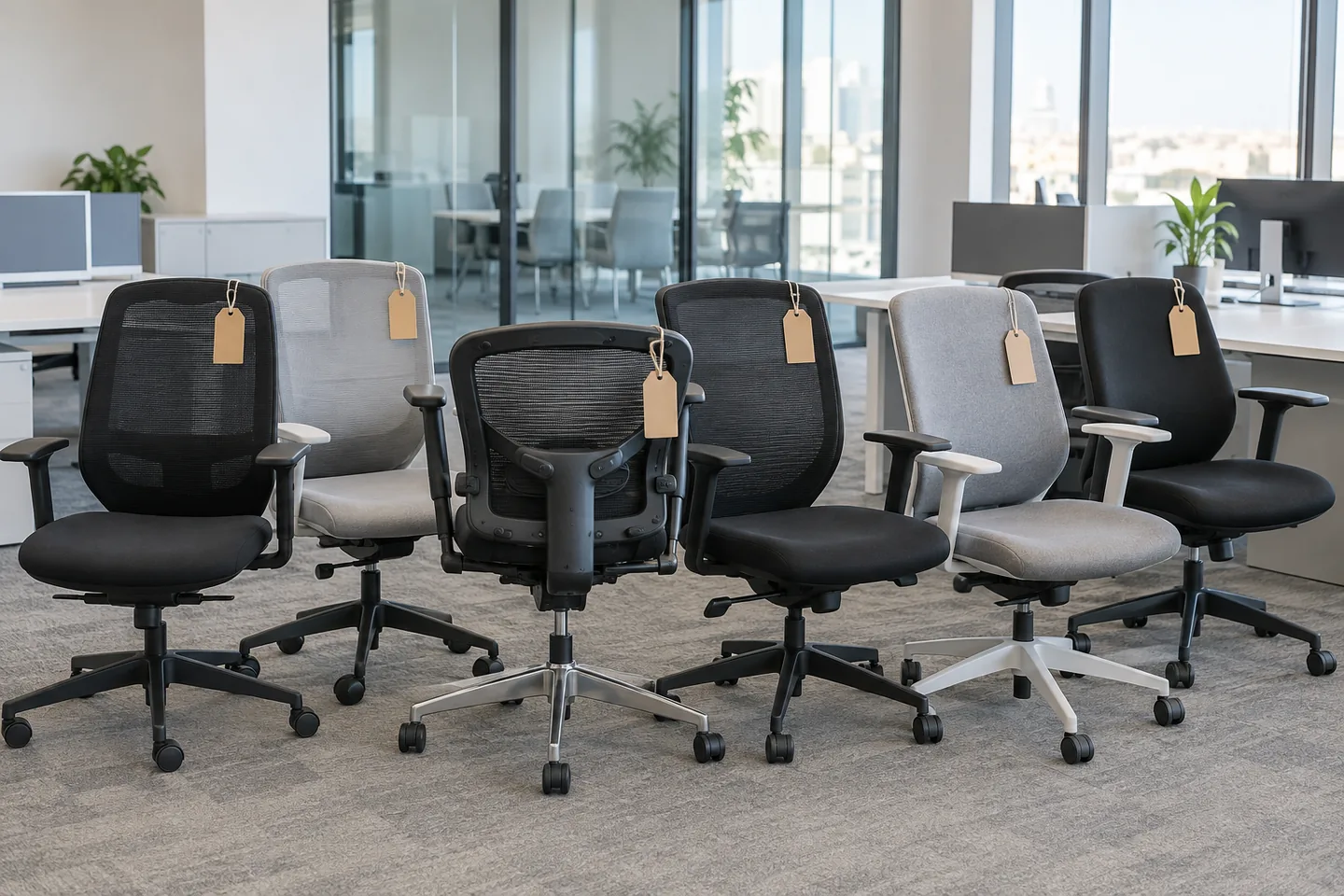
Buyers look for furniture that can go straight into another office without repair. Matching quantities in good working order are the strongest lots, while worn, bespoke or fixed items are the hardest to sell. Demand changes with the market, so treat this as a guide to sorting, not as a promise of value.
- More likely to sell: matching batches of task chairs that adjust correctly, sit-stand desks that work, steel storage and pedestals with their keys, and meeting chairs in one design.
- Less likely to sell: bench desks with worn or chipped tops, single odd pieces, chairs with failed gas lifts or torn upholstery, and partition panels.
- Rarely sellable: bespoke reception counters, built-in joinery and anything that would need a contractor to remove.
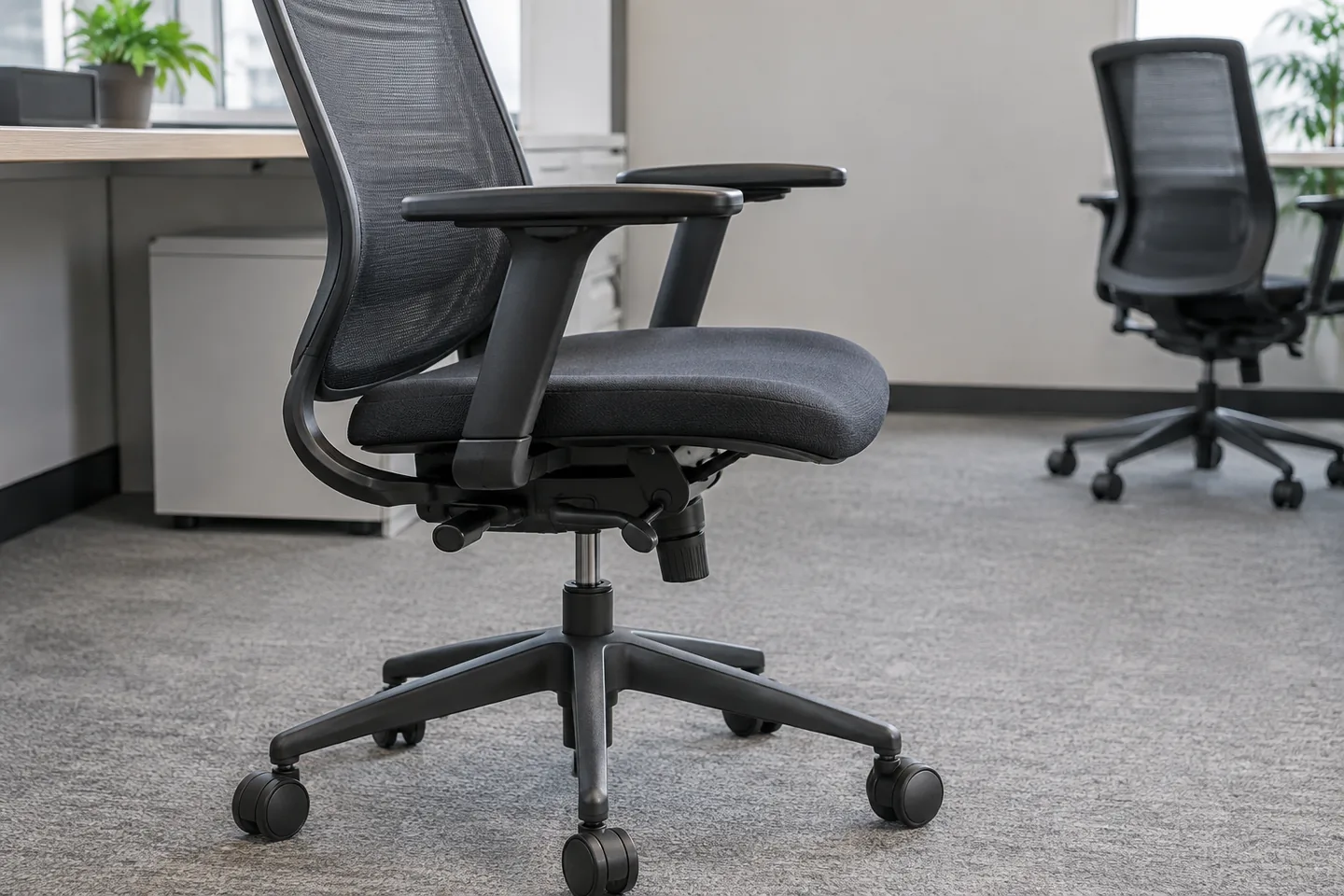
Check condition before offering anything. A short test of height, tilt, castors and arms on each chair, as described in the guide to office chair disposal, stops a buyer rejecting a lot on collection day.
Build lots that buyers can actually collect
A lot is only sold once it has left the building. Group furniture by type and quantity, keep keys, connectors and fixings with the pieces they belong to, and photograph each lot with its count. State whether desks are assembled or already dismantled, because that decides how long each collection takes.
Buyers collecting from an office tower need goods-lift bookings and loading-bay access like any other contractor. In towers such as those in Business Bay, building management may also ask for company details or insurance before letting a buyer's team in. Give each buyer the building rules in advance, and have one staff member supervise every collection and mark the inventory as each lot leaves.
If desks have to come apart for buyers, decide who does it. Bench systems and cable trays come apart in a set order, explained in the guide to office desk removal, and a buyer working against a lift booking may skip steps and damage the floor.
Clearing what the sale leaves behind
The residual clearance takes whatever is still on the floor after the cut-off: unsold lots, pieces buyers rejected, broken items, packaging and storeroom leftovers. Because it happens in one booked slot, the crew can plan a single route and vehicle size from the updated inventory.
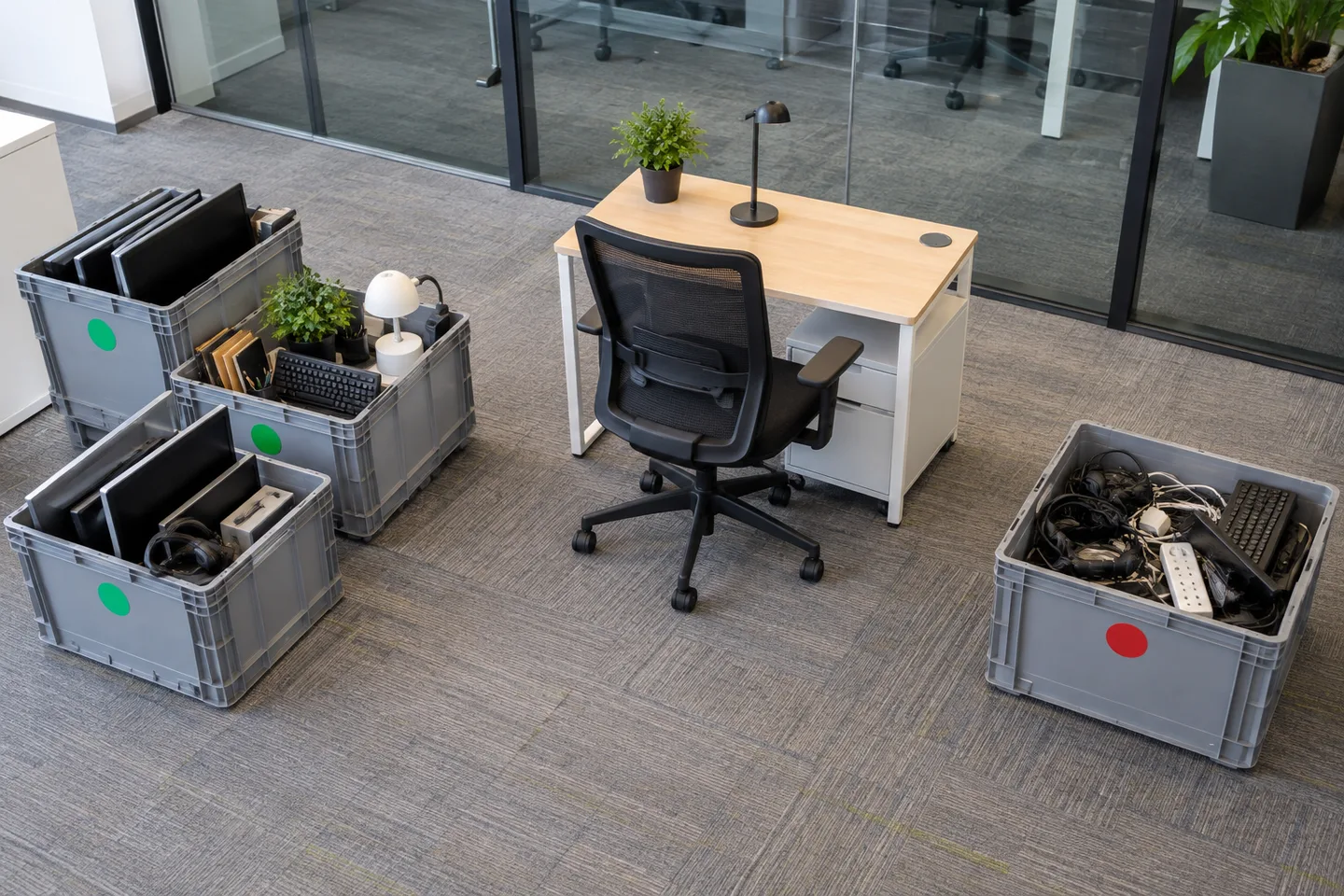
Computers, monitors, phones and other IT equipment should not be sold as part of the furniture liquidation. They need IT release and data decisions first, as explained in the guide to office electronics disposal, and then leave through e-waste disposal or the business's own IT route.
What to send when booking the residual clearance
Send the handover date, the sale cut-off date, the inventory with each line marked sold, unsold or uncertain, and photos of every room including stores. Add the building's goods-lift and loading-bay rules, and say whether any buyer may still be collecting on clearance day. Update the inventory the evening before so the vehicle matches what is actually left.
If the business is leaving the premises entirely, the wider office clearance inventory covers records, IT and the final handover record alongside the furniture.
A liquidation is judged on the handover date, not on the sale total. Fix the cut-off date, book the clearance before the first buyer visits and keep one person in charge of the inventory, and the office is empty on time however the sale goes.