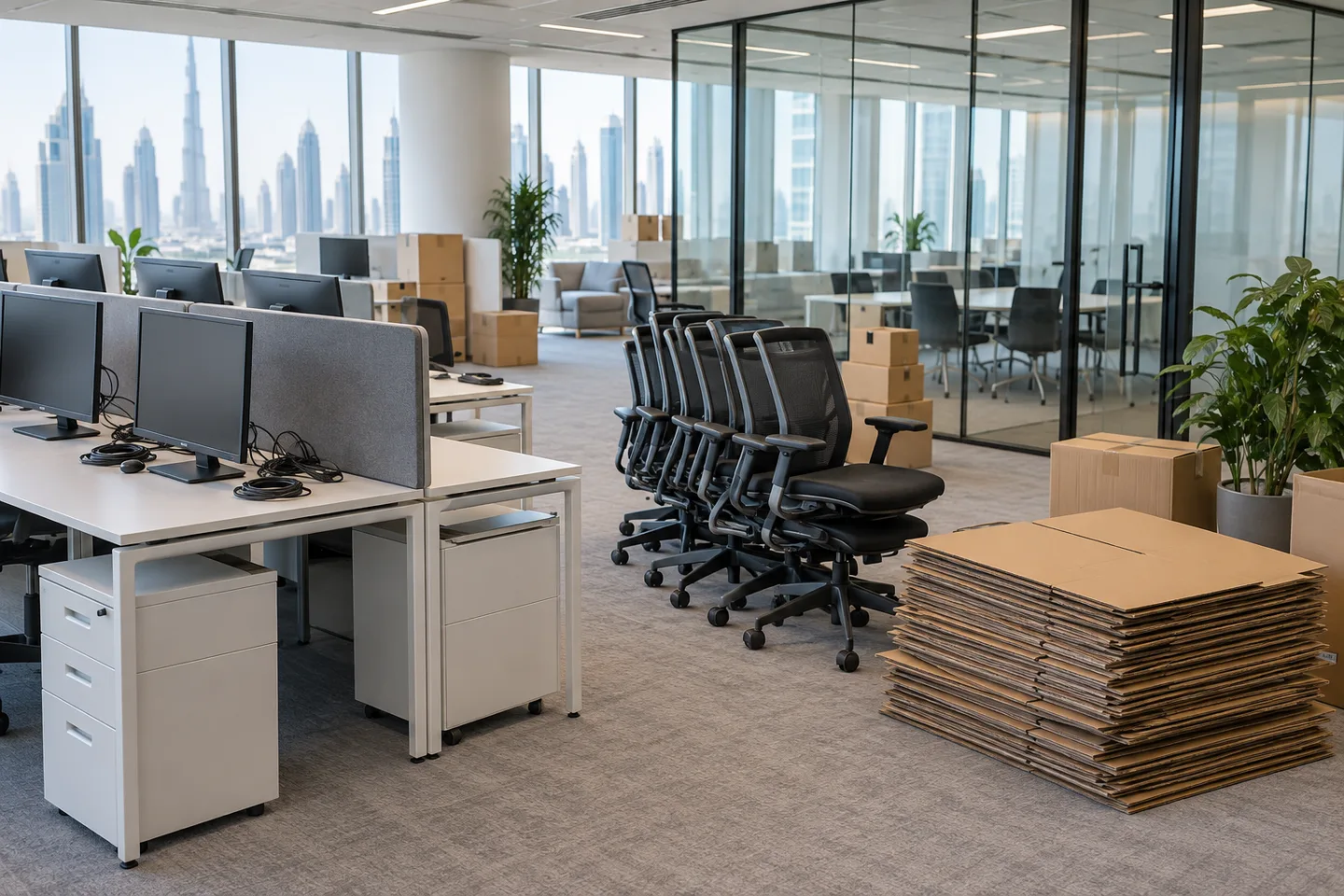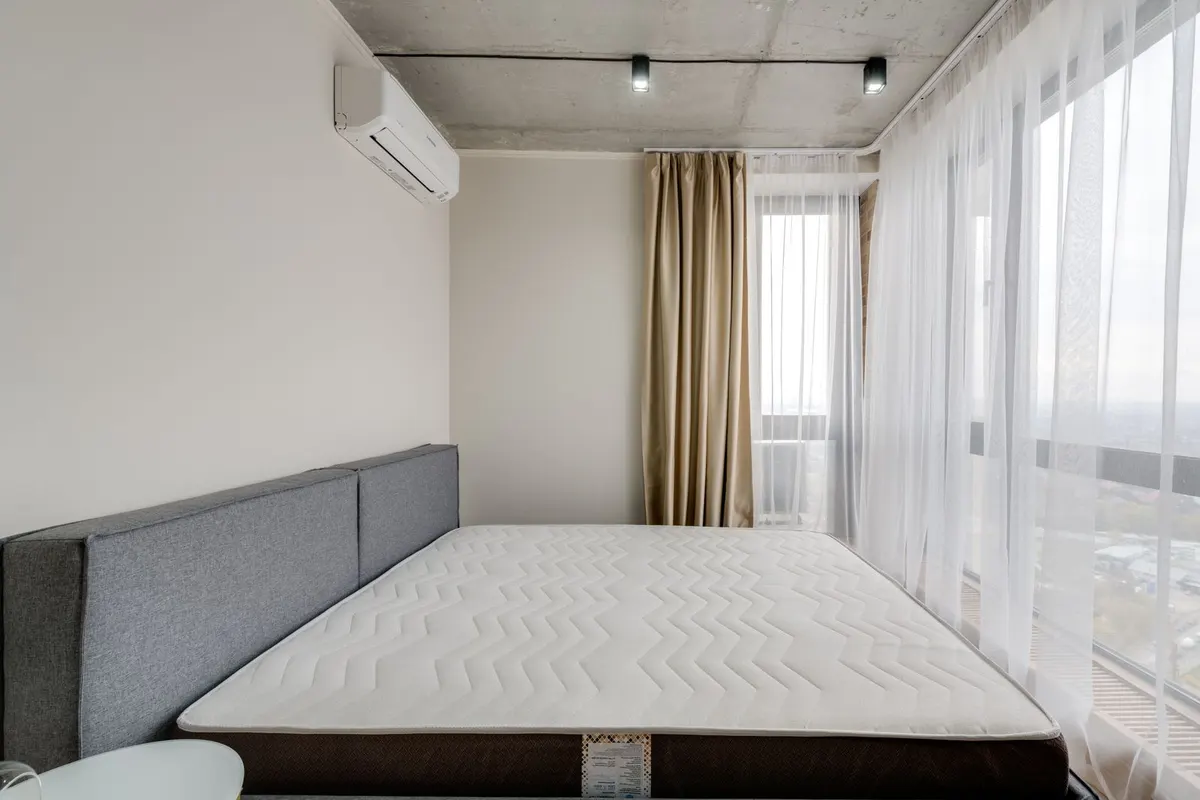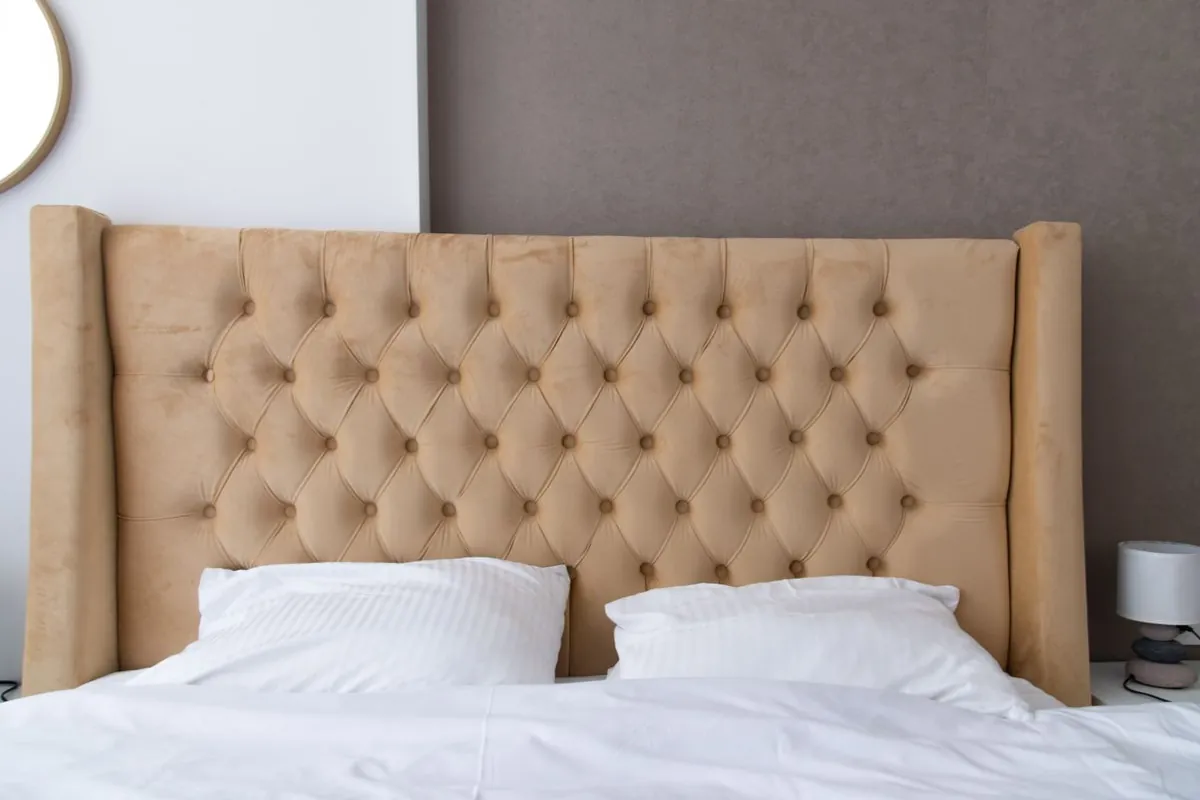
A hotel refurbishment can mean the same bed, bedside tables, desk and armchair leaving a hundred rooms or more, often while guests are still staying on other floors. Furniture removal in Dubai for a hotel is therefore a repetition and timing job more than a lifting job. This guide covers how to count the contents, clear floors without disturbing guests, and decide what is reused before anything is carried out.
What does hotel furniture removal cover?
Hotel furniture removal covers the loose furniture in guest rooms, suites, corridors and public areas that the hotel no longer needs. Most of the volume sits in guest rooms, because each room repeats the same small set of pieces. Public areas add fewer but larger items.
- Guest rooms: bed bases, mattresses, headboards, bedside tables, desks, desk chairs, armchairs, luggage racks, minibar cabinets and freestanding wardrobes.
- Suites and serviced units: sofas, dining sets, coffee tables and occasional furniture, often in smaller numbers per room type.
- Public areas: lobby seating, lounge tables, banquet chairs and conference furniture.
- Outside the collection: fixed joinery, built-in wardrobes, wall-bonded headboard panels and anything wired or plumbed in, unless the hotel's own team or contractor detaches it first.
Restaurant and kitchen equipment is a separate preparation job with its own disconnections, covered in the guide to restaurant equipment removal. Keep it off the furniture schedule so neither job is quoted on the wrong assumptions.
Count hotel furniture by room type, not item by item
The quickest accurate inventory for a hotel is a room-type schedule. Photograph one representative room of each type, list its contents, then multiply by the number of rooms of that type being cleared. A crew can plan vehicles, staffing and lift time from that table far more reliably than from a long list of individual pieces.
- Room type and number of rooms, for example standard king, standard twin, accessible room and one-bedroom suite.
- Contents of one room of that type, with bed sizes, and whether headboards are freestanding or wall-mounted.
- Exceptions: damaged rooms, rooms already partly stripped and rooms holding stored furniture from elsewhere.
- Items staying behind, such as televisions, safes, artwork or anything the hotel is moving to another property.
Twin rooms and suites are where estimates usually go wrong. Two single beds create twice the bed bases and mattresses of a king room, and a suite can hold a full living room on top of the bedroom. Keep each type on its own line rather than averaging them together.
Removing furniture while the hotel stays open
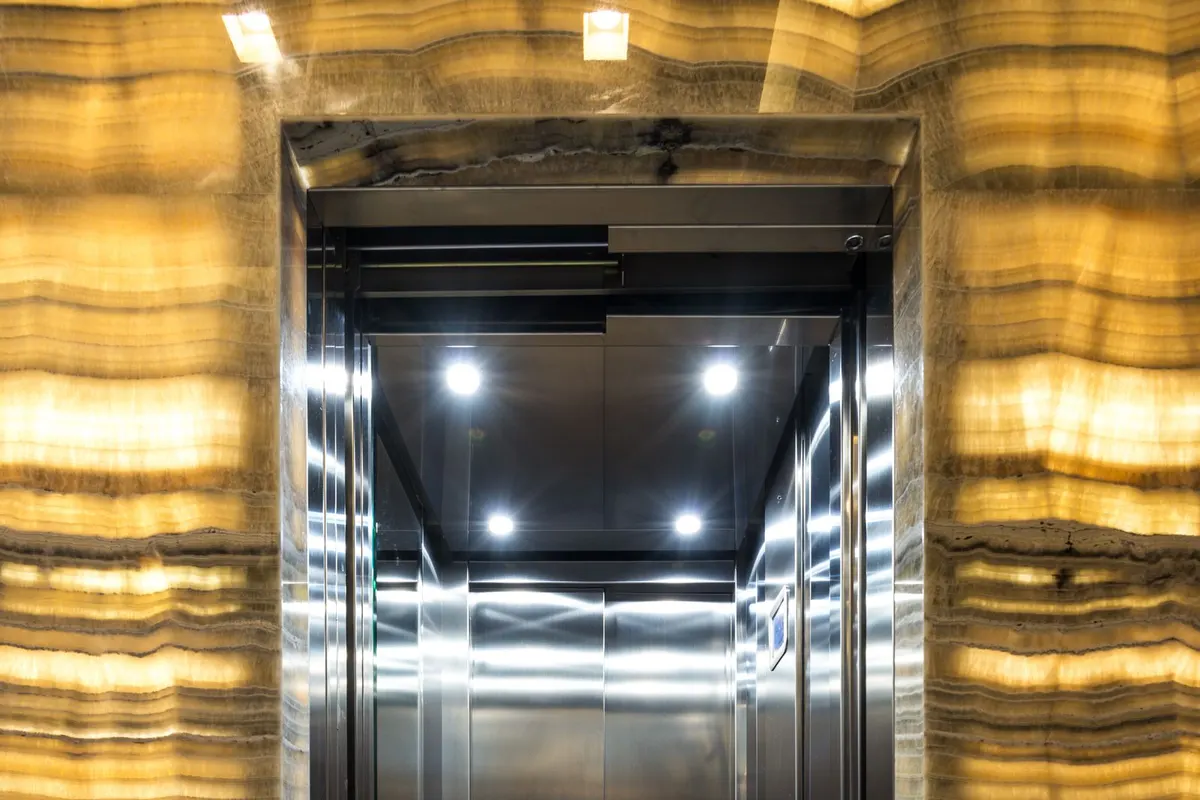
In an operating hotel, the furniture should move only through back-of-house routes: the service lift, staff corridors and the loading dock. Guest lifts and the lobby stay out of the plan unless hotel management agrees otherwise in writing. Agree the route with the hotel's operations or engineering team before the first booking.
- Agree which floors or wings come out of the hotel's room inventory, and on which dates.
- Book service-lift and loading-dock windows with the hotel, avoiding check-out, linen and delivery peaks.
- Protect lift walls, corridor corners and floor finishes along the agreed route.
- Clear one floor or block at a time, moving items straight from rooms to the lift instead of staging them in guest corridors.
- Hand each cleared floor back to the hotel or the refurbishment contractor before starting the next one.
Resort hotels on Palm Jumeirah and tower hotels in the city face the same core problem in different shapes. A low-rise resort may have long walks between guest wings and the dock, while a tower depends on one service lift serving many floors. Both are planned around the hotel's operating day, not around the crew's.
Mattresses, headboards and soft furnishings
Mattresses usually fill vehicles faster than anything else in a hotel job, because they are bulky and every room has at least one. Plan them as their own stream for mattress disposal so they do not crowd out the hard furniture in each load. Upholstered headboards are bulky too, and wall-mounted ones need the hotel's maintenance team to detach them before the crew arrives.
If any rooms have had pest treatment, tell the crew which ones before collection. Those mattresses and upholstered pieces should be wrapped and kept apart from reusable furniture, as explained in the guide to furniture with bed bugs. Never mix them into a batch that is going to a second user.
Decide reuse and ownership before the strip-out starts
A matching batch of hotel furniture is more useful to a second user than the same pieces scattered one by one. If any of it is going to another property, a buyer or a donation, separate that batch before the strip-out starts, while the pieces are still complete and undamaged. Once mixed into a disposal load, reusable furniture rarely survives intact.
Ownership needs checking too. Where the hotel operator and the building owner are different companies, the furniture may sit on the owner's asset register rather than the operator's. Ask whoever instructs the removal to confirm in writing that they can release every room type on the schedule.
What to send for a hotel furniture removal quote
- The room-type schedule with photos of one representative room of each type.
- The floors or wings involved, the order they will be released and any refurbishment deadline.
- Service-lift dimensions, booking windows and loading-dock rules.
- Whether hotel staff will strip linen, empty minibars and detach wall-mounted items beforehand.
- Which batches are going to reuse, and which are for disposal.
For a mixed premises clearance that goes beyond furniture, the wider guide to commercial junk removal explains how to define one load and one authorised contact.
A hotel furniture removal goes well when the crew knows exactly what one room of each type contains, which floors are released on which days, and which lift it may use. Get those three things settled with the hotel first, and the rest is a well-practised repetition, floor after floor.