Office desk removal in Dubai is rarely about single desks. Most offices run desk systems: bench frames shared by four or six positions, cable spines, desk-mounted screens and pedestals that lock. Removing them well means knowing how the system comes apart, what is still connected to the building's power and how the pieces reach the goods lift. A single desk in a home study is a different job, covered in desk removal in Dubai; book furniture removal for office desks once they have been released.
Identify the desk system before asking for a quote
The type of desk decides the dismantling time, so describe it precisely. Office desks usually fall into one of five types.
- Bench desks: several tops sharing one continuous frame, often with a central beam and cable tray.
- Freestanding single desks: independent frames that usually leave in one or two pieces.
- L-shaped and executive desks: a main top with a return or credenza, joined by brackets underneath.
- Height-adjustable desks: motorised frames with a control box and power supply.
- Meeting and training desks: flip-top or linked tables that fold or unlink.
Photograph one example of each type from the front and from underneath, then count how many of each there are. Twenty identical bench positions need one description and one count, not twenty photographs.
Isolate power and clear IT before dismantling
Office desks are often wired into the building. Power modules, floor boxes and cable spines may connect to the office's electrical installation. Staff can unplug ordinary plug-in leads, but anything hard-wired or fed from a floor box should be disconnected by the facilities team or an electrician before the crew arrives. A removal crew should not cut or terminate building wiring.
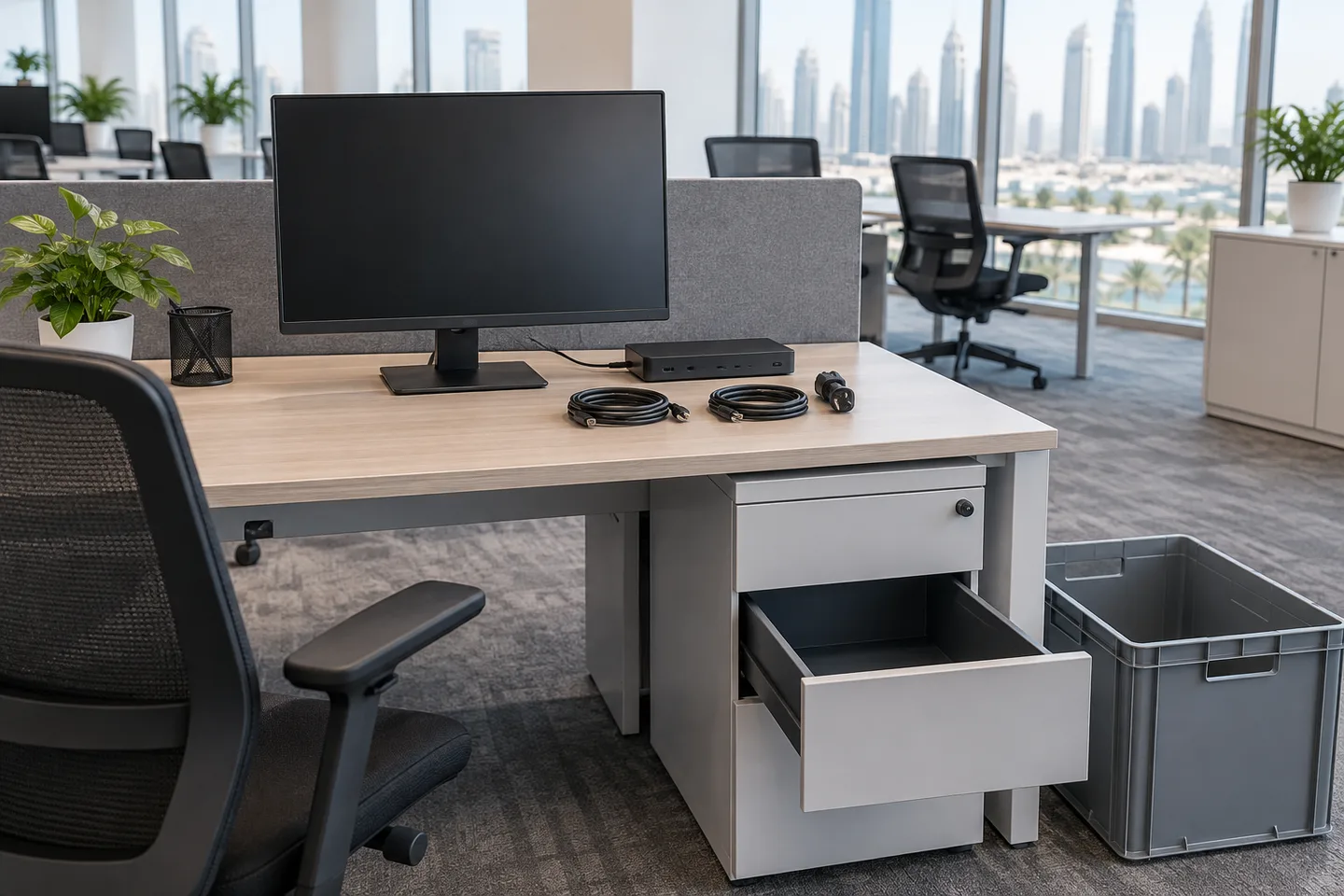
IT equipment comes off the desks first. Monitors, docks, keyboards and monitor arms are released by the IT contact and, if they are not being kept, routed through the e-waste disposal service. A desk cleared of equipment is quicker to dismantle and cannot leave with a device still clamped to it.
Dismantle bench desks in reverse order of assembly
Bench systems come apart in the reverse of the order they were built. Each position depends on its neighbour, so removing a top from the middle of a run can leave the remaining tops badly supported.
- Remove desk screens, monitor arms and any accessories clamped to the tops.
- Lift off the desk tops and stack them flat, face to face, to protect the surfaces.
- Remove cable trays, spines and modesty panels.
- Unbolt the beams and legs, and bag the fixings by desk run if the furniture will be reused.
Decide on reuse before this sequence starts. Desks going for resale or donation need each run's parts kept together and labelled, which takes longer than dismantling for disposal. Desks leaving for recycling can be packed by component, but loose bolts still should not be left on the office floor.
Handle pedestals and sit-stand desks separately
Pedestals are heavy for their size and often locked. Collect the keys before the job, empty every drawer and check for anything taped underneath. A full, locked pedestal weighs far more than an empty one and cannot be checked for records or personal items.
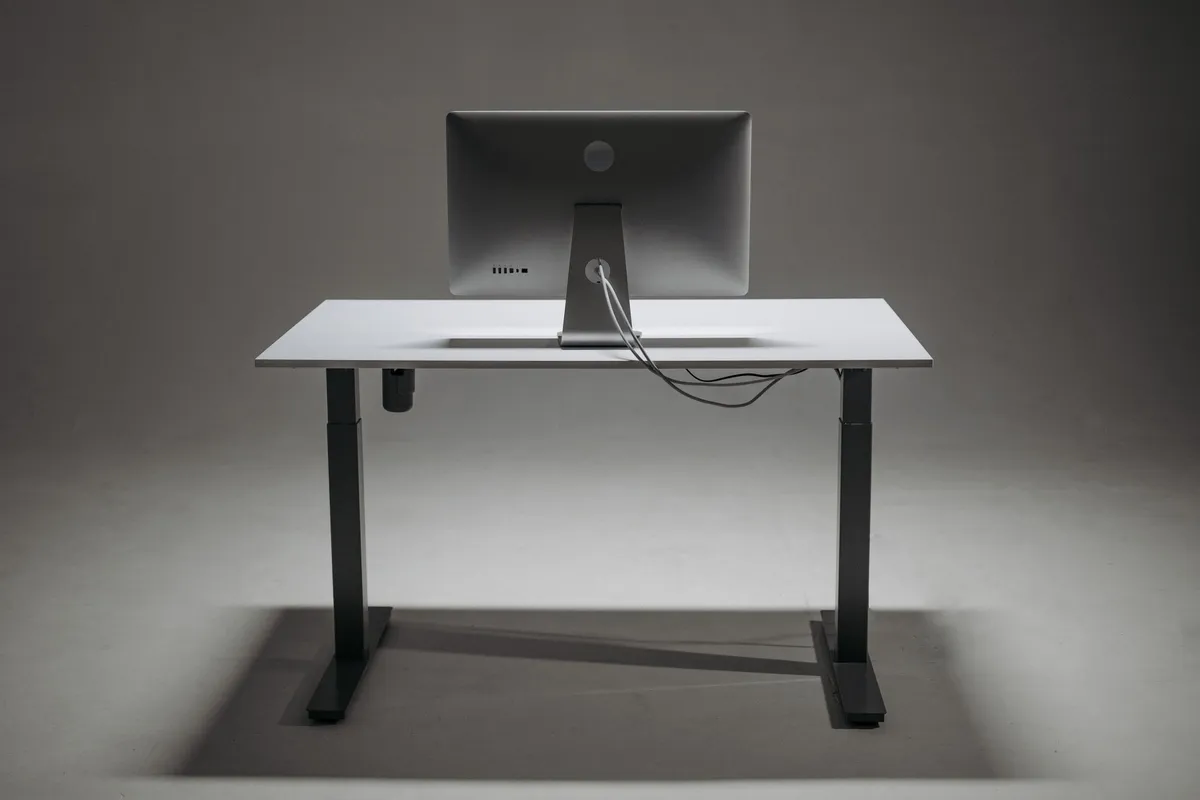
Height-adjustable desks contain motors, a control box and a power supply. Lower each desk to its minimum height before unplugging it, so the frame is compact and stable in the lift. The electrical parts are treated as electrical waste, while the steel frame and top travel with the other furniture.
Move desks through the building without damage
Desk tops and long beams are the awkward pieces in a goods lift. Measure the longest top against the lift car and door opening, then book the goods lift and loading bay for long enough to move the whole run. Older commercial buildings in Deira can have smaller lifts than newer towers, which means more trips for the same number of desks.
Protect door frames and lift walls with blankets or corner guards, and move parts on trolleys rather than dragging frames across the floor. Keep dismantled desks staged inside the office, not in the shared corridor, until the lift is ready.
What changes the cost of office desk removal
The price follows the number of desks, the time each takes to dismantle and the route to the vehicle. Bench runs with cable spines take longer per position than freestanding tables, sit-stand desks add electrical handling and a long carry or tight lift window adds time. The guide to office clearance cost covers the full-office picture when desks are only part of the job.
Office desks come out quickly when the system is identified, the power and IT are released and the dismantling order is agreed before the crew arrives. The furniture itself is the simple part; the preparation around it decides whether the job takes a morning or a full day.