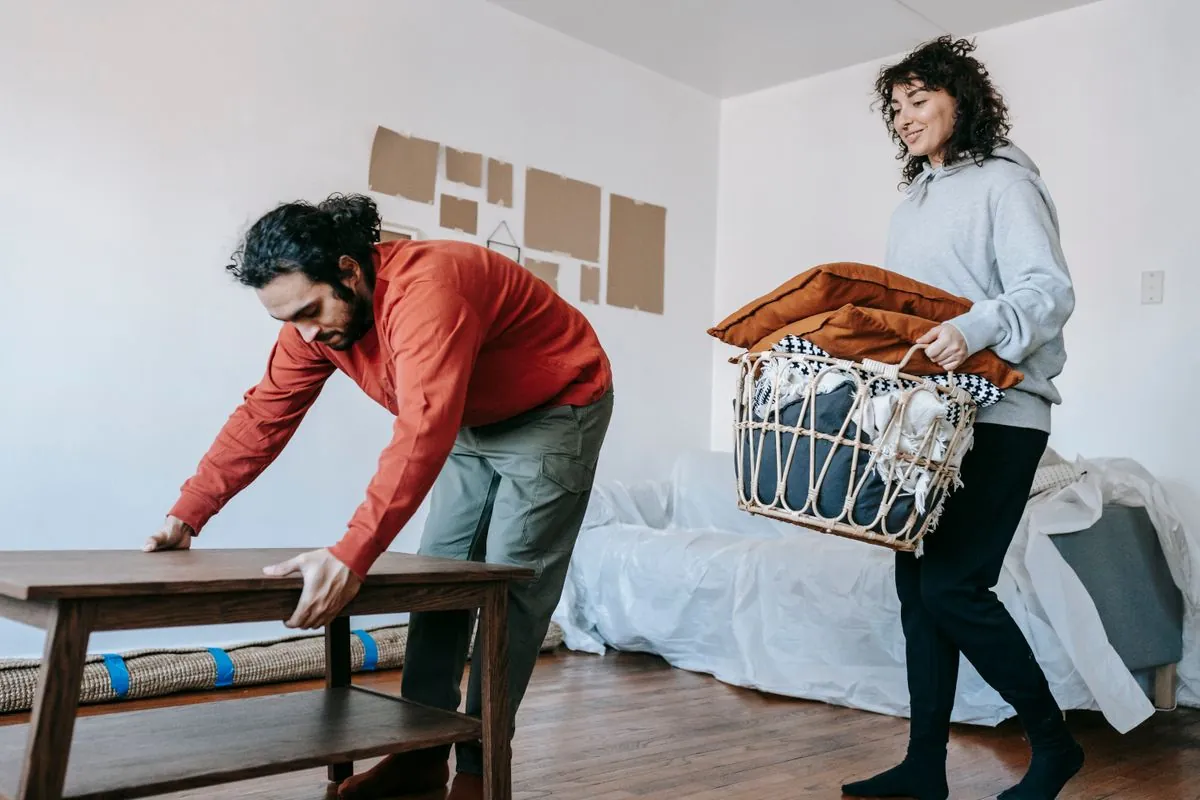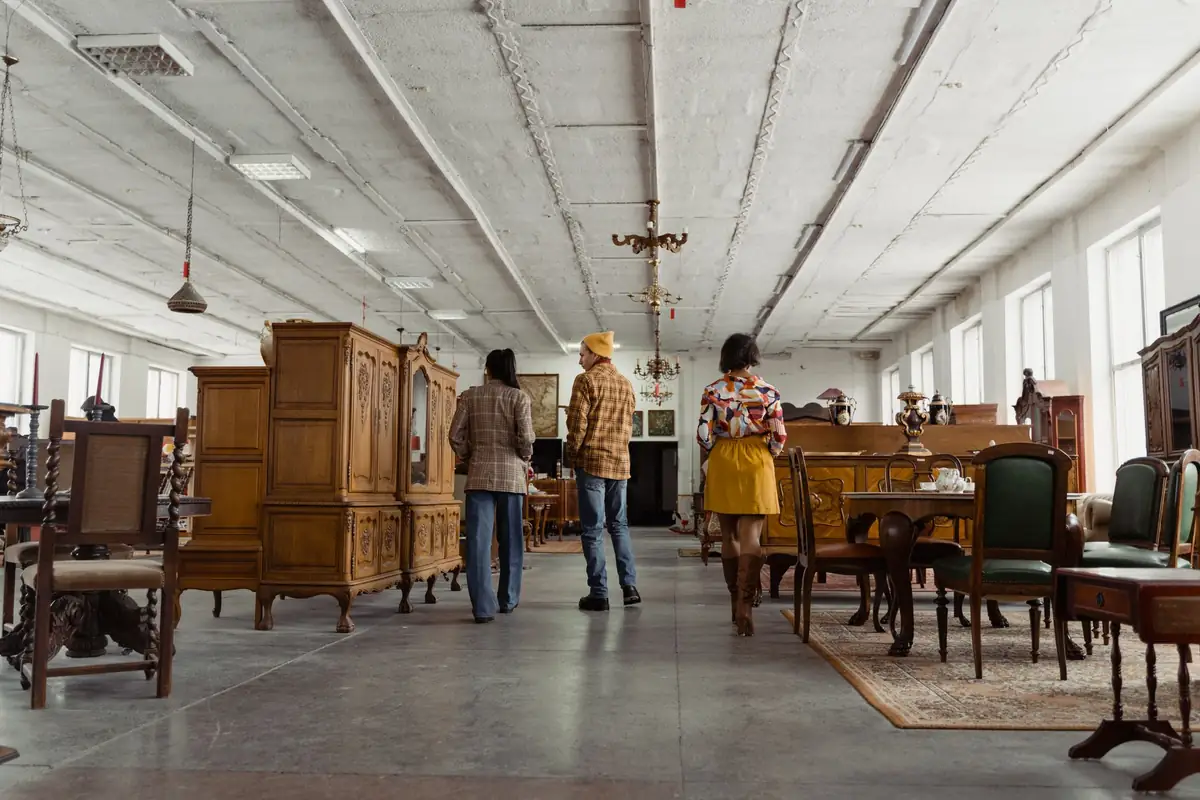
Learning how to sell used furniture in Dubai is mostly about the last hour rather than the listing. A sale is finished when a stranger reaches your building, gets past reception, fits a wardrobe into a car that was never going to take it, and carries it down with one friend. Almost everything useful you can do happens before that hour, and this guide covers those things: what to ask for it, what to put in the listing, and how a handover actually runs here. Anything that does not sell in time goes out through furniture removal in Dubai instead, which is why the deadline matters more than the price.
Price it against the buyer's alternative, not against what you paid
Nobody is buying your history with the item. A buyer is comparing your piece against what the same money buys new, plus delivery, plus not having to arrange anything with a stranger — and that comparison is the only one that sets your price.
Assembled furniture drops sharply the moment it leaves a shop and keeps drifting down while it waits for a decision. That is uncomfortable to accept and it is also the entire reason a second-hand market exists here. A realistic number is not a failure of nerve; it is the difference between selling and storing.
Two things follow from that. The price you set decides who contacts you — an ambitious one attracts people who negotiate at length and rarely arrive, while a realistic one attracts people who turn up with a vehicle. And a price that has not moved in two weeks is not a price, it is a hope. Reduce it or change the plan.
Write the listing so the questions never have to be asked
Most no-shows are not rudeness. They are people who discovered something at the last minute that would have stopped them at the start. Answer those things in the listing itself.
- Real measurements in centimetres, height first. “Large sofa” tells a buyer nothing about whether it fits their lift.
- The floor, and whether there is a lift the buyer can actually use.
- Whether it comes apart, and whether it will be apart when they arrive.
- Whether you will help carry it. Everyone wants to ask this and almost nobody does.
- The date it has to be gone by, so anyone who cannot collect before then knows now rather than later.
- Every fault, with a photograph of each. A scratch disclosed in the listing costs a little on the price; a scratch discovered at the door costs the sale.
On photographs, the shot people actually need is the boring one: the whole piece, straight on, with nothing in front of it. A styled corner-of-the-room picture sells magazines and loses furniture sales, because the buyer cannot work out the shape or the scale from it.
Marketplaces such as Dubizzle and community buy-and-sell groups are where most private furniture changes hands here, and a building's own residents' group is worth trying first for anything heavy. A neighbour two floors up is the only buyer who never has a transport problem.
Almost every private sale here is buyer-collects
Assume the buyer collects unless you have specifically offered otherwise — and understand what that actually asks of them, because it is not simply a vehicle.

- A vehicle that genuinely fits the item, which for most furniture means a pickup or a van rather than a car.
- Enough people. A buyer arriving alone for a three-seater has already failed and does not always realise it.
- Access to your building — in most towers a visitor has to be registered, parked somewhere legitimate, and directed to whichever lift the building allows goods in.
That third point is the one sellers forget, because it is invisible from inside the flat. Tell the buyer in advance where to park and what reception will ask for. A buyer circling a tower for twenty minutes with nowhere to stop is a buyer who leaves.
Decide in advance whether you will help carry it, and say so before anyone is standing in your hallway. Declining is perfectly reasonable. A buyer who expected two pairs of hands and found one will usually try to renegotiate on the spot, and at that point you are arguing about money while holding one end of a sofa.
The viewing and the handover
Agree a window rather than a day. “Sometime Saturday” is how an afternoon disappears.
- Offer a two-hour window and confirm it on the morning itself, not the night before.
- Have the item clear and accessible, and dismantled beforehand if it is going to be — not while somebody waits.
- Treat a hold as real only when something has been paid. An unpaid promise to collect on Friday is not a reason to stop replying to other people.
- Agree the payment method when you agree the price rather than at the door. Cash on collection is the norm for private furniture sales here.
Meet a buyer in the lobby rather than sending a flat number to someone you have never spoken to, and have somebody else at home for the handover if you can. This is ordinary caution rather than suspicion, and most buyers expect it.
A no-show is not a reason to take the listing down. It happens to most listings at least once, and the correct response is simply to reply to the next message.
What moves quickly and what sits
Speed is decided less by quality than by how easily an item can be taken away.
- Fast: anything one person can carry to a car — side tables, chairs, small shelving, lamps, mirrors under a metre.
- Fast: complete matched sets, because they solve a whole room in a single collection.
- Slower: sofas and beds, which need real transport and are the pieces buyers are fussiest about.
- Slowest: wardrobes and anything tall, because a buyer has to match it to a specific wall and then get it there.
Two things speed almost anything up. Being genuinely available at short notice matters more than most sellers expect, because a buyer with a van booked for Saturday is buying from whoever can hand something over on Saturday. And an item you are willing to take apart moves out of the slowest group entirely, since the transport problem is usually what stopped it.
Selling a whole apartment when you are leaving
A large share of used furniture here changes hands because somebody is leaving the country, and selling a flat's entire contents is a different exercise from selling one sofa.

There are two approaches and most people end up using both. Listing item by item returns the best total and takes the longest. Offering the remainder to one buyer as a lot is faster and far more certain, and it is usually the right answer for whatever is still there in the final fortnight.
The order things sell in is predictable enough to plan around: small and carryable first, then anything that solves a whole room, then the large pieces. The last three items in almost every flat sale are the wardrobe, the bed and whatever is in the store room, because each one needs a vehicle, two people and a decision from somebody who has not made it yet.
Whatever has not gone by then is a collection rather than a sale, and that is much easier to accept a week early than on handover morning.
The parts of selling used furniture that people put effort into — the wording, the styled photograph, the negotiation — matter far less than the parts they skip. Honest measurements, a full fault list, clear instructions for getting into the building, and a decision made in advance about who carries it down. Get those four right and most items sell to the first person who turns up. Get them wrong and the same item sits through four no-shows and leaves on a truck anyway.