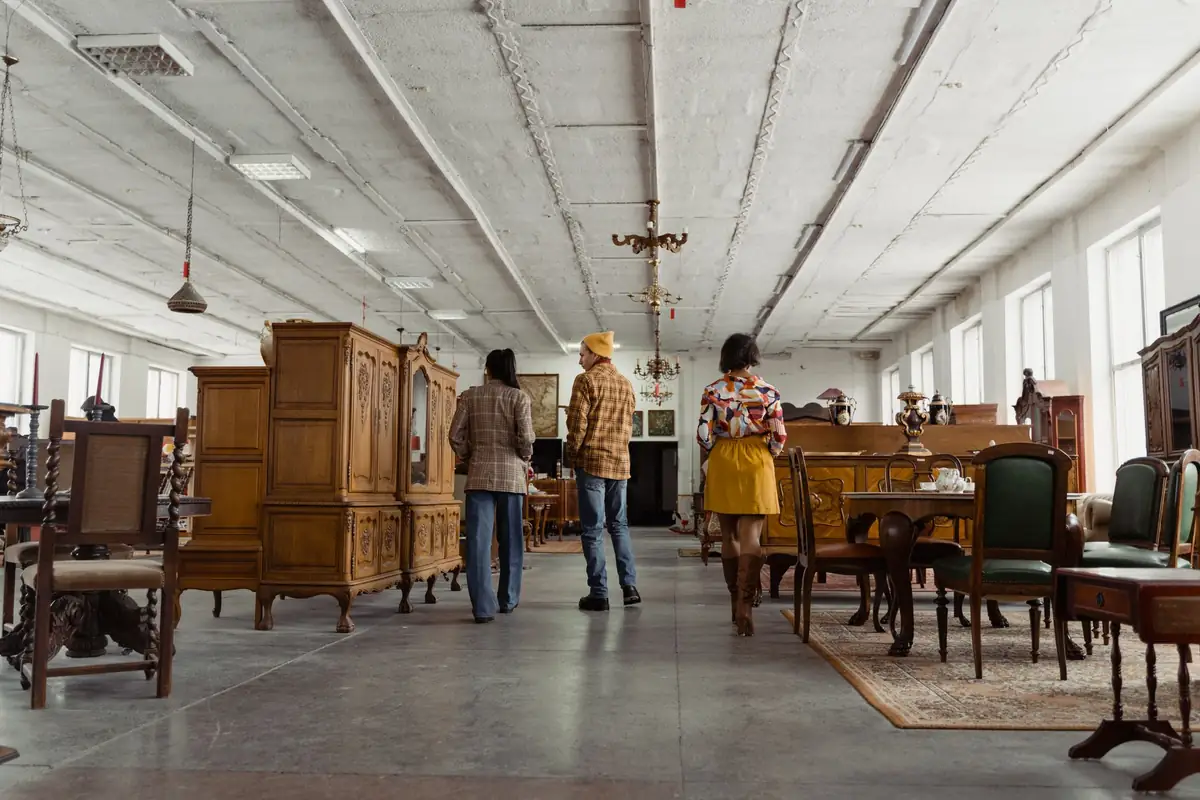
Selling, donating and disposing of old furniture are usually presented as a ranking, with selling at the top and disposal as the admission of defeat. They are not a ranking. They are three routes that ask for different things, and the one that actually works for you is decided less by what the item is worth than by how many days you have left. This guide compares them on the things that genuinely differ, then works backwards from a moving date to a plan you can hold to.
Sell, donate or dispose: the three routes side by side
Four things separate the routes, and price is not the most important of them.
- Selling. Needs an item people currently want, in condition good enough to photograph honestly. The buyer usually collects. Takes anywhere from two days to never, and the outcome is uncertain until somebody actually turns up.
- Donating or giving away. Needs an item that is clean, complete and safe to use, but not fashionable. Transport is usually on you rather than on the recipient. Takes longer than people expect, because it depends on someone else's schedule as well as yours.
- Booking a collection. Needs nothing from the item at all — broken, part-dismantled and unfashionable are all fine. The crew comes to you and carries it out. It costs money, and it is the only one of the three with a date you can rely on.
Read that list again with certainty in mind rather than cost. Two of the three routes depend on a stranger doing something by a particular day, and neither of them lets you insist on it. That is the trade-off the whole decision turns on.
What each route asks of the item
Be honest about condition early, because an overestimate here costs weeks. The test is not whether the piece still works — it is whether somebody who has never seen it would choose it over the alternatives available to them on the same day.
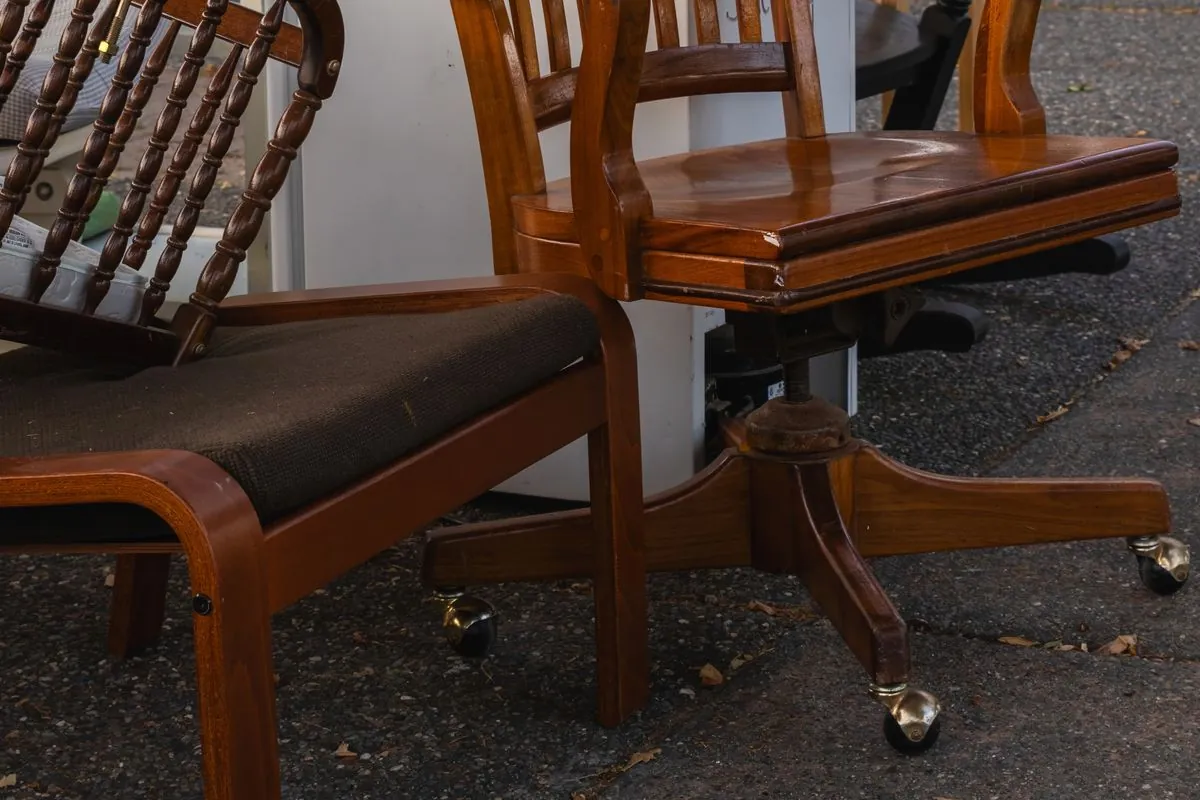
Selling has the highest bar, and it is style as much as condition. A solid wood dining table with a few marks sells. A faultless wardrobe in a colour nobody is buying does not. Anything that was inexpensive when new has almost no resale life once it has been assembled and used, whatever state it is in.
Giving away sits lower and behaves differently. Recipients tend to be forgiving about appearance and unforgiving about completeness and safety — a sofa with a faded arm is fine, a bed with two slats missing is not, and items whose history matters, like used mattresses and children's safety equipment, are declined almost everywhere.
Disposal asks nothing. That sounds like the least interesting fact on the page, and it is actually the most useful one: it is the only route that cannot fail because of the item, so it is the only route that can safely be the backstop behind the other two.
Who actually has to move it
This is the axis people leave out of the comparison, and in a city of towers with service lifts and booked loading bays it is often the one that settles the argument.

When you sell, the buyer normally collects, which is the quiet advantage of selling that has nothing to do with the money. You still have to be at home for it, though, and you may still have to help carry a two-seater down to a car park.
When you give something away, the moving is usually yours to arrange, which is why a wardrobe is a transport question before it is a generous one. When you book a collection, the carrying, the lift and the stairs are all somebody else's problem — that is most of what you are paying for.
Add your own time to the comparison honestly. An afternoon at home waiting for a buyer, an evening spent wrapping a chair, and a van hired for one trip are real costs even when no money changes hands. Weigh those against a fixed price for someone else doing all of it, and the free routes are less free than they look.
Work backwards from your date
Most people run all three routes in sequence without ever deciding to: list it, wait, drop the price, offer it free, then book a collection in a panic the week the tenancy ends. The sequence is not the problem. Discovering it halfway through is.
Run it deliberately instead. Take your handover date, work backwards, and give each route a window with a fixed end.
- Six weeks out: decide which pieces are genuinely sellable and which are not, and only list those. Everything else skips straight to the next step.
- Four weeks out: anything unsold moves to given away. This is also the point to start any conversations that need somebody else's calendar, because those are the ones that stretch.
- Two weeks out: stop. Whatever has not gone is now a collection, and count it properly — including the balcony, the store room and the maid's room.
- One week out: have the collection booked with a confirmed slot, and the service lift reserved with building management if your tower needs it.
The dates matter less than the fact that each stage has an end. A listing with no expiry date is how a sofa ends up still in the living room on handover morning, at which point there is no choice left to make and no time to make it in.
One local detail worth planning around: the weeks around the end of a school year are the busiest time of the year for both second-hand furniture and clearances here. Buyers are plentiful then, which helps the selling route — and collection slots fill up faster, which hurts the fallback. Book earlier than feels necessary in that window.
Which route suits which item
A quick sort, so a full apartment does not have to be reasoned through piece by piece.
- Sell: solid wood dining tables and sideboards, sofas from recognised brands in good condition, complete matched sets, and anything still boxed and unassembled.
- Give away: sound but unfashionable pieces, single armchairs, desks, bookshelves, and complete children's furniture other than cots and safety equipment.
- Book a collection: anything broken or unstable, faced-board units that have already been assembled, used mattresses, wet or sun-damaged items, and — this one is the most common — everything left over on the last weekend.
Mixed loads are normal and it is worth saying so when you ask for a price. A single collection that takes the wardrobe, the broken chair and four boxes of things nobody wanted is almost always cheaper than treating each of them as its own small problem.
Between the three routes there is no morally correct answer, only a practical one. Sell what people are actually buying, offer what is sound but unfashionable to somebody who can use it, and book the rest without treating that as a failure — a piece that leaves in one clean visit is a better outcome than one that sits in a spare room for six months waiting for a buyer who was never coming.