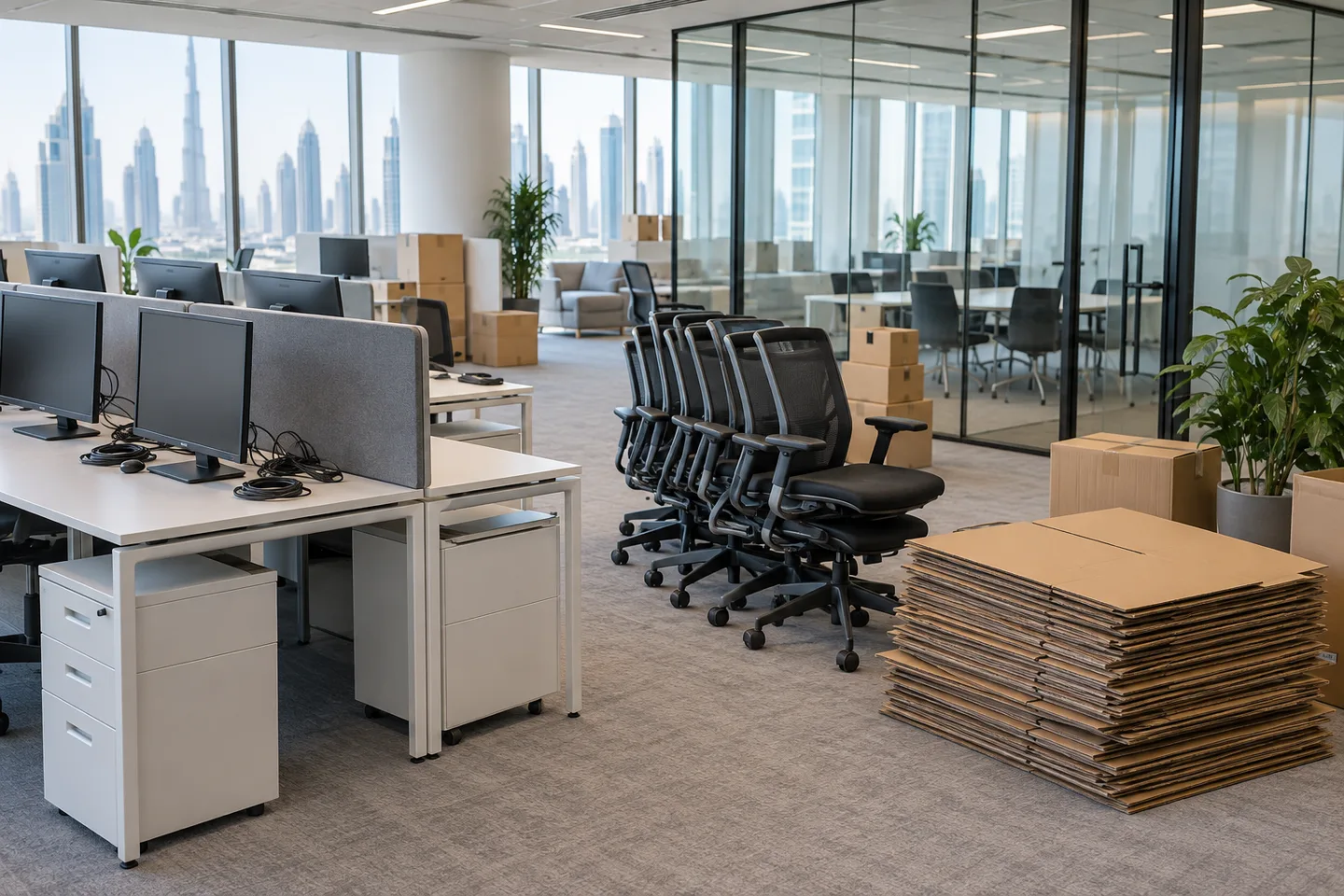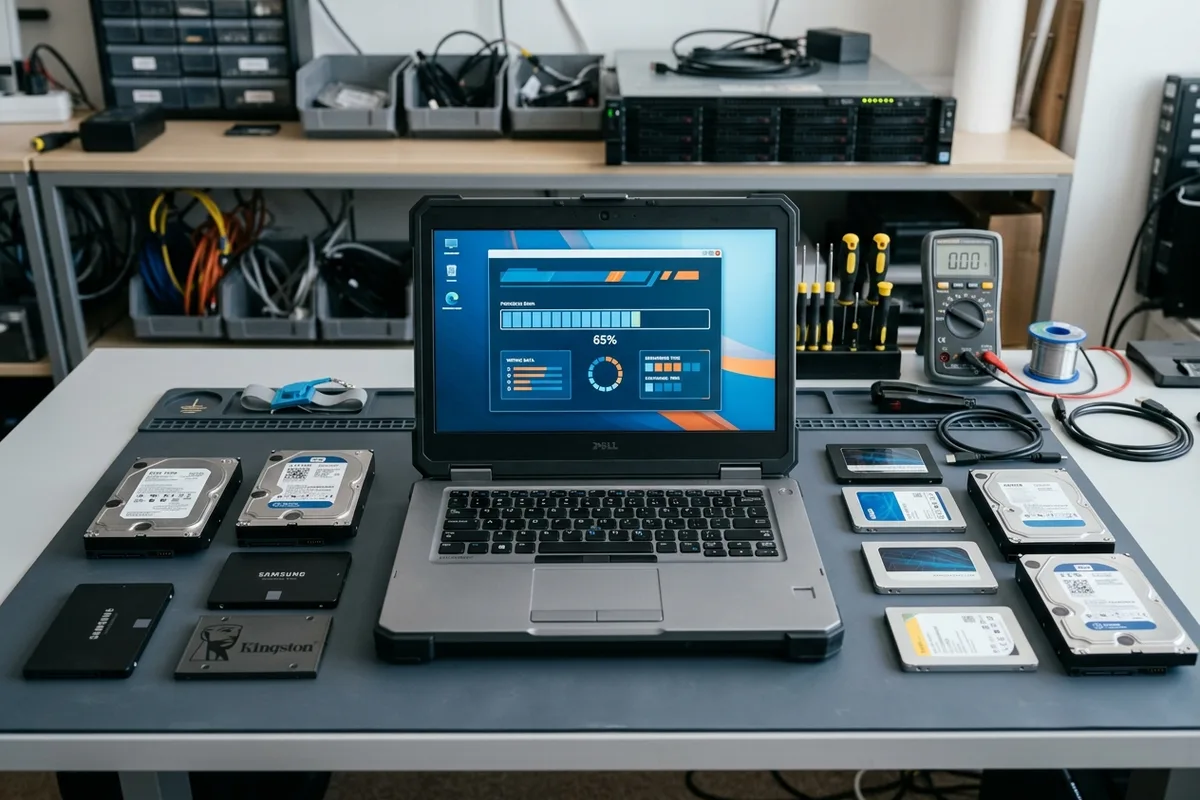
Office clearance in Dubai should begin with an inventory of workstations, shared rooms and assets that do not belong in the removal load. Desks and chairs may be simple furniture removal, but computers, records, leased devices and fitted elements need different decisions. Map those decisions before anyone dismantles a desk or empties a cabinet.
Define what an office clearance includes
An office clearance can cover the whole occupied workspace or a named group of rooms, but the scope must say which. The tenancy boundary, furniture ownership and final condition are separate questions. Emptying loose business contents does not automatically include removing partitions, cabling, fixed counters or other fitted work.
- Workstations: desks, task chairs, pedestals, screens, docks and accessories.
- Shared spaces: meeting rooms, reception, print areas, stores and the pantry.
- Controlled contents: records, computers, storage devices and access-control equipment.
- Property items: fitted partitions, floor boxes, wall-mounted screens and landlord-provided furniture.
Name each included room and identify property or contractor work as an exclusion unless separately agreed. This prevents a loose-furniture instruction from turning into an improvised strip-out. If the office is only partly closing, also name the occupied zones that must remain untouched.
Build the inventory by workstation and shared room
A workstation is a useful inventory unit because its parts belong together. Count the desk, chair and pedestal, then list the monitor, dock, power supply and other accessories according to their destination. Repeating that pattern across the floor is more reliable than counting all chairs first and all cables later.
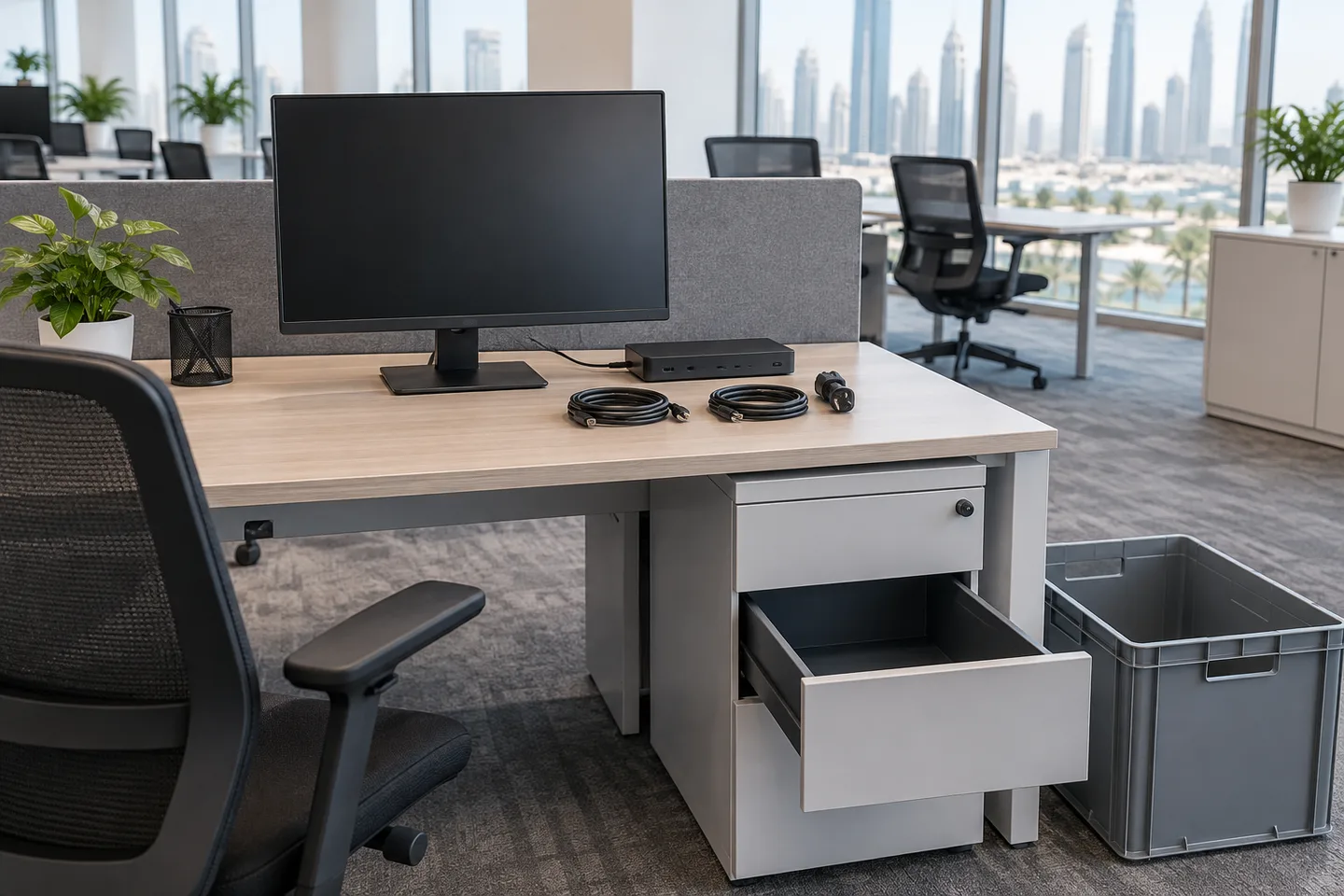
Open every pedestal and cupboard while the people who understand the office can still review the contents. Remove keys, staff belongings, petty cash, identity cards and records before the furniture enters the outgoing group. An empty-looking desk can still have equipment fixed beneath the top or a dock left behind the monitor.
Use counts for repeated furniture and individual descriptions for exceptions. Twenty matching task chairs can be one line; a boardroom table with power modules or a damaged reception counter needs its own photograph and handling decision.
Release records and IT through their own controls
Records and data-bearing devices should not be released merely because the office is closing. The responsible business function must decide what is retained, transferred or approved for destruction. The collection crew can follow a confirmed instruction, but should not decide whether a drive is blank or whether a file has reached the end of its retention period.
Keep approved electronic equipment identifiable and use the e-waste collection route agreed for the job. Record serial numbers or asset tags only if the business requires that control, and complete the record before loading. The separate guide to wiping data before disposing of electronics covers the user-side preparation without substituting for the organisation's own policy.
Match the office plan to the building route
For an office in DIFC, confirm the route the building has approved rather than assuming the passenger lobby is available. The facilities contact should identify crew registration, the goods lift, loading access, protective requirements and the working window that applies to the premises.
Walk from the furthest included room to the loading point. Door closers, access-controlled zones and lift transfers can slow a repeated route even when every item fits. Measure exceptional furniture and ask who can release doors or call lifts during the booked period.
Stage the load inside the office in the order agreed with the crew. Shared corridors and lift lobbies are circulation space, not overflow storage. A clear internal aisle also lets the authorised contact see which workstations have been checked and which still contain retained assets.
Clear an occupied office in controlled zones
If staff are still working, release complete zones rather than individual items scattered across the floor. A closed meeting room or vacated bank of desks gives the crew a defined working area. It also reduces the chance that an active chair or connected screen joins the load because it resembles the approved furniture beside it.
Tell staff when their zone becomes unavailable and where they should place personal belongings. Keep cleaning, IT disconnection and removal in an agreed order. A cleaner cannot finish a floor beneath desks that have not moved, while a removal crew should not wait for each computer to be released one at a time.
Finish with an office handover record
Walk the included rooms after loading with the inventory in hand. Confirm removed groups, exceptions, retained property items and any asset that followed a separate recipient. Photographing an empty room does not prove that every device took the correct route, so keep the item record and room check together.
A successful office clearance is controlled, not merely empty. When every workstation and shared room has a named instruction, IT and records have released their own assets, and the final walk matches the inventory, the premises can move to its next handover step without unresolved contents hidden in the result.