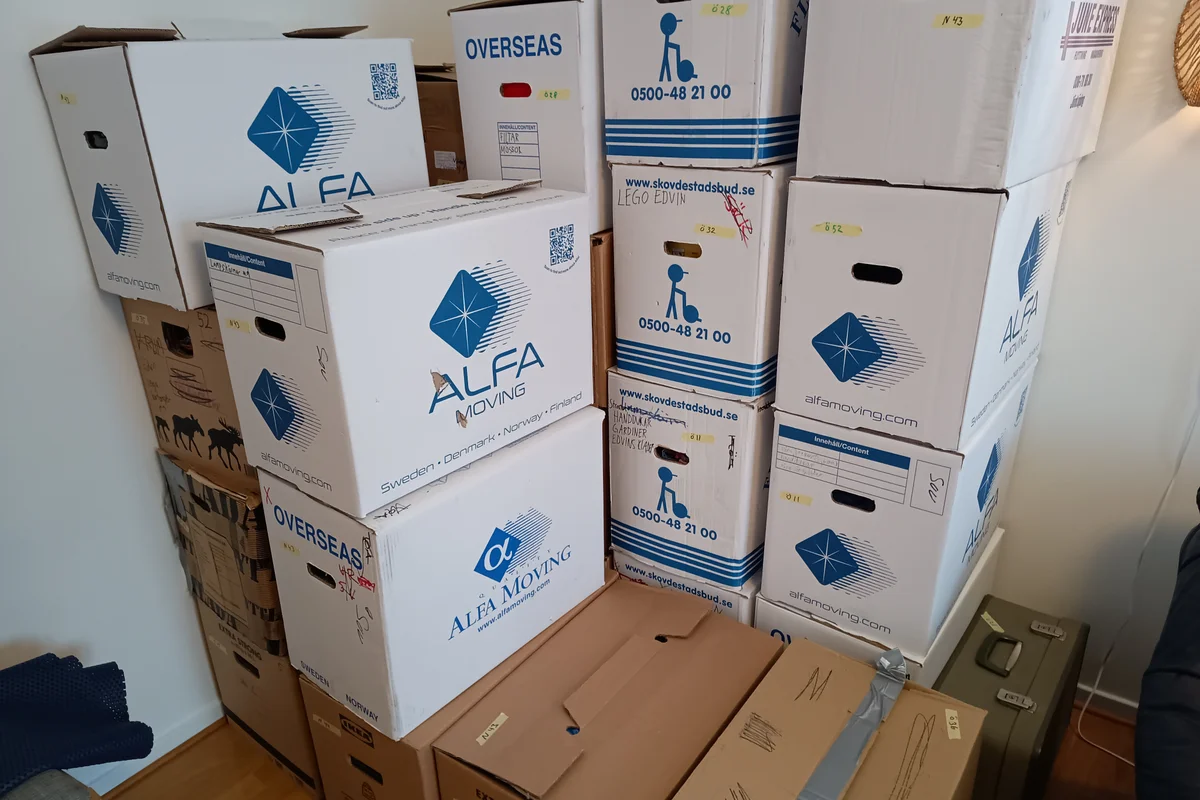
Office relocation junk removal in Dubai should happen before the moving crew packs surplus into the new workplace. Give every asset a destination: new office, another recipient, return route, removal load or decision hold. Book furniture removal for the approved surplus only after that destination map is stable enough to guide both vendors.
Decide the destination before packing starts
A relocation creates two different jobs in the same rooms. The mover protects and delivers assets that remain useful to the business; the removal operator takes items the business has decided not to move. The guide to junk removal versus a moving company explains that destination distinction in general, while this plan applies it to an office cutover.
- Move: assets with an assigned place and owner at the new office.
- Transfer: items going to storage, another branch, a buyer or another approved recipient.
- Return: landlord, supplier or leased assets following their own handover process.
- Remove: approved surplus, obsolete furniture, packaging and other accepted contents.
- Hold: anything without a confirmed owner, destination or release decision.
Apply the decision to complete groups. A desk marked to move is incomplete if its pedestal, power lead or monitor arm enters another stream by accident. Keep accessories with the asset until the responsible team decides whether the destination needs them.
Use the new office plan to identify surplus
Surplus is determined by the destination office, not by how much furniture the old office owns. Compare the new workstation count, room sizes, storage provision and supplied furniture with the current inventory. A sound desk may still be surplus if the new floor has fitted workstations or a different layout.
Measure exceptional furniture against the new route and final position before allocating it to the move. Do not pay to dismantle, transport and reassemble a boardroom table only to discover that the destination room or goods lift cannot accept it. Keep uncertain pieces on hold until facilities and the mover confirm the fit.
Create move, remove and hold zones
Visual separation reduces wrong-destination errors during a busy cutover. Use an agreed colour system, room map or physically separate areas, and make sure both crews receive the same key. A sticker without a shared instruction is decoration, not control.
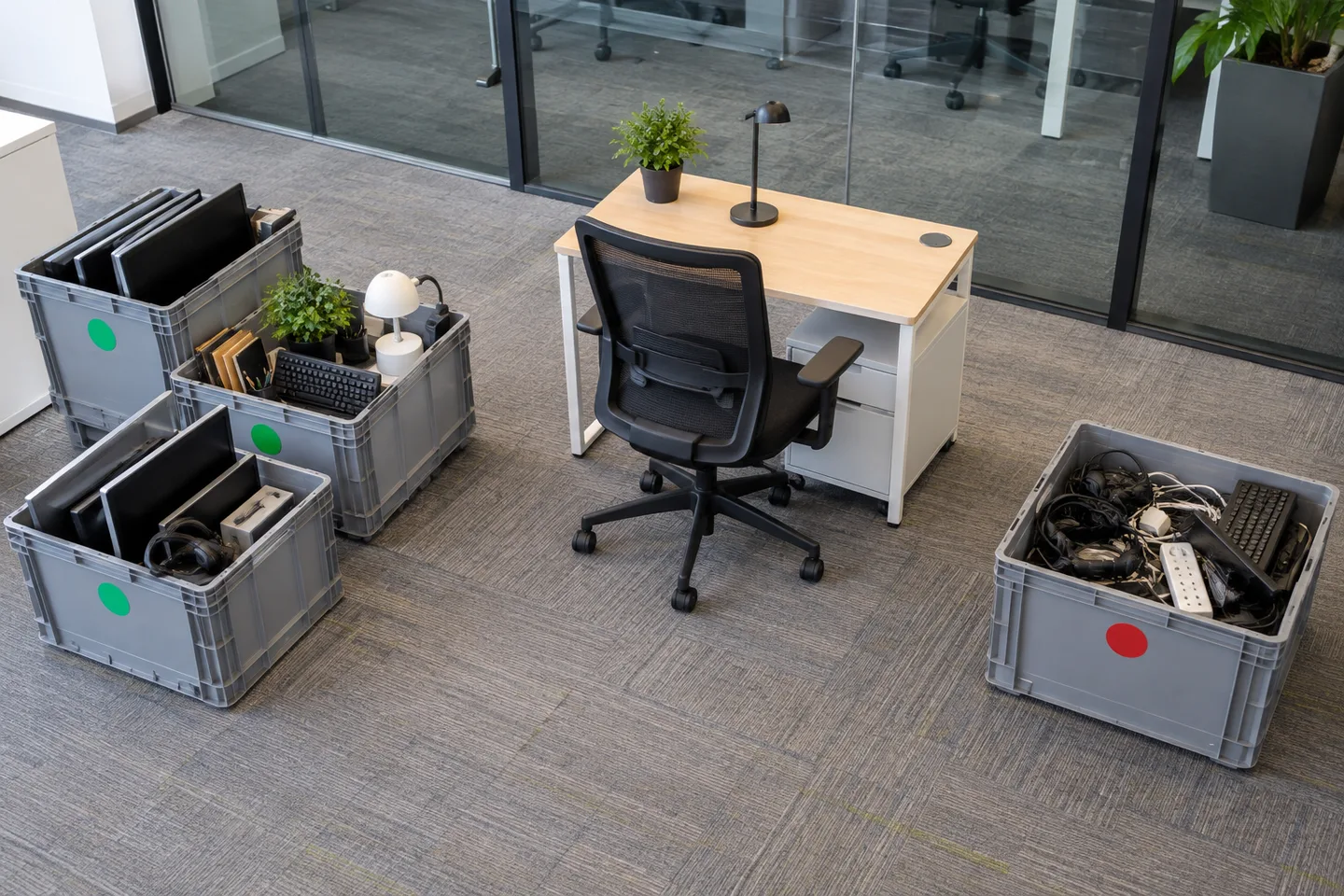
Place the hold zone away from both loading routes. If a manager is still deciding about spare monitors or chairs, those items should not sit between the mover's crates and the removal load. Record who must decide and the last time that decision can be made without disrupting the schedule.
Remove surplus in phases around the cutover
The safest early removal phase covers items that no team needs for the final working days: broken spare chairs, archived packaging approved to leave, redundant loose furniture and already-released equipment. This creates packing space without disabling live workstations.
- Approve and remove obvious surplus before relocation packing begins.
- Keep live workstations intact until IT and department owners release them.
- Let the mover load destination assets from completed zones.
- Run a final residual collection after the move reveals forgotten packaging and approved leftovers.
A final residual collection should be planned, not treated as evidence that the first visit failed. The move can expose cable boxes, damaged crates or pieces the destination declined. Define the types it may include and keep the old-office access available until the check is complete.
Protect the working day and the new-office start
Do not clear shared items before their replacement is ready. Pantry appliances, visitor chairs, printers and meeting-room screens may support the final days in the old office even when they will not move. Assign a release time rather than relying only on a move or remove label.
In JLT, the old and new towers may have different goods-lift and loading arrangements. Confirm each building separately and do not let a delay at one address consume the other address's window. The mover and removal operator need their own arrival points, contacts and permitted working periods.
Keep data-bearing devices under the IT release process. If approved devices are not moving, route them through the agreed e-waste disposal service after backup, account and data decisions are complete. A relocation deadline does not remove those controls.
Close the old office against the destination map
After both crews leave, check the old office room by room and compare the result with the destination map. Confirm that moved assets reached the mover, transferred assets reached their separate recipient, return items remain protected and removal items left under the approved instruction.
Office relocation junk removal is successful when it reduces what the business transports without creating uncertainty at either address. Decide destinations from the new-office plan, clear safe surplus early, preserve live operations until release and reserve time for the final residual check.