A desk sounds like the easiest furniture collection there is. A flat top, four legs, out of the door. In practice it is one of the slowest single items in a home, and almost none of that time is spent carrying anything. This is about desks in apartments, bedrooms, studies and spare rooms — a floor of workstations in an office is a different kind of job with a different kind of schedule.
Why a desk takes longer than it looks
A desk is the one piece of furniture in a home that things get attached to. Over a couple of years a plain top acquires a monitor arm bolted through it, a power strip taped underneath, a cable tray screwed to the frame and a drawer unit tucked below. Every one of those has to come off before the desk itself moves, and each takes longer than lifting the desk would.
The desk is also nearly always against a wall, under a window or wedged into a corner, so there is no working space on three of its four sides until it is pulled out. Allow for that when you picture the job: the first ten minutes are spent making room to work rather than working.
Everything under the desk comes first

Unplug and coil everything before the day, and take the cables off the desk rather than leaving them clipped to it. Cables left attached snag on door frames, and a trailing extension lead is the most common way a desk arrives at the lift with a chunk of skirting board still attached to it.
The router, the power strips and the plug-in adaptors are worth separating at this point too, because they are electrical items rather than furniture. If they are going as well, they leave as electronics and not as part of the desk — say so when you book so both are accounted for.
What is bolted to the top
Monitor arms are the usual surprise. A clamped arm grips the rear edge of the top and comes off in a minute; a grommet-mounted one passes through a drilled hole and has a plate underneath that has to be reached from below. Both are removed before the desk moves, because an arm left on turns the desk into an awkward shape that cannot be stood on its end.
The same applies to anything else fixed to the surface: cable trays, under-desk drawers, laptop mounts, a pegboard screwed to the back edge, or a lamp with a table clamp. If it does not come off, it decides how the desk travels.
Sit-stand desks are electrical items
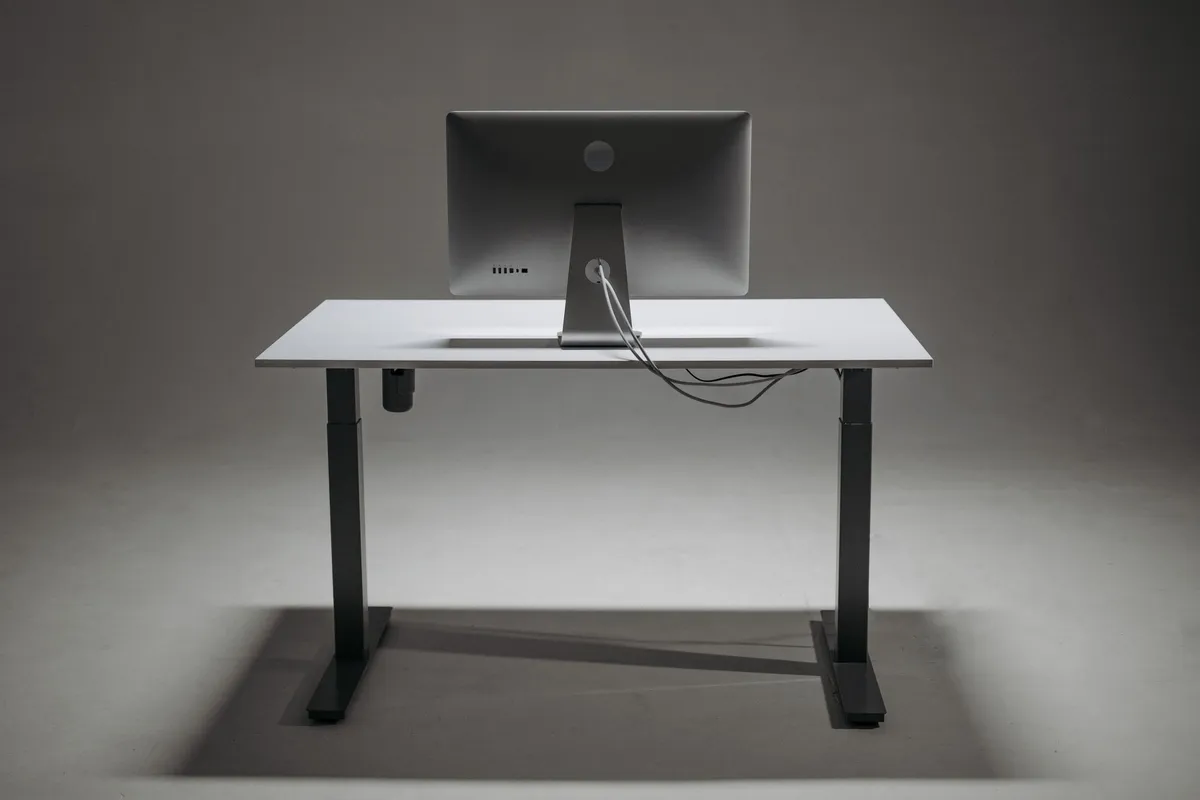
A motorised height-adjustable desk is two things at once. The top is furniture. The frame contains a motor in each column, a control box under the top and a handset on a data cable, and those are handled as electrical waste rather than timber. It matters because the two go to different places once they leave your flat.
Lower the desk fully before the day. A frame left at standing height is top-heavy, harder to tip and considerably more likely to catch a door frame on the way out. Keep the handset with the frame rather than in a drawer — a sit-stand desk without its controller is unsellable and much less likely to be reused.
Pedestals, corner desks and desks that are two pieces
A drawer pedestal is a separate item, whether or not it rolls. Empty it, and say when booking whether it is going with the desk or staying — a pedestal full of paper is heavy enough to change how the desk is loaded.
L-shaped and corner desks are two tops joined by a bracket, and they come apart at that joint rather than travelling as one shape. This is usually good news: a corner desk that looks impossible to get out of a small bedroom is generally two ordinary desk tops once the bracket is undone.
Desks that are part of the room
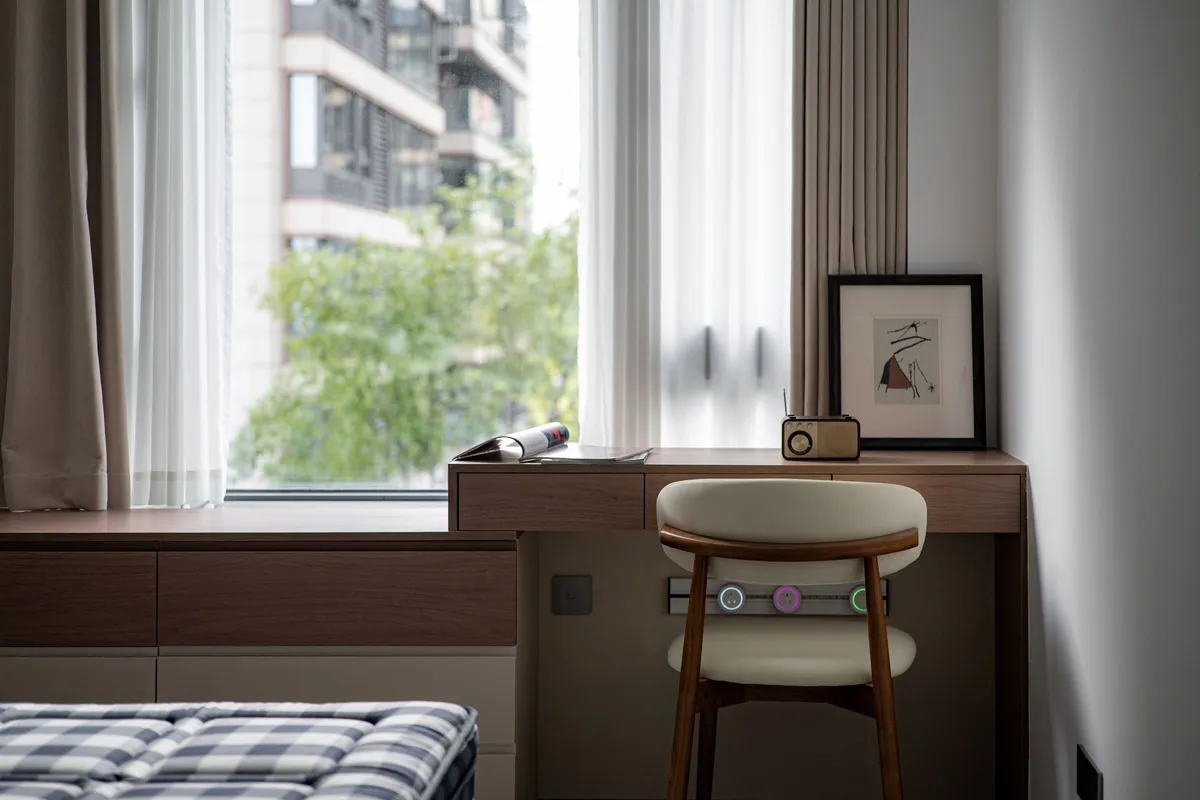
Built-in study desks are common in apartments here, particularly as a continuous run under a bedroom window that carries on into drawers or a dressing unit. These are not collections but small strip-outs: the run is fixed to the wall, shares panels with the units beside it, and leaves fixings and bare wall behind.
In a furnished let, a built-in desk is part of the property rather than part of your contents, so it is agreed with the landlord or the agent before anything is unscrewed. Check the join where the desk meets the wall — a finished end panel and a visible gap behind means freestanding; a scribed edge sitting tight to the plaster means fixed.
Before the crew arrives
- Back up and wipe anything with storage in it before it leaves the flat — a computer or drive is dealt with separately from the desk, never as part of it.
- Unplug everything, coil the cables and take them off the desk frame.
- Empty the drawers and the pedestal, including the shallow one under the top that usually holds pens and old chargers.
- Take off clamped monitor arms, lamps and anything screwed to the surface, and bag the fixings.
- Lower a sit-stand desk to its minimum height and keep the handset with it.
Done in advance, that list turns a desk into what people assume it already is — a top, a frame and ten minutes. Left until the crew is standing in the room, it is the reason a small job runs long.
The honest summary is that nobody struggles with the weight of a desk. What catches people out is the monitor arm nobody thought about, the cable tray screwed to the underside, and the moment somebody realises the desk is fixed to the wall rather than standing against it. Spend a quarter of an hour underneath yours before you book, and there is very little left for the day itself to go wrong with.