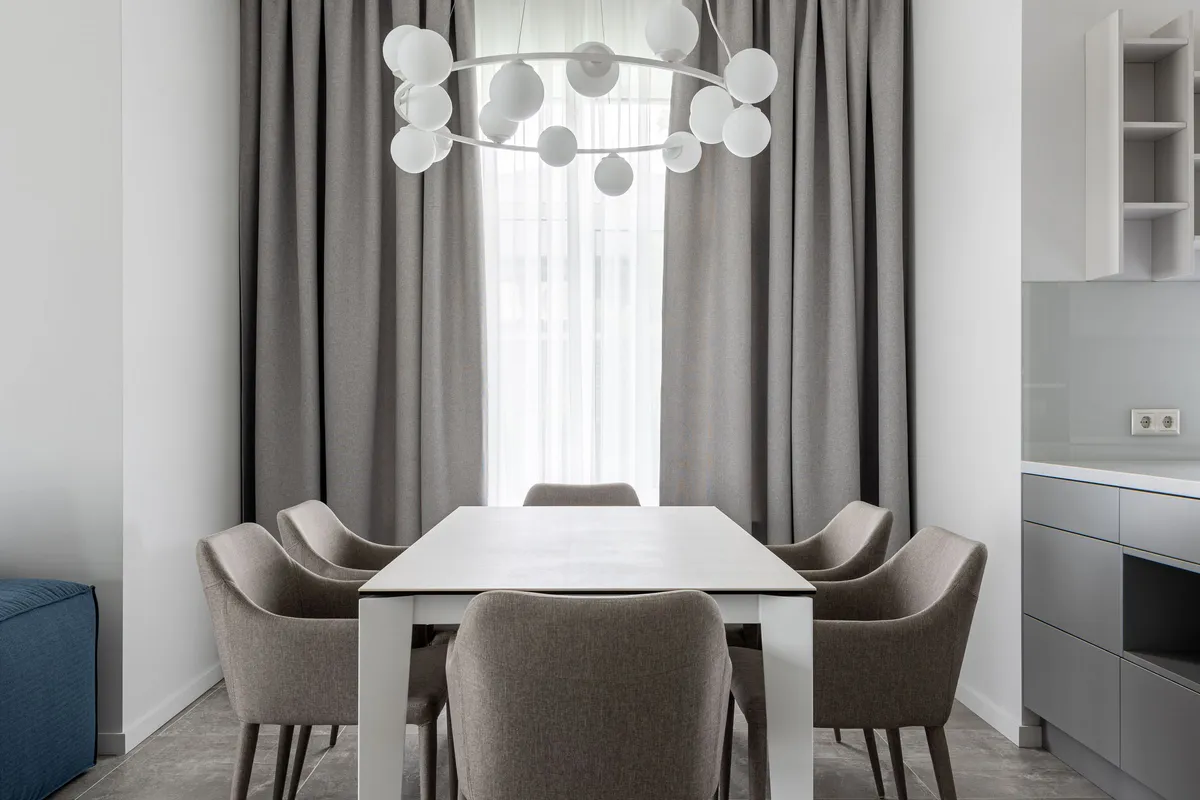
Dining tables are the item people most often underestimate when they book a collection, and the reason is that a table looks like one object. It is usually two: a top, and a base that carries it. What the top is made of decides how many people are needed and how carefully the crew has to work, and that matters far more than whether the table seats four or eight.
A table is a top and a base, and they leave separately
On almost every dining table, the top lifts off the base once a handful of fixings underneath are released. That is not a shortcut — it is how the table was delivered and assembled in the first place, and it is the only way most tables get back out of a room they were built in.
The practical consequence is that the table's footprint is not the number that matters. A separated top travels on its edge, so its thickness and width against a doorway is what counts. A base folds down into something much smaller than it looks. A table that clearly will not fit through the door in one piece will usually leave without any difficulty in two.
What the top is made of changes the job
This is the single detail worth getting right before anyone quotes on a table. Four materials cover nearly everything in a Dubai apartment or villa, and they behave nothing alike.
Glass tops
Glass is not especially heavy but it is unforgiving. A tempered glass top is safe to carry flat or on its edge and dangerous to twist, because it fails all at once rather than chipping. It comes off first, travels on its own with the faces protected, and is never stacked under anything. If your table has a glass top, say so when booking — it is the detail most likely to change the number of people who turn up.
Stone, marble and sintered tops
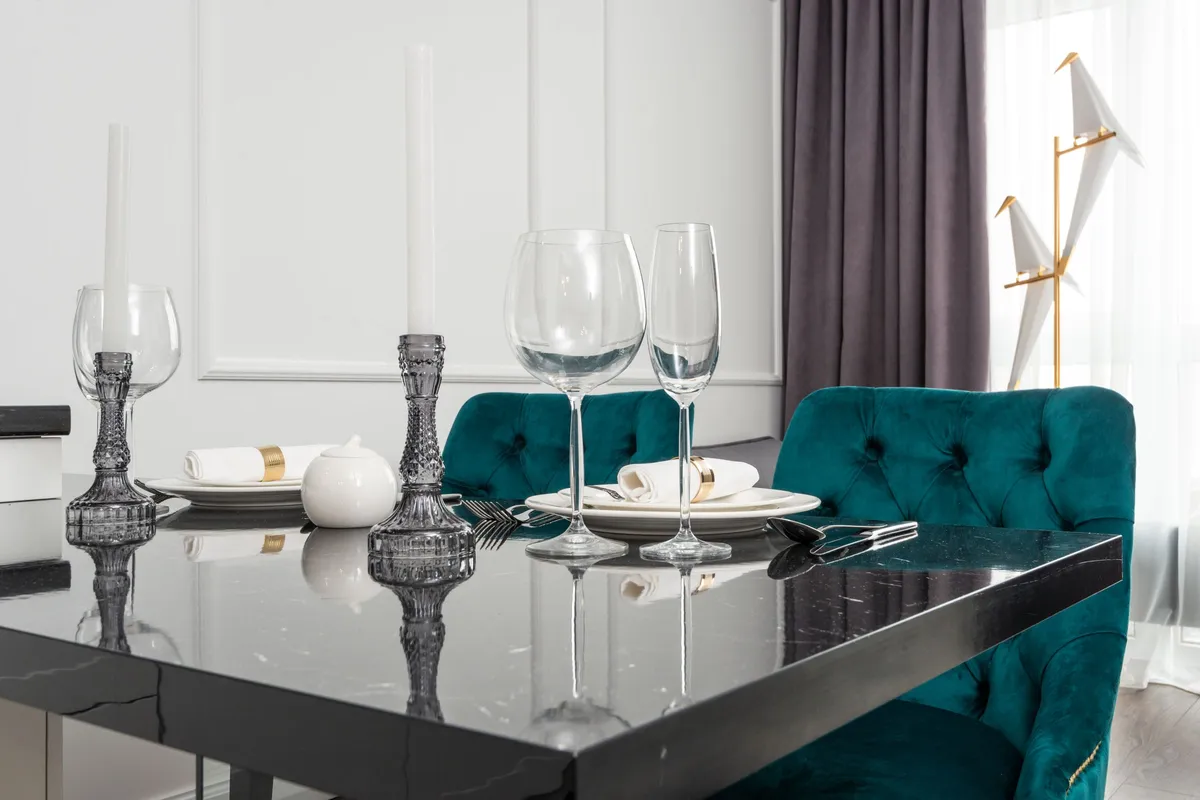
Stone is the heaviest thing in most dining rooms and the reason a two-person job sometimes needs four. Marble, granite and sintered stone tops are carried vertically and never laid flat on an unsupported surface, because an unsupported slab cracks under its own weight. They also cannot be leaned casually against a wall while a door is opened. Assume a stone table takes longer, and assume it needs the lift rather than the stairs.
Solid wood tops
Heavy, forgiving and the most likely to be worth passing on rather than disposing of. Solid wood tops handle being carried on edge, take a knock without failing, and separate cleanly from the base. A large solid top may still need two people simply because of its span.
Veneered and laminate tops
Light and easy to move, and the most likely to be damaged in a way that ends their life. The core is board, so a knocked corner exposes the material underneath and a soaked edge swells permanently. These come out quickly, but they are also the tops least likely to survive being sold on.
Bases, pedestals and legs
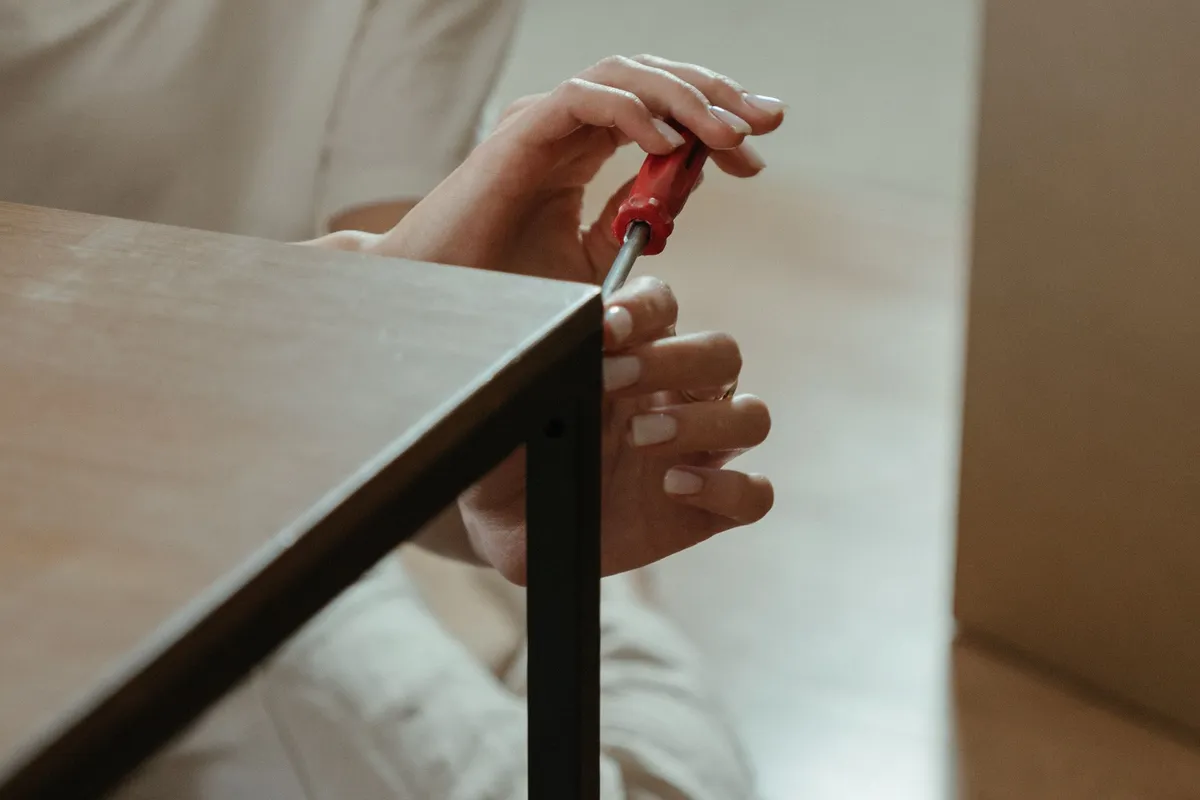
Four-leg tables are the simplest — the legs unbolt from corner brackets and the whole thing reduces to a top and a bundle. Trestle and A-frame bases separate into two ends and a stretcher. Pedestal tables are the awkward ones, because a single central column is often bolted through from above and cannot be reached until the top is already off and face down.
One thing worth doing yourself before the day: check underneath for a plate of screws in the middle of the frame. If it is there, the top lifts. If there is nothing but a continuous welded frame, the table is a single unit and needs to be measured against the door as it stands.
Extending tables and the missing leaf
Extending tables come apart further than fixed ones, which is helpful, but they carry a small trap. The extra leaf is often stored somewhere other than the dining room — on top of a wardrobe, behind a bedroom door, in a storeroom or under a bed — and it is regularly forgotten on collection day.
Find it before the crew arrives and stand it against the table. A table handed over without its leaf is worth noticeably less to anyone buying it second-hand, and the leaf on its own is worth nothing at all.
Getting a table out of an apartment
Once the top is off, the constraint stops being the room and becomes the lift. A dining table top is a large flat panel, and a large flat panel goes into a lift car diagonally or not at all. That is why the depth of the lift car matters more than its width, and why a service lift with a high ceiling is worth booking even when the passenger lift looks big enough.
Villas are easier in every respect that involves distance, since the vehicle parks near the door and there is no lift to reserve. What they add instead is size: villa dining tables tend to be longer, often stone or thick solid wood, and frequently paired with eight or ten chairs rather than four.
The chairs, briefly
Chairs are counted separately from the table, because they take up space on the vehicle in a way the table does not. Six upholstered dining chairs occupy roughly as much room as the table they sit around, and they cannot be nested unless they were designed to stack.
Whether the chairs are going at all is worth settling before you book rather than deciding on the doorstep. If you are keeping the table and clearing only the chairs, or the other way round, say so — the two are quoted as different volumes.
What we need to know before the day
- What the top is made of — glass, stone, solid wood or board.
- Whether the top lifts off the base, or the table is welded as one piece.
- Whether it extends, and where the spare leaf is.
- How many chairs are going, and whether they stack.
- Your floor, and whether a service lift is available and can be reserved.
Those five between them set the crew size, the time allowed and the handling — which is nearly all of what makes a table collection go smoothly or badly.
The useful habit with a dining table is to stop thinking about how many people it seats and start thinking about what its top is made of and whether that top comes off. Look underneath, find the fixings, locate the spare leaf, and you will have answered almost every question a crew is going to ask before they ask it.