A wardrobe is usually the largest single item in a Dubai bedroom, and the one people most often assume will simply be carried out. It rarely is. Almost every wardrobe removal starts with the same question, and the answer changes the shape of the whole job: is the wardrobe standing in the room, or is it built into it?
The first question: freestanding or fitted
Freestanding wardrobes are collected. Fitted wardrobes are stripped out. Only the first of those is a straightforward furniture collection, which is why the distinction is worth settling before you ask anyone for a price. What happens to the wardrobe after it leaves — solid wood, faced board or metal — is a separate question, answered in where an old wardrobe ends up.
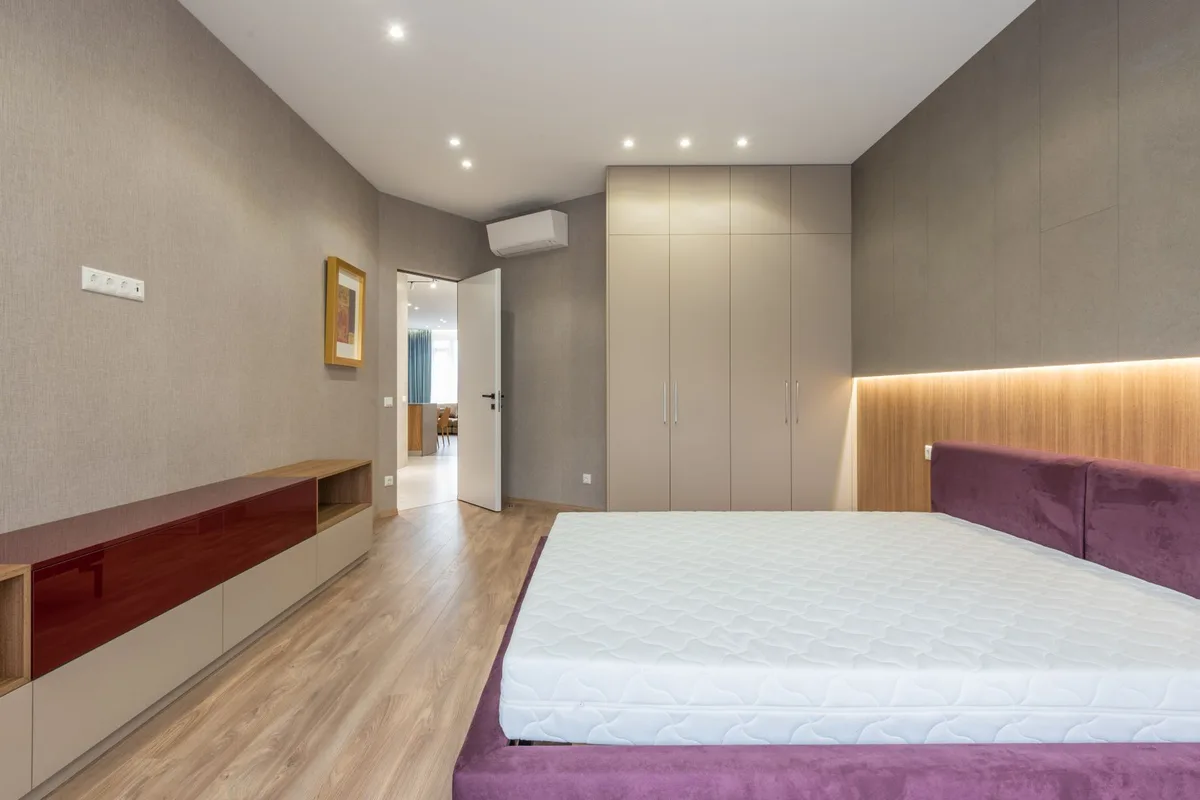
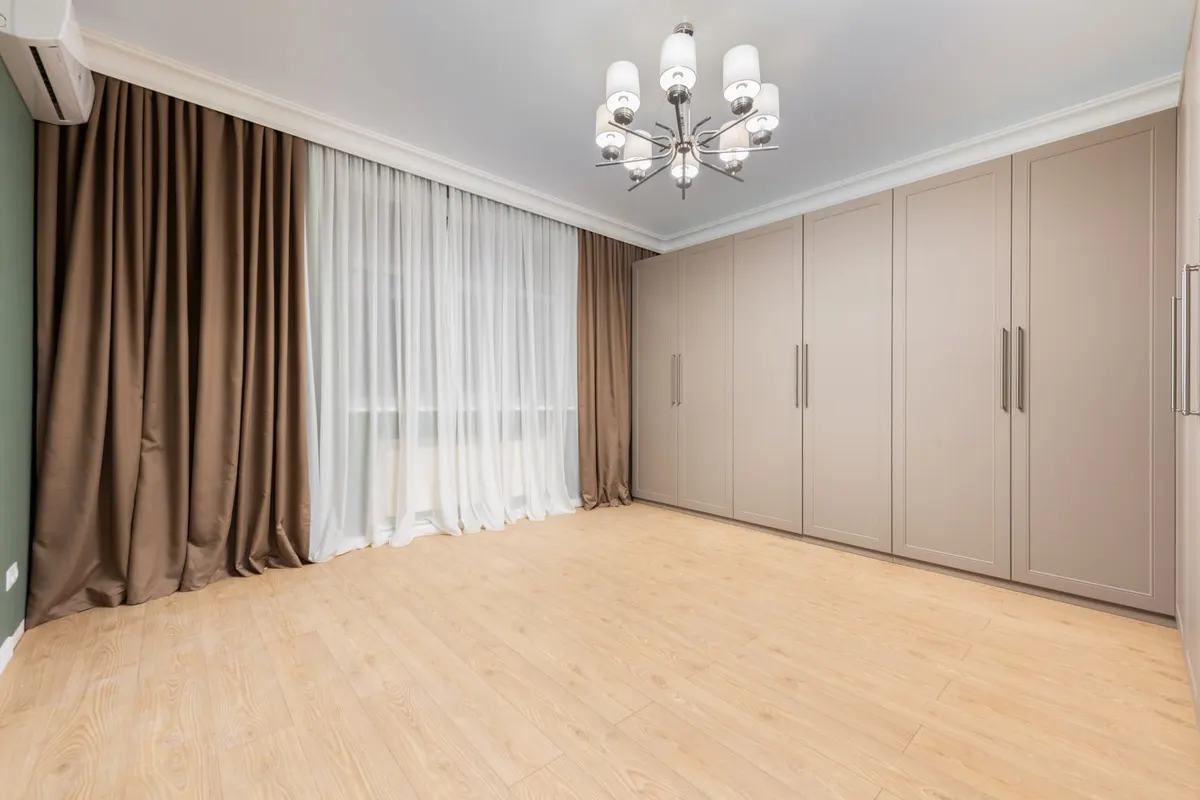
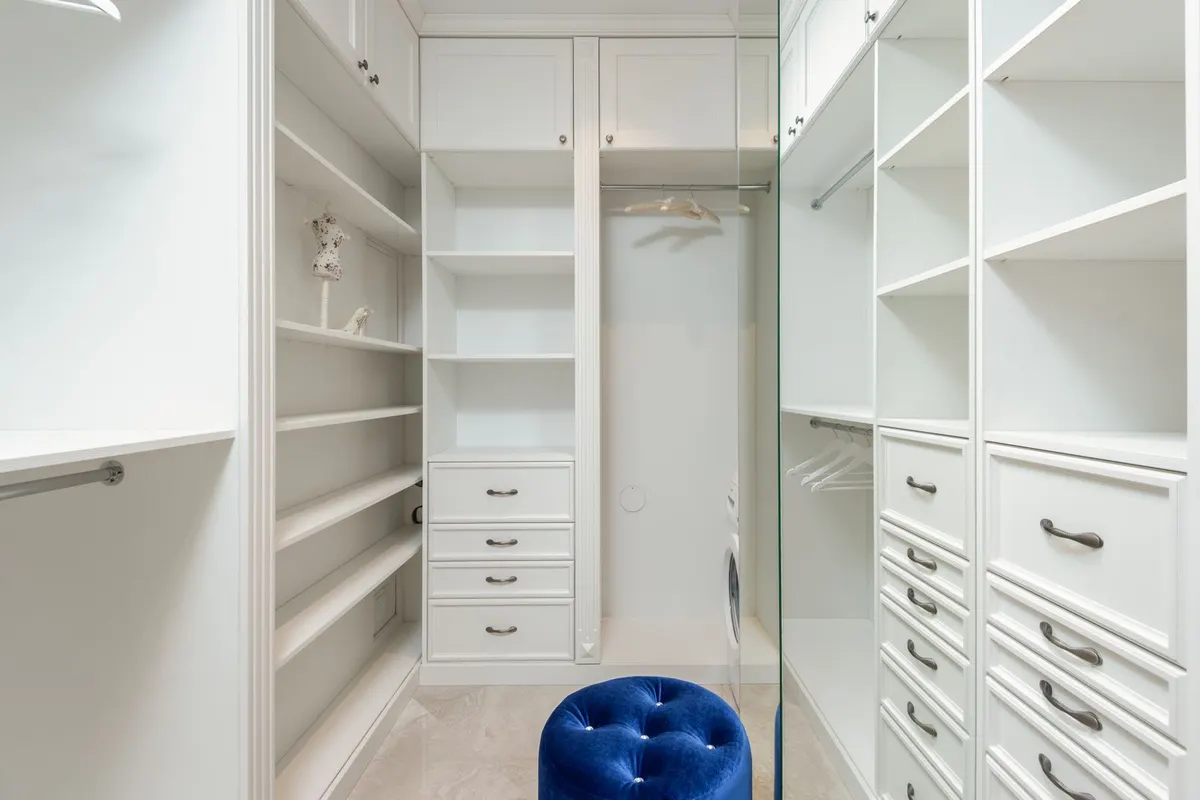
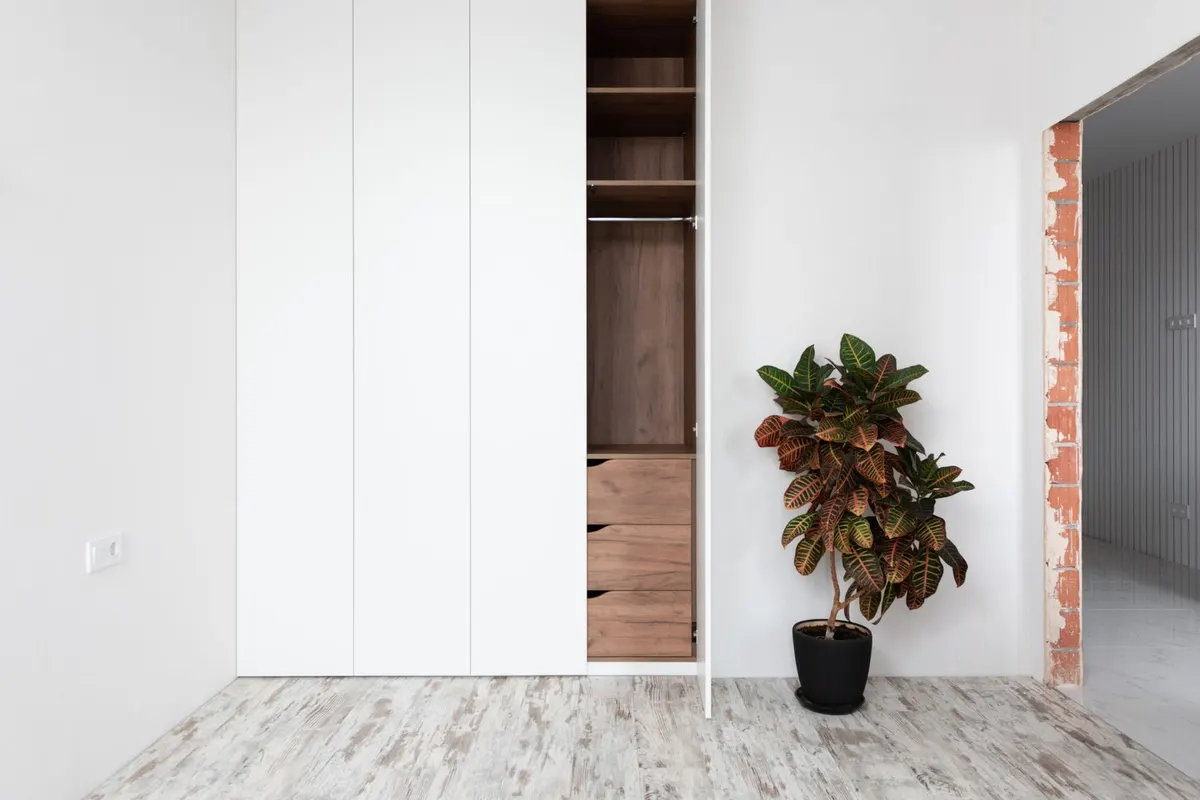
A freestanding wardrobe sits against a wall and can be pulled away from it, however heavy and awkward that is. It comes apart in the room and leaves with the load. A fitted wardrobe is screwed into the wall, the floor or the ceiling and forms part of the apartment's fit-out. Taking one out leaves fixings, anchor holes and bare wall behind, so it sits closer to a small strip-out than a collection. In a rented flat, it is agreed with the landlord or the agent before anything is unscrewed.
If you are not sure which you have, open a door and look at the back and the top. A fitted unit usually has no finished back panel and no gap above it.
Why a wardrobe rarely leaves in one piece
A two-door wardrobe is roughly the width of a standard doorway before you allow for the frame, and a three-door unit is wider than almost any internal door in a Dubai apartment. Height is the second problem. Most wardrobes are built close to floor-to-ceiling to use the space, which leaves nothing to tilt into.
So the crew works in the bedroom first. Doors come off their hinges or out of their tracks, shelves and rails come out, and the carcass separates into panels that go down flat. What looks like a heavy lift is mostly patient unscrewing.
Empty it, including the parts people forget
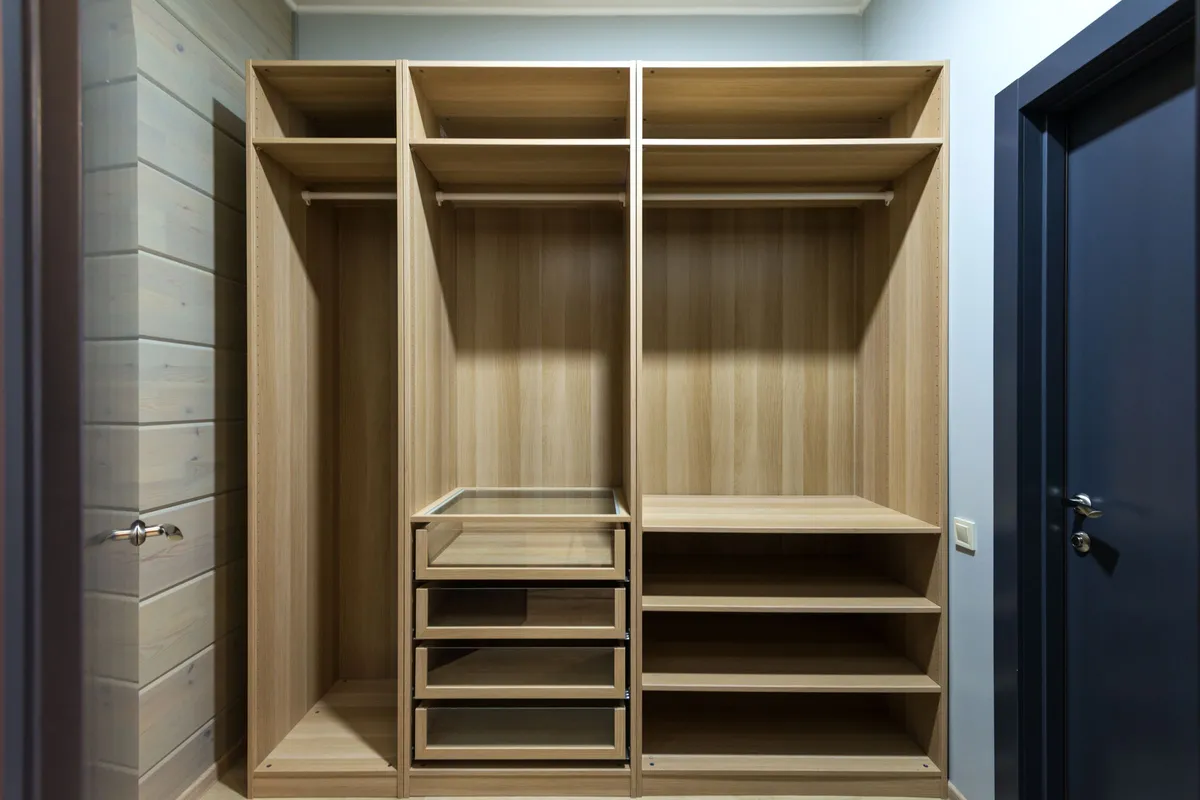
A wardrobe is dismantled standing up, and anything left inside shifts the moment the first panel comes off. The obvious contents get cleared; these are the ones that get missed:
- The shelf above the hanging rail, which is usually above eye level.
- Drawer units built into the carcass rather than sitting loose inside it.
- Shoe racks in the base, behind the lowest door.
- The top of the wardrobe, where suitcases and storage boxes tend to live.
- A small safe, if one is fitted inside — common in furnished apartments here.
- Anything hooked or taped to the inside face of a door.
What slows a wardrobe collection down
Wardrobes vary more than their fronts suggest. Four features account for most of the difference in how long one takes.
Mirrored and glass doors
Mirror panels are the most fragile part of a wardrobe and the part most likely to change how a crew works. They come off first, travel flat rather than stacked, and are carried separately from everything else. Say in advance if your doors are mirrored, because it affects both the handling and the number of people needed.
Sliding doors and their tracks
Sliding doors lift out of a top track rather than swinging off hinges, and the tracks are screwed into the carcass or the ceiling. They come out quickly once the order is clear, and badly if forced, because the rollers bend and then jam in the channel.
Corner and walk-in units
A walk-in or corner wardrobe is not one wardrobe. It is a run of connected modules sharing a frame, and it comes apart module by module. Allow more time than the floor area suggests.
Solid wood against faced board
Solid wood wardrobes are heavier but separate cleanly and can be rebuilt elsewhere. Melamine-faced board is lighter and seldom survives being taken apart, because the fittings pull straight out of the panel. Neither is a problem on the day, but they lead to different outcomes for the wardrobe afterwards.
Getting the panels out of the building
In a tower, the panels are the easy part and the route is the hard one. A dismantled wardrobe travels as several long, flat, reasonably heavy boards, and those need a service lift, a booked slot and a clear corridor more than they need muscle.
Most buildings ask for the service lift to be reserved for furniture movements, and some limit the hours it can be used. Villa communities are simpler, because the vehicle parks close to the door, but villa wardrobes tend to be larger and there are usually several of them rather than one.
Wardrobes in furnished and landlord-owned apartments
Furnished lets are common here and the bedroom wardrobe is frequently the landlord's rather than yours. Anything that came with the property is settled with the landlord or the agent first. This matters more for wardrobes than for most furniture, because a fitted wardrobe is part of the flat rather than part of the contents, and removing one without agreement turns into a deposit problem at check-out.
What to tell us when you book
- Whether the wardrobe is freestanding or fixed to the wall, floor or ceiling.
- The number of doors, and whether any are mirrored or sliding.
- Rough height and width, and whether it reaches the ceiling.
- Your floor, and whether a service lift is available and can be booked.
- Whether it is already empty, and whether anything is still fixed inside it.
Those five decide the crew size and the time allowed, which is most of what a quote is built from.
After the wardrobe leaves
Where a wardrobe ends up depends mainly on what it is made of and whether it survived coming apart. A solid wood unit that separated cleanly can often be passed on. Faced board that lost its fittings on the way out generally cannot. Either way, the choice between donating, reselling and disposing of furniture is easier to make before the crew arrives than on the day.
Wardrobe removal is rarely about lifting. Nearly all of the work happens in the bedroom with a screwdriver, before anything reaches the corridor, and nearly all of the surprises come from a unit being fixed to the wall, mirrored, or simply bigger than it looked with the doors shut. Work out which kind of wardrobe you have, say so when you book, and the rest of it is a quiet hour in a bedroom.