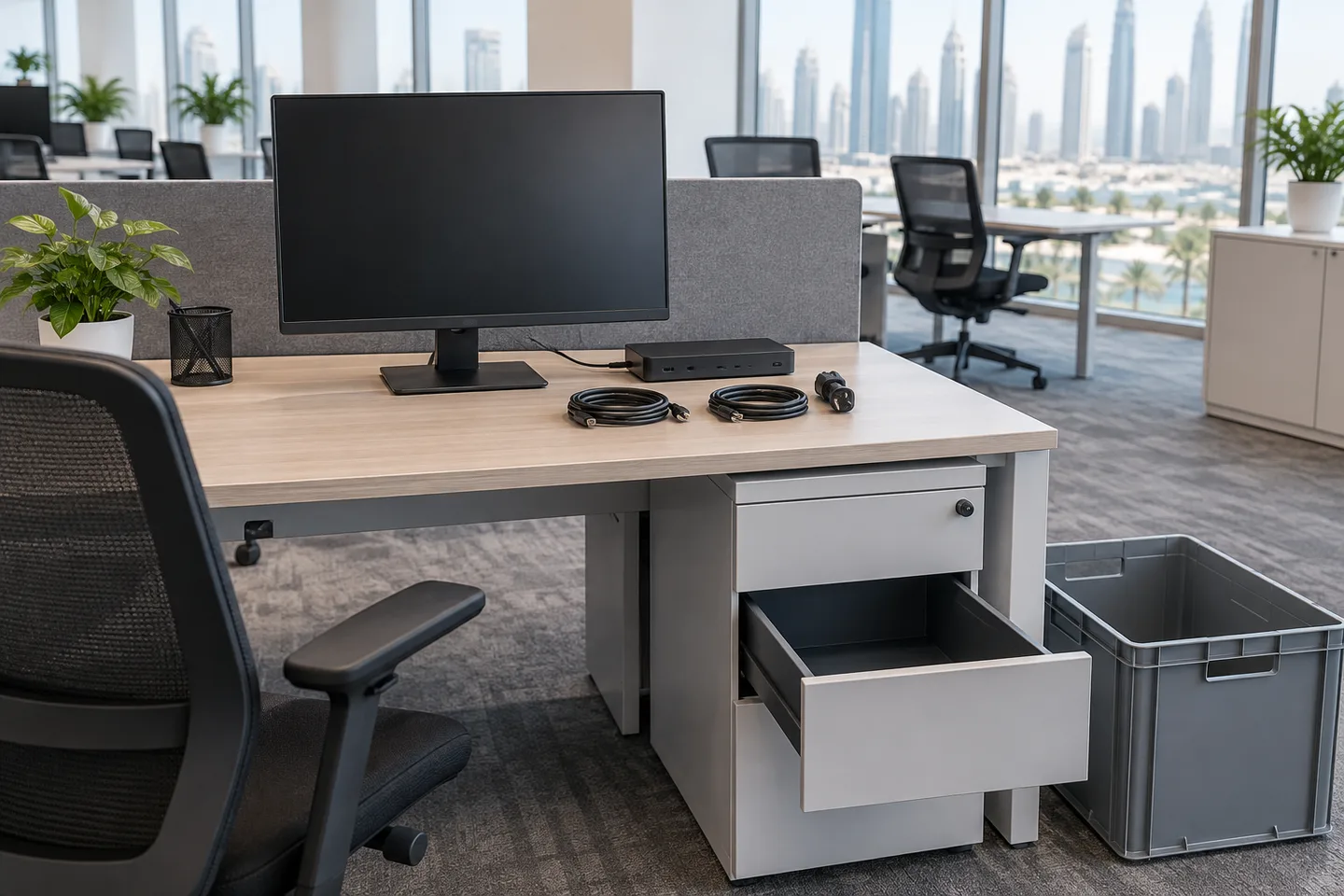
Office chair disposal in Dubai starts with a count by chair type and condition. Ten matching task chairs in working order are a different collection from ten mixed chairs with failed gas lifts, missing castors and torn seats. Separate those groups before arranging furniture removal, because the condition split decides what can remain intact for reuse and what must be broken down by material.
Count office chairs by type, not only by total
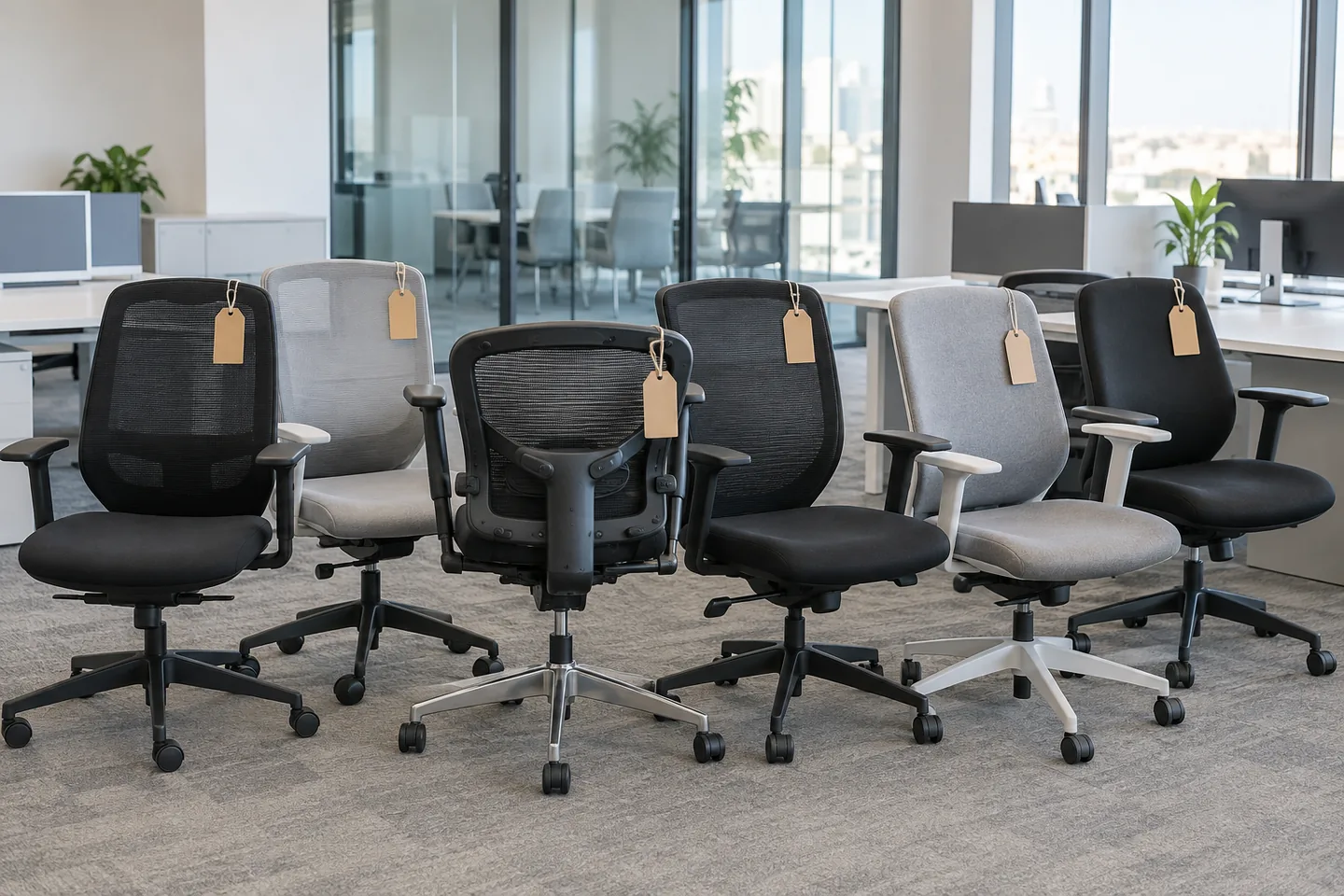
A useful chair inventory names the shape of the fleet. Task chairs, executive chairs, meeting-room chairs, training chairs and reception seating occupy different amounts of vehicle space and do not stack in the same way.
- Task chairs: swivel bases, castors, gas lifts and adjustable backs; count standard and high-back models separately.
- Executive chairs: wider seats, heavier frames and padded arms that usually prevent close nesting.
- Meeting chairs: four-leg, sled-base or cantilever designs; note whether identical chairs genuinely stack.
- Training chairs: folding or nesting frames that move compactly only when their mechanisms still work.
- Reception seating: tub chairs and lounge seats that behave more like upholstered furniture than desk chairs.
Photograph one example of every type and show the whole group in a second image. A fleet count gives a better estimate than a close-up of one chair, especially when the load includes both compact meeting chairs and bulky executive seating.
Use a short condition check before deciding the route
A chair is a realistic reuse candidate when it is complete, stable, clean and adjustable. Appearance alone is not enough: a tidy seat with a sinking gas lift or cracked base is not ready for another office.
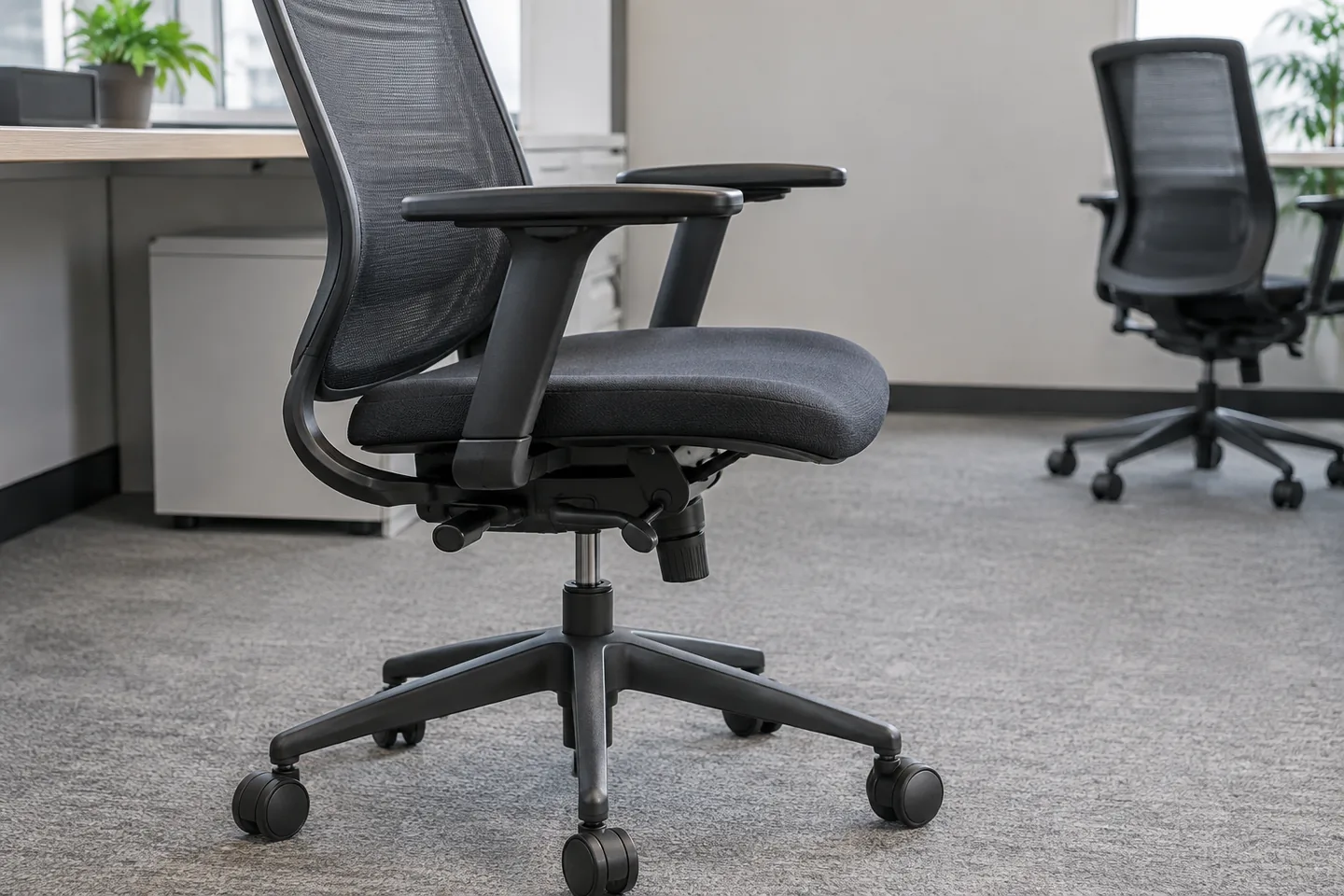
- Rock the chair gently and check that the five-star base is not cracked or distorted.
- Roll it a short distance to find seized, missing or mismatched castors.
- Test the height control and confirm that the seat does not sink after adjustment.
- Check the tilt, back support and arm adjustments without forcing a stuck mechanism.
- Inspect the seat, mesh and padding for tears, deep stains or exposed foam.
Keep matching usable chairs together, with any loose arms or headrests attached to the correct model. Chairs that fail the check go into a separate removal group so nobody later mistakes a faulty chair for usable stock. The broader chair disposal guide covers household dining and occasional chairs; an office fleet adds mechanisms, repeated models and quantity planning.
Do not open or crush the gas-lift column
The gas-lift column is a sealed component and should remain intact during handling. Staff should not drill, cut, heat or try to empty it. If a chair must be reduced for transport or material sorting, the base, seat and column can be separated with suitable tools while the sealed cylinder stays whole.
Do not dismantle usable chairs merely to save a little space. Removing a tight gas lift or mechanism can damage a chair that could otherwise be reused, and a box of unlabelled chair parts is much harder to place than a complete working fleet.
Stage chairs without blocking the working office
Release chairs by complete zone and stage them inside a room the business controls. In an occupied office, scattered chairs create trip hazards and make it unclear which desks are still live. Shared corridors, fire routes and lift lobbies should remain clear while the goods-lift slot is pending.
In a tower in Business Bay, the loading-bay and goods-lift window can decide the pace of the job. Move chairs on dollies or in stable nested groups where the design permits it; do not build tall, loose stacks simply because the seats look similar. Protect glass doors and lift walls from projecting arms and five-star bases.
What to send for an accurate office-chair quote
Send the count by type, the number believed reusable, photographs of exceptions and the route from the office to the loading point. State the floor, lift booking, carry distance and collection window. If chairs are spread across departments, explain whether every zone will be released at once or the work needs phases.
Office chair disposal is simplest when the business makes two decisions before the crew arrives: which chairs are complete enough to keep together, and which chairs have reached the end of use. A typed count, a quick mechanism check and one clear staging area turn a mixed fleet into a controlled collection.