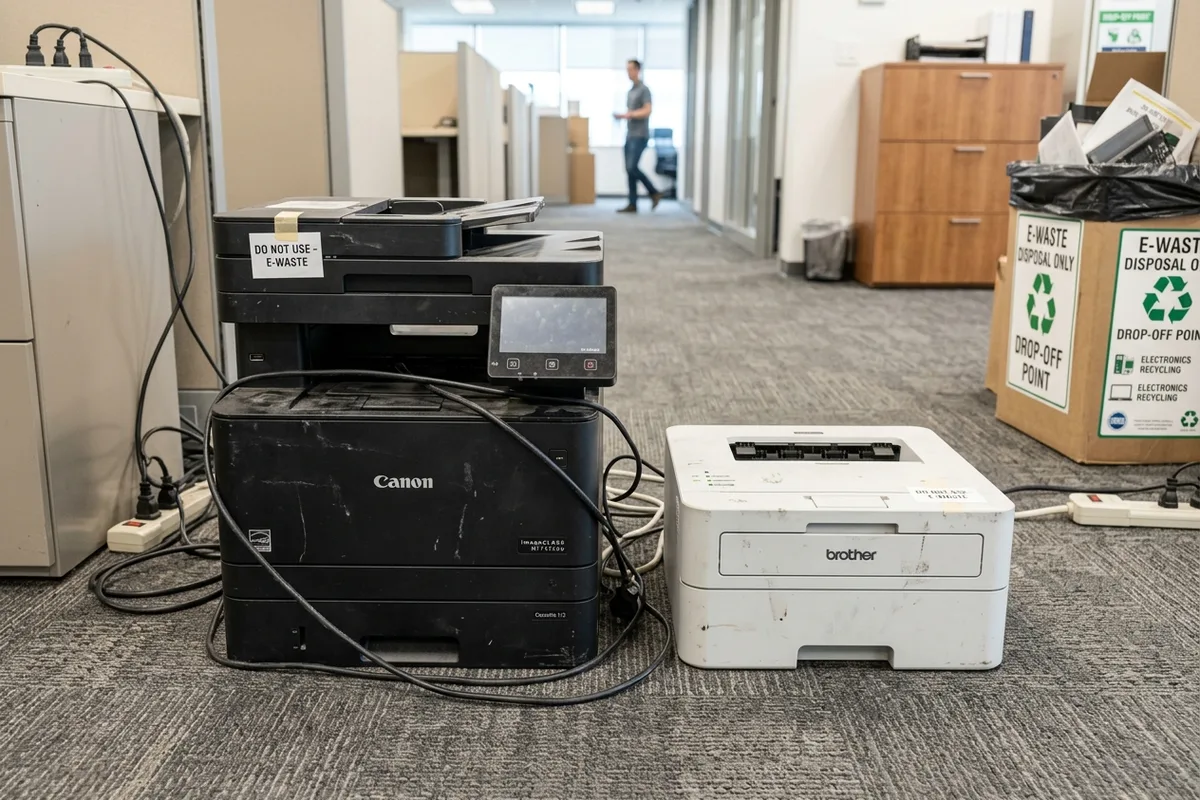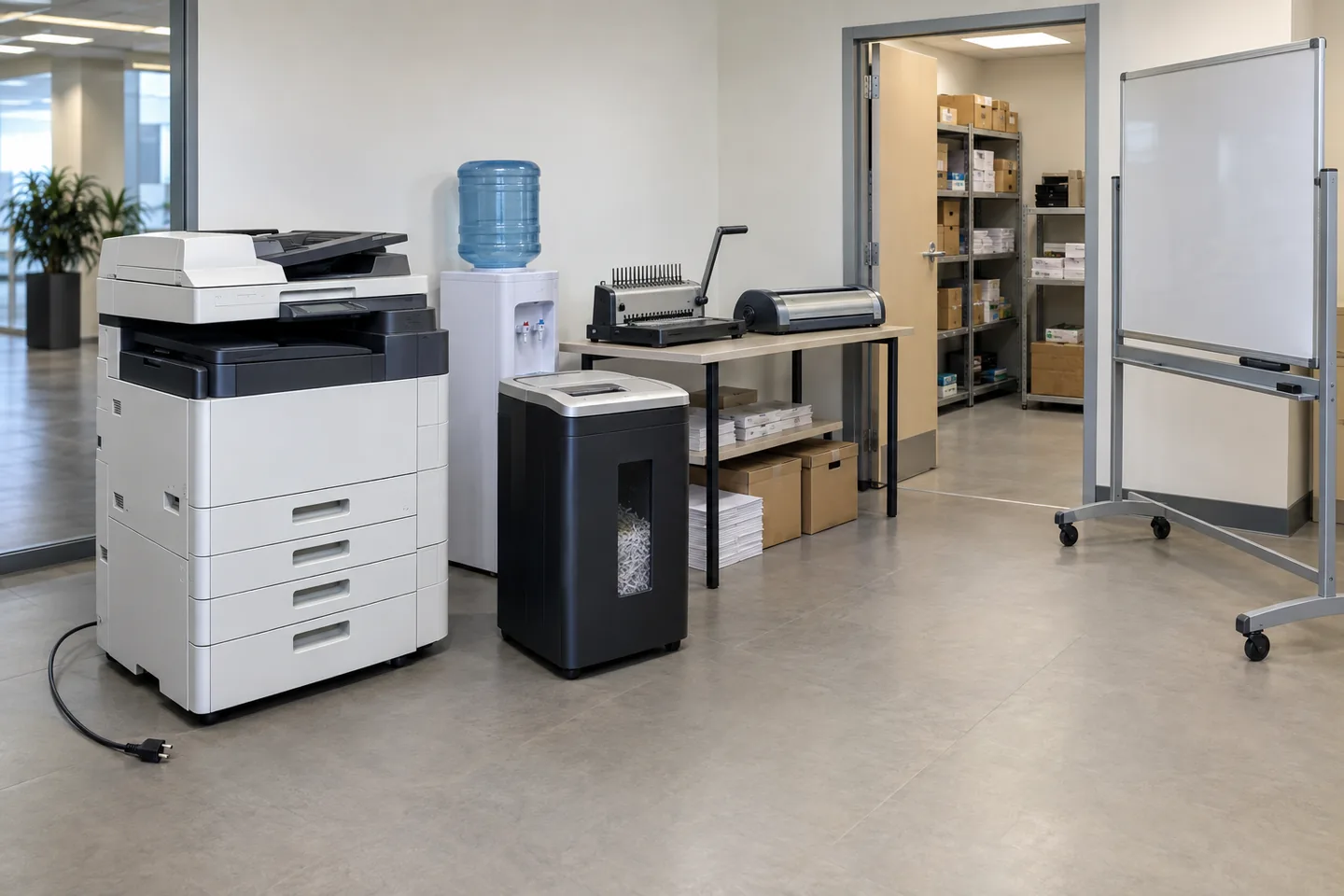
Office equipment disposal in Dubai covers the shared machines and loose workplace fixtures that are not part of an employee's computer setup: floor-standing copiers, shredders, binding machines, laminators, water dispensers, presentation boards and similar items. Before arranging commercial furniture and equipment removal, confirm who owns each machine and what must be removed from it. Computers, monitors, desk phones and network hardware belong in the separate office-electronics process.
Separate shared equipment from furniture and IT assets
The equipment category is defined by function, not simply by whether an item has a plug. A copier is shared operational equipment even though it contains electronics; a desktop computer is an IT asset because it may hold business data and sits under the IT release process.
- Shared machines: copiers, paper shredders, binding and laminating machines, postage or labelling equipment.
- Pantry and comfort equipment: water dispensers, countertop appliances and freestanding coolers once emptied and disconnected.
- Loose workplace fixtures: mobile whiteboards, presentation stands, freestanding display boards and unpowered equipment trolleys.
- Not this category: desks, chairs and cabinets; computers, monitors and desk phones; fitted mechanical or electrical plant.
This split stops a broad "office equipment" label from hiding three different jobs. Furniture follows a furniture route, user electronics follow e-waste disposal, and fitted air-conditioning, access-control or building systems stay with the facilities contractor responsible for them.
Check leases, service contracts and supplier ownership first
Large copiers, water dispensers and specialist machines may be leased, rented or supplied under a service agreement. A business should not place supplier-owned equipment in a removal load. Match the asset number or contract description to the machine and arrange the supplier return where required.
If ownership is unclear, move the item into a hold group rather than guessing. The same rule applies to equipment supplied by a landlord or business-centre operator. The wider office clearance guide uses this property-versus-business boundary across the whole floor.
Empty, isolate and contain each machine
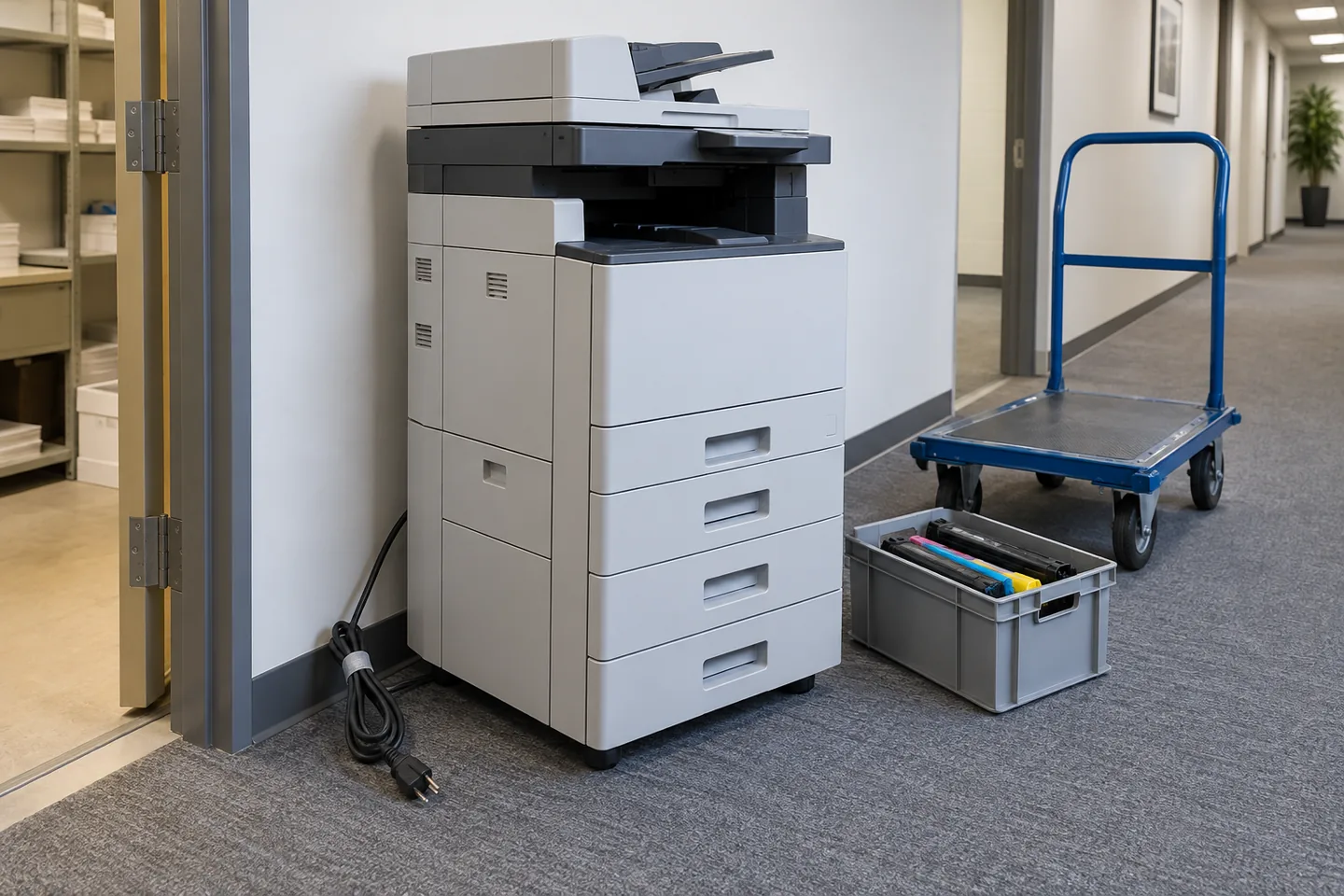
Office equipment should be switched off, unplugged and emptied before collection. Ordinary plug-in leads can be disconnected once the machine has shut down. Anything hard-wired, plumbed or fixed into the building should be released by the facilities team or the relevant technician rather than cut free by a removal crew.
- Remove paper, document originals and anything stored in trays or side cabinets.
- Take out loose consumables such as toner bottles, cartridges, binding combs and laminating pouches, then contain them by type.
- Close and secure trays, lids and removable feeders without taping directly onto delicate finishes.
- Coil and secure the power lead so it cannot catch under a wheel or trolley.
- Record fragile, leaking or incomplete equipment separately instead of hiding it inside the general count.
A copier's internal settings or stored address book may also need the business's own release check. The equipment-removal crew should not decide whether retained information is acceptable; ask the administrator or supplier to complete the reset required for that particular machine before it leaves. The dedicated printer disposal guide covers printers, cartridges and print-device preparation in more depth.
Plan the route around the heaviest item
The heaviest floor-standing machine sets the handling plan. Measure its width and depth, check whether it rolls safely on its own castors and compare it with every doorway and goods-lift entrance. A copier that moves easily across a copy room may still need a rated trolley for a threshold, ramp or loading-bay transition.
In Dubai Silicon Oasis, a ground-floor office may have a short route to a service yard, while an upper-floor unit still depends on a booked goods lift. Protect lift sills and finished floors, and keep lighter equipment behind the heavy machine rather than crowding its turning space.
Build the quote inventory by machine, not by room
List each large machine individually with its approximate dimensions, ownership status and connection type. Group small machines by type and count. Add photographs of the front, side and route, especially for a copier or water dispenser that must pass a narrow door.
Office equipment disposal works cleanly when the business settles ownership, consumables and connections before collection day. Once those three questions are closed, the job becomes a physical handling task with a known load and route instead of a last-minute argument about what is allowed to leave.