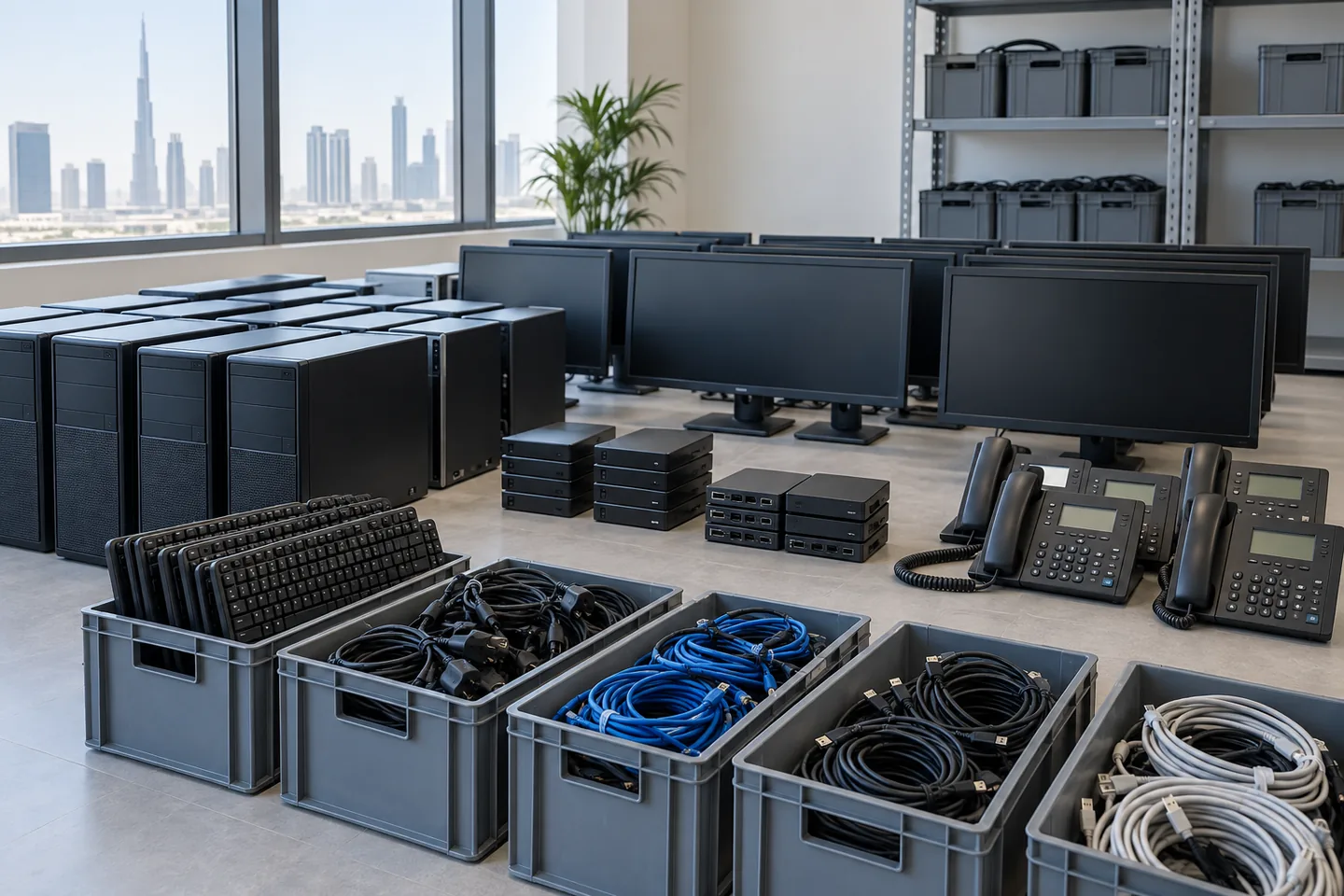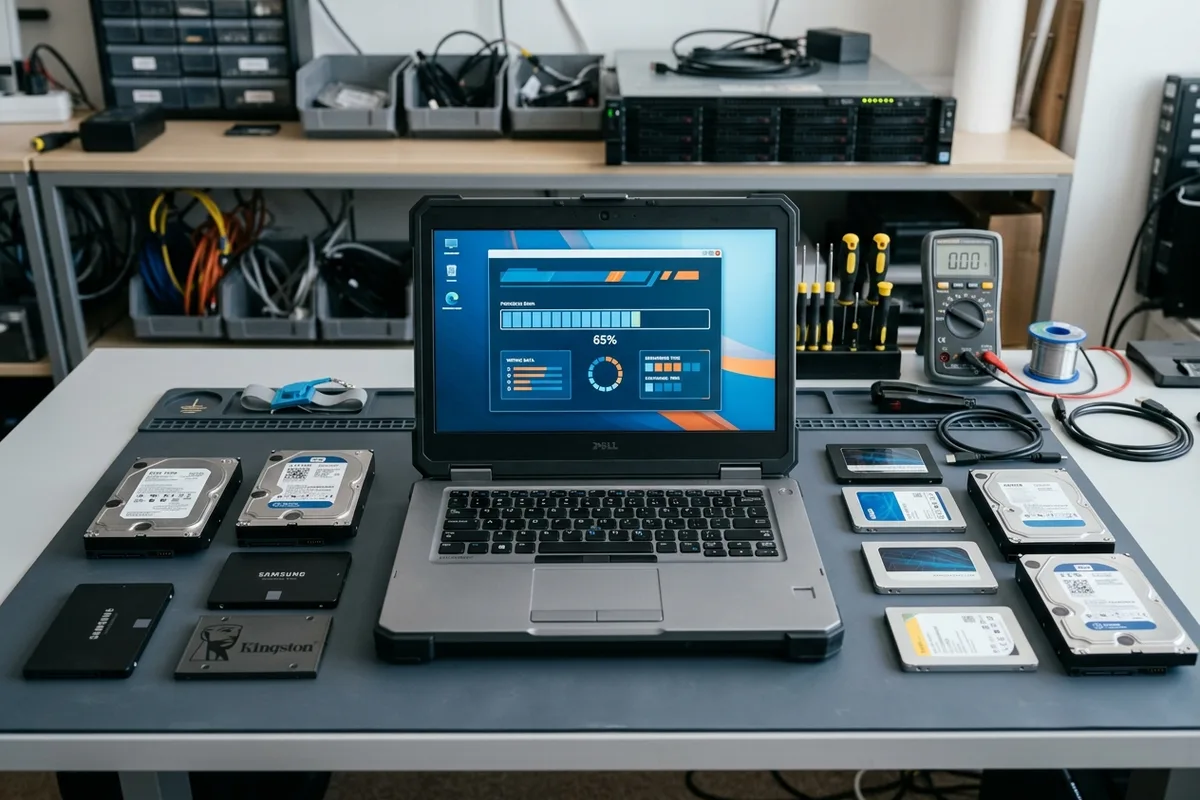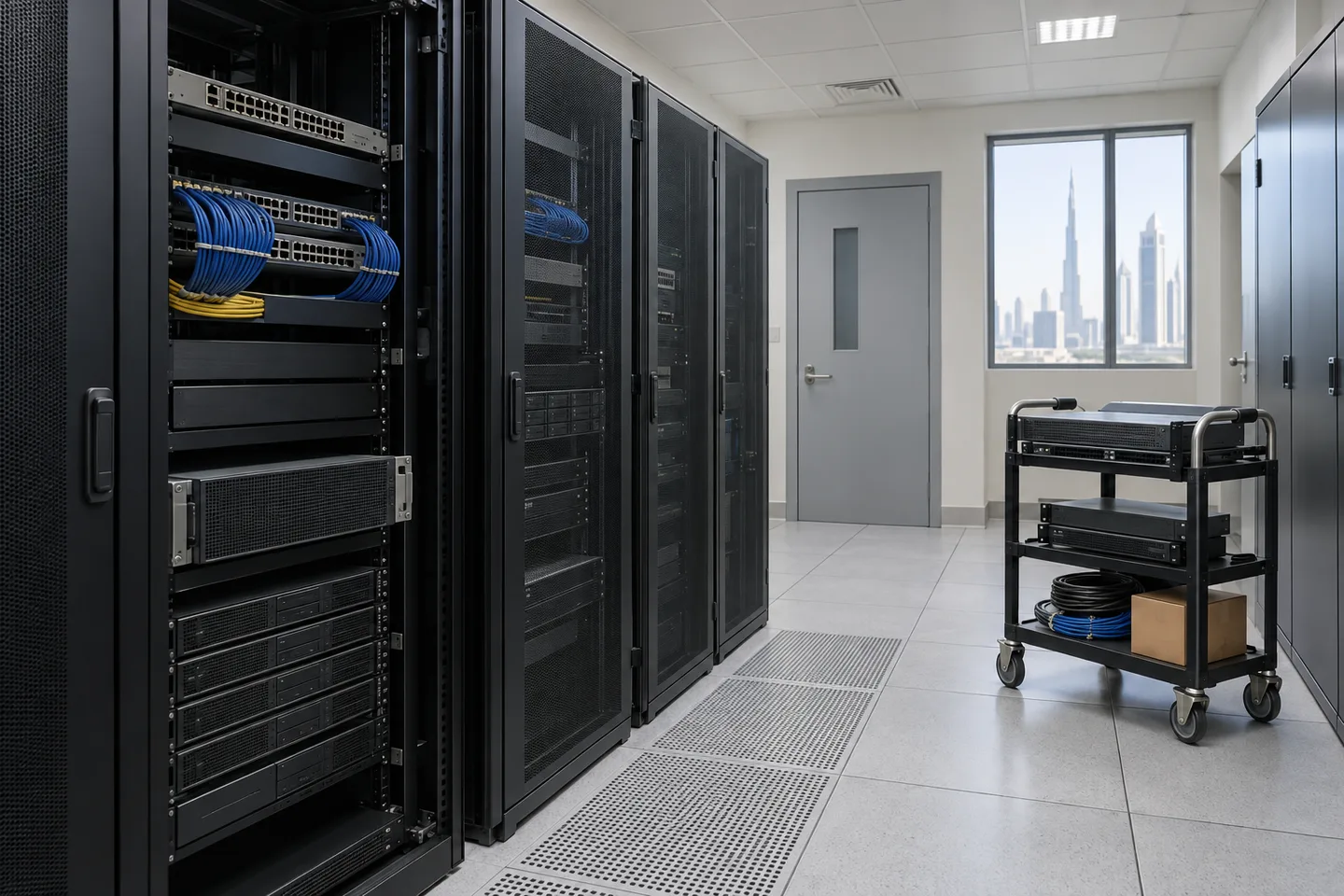
Server and IT equipment disposal begins after technical decommissioning, never instead of it. An e-waste collection can remove released servers, switches, storage appliances and rack parts, but the business remains responsible for shutdown authority, service migration, data decisions and the record that approves each asset to leave.
What belongs in a server and infrastructure disposal scope?
This scope covers infrastructure hardware rather than ordinary end-user electronics. Typical items include rack servers, storage arrays, network switches, firewalls, backup appliances, rails, console equipment, power distribution units and empty racks. Laptops, monitors and desk phones belong in the broader office-electronics stream.
A useful inventory separates device, media and structure. A server chassis, its removable drives and its rack rails may follow different controls even though they occupied one rack position. Likewise, a cabinet can be empty while still containing power distribution, patching or building-connected monitoring that has not been released.
Decommission the service before releasing the hardware
Decommissioning confirms that workloads, dependencies and access have moved or ended. It is an IT change process performed by authorised technical staff. Physical collection begins only after that team confirms the equipment is powered down, disconnected from live services and safe to handle.
- Identify the service owner and approve the shutdown or migration window.
- Confirm backups, retention decisions and dependencies under the organisation's own controls.
- Remove the device from monitoring, access and asset systems as the internal process requires.
- Power down and disconnect data and power connections through authorised technical staff.
- Release the chassis, media, rails, cables and rack separately to their stated destinations.
Do not ask a removal crew to decide whether an unlabelled appliance is redundant. In controlled environments around Dubai Silicon Oasis, a dark status light does not prove a device is retired, and an empty-looking rack can still support active cabling outside the cabinet.
Keep the data-bearing media decision explicit
Servers and storage appliances may contain internal drives, removable caddies, flash modules or other media. The business should decide whether media stays installed for an approved downstream process, is removed for a separate process or remains on hold. The collector should not infer the choice from an empty label or an unlocked bezel.
Record custody at the level the organisation requires before collection. The removal handover can confirm what physical items were received, but it should not be described as proof of data erasure unless verified data work was separately commissioned and documented. The practical preparation steps are covered in data wiping before disposing electronics.
Prepare racks, rails and heavy chassis for handling
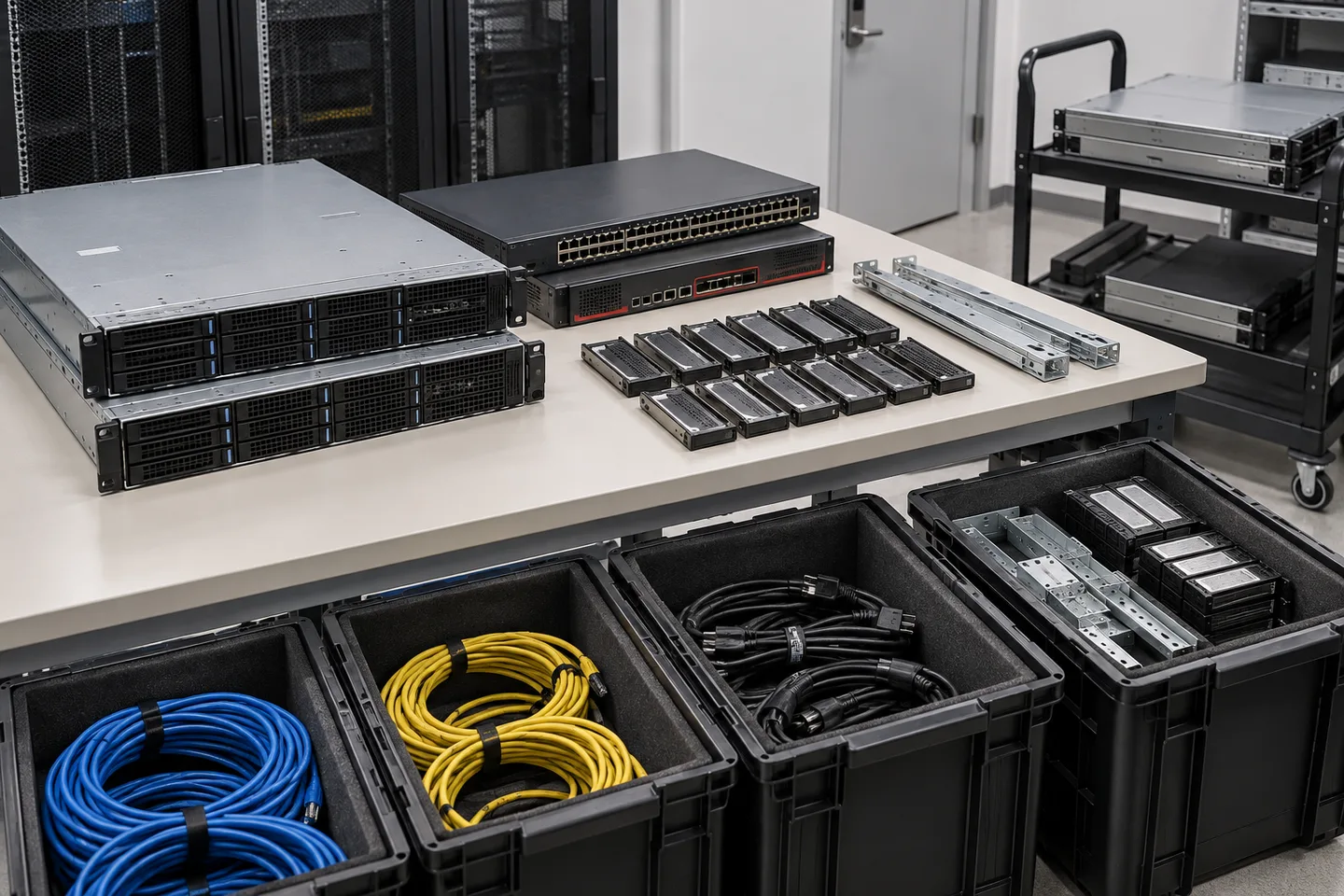
Rack equipment should be removed from top to bottom only under a planned handling method that keeps the cabinet stable. Heavy chassis need an accurate weight check, enough people or lifting equipment, and a trolley rated for the route. Rails, cable arms and cage nuts should be packed separately rather than left projecting from a chassis.
- Confirm the rack is owned by the business and free of building or colocation-provider equipment.
- Check whether the rack is bolted, bonded, linked to overhead containment or connected to fixed power.
- Measure doorways, thresholds and lift capacity for the heaviest released chassis.
- Use padded, stable containers for equipment that must remain intact during transport.
- Keep loose drives, optics, rails and cables separated by the approved destination.
Define the handover and quote boundary
For quoting, provide equipment counts by type, rack-unit sizes, known weights, rack status, floor and loading access, and whether secure staging is available. State clearly whether the job includes only released loose hardware or also empty-rack removal. Fixed electrical work, cooling equipment, fire systems and live cabling need separate qualified scopes.
The clean boundary is simple: IT decides and documents what may leave; the collection team verifies the released physical scope and moves it through the agreed route. Keeping those responsibilities separate protects service continuity, data control and the accuracy of the final handover.