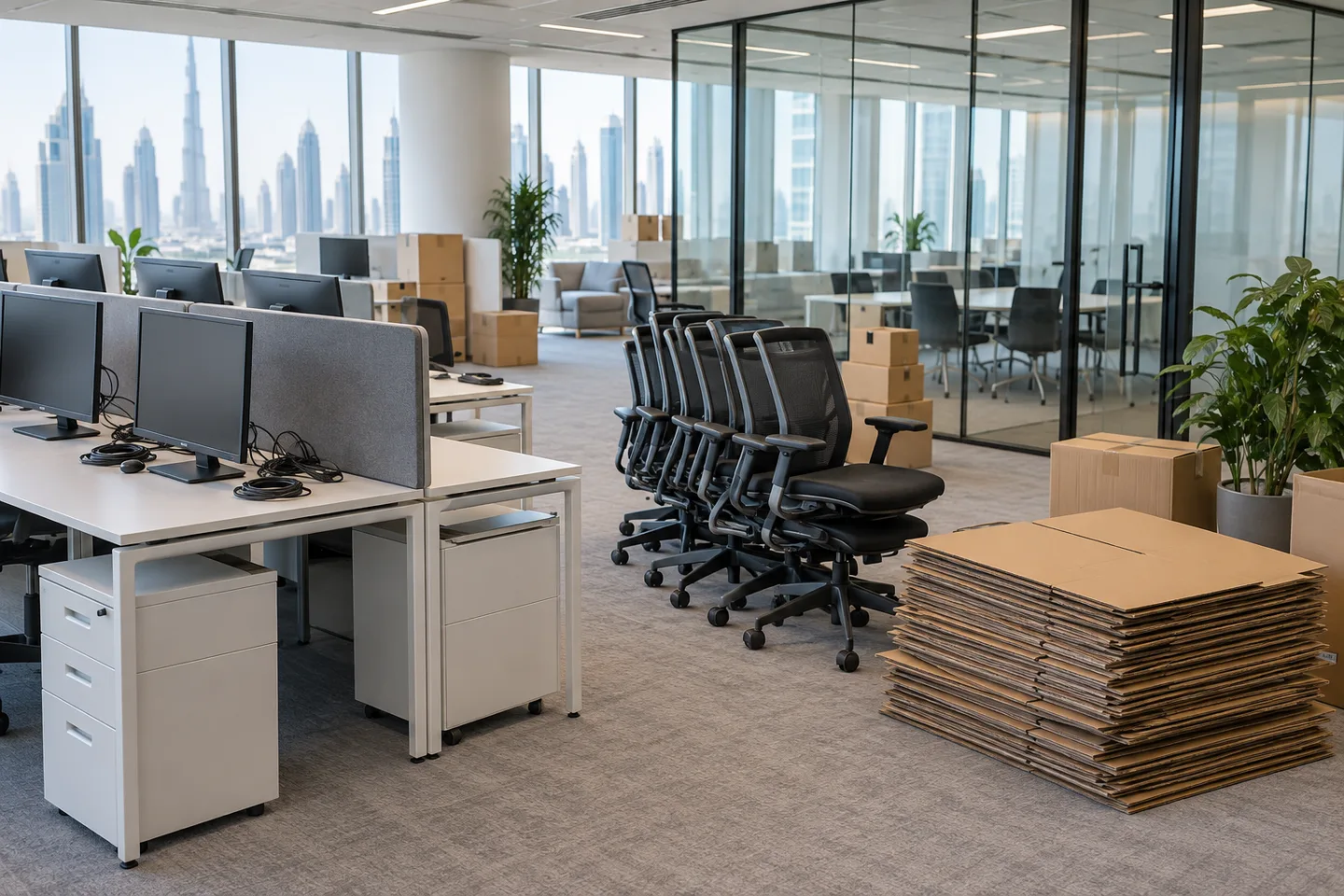
When corporate offices in Dubai renovate, downsize, or relocate, managing hundreds of unwanted desks, task chairs, and cabinets presents a substantial waste challenge. Sending entire office floors of furniture directly to landfills wastes valuable materials and conflicts with corporate environmental, social, and governance (ESG) commitments. Across modern commercial business centres like Dubai Silicon Oasis and Business Bay, companies increasingly seek transparent, sustainable disposal pathways. This guide explains how to audit commercial furniture, implement circular economy principles, and ensure responsible furniture removal in Dubai without compromising operational deadlines.
Why is commercial office furniture challenging to recycle?
Commercial office furniture is engineered for durability rather than easy recycling. Unlike raw scrap metal or clean paper, modern office furniture consists of complex, bonded multi-material assemblies:
- Composite wood boards: Desks and cabinets use particleboard or medium-density fibreboard (MDF) coated with synthetic melamine or laminate veneers. These cannot be pulped like clean wood and require specialist chipping for secondary industrial uses.
- Glued foam and upholstery: Ergonomic office chairs combine high-density polyurethane foam adhered to polyester fabrics and reinforced plastic shells, making mechanical separation labour-intensive.
- Mixed structural metals: Steel desk legs often feature cast aluminium fittings, internal wiring raceways, and plastic leveler feet that must be dismantled before metal smelting.
Understanding these material realities allows corporate facility teams to establish practical diversion goals rather than assuming everything can simply enter a standard recycling bin.
The corporate hierarchy of sustainable furniture disposal
To maximise landfill diversion, forward-thinking businesses apply a clear four-tier disposal hierarchy:
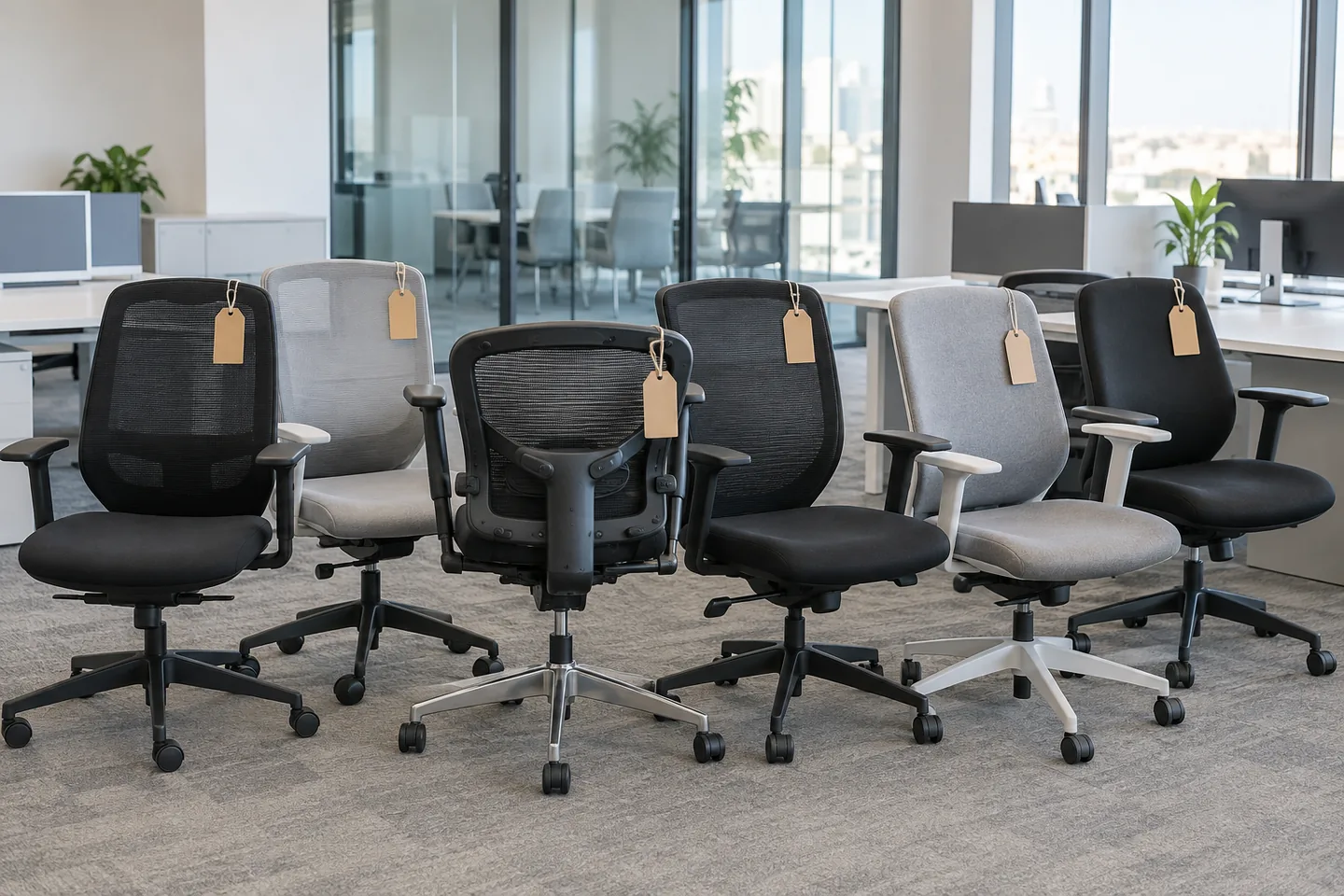
- Internal redeployment: Transfer sound workstations, conference tables, and ergonomic chairs to branch locations, subsidiaries, or storage for future expansion.
- Resale and liquidation: Sell matched suites of high-value designer desks or executive furniture to secondary market buyers. Review our advice on office furniture liquidation for managing timed commercial sales.
- Charitable donation: Partner with registered educational institutes, community groups, or charities that can reuse functional student desks, filing units, and visitor seating.
- Material segregation and recycling: Dismantle damaged or obsolete furniture into clean material streams (steel, aluminium, wood chip, and plastics) for industrial processing.
Applying this hierarchy ensures items retain their highest practical utility before entering raw recycling streams.
Disassembling furniture into clean recycling streams
When furniture reaches the end of its useful life and cannot be reused, manual dismantling separates recoverable materials:
- Scrap steel and aluminium recovery: Steel pedestal drawers, table legs, and monitor arms are unbolted and sorted. Clean metals retain high recycling efficiency and are sent directly to scrap processing yards.
- Office chair component breakdown: Gas lift cylinders must be detached safely, separating the heavy aluminium five-star bases and steel mechanism plates from plastic casters and worn foam cushions. For volume task chair updates, see our detailed guide to office chair disposal in Dubai.
- Filing cabinets and storage units: Metal filing cabinets are among the easiest corporate assets to recycle, provided all internal paper documents have been cleared. Our guide to filing cabinet disposal details steel segregation.

Coordinating electronics and integrated power modules
Modern office desking frequently incorporates built-in electrical feeds, USB chargers, and cable trays. Sustainable furniture disposal requires separating e-waste from structural frames:
- Remove pop-up power modules, power cables, and transformer bricks from meeting tables before disposal.
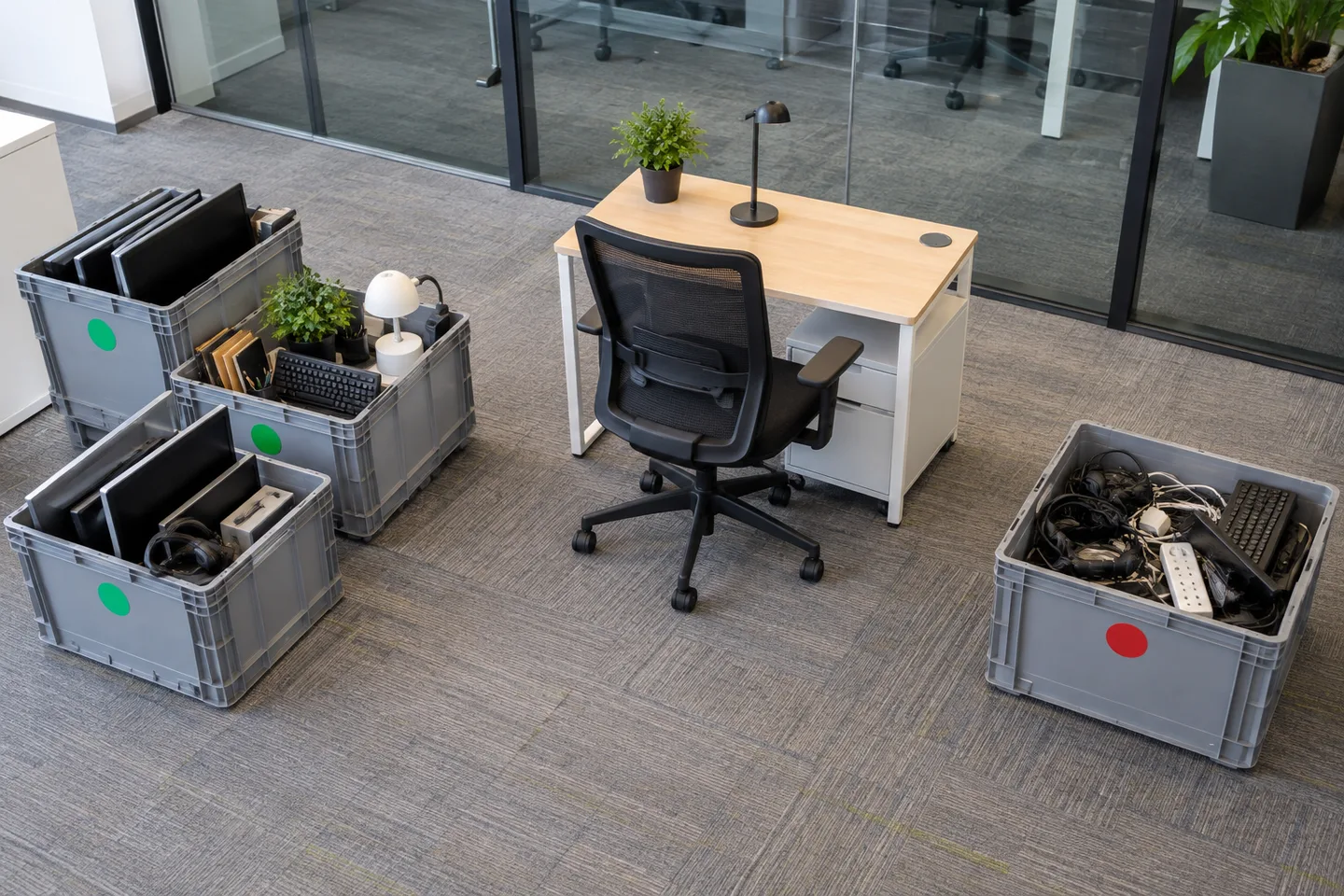
- Route broken electronics and power adapters through certified e-waste disposal facilities to ensure safe recovery of copper wiring and circuit boards.
- Keep battery backup units and UPS systems separate from metal desks to avoid hazardous chemical contamination.
Building an audit trail for corporate ESG reporting
Modern corporate compliance requires verifiable proof of responsible waste management. When arranging commercial junk removal, ensure your waste partner provides the documentation needed for ESG disclosures:
- Itemised collection manifests: An accurate tally of collected furniture pieces, categorized by type (desks, task seating, storage, partitions).
- Weight tickets and diversion records: Certified transfer notes indicating total estimated tonnage diverted from municipal landfills.
- Chain of custody verification: Confirmation that equipment was handled by licensed waste handling and material recovery facilities.
Practical steps to plan a sustainable office clearance
- Walk the office floor 4 to 6 weeks before lease expiration to audit furniture conditions.
- Mark usable sets for internal reallocation or donation early in the project schedule.
- Request green clearance practices and recycling verification from your waste collection provider.
- Isolate electrical accessories and integrated desk cables prior to collection day.
- Maintain signed transfer manifests in your facilities archive for annual sustainability audits.
By adopting a structured diversion process, businesses can significantly reduce their environmental footprint while vacating commercial premises smoothly and efficiently.