When a school or nursery in Dubai replaces its classroom furniture, the old pieces leave in volume: dozens of identical desks and chairs per year group, plus lab stools, library shelving and hall seating. Furniture removal in Dubai for a school is planned around two things a home or office job rarely faces, which are the size of the matching sets and the short windows when pupils are off site. This guide covers how to count the furniture, what stays with the school's own maintenance team, and how to fit the work into a term break.
What does school furniture removal cover?
School furniture removal covers the loose furniture a school no longer needs, across every type of room on the campus. Most of the volume comes from classrooms, because each room repeats the same set of pupil desks and chairs. Specialist rooms add fewer pieces, but those pieces are heavier or awkwardly shaped.
- Classrooms: single and paired pupil desks, stackable chairs, teacher desks, storage trolleys, tray units and freestanding cupboards.
- Early years and nursery rooms: low tables, small chairs, play kitchens, cubby shelving, soft seating and nap mats.
- Libraries: freestanding bookcases, kinderboxes, reading tables and study carrels.
- Science rooms and art rooms: loose lab stools, mobile prep trolleys, drying racks and art tables.
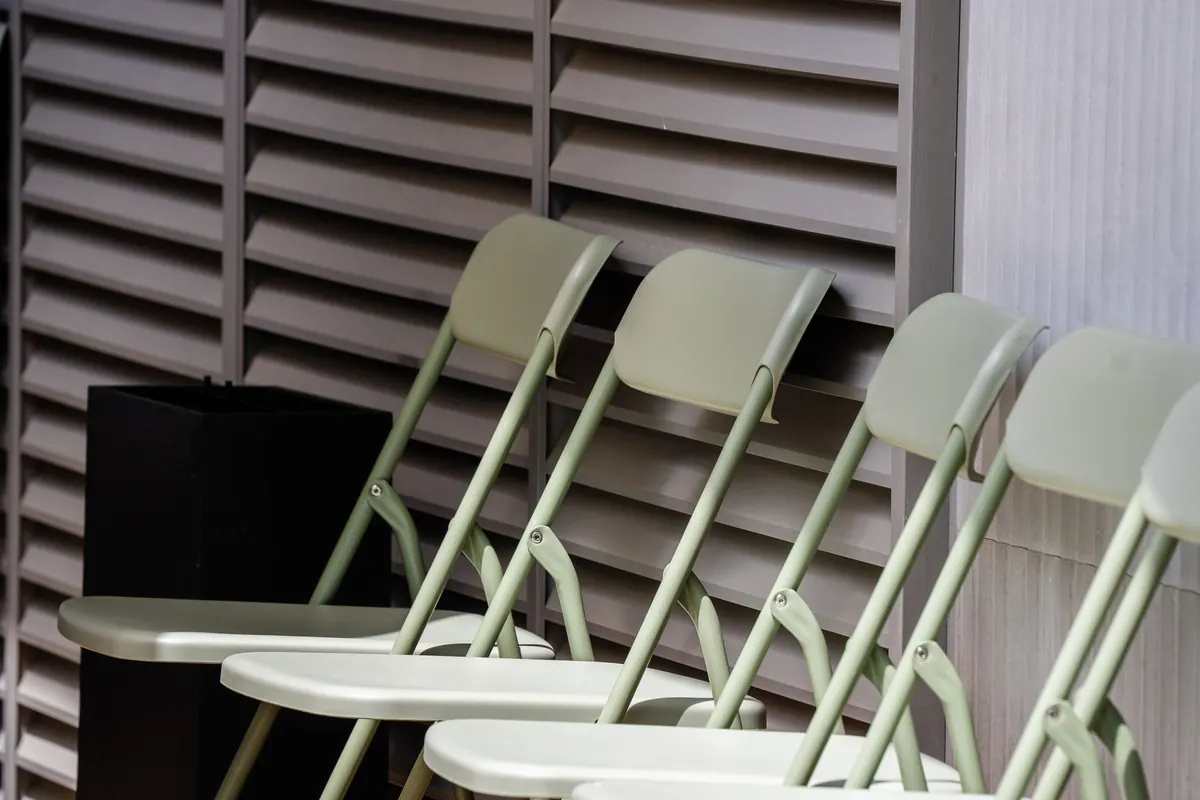
- Halls and staff areas: folding or stacking hall chairs, staging blocks, staffroom sofas and office furniture.
Screens, interactive displays, computers and projectors are electrical waste, not furniture. They follow the school's IT release process and go to e-waste disposal, so keep them on a separate line of the inventory.
Count school furniture by room type
The quickest accurate inventory for a school is a room-type schedule. Photograph one typical classroom for each age group, list its contents, then multiply by the number of rooms being cleared. A crew can plan vehicles, staff and loading time from that table far more reliably than from a long list of individual chairs.
- Room type and number of rooms, for example Year 3 classroom, secondary classroom, science lab, library and nursery room.
- Contents of one room of that type, with the size of desks and chairs, because furniture for young children and furniture for older students take up very different space in a vehicle.
- Whether chairs stack and desks fold, which can greatly reduce the load volume.
- Exceptions: rooms used as storage, damaged furniture already set aside and anything moving to another campus.
Hall chairs and library shelving are where counts usually go wrong. A hall can hold hundreds of chairs that never appear on a classroom list, and a library run of bookcases is often bolted together in sections. Give each its own line rather than folding it into a general total.
Fixed items stay with the school's maintenance team
A collection crew removes loose furniture. Anything fixed to a wall, the floor or a service connection should be detached by the school's own maintenance team or fit-out contractor before collection day. Agreeing this line early prevents a crew arriving to find half the schedule still screwed to the building.
- Wall-mounted whiteboards, pinboards and display rails.
- Fixed science benches with gas taps, sinks or built-in power.
- Lockers anchored to walls, and coat pegs or cubbies fixed in place.
- Built-in library joinery and fitted storage walls.
Once the maintenance team has taken these items down and made the fixings safe, they can join the collection as loose pieces. Ask for whiteboards to be laid flat and stacked, because a large board is easy to crack if it is carried upright through a doorway.
Plan the removal around term breaks and campus access
The safest time to remove school furniture is when pupils are not on site. In practice that means the long summer break, the shorter winter and spring breaks, or weekends during term. Whichever window you choose, the removal has to finish before new furniture arrives and before staff return to set up their rooms.

- Confirm which rooms are released, and the last date by which each must be empty.
- Book the removal dates early, because the summer break overlaps with the busiest weeks for clearances in Dubai.
- Agree campus access with the school's facilities and security teams: gate times, vehicle entry, the loading point and who signs the crew in.
- Clear one block or floor at a time, moving furniture straight from rooms to the vehicle rather than leaving it in corridors.
- Walk each cleared room with the school's contact before moving to the next block.
Summer timing deserves particular care. The end of the school year is the same period when many families move house, so demand for crews is at its peak, as explained in the guide to seasonal demand for junk removal. A school that books in May has far more choice of dates than one that calls in the first week of the holiday.
Campus layout shapes the day too. Universities and schools in Dubai International Academic City are spread across large sites with long walks between buildings and the loading point, while a school in a residential community like Al Barsha may have tighter gates and a single delivery entrance. Share a simple site plan showing the route, so the crew can bring the right number of trolleys.
Reuse, donation and what the school keeps
Matching classroom furniture in good condition is more useful to a second user as a full set than piece by piece. If any sets are going to another school, a community group or a charity, separate and label them before the removal starts, while they are complete. The guide on where to donate furniture explains how to approach recipients and what condition they usually expect.
Before anything is collected, staff should empty every drawer, tray and cupboard. Pupil work, exam papers, safeguarding files and anything with a child's name on it are the school's responsibility to keep or destroy under its own policy. A crew should never be the first people to open a teacher's desk drawer.
What to send for a school furniture removal quote
- The room-type schedule, with photos of one typical room of each type.
- The removal window, the date new furniture arrives and the date staff return.
- A site plan showing gates, the loading point and any stairs without a lift.
- Which fixed items the maintenance team will have taken down beforehand.
- Which sets are going to reuse or donation, and which are for disposal.
A school furniture removal goes smoothly when three things are settled before the break starts: how many rooms of each type are being cleared, what the maintenance team detaches in advance, and the exact days the campus is open to the crew. With those agreed, the work becomes the same steady routine, one classroom after another.