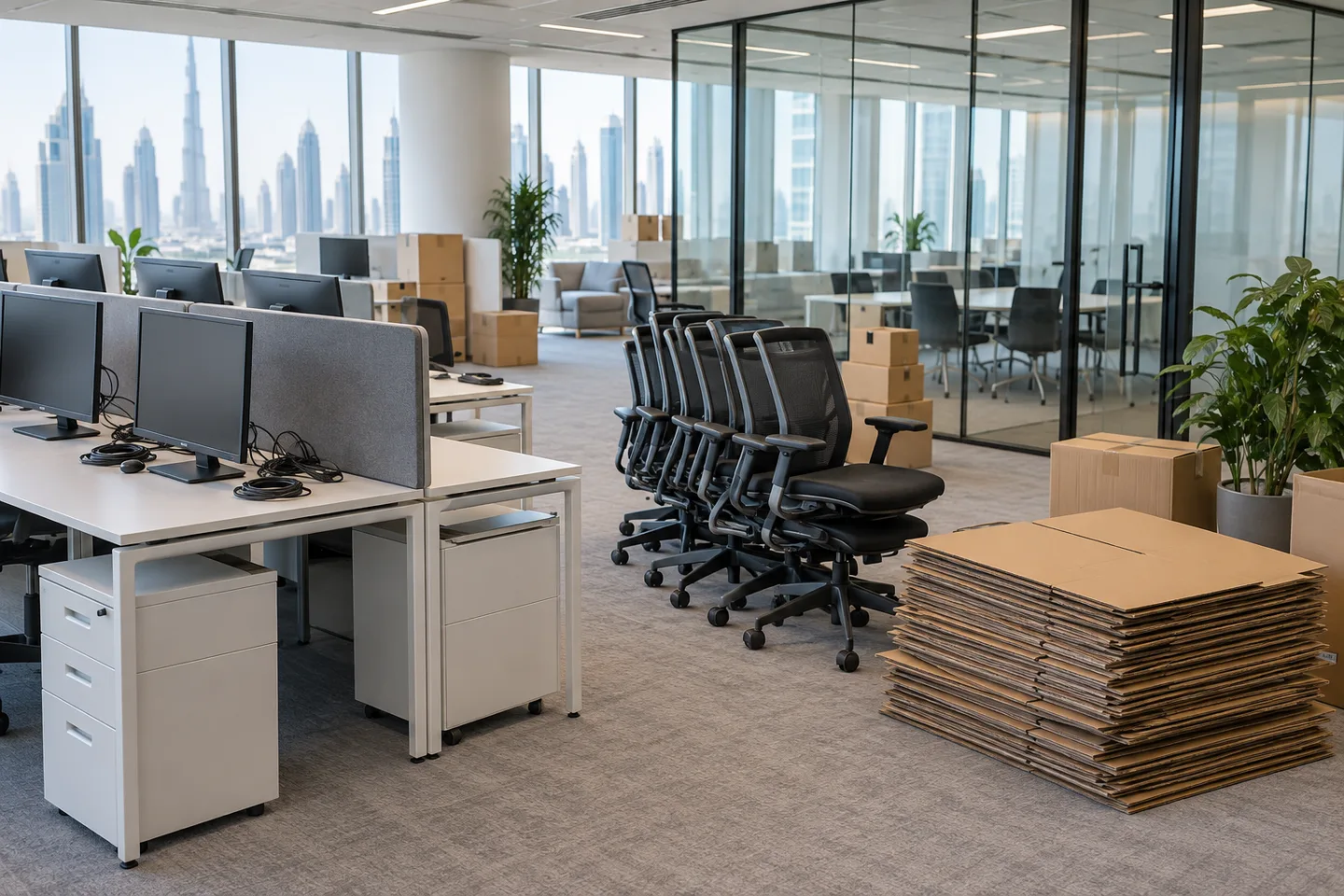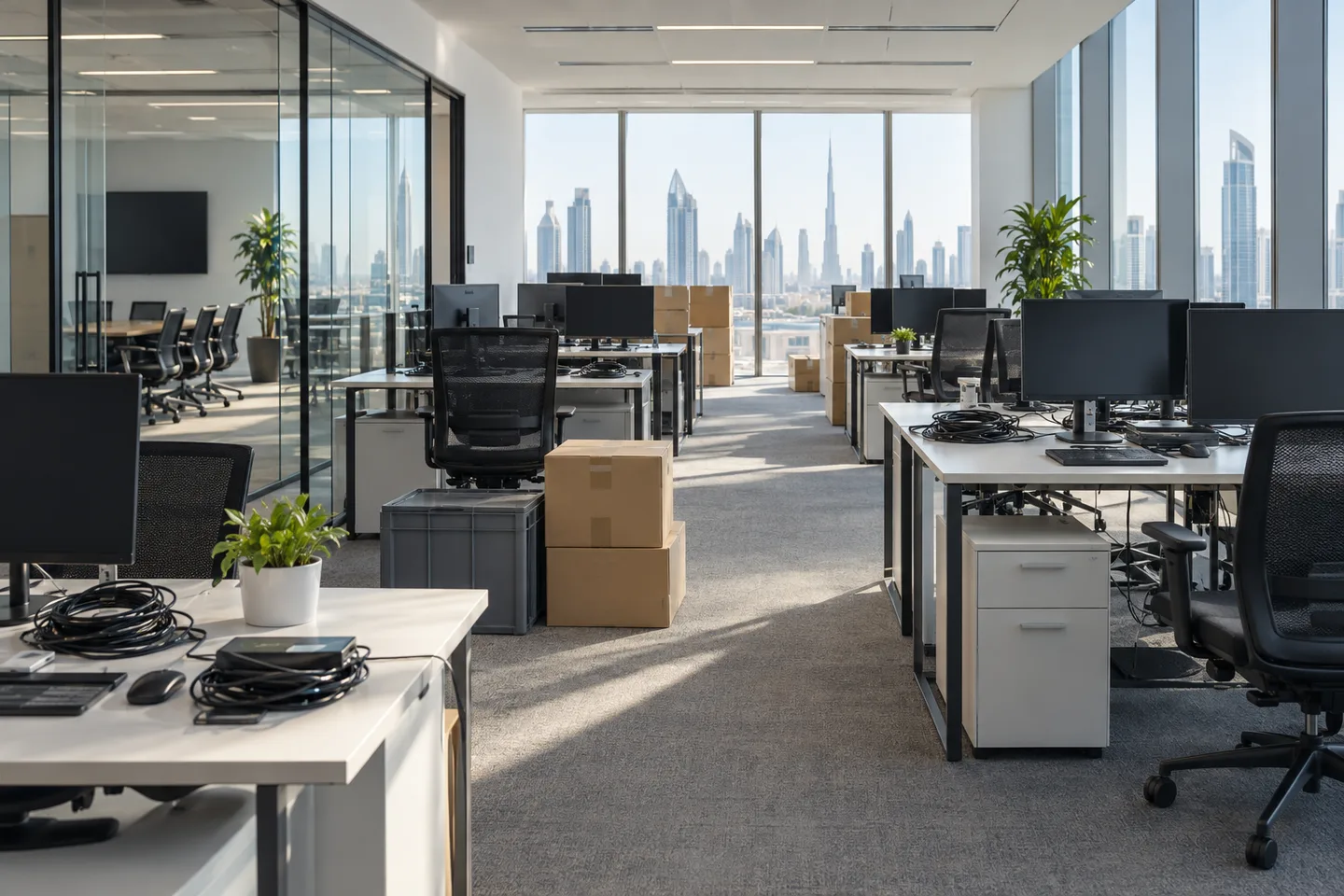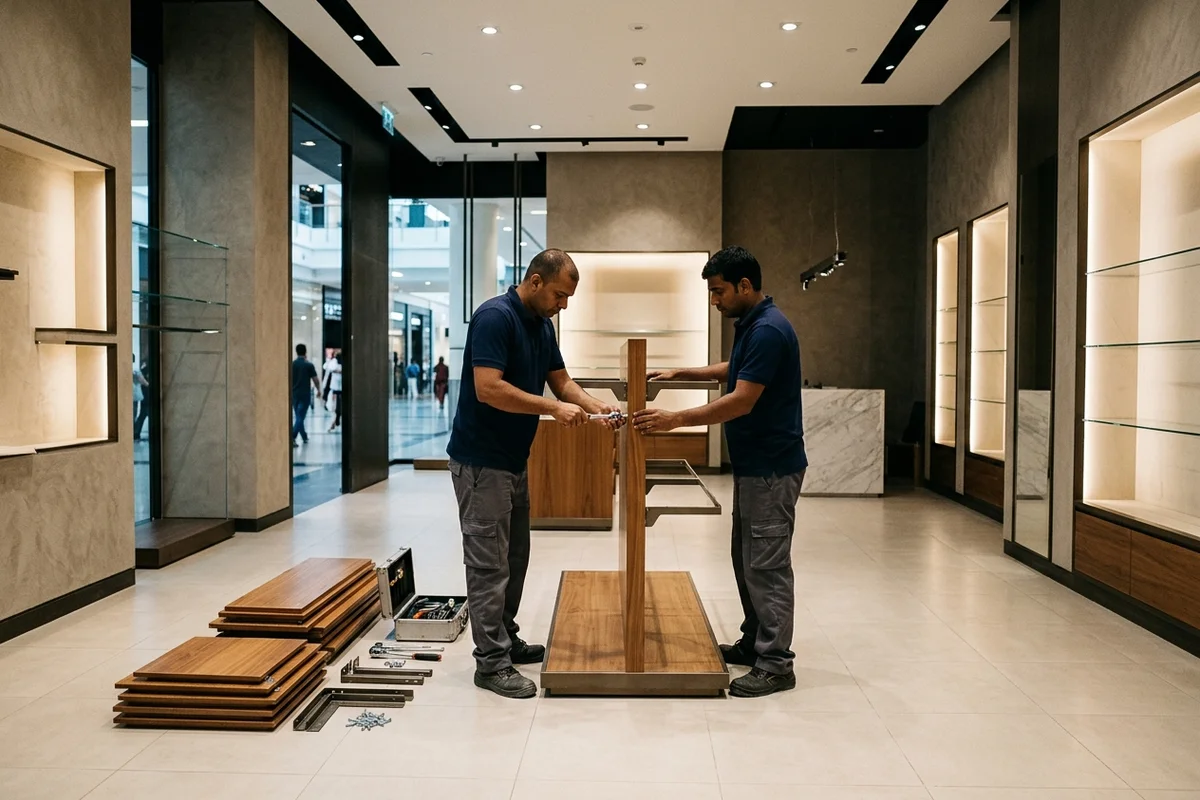
Vacating a retail unit or preparing for a brand refit across major retail hubs like Dubai Mall, Mall of the Emirates, Dubai Hills Mall, and Marina Mall presents strict operational boundaries. Retail tenants are required by property managers and landlord engineering teams to return lease spaces in an empty, defitted shell condition. Managing this exit requires specialized commercial junk removal in Dubai and professional furniture removal in Dubai that targets the mechanical removal of perimeter display racks, cash wraps, and hanging units without causing structural damage to base building walls.
Modular display gondolas versus fixed architectural millwork
Retail store fixtures fall into two distinct engineering classes: unboltable modular merchandising systems and permanent architectural joinery. Clarifying this boundary early determines what a removal crew dismantles versus what requires an approved interior contractor.
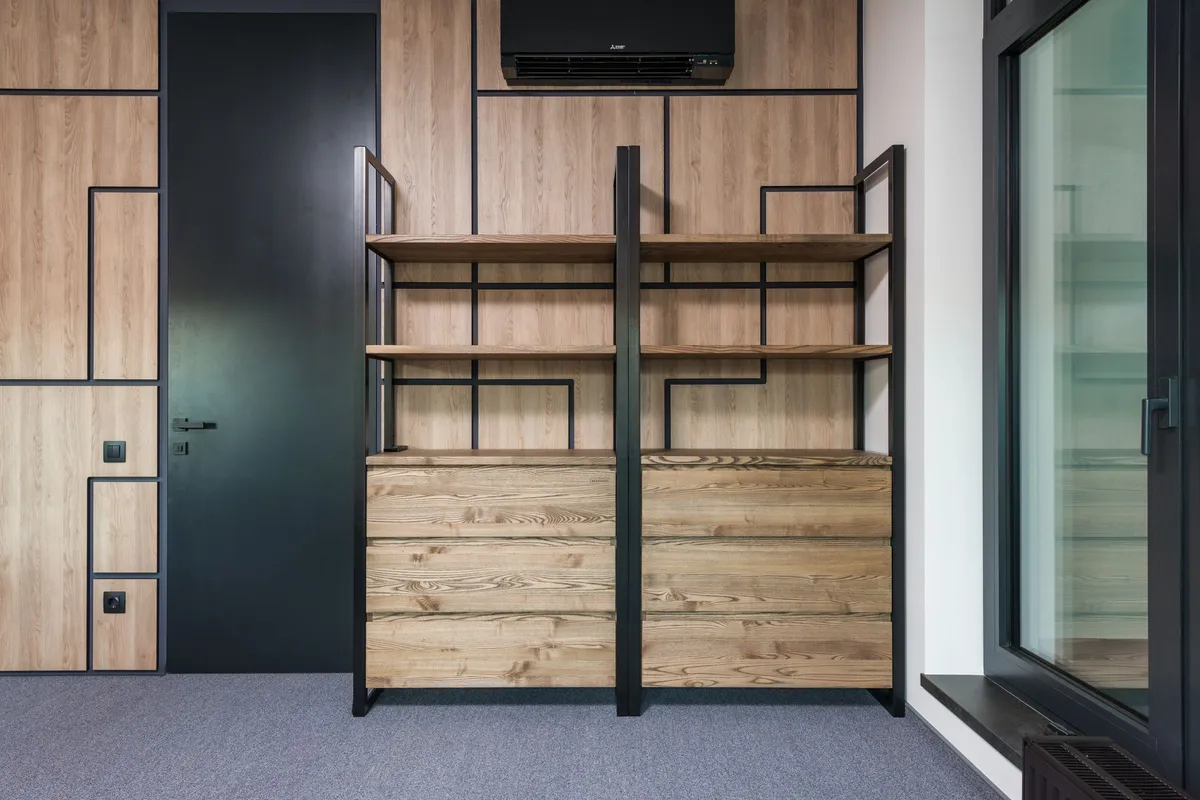
- Freestanding gondolas: central double-sided metal uprights, cantilever base brackets, and modular timber or wire shelves that unbolt cleanly from slotted base frames.
- Perimeter wall tracks: vertical slotted standards screwed into wall battens, supporting interchangeable hanging arms, shoe display shelves, and apparel faceouts.
- Cash wraps and POS desks: modular timber checkout counters containing under-counter cash drawers, cable ports, and receipt printer recesses.
- Mannequin platforms and display plinths: weighted timber or lacquered display cubes and window plinths designed for fast manual lift-out.
While general retail store clearance handles excess unsold inventory and portable decor, shop fitting removal focuses on stripping the display hardware anchored across the sales floor. Fixtures that are surface-screwed into studs or freestanding can be unbolted and hauled out directly. Permanent structural modifications—such as knocking down stud walls, modifying overhead air conditioning ducting, or pulling fire sprinkler heads—remain the sole domain of licensed fit-out contractors.
Perimeter slatwall and panel unmounting protocols
Perimeter slatwall systems are standard in apparel, electronics, and convenience stores throughout Dubai. They provide flexible display options but present a high risk of wall damage during hasty removals. Prying slatwalls off the wall with crowbars tears paper facing from gypsum board, leading to costly repair deductions against the tenant's security deposit.
- Locate hidden anchor screws: fasteners are typically driven into the recessed aluminium groove inserts running horizontally across the panel face.
- Slide out aluminium T-extrusions: removing the decorative metal tracks exposes drywall screws anchored into the underlying steel studs.
- Support panels during unfastening: large 2.4-metre by 1.2-metre MDF slatwall boards weigh over 30 kilograms and require two handlers to prevent sudden drops that gouge floor tiles.
- Remove peripheral brackets: apparel faceout hooks, hanging rails, and acrylic brochure pockets should be collected in heavy-duty totes before panels are unscrewed.

Step-by-step retail shop fitting dismantling sequence
A systematic teardown order prevents spatial bottlenecks on the sales floor and ensures service elevators and loading docks are utilized efficiently during restricted working hours.
- Clear accessories and display attachments: unhook all shelf brackets, hanging prongs, waterfall arms, and acrylic dividers from upright standards.
- Disconnect integrated electrical lines: unplug low-voltage LED strip lights, digital signage power supplies, and POS counter wiring from base building outlets.
- Uncouple central gondolas: remove horizontal stabilizer bars, backboards, and kickplates, stacking modular components by material.
- Unscrew wall-mounted track standards: back out drywall anchors and metal stud screws, stacking long vertical uprights on rolling dollies.
- Dismantle cashier counters: separate the front modesty fascia from interior drawer units to enable easy transit through narrow retail doorways.
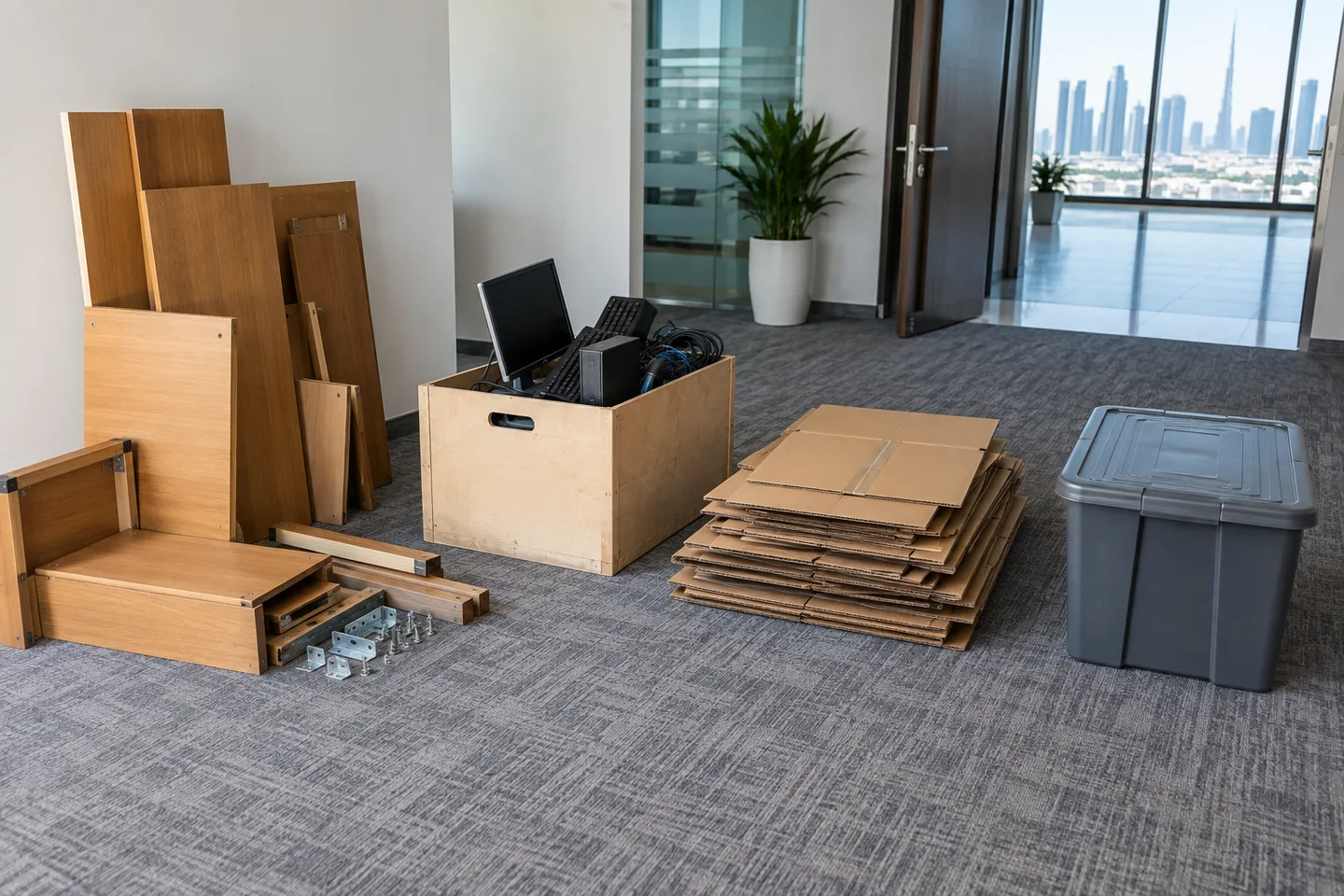
- Bundle components for transport: shrink-wrap long metal profiles and palletize flat MDF boards with corner protectors to prevent edge damage.
Navigating Dubai mall night access and freight dock permits
Dubai shopping malls enforce strict operational rules to protect retail foot traffic and public presentation. Bulky fixture dismantling and transport are strictly barred during mall trading hours.
All heavy shop fitting clearance must be scheduled during dedicated night fit-out and logistics windows, generally between 11:00 PM and 7:00 AM. Removal teams require pre-approved security gate passes, contractor loading bay slot allocations, and valid third-party liability insurance documentation submitted to mall facilities management.
Transit paths between the retail unit and the underground loading dock require continuous floor protection. Professional crews lay down heavy neoprene floor runners or corrugated plastic sheets across mall terrazzo, marble, and service elevator thresholds. Using pneumatic or non-marking rubber wheels on flatbed trolleys prevents scuff marks along service corridors, avoiding punitive mall penalties during final property inspection.
Material separation and commercial recycling streams
Decommissioned retail fittings represent valuable secondary resources when handled methodically during office fit-out clearance in Dubai and commercial strip-outs. Disassembled components are sorted into distinct processing streams:
- Ferrous steel uprights and shelving: sorted, bundled, and routed to licensed domestic scrap metal recyclers.
- Extruded aluminium channels: separated from slatboards for clean non-ferrous reclamation.
- MDF, particleboard, and timber panels: evaluated for secondary commercial workshop reuse or directed to industrial wood processing.
- Acrylic displays and tempered glass panes: segregated to prevent breakage and contamination of bulk collection vehicles.