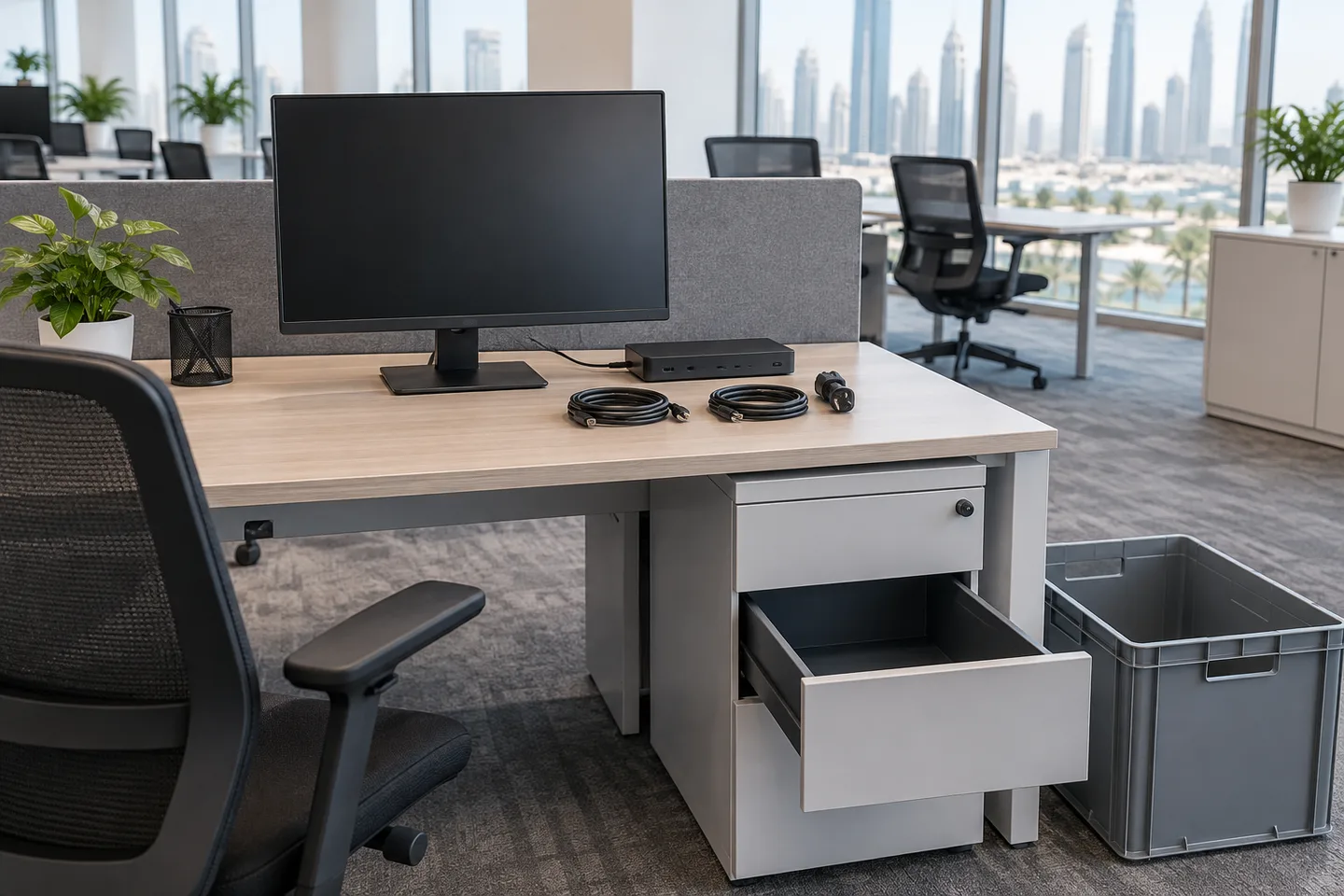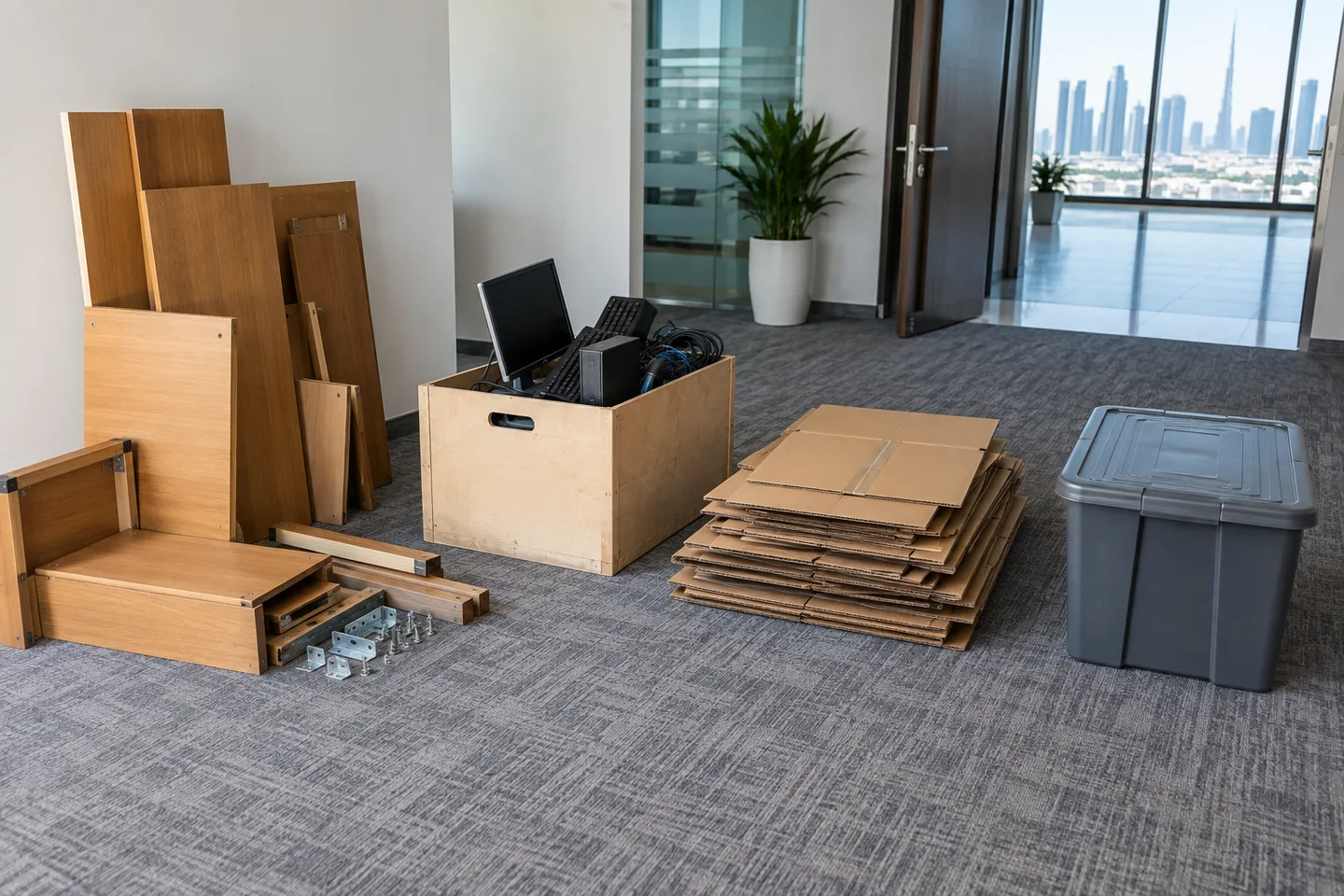
An office fit-out cannot start while the floor is still full of old furniture, archive boxes and stored equipment. Fit-out clearance empties the space of everything loose, mostly through furniture removal in Dubai, so the contractor receives a clear floor on the agreed date. It also removes the packaging and surplus that the new layout leaves behind once the works finish.
What does office fit-out clearance cover?
Office fit-out clearance covers movable contents at two points: before works start and after the new layout is installed. It does not cover demolition. Walls, ceilings, raised floors, fixed joinery and building services belong to the fit-out contractor's scope, even when they are also leaving the building.
- Before works: desks, chairs, storage, meeting furniture, archive boxes, pantry items and anything left in stores that is not moving into the new layout.
- After works: furniture packaging, protective sheeting, pallets, surplus desks or chairs the new layout no longer needs, and loose items displaced during the works.
- Outside the collection: partitions, ceiling tiles, carpet tiles still fixed down, joinery, cabling in containment and anything wired or plumbed into the building.
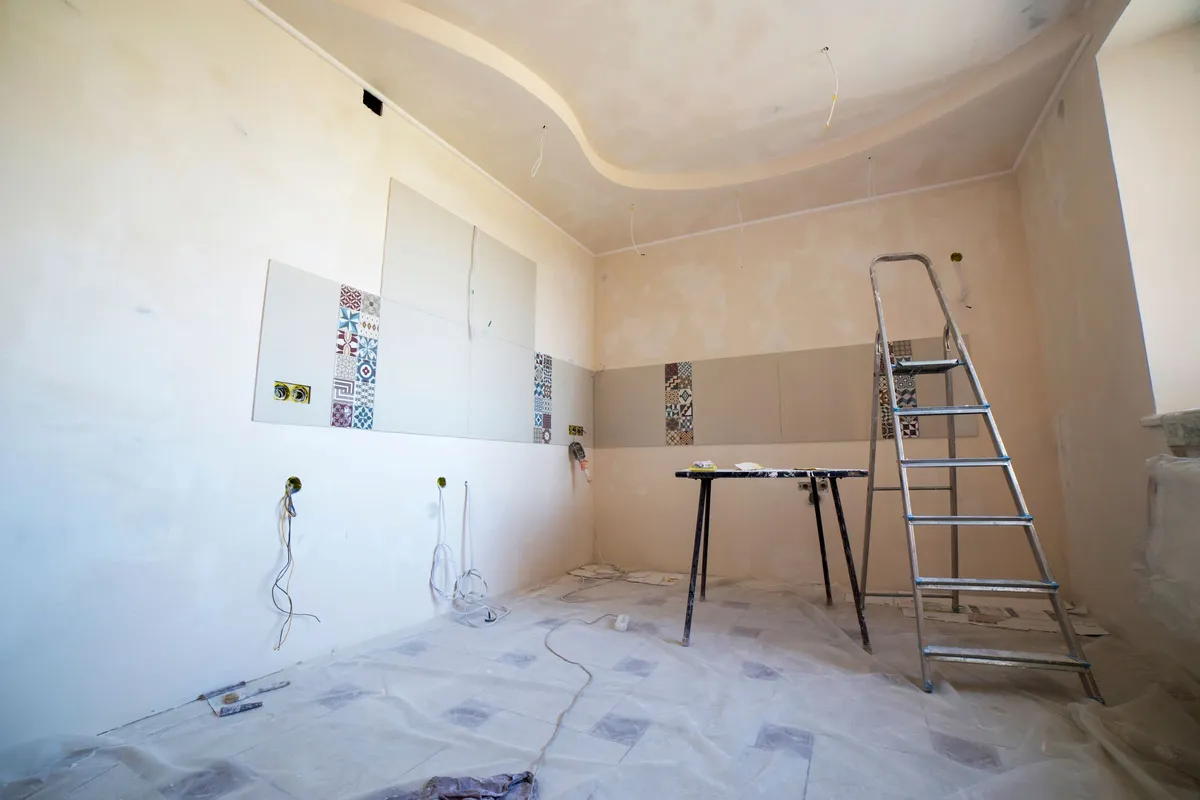
Sometimes the contractor asks for loose strip-out material to be collected separately, such as board offcuts, bagged ceiling tiles or lifted carpet. That is construction debris removal, quoted as its own load. Agree it with the contractor rather than leaving it in a corner for whoever arrives next.
Draw the fixed-and-loose line before anyone quotes
The most common problem on a fit-out clearance is an item nobody claimed. A reception desk may be freestanding or screwed to a wall. A storage wall may be a row of cabinets or built-in joinery. Walk the floor with the fit-out contractor or facilities lead and settle every borderline item while the office is still furnished.
- Loose: it can be unplugged, emptied and carried away without tools touching the building. The collection crew takes it.
- Fixed: it is screwed, bonded, wired or plumbed into the building. The fit-out contractor removes it or releases it in writing.
- Landlord-owned: it appears on the lease or the original handover schedule. It stays unless the landlord agrees otherwise.
Mark the borderline items on a simple floor plan and share it with everyone involved. A reception counter that turns out to be fixed on collection day either stays behind or waits for a contractor, and both outcomes cost the programme time.
Time the clearance to the fit-out programme
The pre-works clearance has one hard deadline: the day the contractor takes possession of the floor. Plan to finish a day or two before that, not on the same morning. A missed goods-lift slot or a late IT release should not delay the contractor's first shift.
- Confirm the date the contractor takes possession of the floor.
- Agree the fixed-and-loose schedule and mark borderline items on the floor plan.
- Let IT and records owners remove or release everything under their control.
- Book the goods lift and loading bay with building management for the clearance window.
- Clear the floor zone by zone, finishing with stores and the pantry.
- Walk the empty floor with the contractor and note anything left deliberately.
In office towers such as those in Jumeirah Lakes Towers, the clearance crew and the fit-out contractor may need the same goods lift during handover week. Put both bookings on one schedule so the clearance finishes before the first material deliveries arrive.
Clearing the floor after the fit-out finishes
Post-fit-out clearance is lighter work with a different risk: separating waste from things that still matter. Furniture deliveries leave cartons, foam corners, pallets and wrap. Among them sit spare keys, fixing kits, warranty packs and spare carpet tiles that facilities may want to keep.
Ask the contractor to confirm that its own waste, tools and materials have gone. Then move spares and attic stock into one labelled store before the crew starts, because packaging and small spares look alike when they are stacked in a corridor. What remains can leave as a single packaging collection.
Surplus furniture is a separate decision from packaging. Reusable pieces may go to another office, to storage or to a buyer; the rest joins the collection. Office desk systems and chairs should be dismantled or grouped the same way they would be in any other office clearance.
What to send for a fit-out clearance quote
Send the fit-out start date, the floor plan with the fixed-and-loose schedule marked, photos of every room including stores and the pantry, and the building's goods-lift and loading-bay rules. Say whether you need a pre-works clearance, a post-works clearance or both, and whether any contractor strip-out material has been added.
If the business is leaving the floor for good rather than refurbishing it, start from the office clearance inventory instead. Fit-out clearance assumes the business is staying, or that a new floor is being prepared for it.
A fit-out clearance succeeds when the contractor walks onto an empty floor on day one and nobody argues about the reception desk. That depends less on the collection itself than on the schedule settled a week earlier: what is loose, what is fixed, who owns each item and which day the floor changes hands.