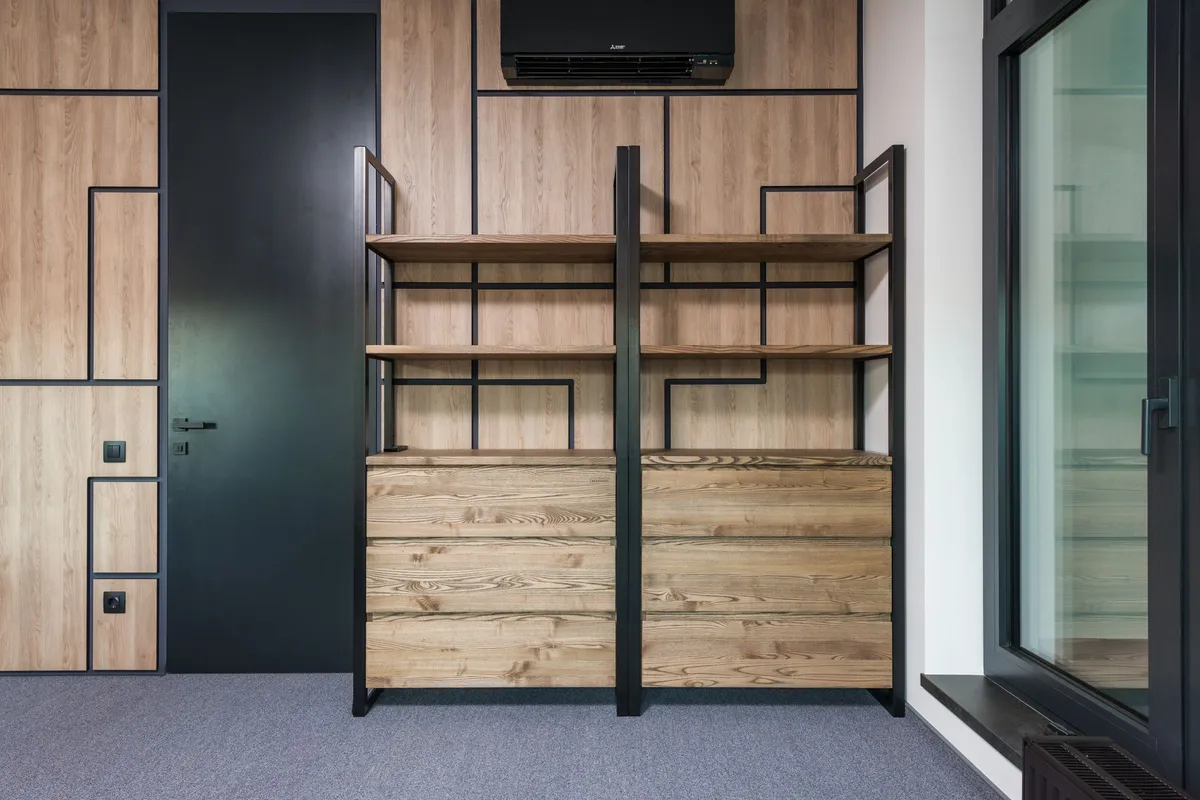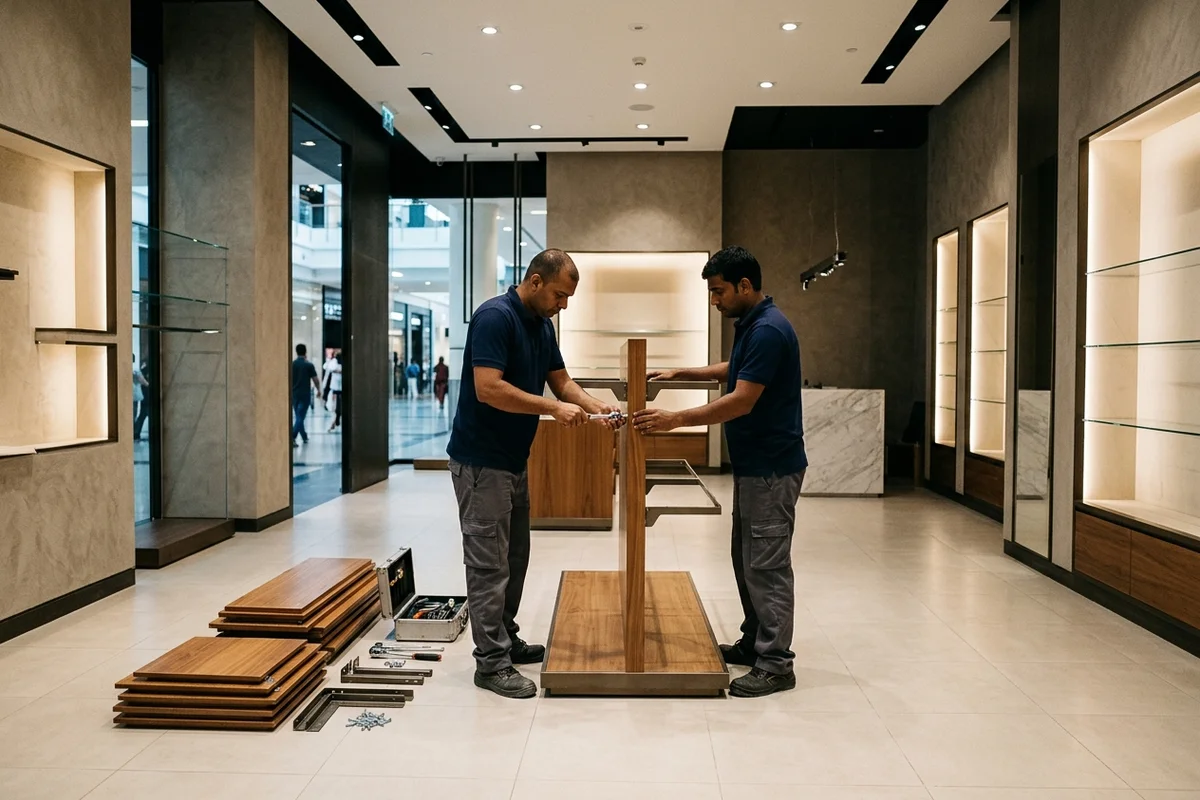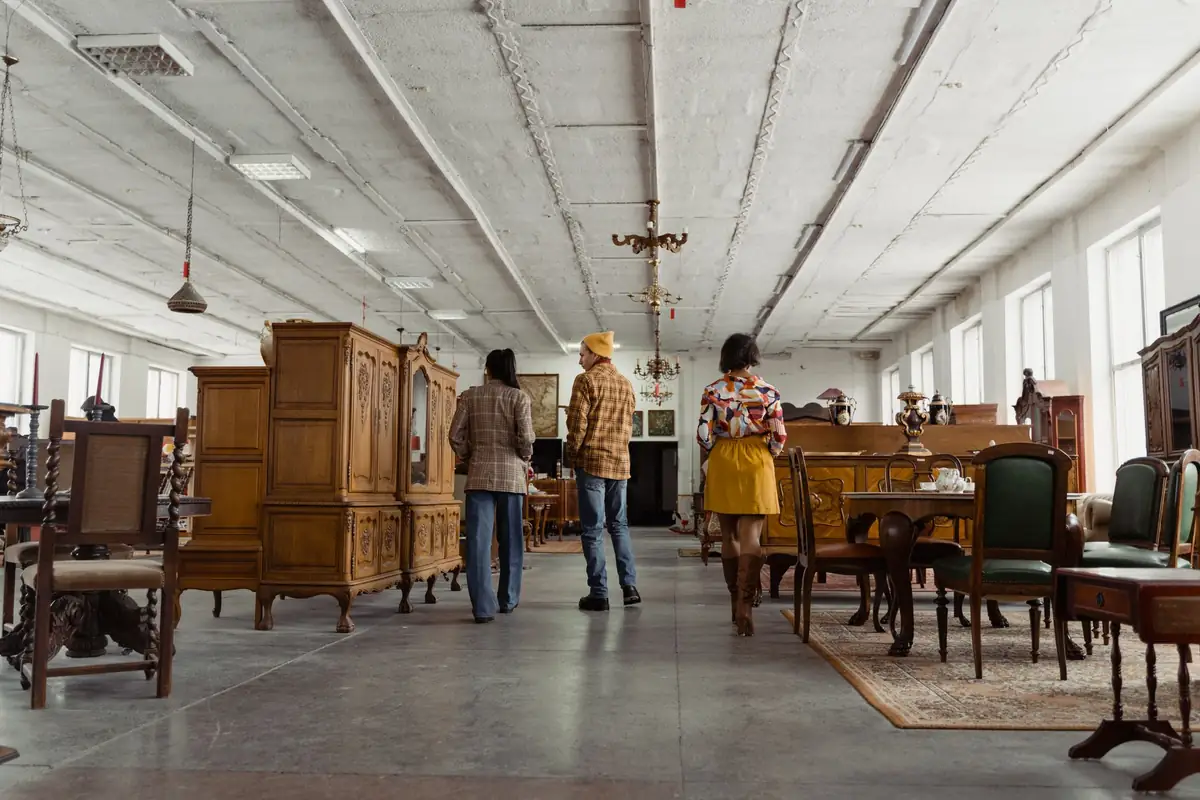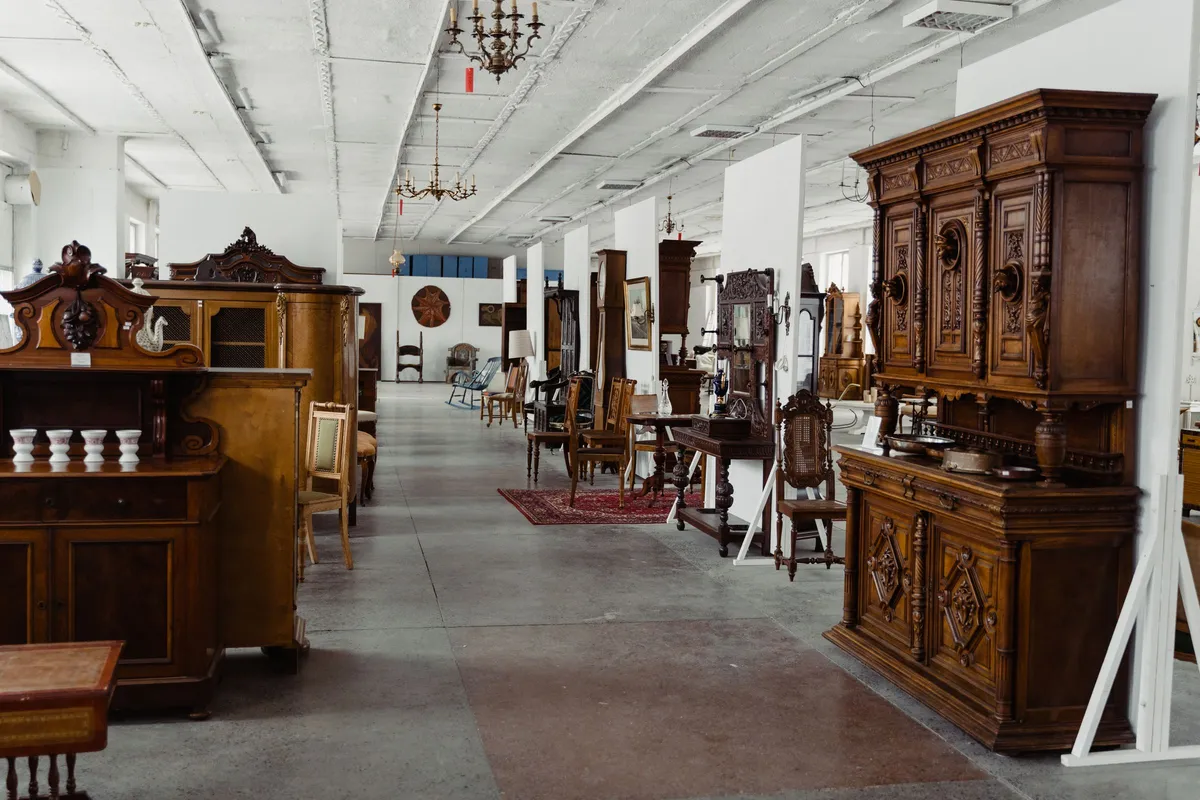
A showroom holds fewer items than a shop, but each one is bigger, often more valuable and set up for display rather than for moving. When a furniture, kitchen, bathroom or lighting showroom in Dubai closes, relocates or changes its range, every display model needs a destination before anything is carried out. This guide covers how to sort display stock by route, how to handle the largest pieces, and where furniture removal in Dubai fits into the plan.
How is a showroom clearance different from a shop clearance?
A showroom clearance is organised around display models, not around boxed stock. A shop sells from shelves and a stockroom, while a showroom shows one assembled example of each product and sells from a catalogue or a warehouse. The decisions are therefore about individual large pieces, each of which may have a different owner and a different next stop.
If your premises is mainly a shop with shelved stock, the guide to retail store clearance covers routing unsold stock. Fixed counters, wall systems and shopfront fittings are covered separately in the guide to shop fitting removal.
Decide the route for each display model
Start with a floor list that gives every display model a route. Walk the showroom with the list, mark each piece, and do not book any collection until every line has an answer.
- Back to the supplier or brand: pieces on loan, on consignment or under a display agreement. Check the agreement, because these are not yours to sell or dispose of.
- To your own warehouse or another branch: current range pieces in good condition that will be shown again or sold from stock.
- Sold as ex-display: pieces sold to customers or trade buyers before the closing date, with a firm collection deadline for buyers.
- Donated: sound pieces that will not sell in time, offered to a charity or community group as complete items.
- Disposed: damaged, discontinued or incomplete pieces that have no realistic second use.
Selling ex-display pieces has its own steps, from photographing and pricing to dealing with buyers, which are covered in the guide on how to sell used furniture. For a closing showroom, set the last buyer collection date a few days before the clearance date, so unsold pieces still have time to be moved to the donation or disposal list.
Handling large display pieces
Showroom pieces are often the biggest versions of a product, because they are chosen to impress on the floor. Corner sofas, extending dining tables, king beds and large cabinets almost always need taking apart before they leave, and some were assembled in place after the showroom was fitted out.
- Corner and modular sofas: separate the modules and remove the connecting brackets, and keep the brackets with the sofa if it is staying in use.
- Dining tables with stone or glass tops: lift the top off the base and carry it on edge, with the corners protected.
- Display beds: remove the headboard and slats, and treat the display mattress as its own item for mattress disposal if it is not being kept.
- Kitchen and bathroom displays: these are usually connected to power or water for demonstration, so the showroom's contractor must disconnect them before collection.
- Lighting displays: chandeliers and pendant fittings on ceiling grids should be taken down by an electrician, then packed or collected as loose items.
Working display appliances, such as fridges, cookers and washing machines in a kitchen or appliance showroom, follow the same split. Those being returned or sold stay with the business, and the rest can go through appliance removal once they are disconnected and empty.
Protect the pieces you are keeping
The greatest risk in a showroom clearance is that a piece meant for the warehouse gets damaged or mixed into a disposal load. Keep the two groups physically apart on the day, in separate areas of the floor, and protect the kept pieces before any disposal work starts.
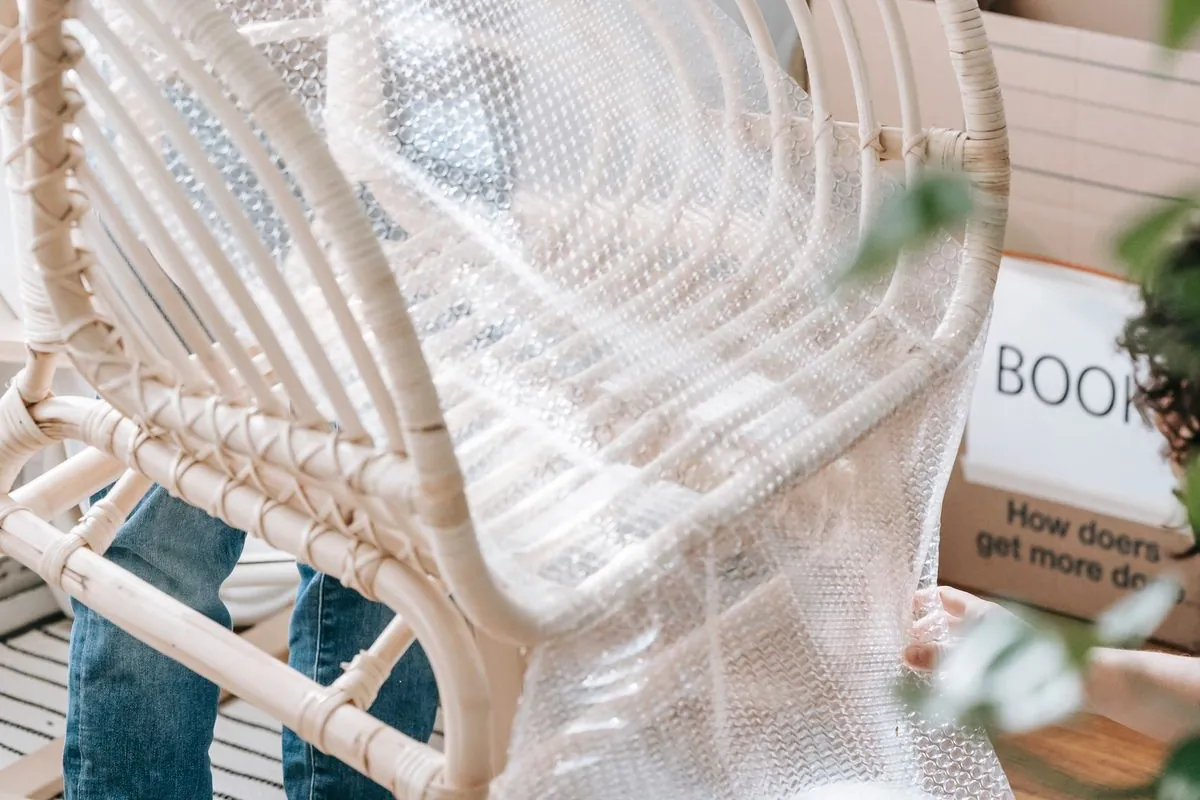
- Wrap kept pieces in blankets or bubble wrap, with extra protection on corners, legs and glass.
- Bag and tape fixings, brackets and keys to the piece they belong to.
- Label each kept piece with its destination, such as warehouse, branch or supplier.
- Photograph the condition of supplier-owned pieces before they leave, in case of a later dispute.
Our crews take the donation and disposal groups. If you also want pieces dropped at your own warehouse, ask for it as a separate line on the quote, with the warehouse address and its receiving hours, rather than assuming it is included.
Access and timing for a showroom exit
Many showrooms in Dubai sit on main roads or in light-industrial areas, with a wide glass frontage and a rear service door. Showrooms in Al Quoz often have direct vehicle access at the back, while a unit in a mall or a mixed-use building will have loading-bay slots and goods-lift rules to book in advance.
- Confirm the handover date with the landlord and work backwards from it.
- Set the deadline for supplier returns and buyer collections a few days before the clearance.
- Book the loading bay or rear access for the clearance day.
- Clear display props, rugs and accessories first, then the furniture, then any loose fixtures.
- Walk the empty showroom with the landlord's checklist before handing back the keys.
What to send for a showroom clearance quote
- The floor list, showing which pieces are for disposal or donation.
- Photos of the largest pieces, with rough dimensions.
- Which displays are still connected to power or water, and who is disconnecting them.
- Access details: rear door, loading bay, goods lift and any time restrictions.
- The clearance date and the landlord's handover date.
A showroom clearance is decided on the floor list, not on the day. Once every display model has a route and the kept pieces are wrapped and labelled, the removal itself is a straightforward job of taking large furniture apart and loading it carefully.