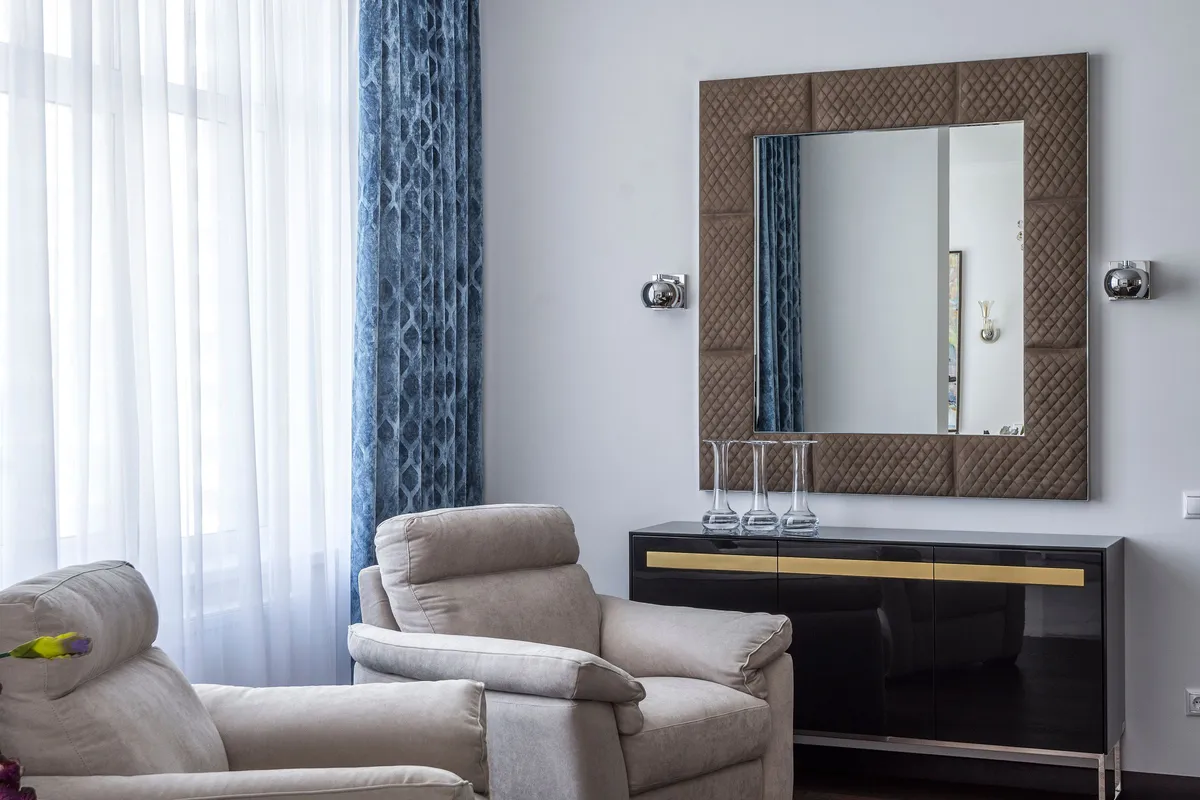
Mirrors and glass furniture get grouped together because they look alike, and then handled as though they were the same thing. They are not. A mirror, a toughened glass panel from a table or cabinet, and the glass a bottle is made from are three separate materials with three different failure behaviours and three different endings — and knowing which one you are holding is what decides how it leaves your home safely. This guide covers how to tell them apart, what to check before anything is lifted, and what honestly happens to each afterwards. Each is handled differently on a furniture removal in Dubai, which is why the crew asks which you have before lifting anything.
Three materials that look the same
Almost all household glass falls into three types, and the difference between them is not appearance but how they break.
- Mirror. Ordinary annealed float glass with a thin reflective metal coating on the back and a layer of protective paint over that. It cracks into long, sharp shards that mostly stay held in place by the backing and the frame.
- Toughened, or tempered, glass. Heat-treated after it is cut, which is why it cannot be cut or drilled afterwards. It does not chip politely — it holds up well until it fails, and then the whole panel goes at once into small blunt pebbles.
- Laminated glass. Two sheets bonded to a clear plastic interlayer. It cracks and stays in one piece, held together by the layer in the middle, which is why it is used where a sheet has to fail safely.
That difference is the practical heart of the subject. A cracked mirror is a sheet of blades held together by paint. A failed toughened panel is a heap of gravel. The first has to be kept still and wrapped; the second has to be swept up. Treating either one like the other is how people get hurt clearing their own flat.
Which mirror do you actually have
Before anything else, work out how the mirror is attached, because that decides whether it is yours to remove and whether it can come off in one piece. There are three versions and they look similar once they are on the wall.
- Freestanding or leaning. A full-height mirror resting against a wall, sometimes with a strap or a small bracket stopping it walking forward. The easiest case — nothing to undo.
- Hung. A framed mirror on hooks, a D-ring and wire, or a French cleat. It lifts off, though a heavy one needs two people and a hand under the bottom edge as it comes away.
- Bonded to the wall. A frameless bathroom, hallway or wardrobe mirror stuck on with mirror adhesive, sometimes with clips at the corners as well. This is the one that catches people out.
A bonded mirror rarely comes off intact, and it frequently takes tile, plaster or a section of the wall finish with it. That turns a disposal question into a repair question, so it is worth deciding deliberately rather than starting and finding out. It is also the version most likely to be a fixture rather than a possession: a mirror fitted as part of a property's original handover generally stays, and removing one that was there when you moved in can turn into a conversation about your deposit. Check your tenancy terms rather than assuming either way.
Mirrors attached to furniture are a fourth case worth naming. A dressing-table mirror or a mirrored wardrobe door comes off before the piece moves and travels flat and separately, and both are covered in more detail on the pages for those items.
Glass furniture: shelves, tops and fronts
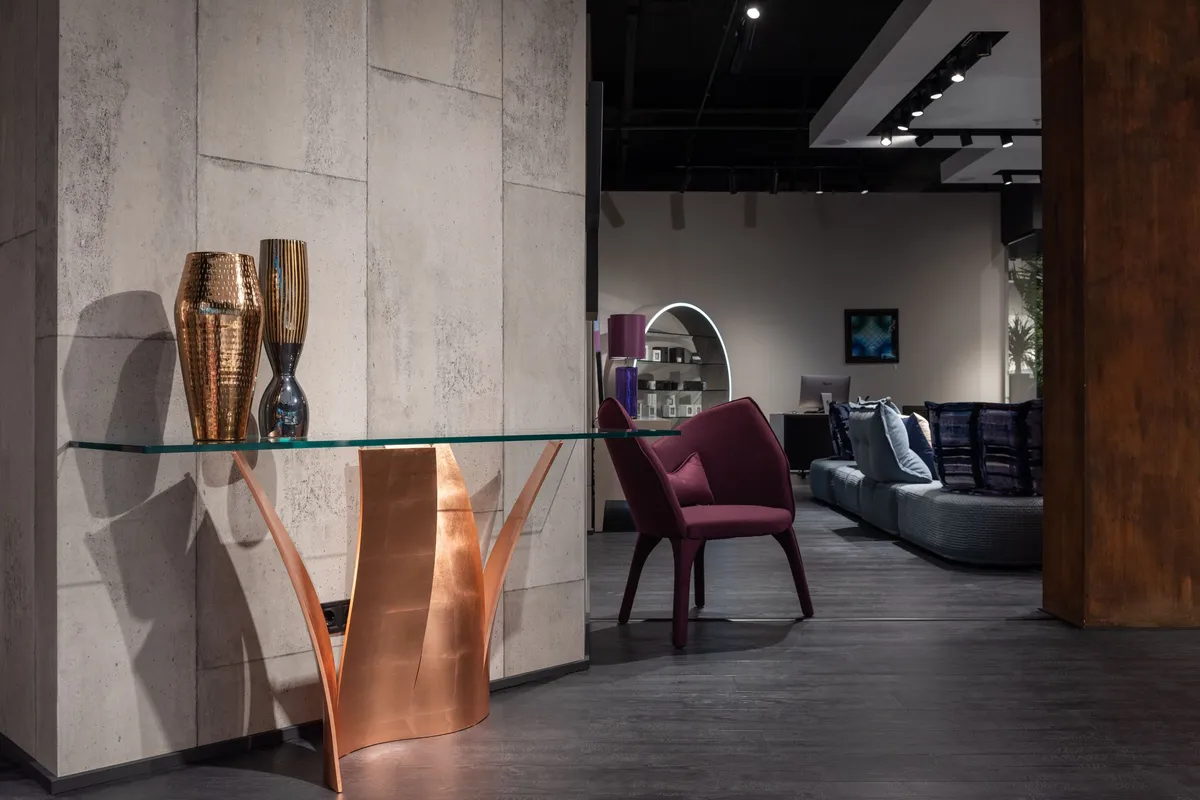
Glass in furniture comes in three arrangements, and the arrangement matters more than the item does. Glass that sits loose on a frame lifts straight off. Glass fixed into a frame — a cabinet door, a mirrored panel — stays in the frame and the frame travels as one object. Glass shelves sit in channels or on small pegs and slide out, which is the first thing to do to any display unit before it is moved.
A bare unframed sheet is the most awkward shape in a home to carry, and it is worth understanding why rather than just being told to be careful. It has no handles and no forgiving edge; all of its strength is across its face and almost none of it is at the corners; and it is heavy enough that anyone carrying it is committed the moment they lift. A polished, exposed edge is a fair sign the panel is toughened, since toughened glass has to be finished before it is heat-treated. That is good news for everyday use and bad news for a corner knock on a doorframe.
Getting an intact sheet out of the flat
Glass and mirror travel upright, on edge, and never flat. A sheet carried flat sags very slightly under its own weight, and that is the loading it is least able to take; on edge it is doing what it was designed to do. Two people take opposite ends, walk slowly, and agree where they are putting it down before they pick it up.
Tape a large X across the face before it moves. Be clear about what that achieves: it does not stop the panel breaking, it holds the pieces together if it does, which is the difference between a mess and an injury. Cover both faces with cardboard or a blanket, protect the corners specifically, and mark the wrapped panel so nobody stacks anything against it while it waits.
One measurement is worth taking in advance: the mirror's longest dimension against the height of your doorways and the lift car door. A sheet that cannot be tilted has to go through standing up, and a full-height mirror is often taller than people assume once a frame is added to it.
When it is already broken
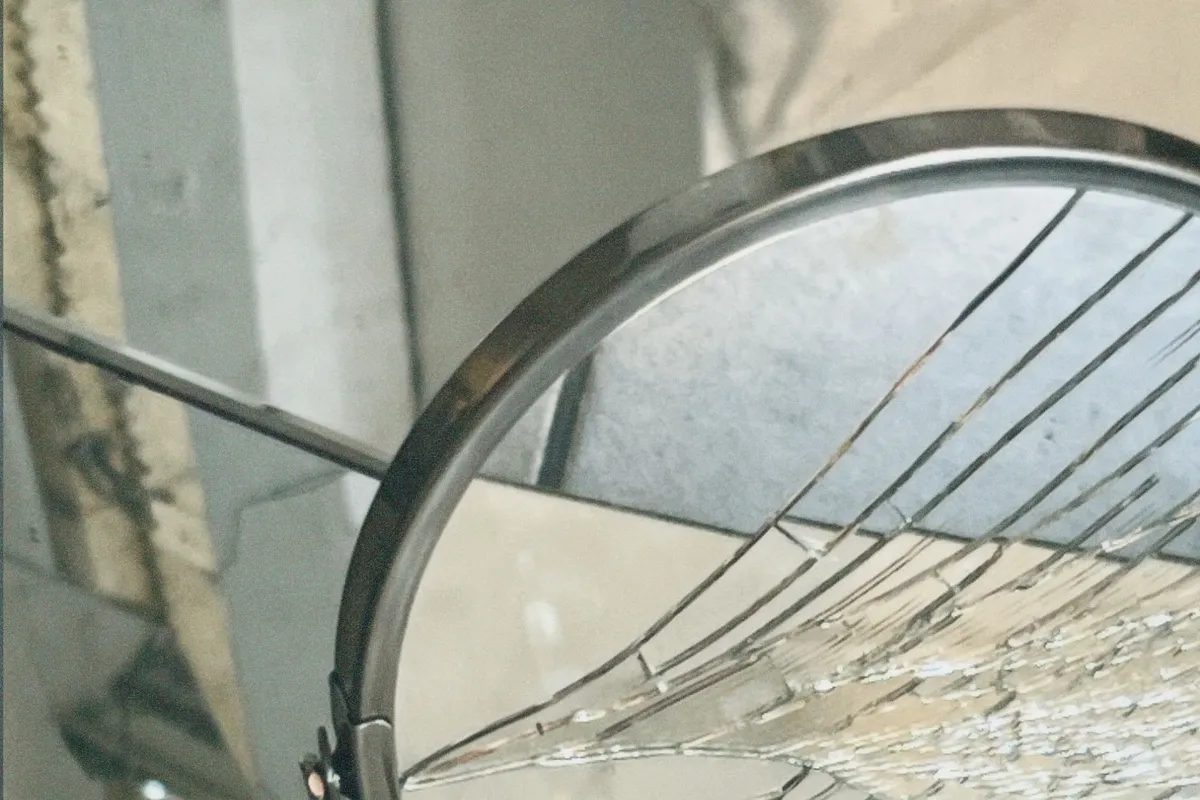
Leave a broken mirror in its frame. The backing paint and the frame are holding the shards in a shape, and taking them out one at a time turns a contained problem into a floor covered in blades. Tape across the whole face, wrap the frame and all, and move it as a single object.
For anything already loose, sweep rather than vacuum — a household vacuum cleaner is not built for glass and the fine fragments end up in the motor and the bag. Bag the sweepings into something rigid, a box or a bucket rather than a bin liner that a fragment will simply cut its way out of, and put a note on it. Then say when you book that there is broken glass involved. That one sentence changes what the crew brings with them, and it is the difference between a routine collection and somebody being cut on your landing.
Where mirror and furniture glass actually end up
Neither belongs in glass recycling, and this is the point most people are surprised by. Household glass recycling exists for container glass — bottles and jars — and it works because that material is chemically consistent enough to be melted back down together. A mirror is not: it carries a metal coating and a paint layer that behave as contamination in a container-glass batch. Toughened glass is not either, because the heat treatment that makes it useful in furniture also makes it behave differently under heat from bottle glass.
What happens instead is separation rather than recovery. On a collected load, glass is kept apart from timber, metal and foam because it contaminates all three, and it is handled as its own material rather than being fed into a bottle stream. It is more honest to describe that as keeping it out of the wrong place than as recycling it, and anyone who tells you a mirror gets recycled alongside your bottles is describing something that does not happen.
Most of the risk in clearing mirrors and glass furniture is decided in the first two minutes, before anything is lifted: work out whether it is bonded to the wall, whether the sheet is loose or framed, and whether it is already cracked. Get those three answers, tape the face, carry it upright, and say the word glass when you book. The material is unforgiving, but it is entirely predictable, which is more than can be said for most of what leaves a home.