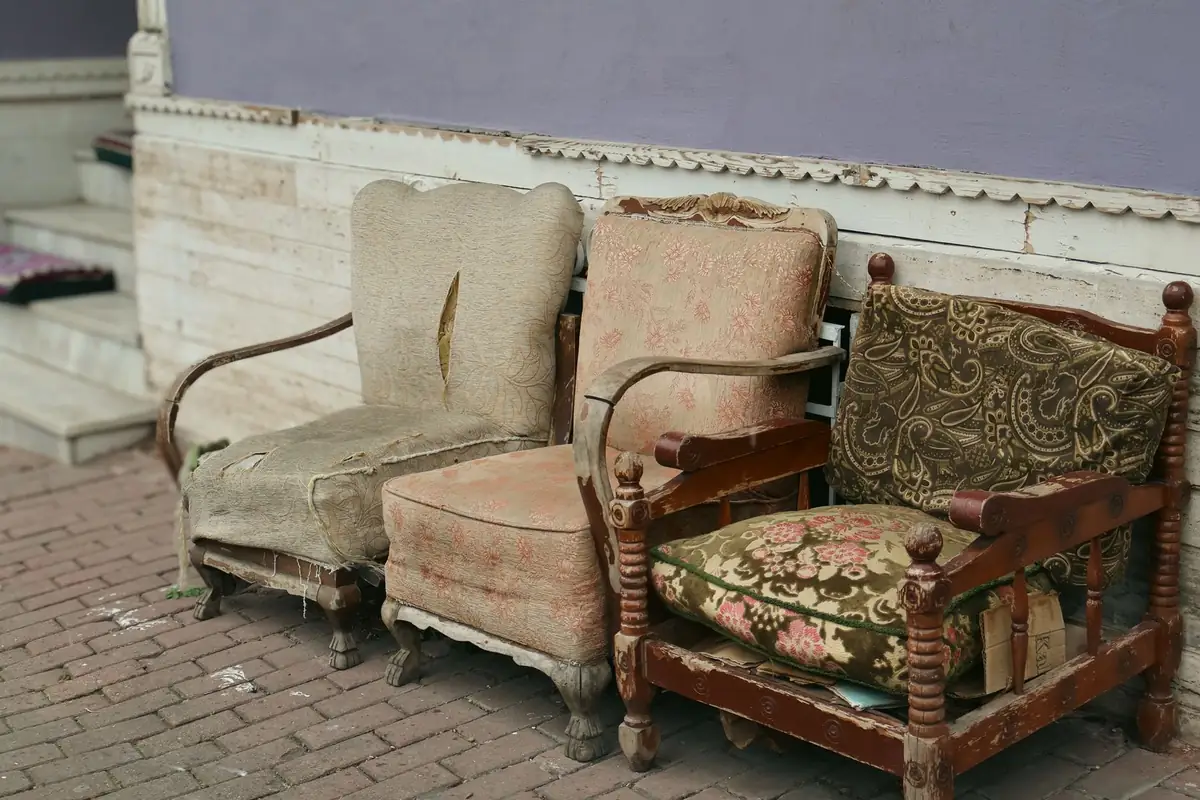
Furniture rarely breaks all at once. A drawer front comes away, then a leg starts to wobble, then one day somebody sits down and the frame gives. By the time you decide to get rid of it, the piece is not simply old — it has stopped being a single object that can be picked up by its own structure. That is what separates a broken furniture collection from an ordinary one, and it changes more than most people expect.
What counts as broken furniture
Broken furniture is any piece that will not survive being moved in one piece, or that is no longer safe to use. The practical test is simple: if you would not sit on it, sleep on it or stack anything on it, it is broken rather than used.
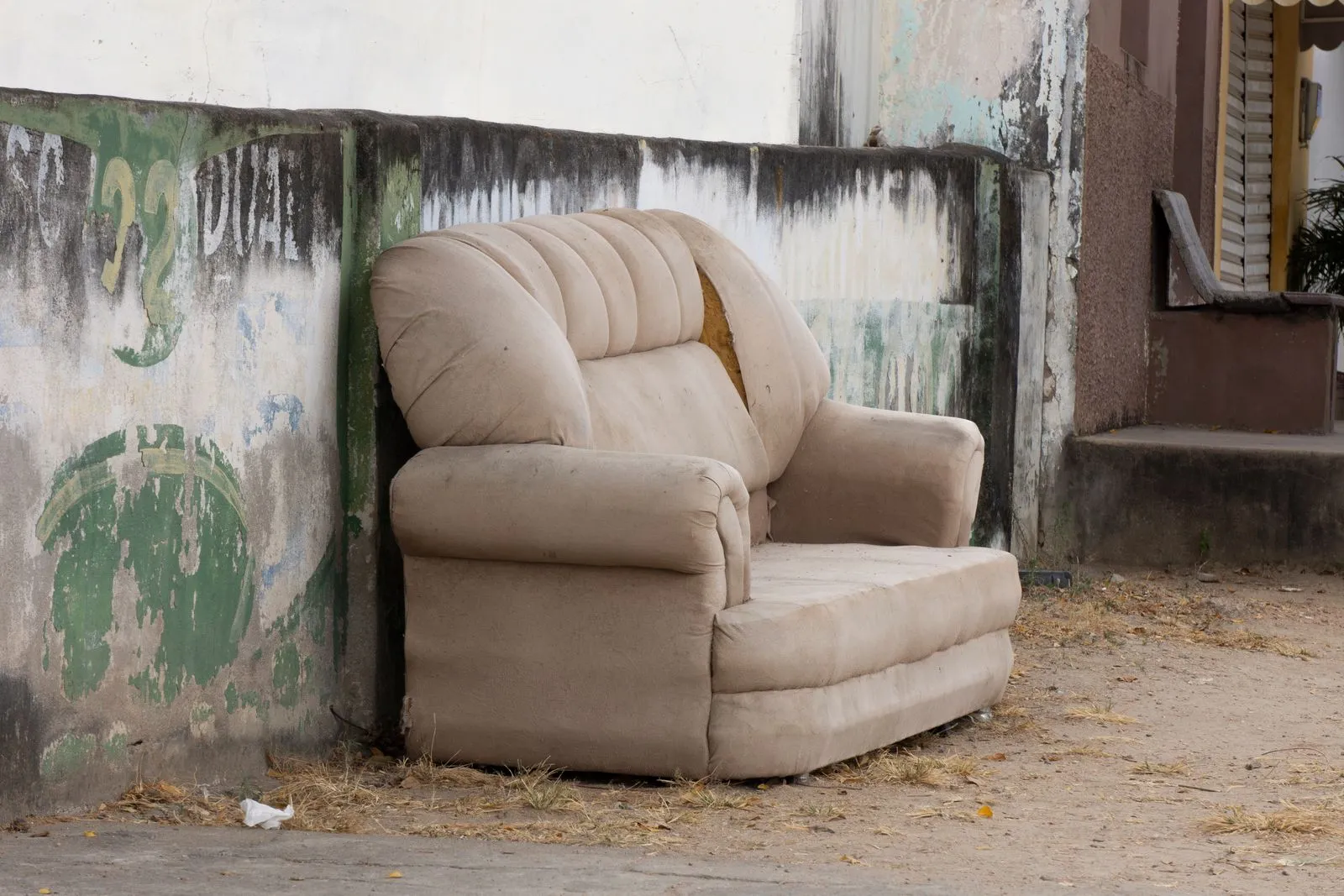
- A sofa or armchair whose frame has cracked, so the seat drops or an arm moves independently of the back.
- A bed whose slats have gone, or whose side rail has pulled out of its fixing.
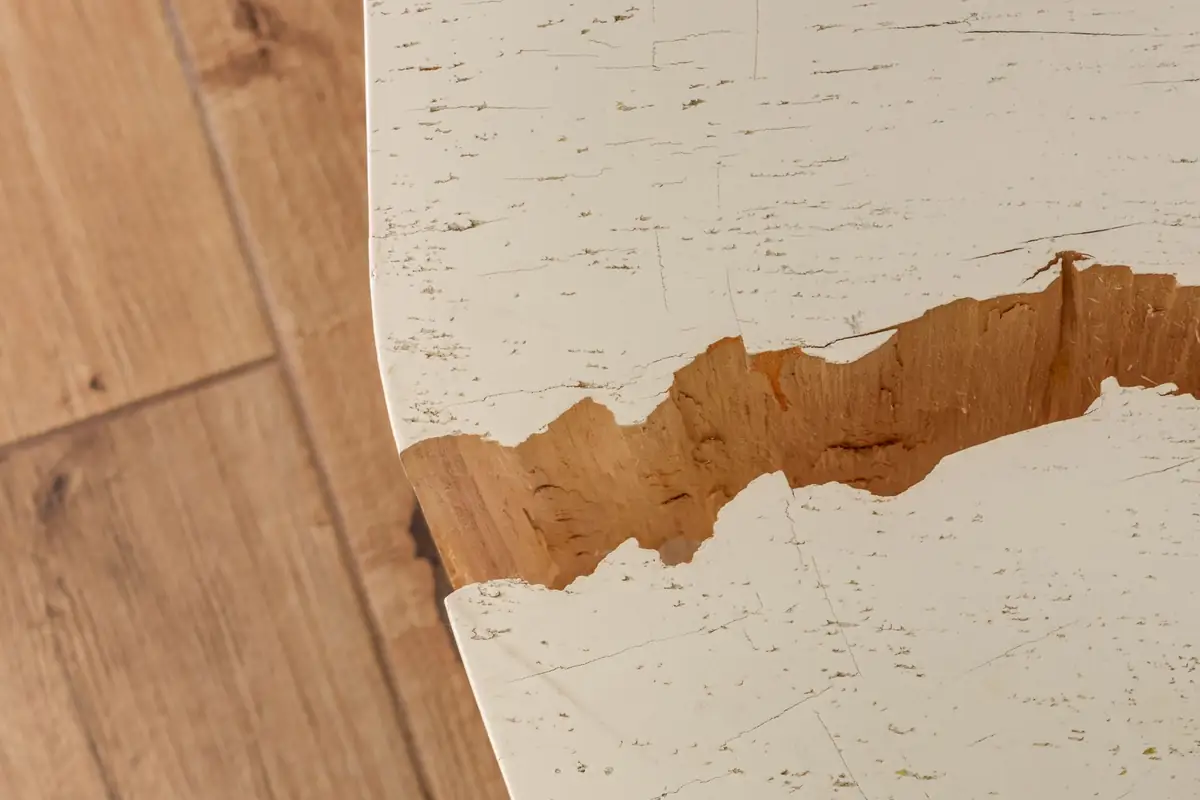
- A wardrobe, cabinet or chest whose board has swollen, split at a screw hole or opened at a corner joint.
- A table with a crack running across the top, or a leg that no longer sits square.
- Anything with glass that has cracked, chipped through the edge or shattered inside its frame.
- A chair whose joints move when you pick it up, however solid it looks standing still.
Why a broken piece is handled differently
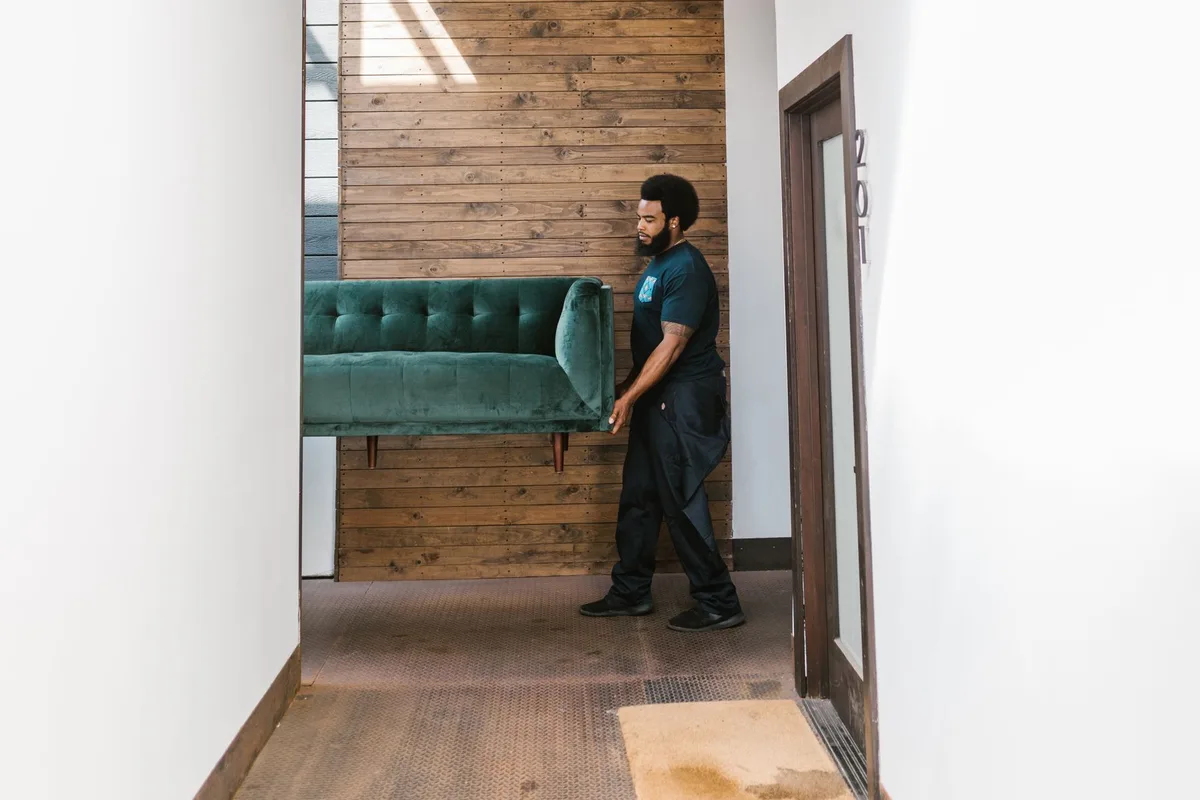
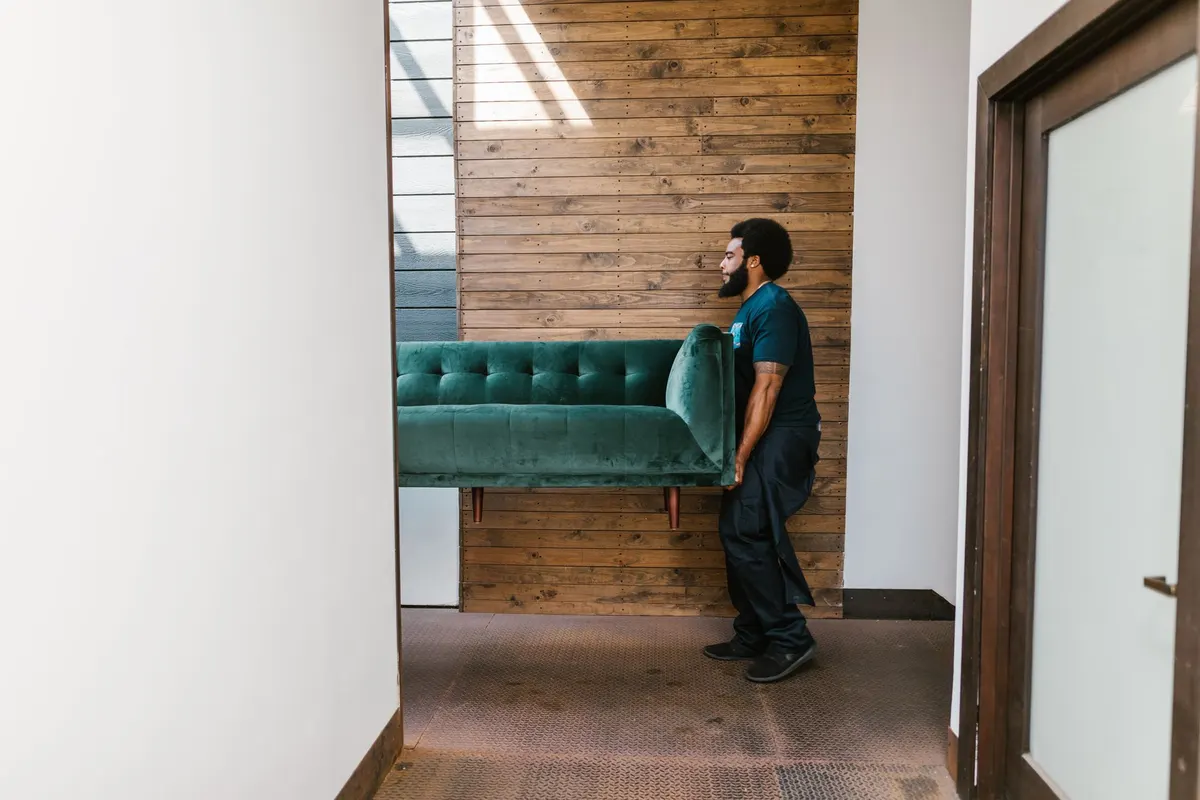
An intact piece of furniture carries its own weight through its frame, which is what lets two people lift it by the corners. A broken piece does not. Lift a sofa with a cracked frame by its arms and the middle sags, the split opens further, and the load transfers somewhere nobody planned for.
So broken items are moved as though they are already in parts. They are lifted lower, carried in shorter stages, and often taken apart deliberately at the point that has already failed rather than wrestled through a doorway whole. It is slower than moving the same piece intact, which surprises people who assume damage makes something easier to deal with.
The other difference is where it goes. An intact piece has options — passed on, sold, given away. A broken one has a single honest destination, which is disposal with as much of the material recovered as possible. That removes a decision, and most people find it a relief rather than a loss.
The failures that make a piece unsafe to move
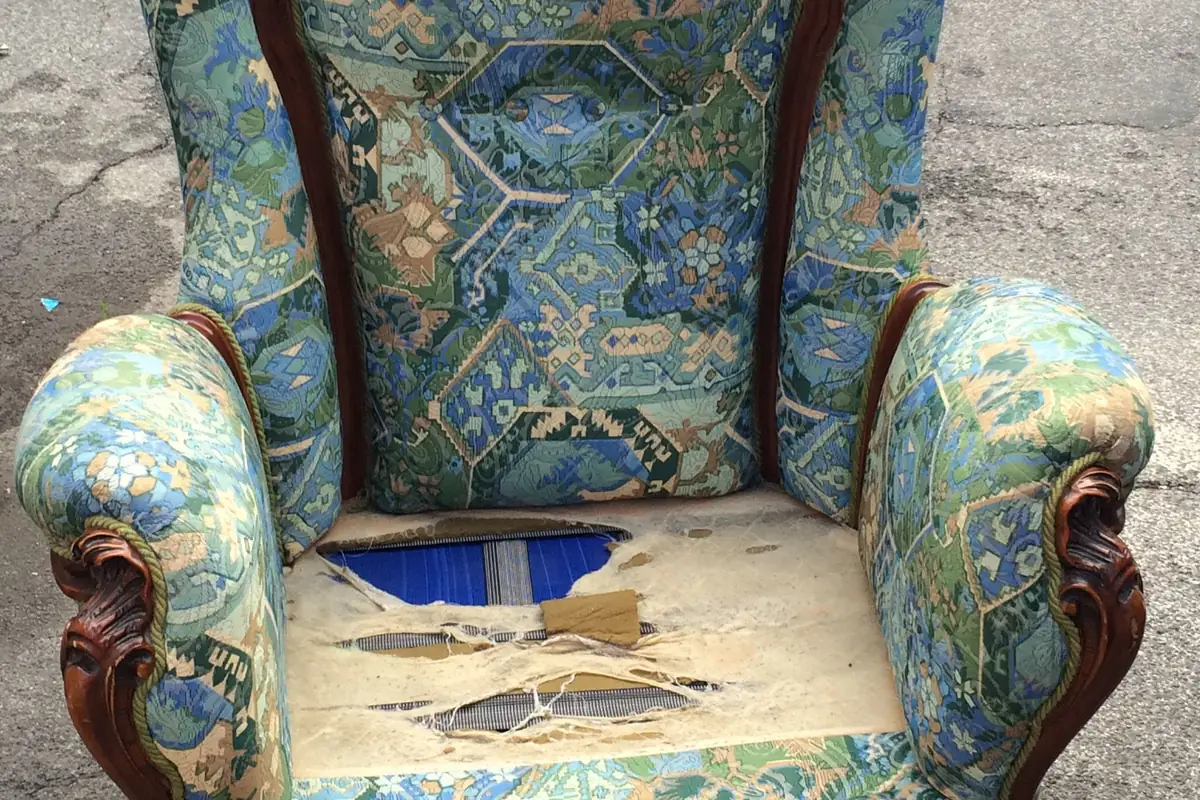
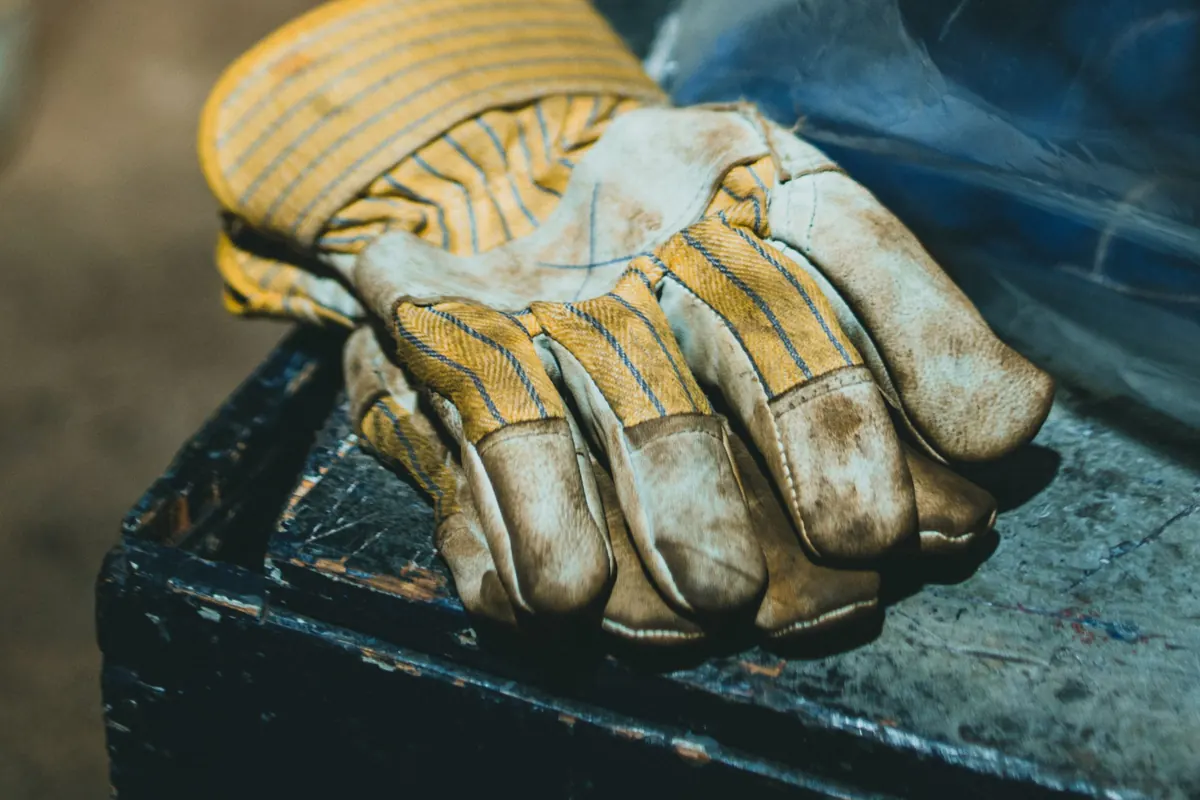
Some breaks are simply untidy. Others are the reason a collection gets done with gloves and a plan.
- Splintered chipboard and MDF — a broken board edge is sharp along its whole length, and the dust off it is not something to be breathing in a small room.
- Exposed screws, brackets and upholstery staples — these appear the moment a frame opens up, and they catch hands, door frames and lift walls.
- Broken glass in a table top, cabinet door or mirrored panel — cracked glass fails again while it is being lifted, not while it is standing still.
- Gas struts in recliners, lift-up storage beds and folding sofa beds — a strut under tension is stored energy, and a bent or partly detached one releases without warning.
- Sprung sofa-bed mechanisms — the frame inside a sofa bed is built to snap into position, and it does exactly that once the structure around it has failed.
None of this makes an item impossible to collect. It does mean the crew should know before they arrive rather than finding out in your living room, so describe the break when you book, not just the item.
Half-broken is harder than fully broken
A piece that has come apart completely is often the easiest thing on the list. Flat panels, loose legs and a bag of fixings stack neatly, load quickly and take up less room than the assembled item ever did.
The awkward case is the one in between. A wardrobe still standing but split down one side. A bed still assembled but with a rail torn out of the board. It holds its full shape and its full size but none of the strength that shape implies, and it cannot be taken apart cleanly because the fixing points are exactly what failed.
If a piece is genuinely in two halves already, leave it that way. If it is still standing, leave that alone too. A half-dismantled item with three of its eight screws out is the worst version of both.
Broken does not mean smaller
A collapsed sofa occupies the same space on a truck as a working one, and a split wardrobe still has to be carried out as a wardrobe-sized object. Collections are worked out from the space something takes and the effort of moving it, so damage tends to add to a job rather than reduce it.
The exception is genuine flat-packing. Where a piece really has come apart into panels, it stacks, and the space it needs drops sharply. Mention that when you describe the item, because a broken wardrobe and a wardrobe in panels are two different collections.
Getting it ready without making it worse
- Leave the piece where it stands. Dragging a failed frame across a room usually finishes it off and marks the floor on the way.
- Do not part-dismantle it. Either take it fully apart or leave it entirely assembled.
- Empty it completely, including the drawer that no longer opens properly — that one is usually still full.
- Contain any broken glass: tape across a cracked panel to hold it together, and sweep up and bag whatever is already loose.
- Bag the screws, brackets and fittings that have come out, and keep them with the piece.
- Photograph the actual break when you book, not just the item. It is the fastest way to explain what the job involves.
Where a broken piece ends up
Broken furniture is separated by material rather than sent away whole wherever that is possible. Timber and board go one way, metal frames and fixings another, foam and fabric another again, and glass is dealt with on its own because it contaminates the other streams. Very little of a broken sofa is genuinely useless. Almost none of it is reusable as furniture.
That is worth knowing, because it answers the question people actually have when they finally give up on a piece. Letting go of something broken is not the same as sending it straight to landfill, and it is a better outcome than the one most broken furniture gets, which is another two years in a spare room.
The common mistake is waiting, on the theory that a piece might be fixable or that it will somehow be easier to deal with later. Board that has split does not un-split, and a frame that has cracked once cracks again in the same place. Once something has failed the sit-on-it test, the useful thing to do is describe the break honestly, leave it exactly as it stands, and let it go in one visit.