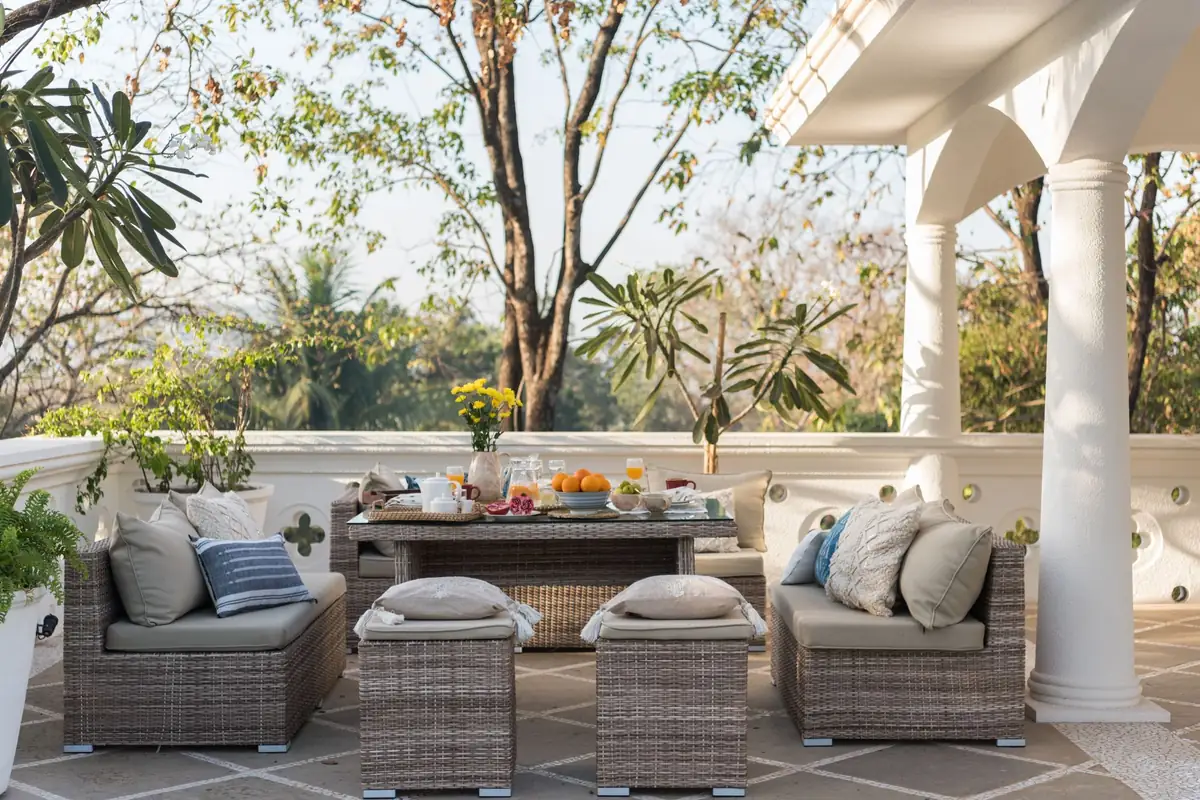
Garden and terrace furniture looks like the easiest thing on any property to collect. It is already outside, there are no stairs, and nothing has to come through a hallway. Then somebody tries to lift the parasol base. Outdoor furniture is built for weather that would destroy the same pieces indoors, and nearly every design choice that keeps it upright in a strong wind is a choice that makes it slower to take away. This covers how a garden, terrace or roof-terrace collection runs in Dubai — what lifts, what is bolted down, what belongs to your landlord, and how it all leaves the property.
Why outdoor furniture is a different job
Outdoor furniture is engineered to stay where it was put. Weight is added at the bottom deliberately, feet are filled with sand or water, frames are bolted through decking, and the larger structures are fixed to the villa itself. None of that exists indoors, so an outdoor collection is less about carrying things and more about releasing them first.
The second difference is what the climate has already done to it. A few summers of direct sun, heat and fine dust leave plastic brittle, weave dry and metal rusted at its welds. That matters practically rather than cosmetically. A chair stiffened by the sun tends to fail while it is being lifted rather than while somebody is sitting on it, so pieces are handled as though they might come apart, not as though they are sound.
The parasol base is the heaviest thing out there
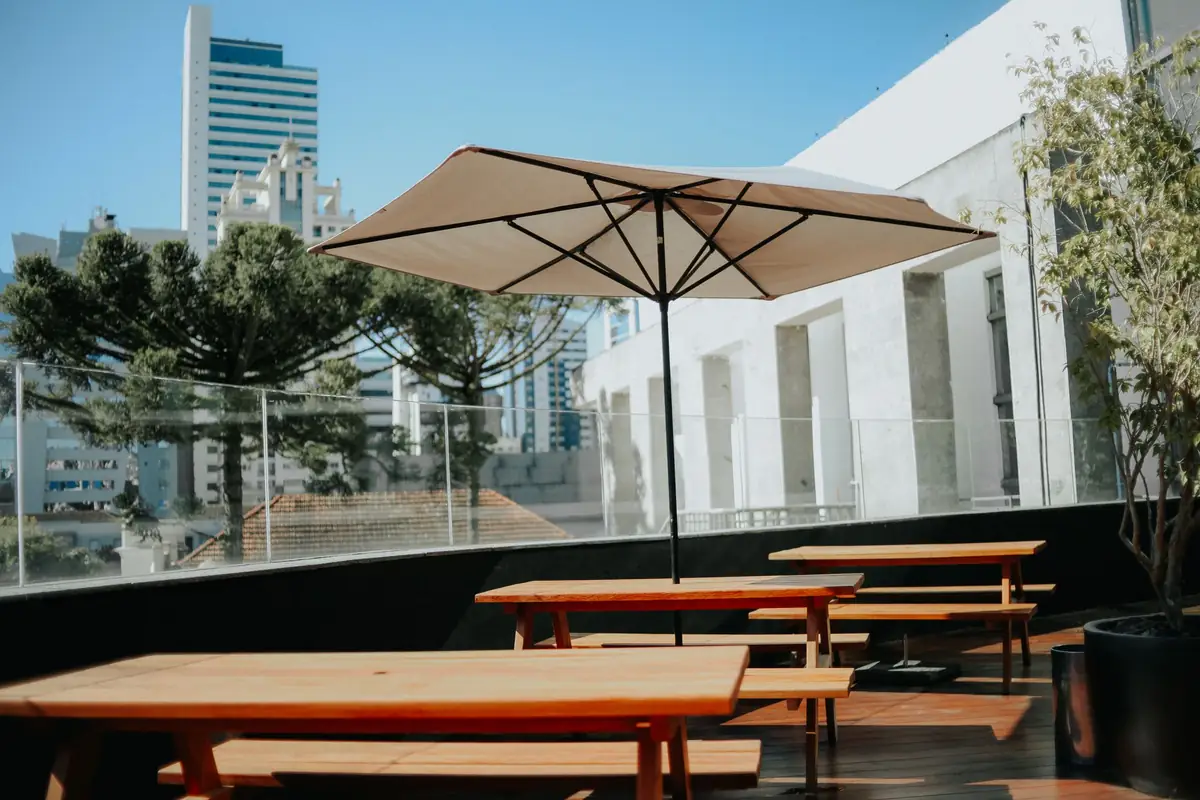
On most terraces the heaviest item is not the sofa or the table. It is the parasol base. Cast concrete, granite and steel bases are made heavy enough to hold a large canopy against wind, and they come out as their own item, usually with two people on them.
Filled bases are a separate problem. Plastic bases designed to take sand or water are light when empty and unmanageable when full, and nobody can tell which state yours is in by looking at it. Drain a water-filled base a day or two ahead so it has time to empty properly. A sand-filled one is either emptied where it stands or taken as it is, and it is worth saying which you have when you book.
The canopy and the pole separate from the base on almost every design. Take the canopy off, close it and lay the pole down before the day. A cantilever arm left extended catches on everything between the terrace and the truck, and it is the part most likely to be damaged in transit — which matters if the parasol itself is going to somebody else.
What is yours and what belongs to the property
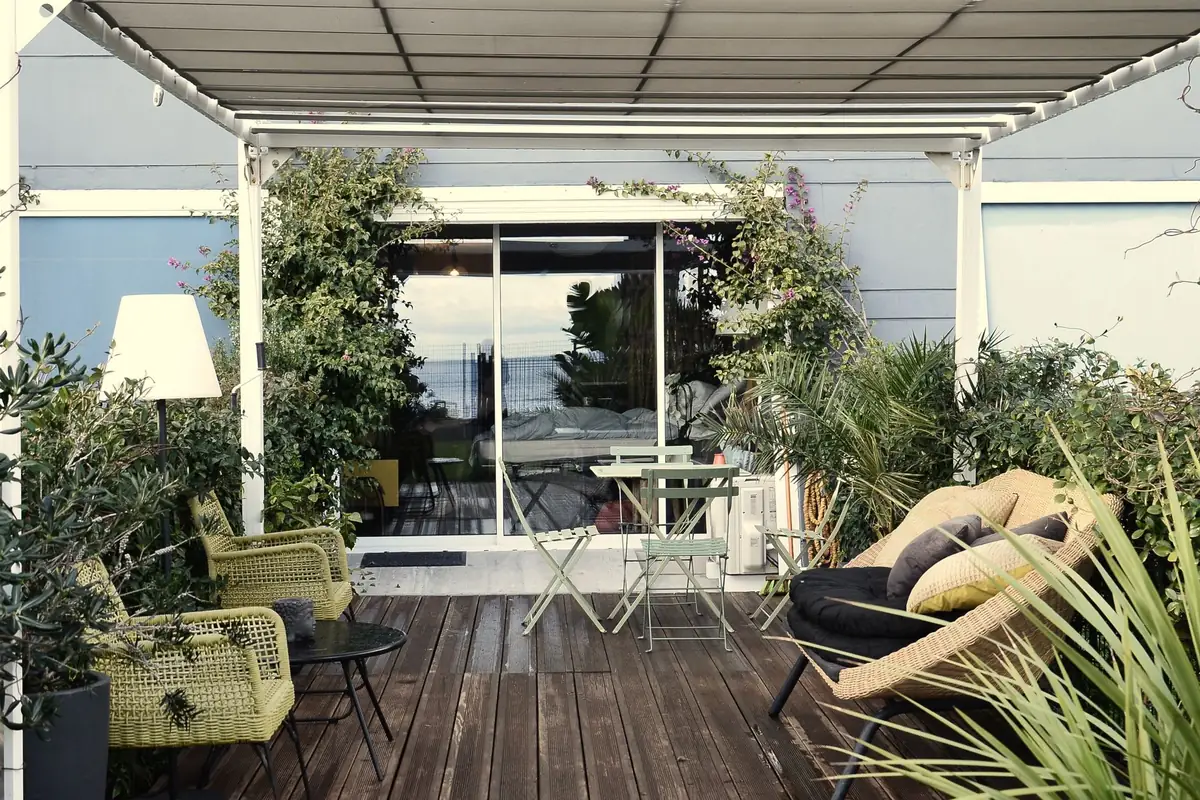
Freestanding furniture goes. Anything fixed to the building or the ground does not, at least not as part of a collection. Pergolas, retractable awnings, shade sails anchored into walls, decking-mounted benches and built-in barbecue counters are part of the property rather than part of your contents.
In a rented villa or townhouse that distinction decides who can authorise the work. A pergola bolted into a terrace slab leaves fixing holes and bare patches behind it, so removing one is agreed with the landlord or the community management office first, and it runs as a small strip-out rather than a collection. Freestanding gazebos with weighted feet are the case people misjudge in both directions — they look permanent and usually are not.
The test is the same one that works indoors. Look at where the item meets the wall, the slab or the decking. A visible foot standing on the surface means freestanding. A bracket, a bolt plate or a sealed joint means fixed.
Which sets come apart and which do not
Modular corner sofas separate into single seats and corner units, and that is usually what makes a large outdoor lounge set movable at all. The seats are held together by clips or brackets under the frame rather than by bolts, so they come apart in the garden in a few minutes.
Not everything is so obliging. Welded aluminium and wrought iron frames arrive as one shape and leave as one shape. Glass table tops lift off their frames and travel separately, standing on edge and never flat under anything else — outdoor tops are usually tempered glass, which does not chip politely when it fails. Stacking chairs stack; dining chairs with arms generally do not, so count those as separate pieces rather than assuming they will nest.
Getting it out of a walled garden
Most villa and townhouse gardens here are walled, with a pedestrian side gate and a main gate for vehicles. The side gate is what decides the day, because a corner sofa module or a six-seat table is often wider than it. Measure the narrowest point on the whole route before you book: the gate itself, the gap between the wall and the air-conditioning condenser, and the turn at the end of a side passage.
Where the side gate is too narrow, the route runs through the house instead. That changes the job rather than ending it. Everything coming through has been outdoors for years, so it is wiped down, wrapped or bagged before it crosses an indoor floor, and that takes real time. Roof terraces on townhouses have the same constraint with a staircase added to it.
For vehicle access, what matters is where the truck can stand and how far the carry is from there to the gate. Communities that restrict where a commercial vehicle may park usually just mean a longer walk with each piece — worth mentioning when you book rather than discovering together on the morning.
What travels with it and what needs its own arrangement
- Cushions, covers and outdoor rugs — these hold far more dust and water than they look like they do, so they leave in bags rather than loose.
- Cushion boxes and deck chests — empty them, and check the bottom, which is where water collects and where things get forgotten.
- Plant pots and planters — soil compacts into a solid block over the years and is much heavier than the pot suggests. Give a number when you book.
- Barbecues — the barbecue itself is straightforward, but a gas cylinder is not general waste and is arranged separately rather than loaded in with the furniture.
- Sun loungers and day beds — the wheels and folding backs are where these seize, so check yours still folds before promising it to anyone.
Before the crew arrives
- Drain any water-filled parasol base or furniture foot at least a day ahead.
- Take the canopy off the parasol, close it and lay the pole down.
- Empty cushion boxes, deck chests and anything else that has been used as storage.
- Separate the gas cylinder from the barbecue and stand it aside on its own.
- Undo the clips between modular seats so the set is already in pieces.
- Measure the side gate and the narrowest turn on the route out.
Nothing about an outdoor collection is heavy in the way people expect, and almost everything about it is slower. The time goes on a base nobody can lift alone, a pergola that turns out to be bolted into the slab, and a gate that is a hand's width narrower than the sofa. Walk the route out with a tape measure before you book, and what is left really is the easy job it looks like from the kitchen window.