The shelf is rarely the difficult part of a bookshelf removal. The books are. A loaded bookcase weighs several times what its empty carcass does, and until it is emptied nobody can safely tip it, turn it or unbolt it from the wall. So the first thing to settle is not how the unit comes apart but who is emptying it and when. Here is how a shelving collection runs in a Dubai apartment or villa, what to check on the wall behind the unit, and which bookcases survive the trip out.
Empty it first, and use small boxes
A bookcase must be completely empty before it is moved, including the ornaments, the box files and the things at the back of the bottom shelf that have not been touched since the tenancy started. This is the single preparation step that decides whether a bookshelf collection takes twenty minutes or most of a morning.

Pack books into small cartons rather than large ones, and stop filling at about two-thirds. Books are dense in a way people consistently underestimate, and a large box packed full to the flaps becomes something that has to be dragged rather than carried — which is how box bottoms fail on a marble lobby floor.
Work from the top shelf down. Unloading the bottom first leaves the weight high, and a tall unit with a full top shelf and an empty base is exactly the shape that tips forward when somebody leans on it.
If the books are going too, that is straightforward and worth saying at booking — paper is one of the more useful things on a household load, and books in reasonable condition are worth offering to a community group before they go anywhere near a vehicle.
Check the wall behind it for an anti-tip bracket
Tall shelving is very often screwed or strapped to the wall, and this is the detail most likely to stall a collection that everybody assumed would be simple. Look behind the top shelf for a metal L-bracket, a nylon strap or a screw running through the back panel into the wall.
It matters for two reasons. A crew cannot walk a fixed unit away from the wall, and finding out mid-lift is the worst moment to discover it. And the fixing will leave two or three small holes that need filling before a property handover, which is easier to plan for than to be surprised by on the same afternoon your landlord's inspection is booked.
Flat-pack units bought in the last several years almost always came with a restraint in the box. Whether it was actually fitted varies, but in a home with children it usually was.
Freestanding, wall-mounted or built in
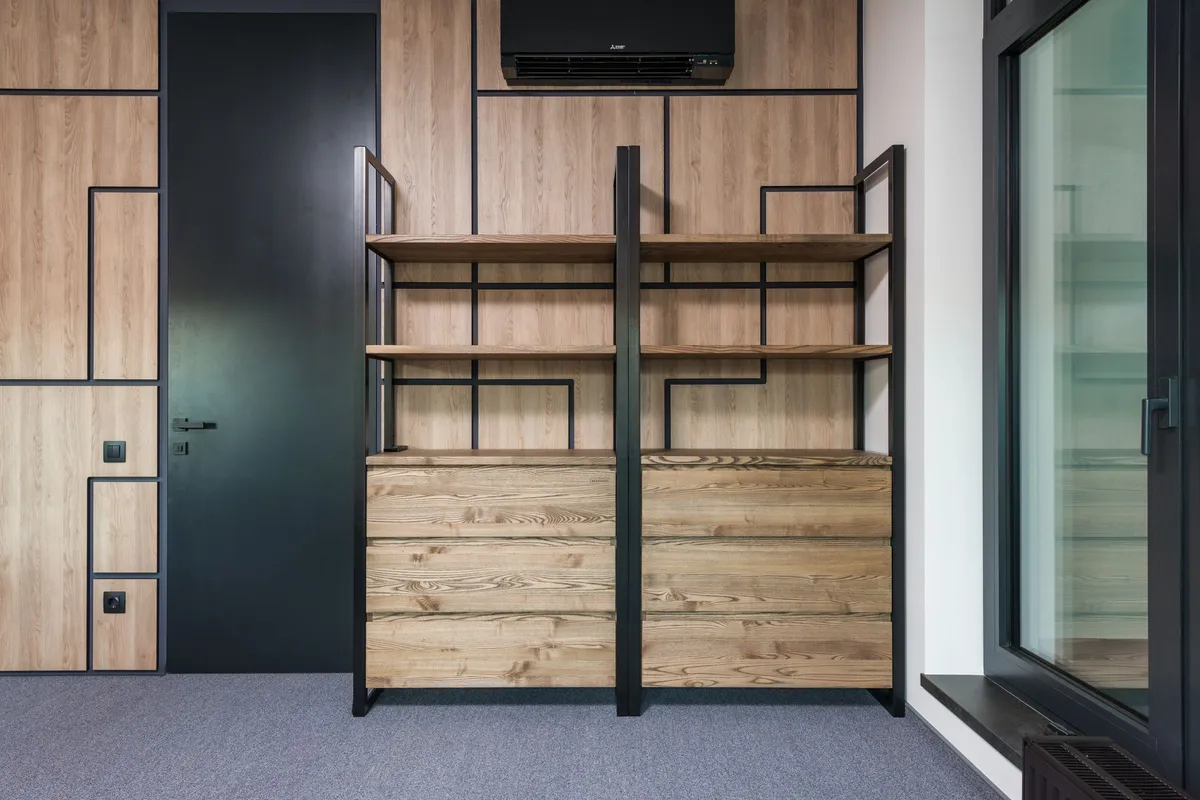
Which of the three you have decides whether the shelving is yours to remove at all.
- Freestanding — a self-supporting carcass standing on the floor, possibly restrained at the top. It is furniture, it is yours, and it leaves like any other item.
- Wall-mounted — floating shelves or shelves on rail-and-bracket systems. The shelves lift off, the brackets and rails unscrew, and what stays behind is a line of plugged holes.
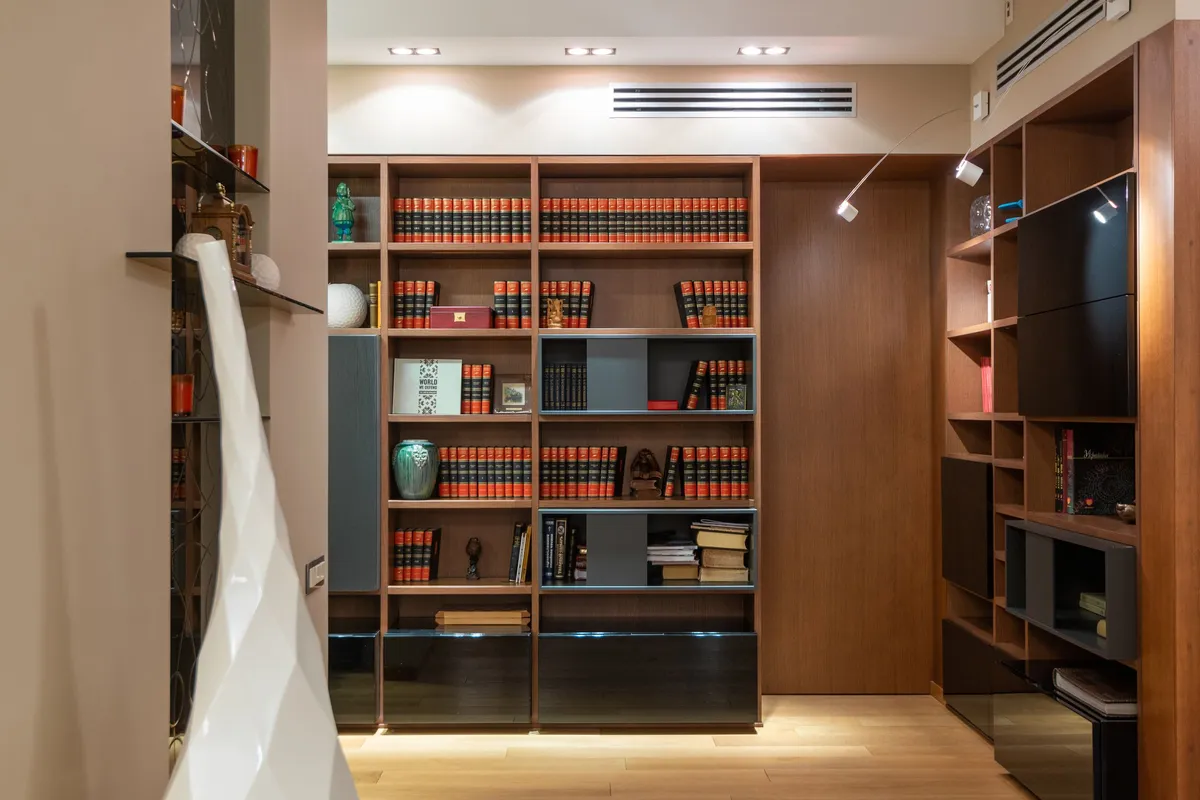
- Built in — a carpentry run made for the room, often full height and finished into the wall. This belongs to the property, not to the tenant, and removing it is a conversation with the landlord or building management before it is a booking.
The middle category catches people out in Dubai apartments, where a shelving run in an alcove can look built in and turn out to be three separate units pushed together and screwed at the top. Look for a vertical seam where two carcasses meet.
Flat-pack shelving rarely survives being moved
Assume a flat-pack bookcase is at the end of its life once it comes apart, and plan on that basis rather than hoping otherwise. Chipboard carcasses are held together with cam-lock fittings that grip well once and much less well the second time.
The back panel is the real weakness. It is thin hardboard pinned all the way round, and it is what keeps the unit square under load. Once those pins are pulled the carcass racks into a parallelogram and will not sit true again, which is why a dismantled flat-pack bookcase that gets rebuilt usually leans afterwards.
So decide before anybody picks up a screwdriver. If the unit is genuinely worth passing on, offer it assembled and let the person taking it deal with moving it. If it is going, it does not need dismantling with any care — it needs to fit through the door, and that is all.
Solid timber and steel-framed shelving is the opposite case. Both come apart and go back together repeatedly, and both are worth offering before disposal.
The awkward ones
Four types need a mention when you book, because each changes either the crew or the handling.
- Glass-shelved units. The shelves come out first, travel separately and are never carried inside the frame. Say so at booking — it is the detail most likely to change how many people turn up.
- Ladder and leaning shelves. They have no fixings and depend entirely on the wall for stability, so they collapse forward the moment they are lifted away from it and need two people from the start.
- Corner units. Awkward geometry rather than awkward weight, and often wider across the diagonal than they look against the wall.
- Units with drawers or cupboards in the base. Empty those too. They are the compartments most likely to be forgotten, and a loaded base makes the unit far heavier than it appears.
The five-minute check before the crew arrives
- Every shelf, drawer and cupboard in the unit is empty.
- Boxed books are stacked clear of the route to the door, not against the unit.
- You have looked behind the top shelf and know whether it is fixed to the wall.
- Glass shelves are out and set aside where nobody will walk into them.
- The corridor from the room to the lift or front door is clear of anything you would rather not have knocked.
That list takes a few minutes and removes almost every reason a shelving job runs long.
Bookshelves are one of the few pieces of furniture where the preparation genuinely matters more than the item. An empty bookcase, whatever it is made of, is a light and manageable thing that two people carry out without ceremony. A full one is immovable, and the wall bracket nobody checked is what turns a short visit into a long one.