Junk removal safety and manual handling sound like workplace training subjects, and inside an actual home clear-out they narrow down to something much smaller: whether the person carrying an item can hold it, see past it, and put it down again. Most of what goes wrong during a clear-out is not a strength problem. This is what genuinely injures people while a home is being emptied, and the habits that prevent it.
What actually causes injuries during a clear-out
Awkwardness, not weight. The injuries happen on items with nowhere to grip, on routes the carrier cannot see, and on lifts that were rushed because a lift door was closing. Genuinely heavy things get treated with respect — people brace, ask for help, or decide not to try. It is the medium-sized, badly shaped things that get picked up without thinking, and those are what strain backs and trap fingers.
A half-emptied chest of drawers is the classic example. It is not heavy enough to look like a two-person job, the remaining weight has all slid to one side, and the drawers move while you are carrying it. A rolled rug, a detached wardrobe door and a full storage box are all the same shape of problem.
The three questions to ask before you lift anything
Ask these in order, before your hands are on the item. Any one of them answered with a no means the plan changes rather than the effort increases.
- Can I hold it? This is about grip, not weight. If there is nowhere sensible to put your hands, how much the item weighs stops being the relevant question.
- Can I see where I am going? If the item blocks your view, either the route gets walked and cleared first, or the item gets carried by two people with one of them watching the floor.
- Can I put it down again? This is the one almost everyone skips. Anything you cannot set down halfway is something you have committed to carrying the entire way, including the last two steps when your grip has quietly gone.
Manual handling in practice: how to lift something properly
The method has not changed in decades because it works, and it takes about six seconds once it is a habit.
- Clear the route before you lift, not while you are carrying. Doors open, mats moved, nothing on the floor between here and where the item is going.
- Stand close to the item with your feet apart and one slightly forward, so you have a base rather than a balancing point.
- Bend at the knees and hips, keeping your back straight rather than rounded over the item.
- Get a firm grip on two opposite points, then test it by lifting an inch and stopping. If it shifts, put it down and rethink it.
- Straighten your legs to lift, keeping the item against your body rather than out in front of you.
- Turn with your feet, never at the waist. Twisting under load is what causes the injury people remember for years.
Setting it down is the same sequence in reverse, and it is where people get careless because the hard part feels finished. Bend the knees again rather than dropping the last foot of the movement.
Why two-person carries go wrong
Two people carrying one item is safer than one person carrying it, but only while both are doing the same thing at the same moment. Three failures account for most of the trouble.
- No agreed signal. One person lifts while the other is still adjusting a grip, and for a second the whole weight lands on one back.
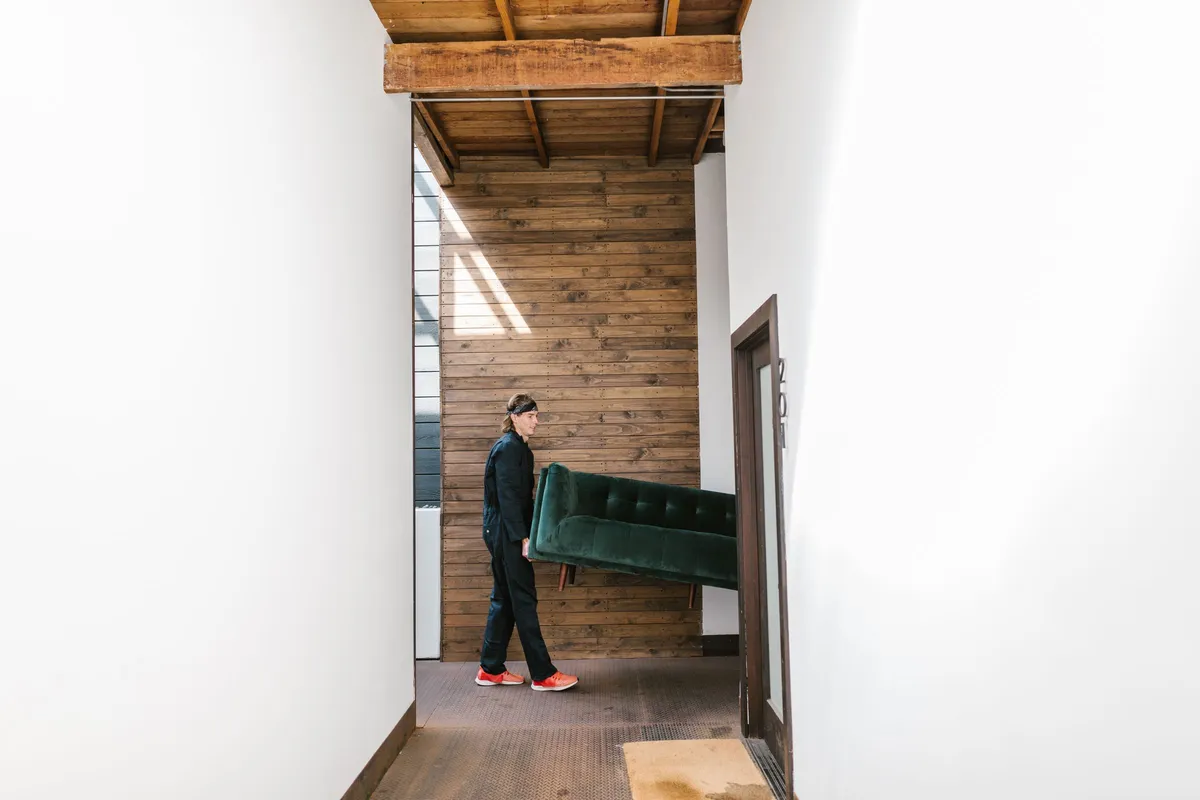
- Uneven ends. The heavy end of a wardrobe, a fridge or a sofa bed is rarely the middle, and the person who happened to take that end often does not realise until they are three steps into a corridor.
- The person walking backwards. On a stairwell the person below is descending a flight they cannot see. That person sets the pace and calls the stops, and the person above follows — not the other way around.
Saying "ready, and lift" out loud sounds excessive right up until the first time it would have helped. The same applies to a spoken "stopping" before either person changes their grip.
The items that catch people out
Some things are consistently harder or more dangerous to handle than their size suggests.
- Mattresses — heavy without ever being liftable. They fold in the middle, offer nothing to grip, and behave like a sail in a corridor or an open stairwell.
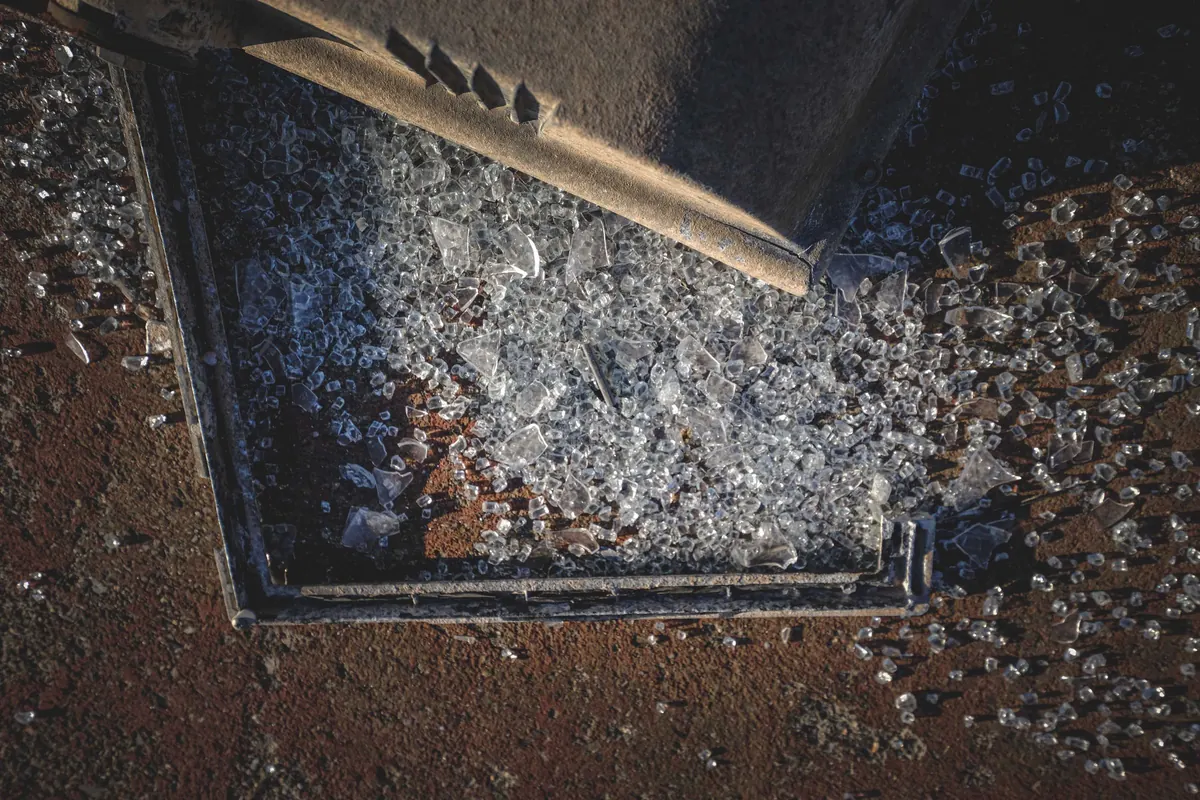
- Glass — mirrors, glass-fronted cabinets and table tops. A crack that formed in storage stays invisible until the piece flexes in your hands.
- Old flat-pack furniture — anything that has been taken apart before has exposed screws, staples and cam fittings sitting on the underside where your fingers go.
- Anything stored above head height. The load is uncontrolled from the moment it starts to move, and you are looking up at it while that happens.
- Anything that has spent years in an uncooled store. Plastic goes brittle, adhesive fails, and handles come away in your hand exactly when you have taken the weight.
Heat changes what your body can safely do
Garages, storerooms, sheds and balconies sit outside the cooled part of a Dubai home, and for a large part of the year they are considerably hotter than the room next door. Working in that heat shortens how long anyone can lift safely, and it shortens it well before it starts to feel like it has.
The practical version: drink before you feel thirsty, split the work into shorter stretches with the door propped open, and do the heavy items first rather than saving them for the end. The instinct to push through and just finish a hot storeroom is exactly the instinct that produces the strained back, because judgement fades before strength does.
When to stop and let a crew do it
Stop when any of the following is true. These are not close calls, and treating them as ones is how a straightforward afternoon turns into an injury.
- The item cannot be lifted comfortably to knee height and held there for a few seconds by the people actually present.
- The route out includes stairs and the item cannot be seen past.
- The item contains glass that is already cracked or loose in its frame.
- You would be working alone, in an uncooled space, in the middle of the day.
- The only way to move it is to take it apart, and you are not confident it will hold together well enough to be carried afterwards.
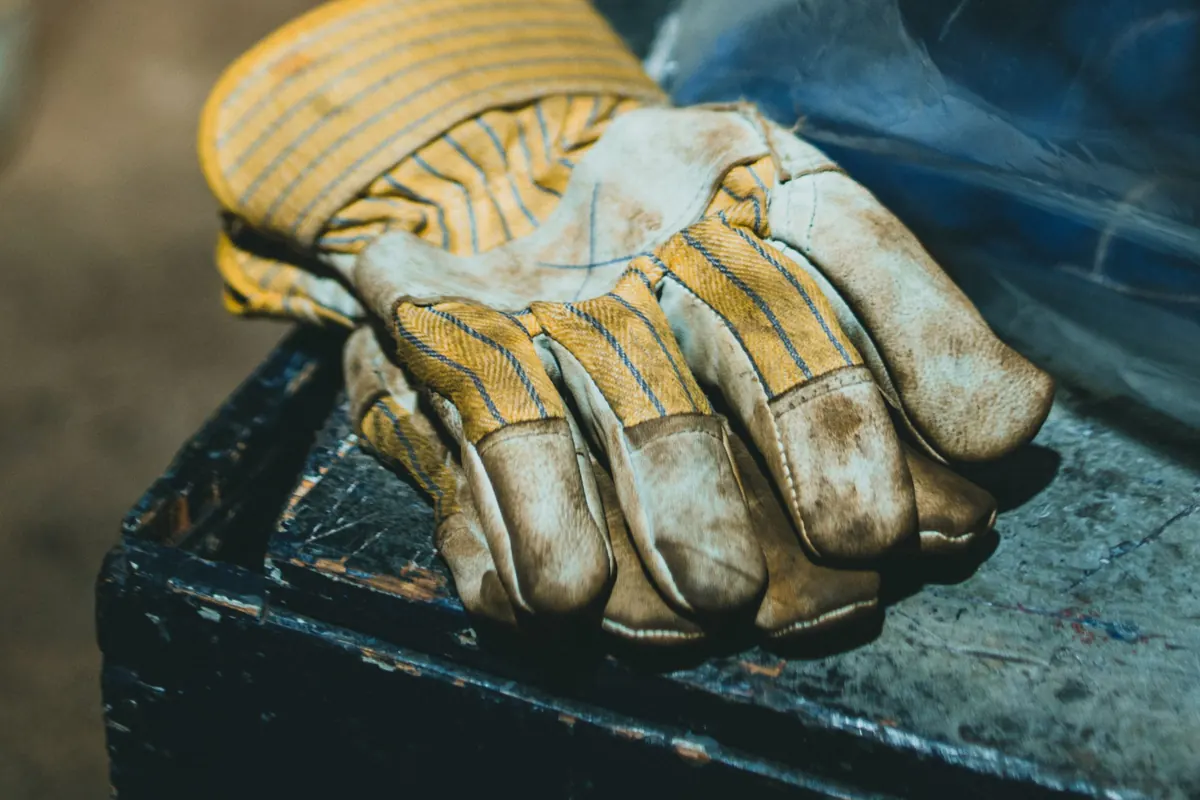
A crew arrives with two or three people, the right gloves and closed boots, and a vehicle already positioned. None of that makes them stronger than you — it means the awkward part of the job has been planned rather than improvised.
Nearly all of this comes down to slowing down the first ten seconds of each lift: check the grip, check the route, check that you could set the thing down again if you had to. A clear-out is a long series of small decisions made while tired, in a hallway, with someone waiting. Making those decisions before anything leaves the floor is what keeps a day of emptying a flat from turning into a fortnight of not being able to.