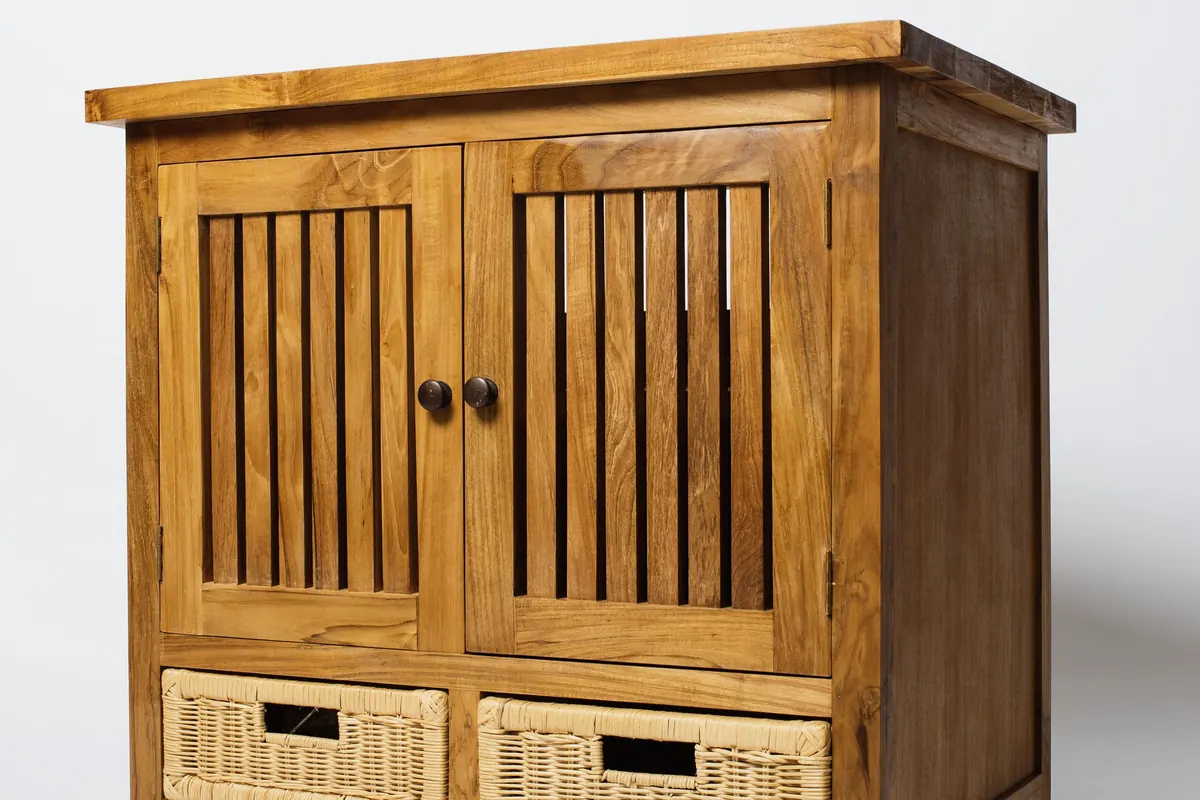
Almost every other piece of furniture people get rid of has something wrong with it. A TV unit usually does not. It gets replaced because the television above it changed size, or moved onto the wall, or because the boxes it was built to hold no longer exist. That makes a media console the one item on a disposal list where condition is rarely the deciding factor — measurements are — and it changes what you should do with it. This guide covers how to work out whether yours is worth passing on, what leaves as furniture and what leaves as electrical waste, and how the unit itself comes out. That changes whether it belongs in a furniture removal in Dubai at all.
Why TV units get replaced while they are still perfectly good
A media console is made obsolete by something else changing rather than by wearing out. Three things do it, and none of them says anything about the unit itself.
- The television got bigger. A new set is wider than the one it replaced, and the unit that held the old one now looks undersized or genuinely cannot support the feet.
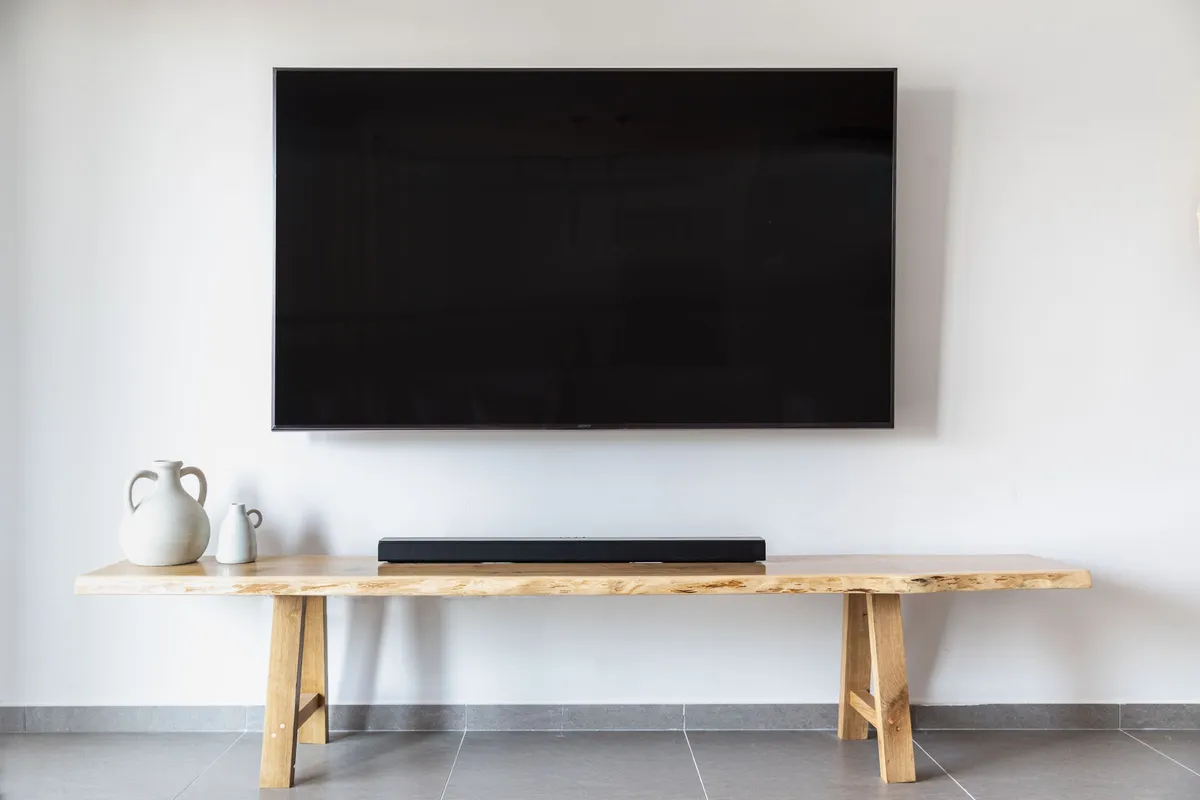
- The television went on the wall. A floor-standing unit that existed to hold a screen ends up holding nothing but a soundbar and a router, and the space it takes is no longer worth it.
- The equipment disappeared. A unit designed around a disc player, a receiver, a games console and two shelves of discs is mostly empty once everything streams from one small box.
The honest consequence is worth stating plainly: most media consoles leaving a home in this city would still do the job for somebody else. That is not true of a sagging sofa or a swollen chest of drawers, and it means the first question about yours is not how it gets carried out but whether it should be going to disposal at all.
Measure it before you decide anything
Two measurements decide whether a TV unit is placeable: its overall width, and the depth of its top surface. Take both before you list it anywhere or book anything, because they are the only two numbers a person considering it will ask for.
Width is the one people get wrong, and the reason is a change in how televisions are built. Many current sets stand on two feet positioned near the outer edges of the screen rather than on a single central pedestal, so the unit underneath has to be almost as wide as the television itself, not merely wide enough to look proportionate. A console that comfortably held a pedestal-mounted set can be genuinely unusable under a wide-footed one of the same screen size. Depth matters for the opposite reason: a shallow unit will not take a soundbar and a media box side by side, and a deep one eats floor space in an apartment living room that rarely has it to spare.
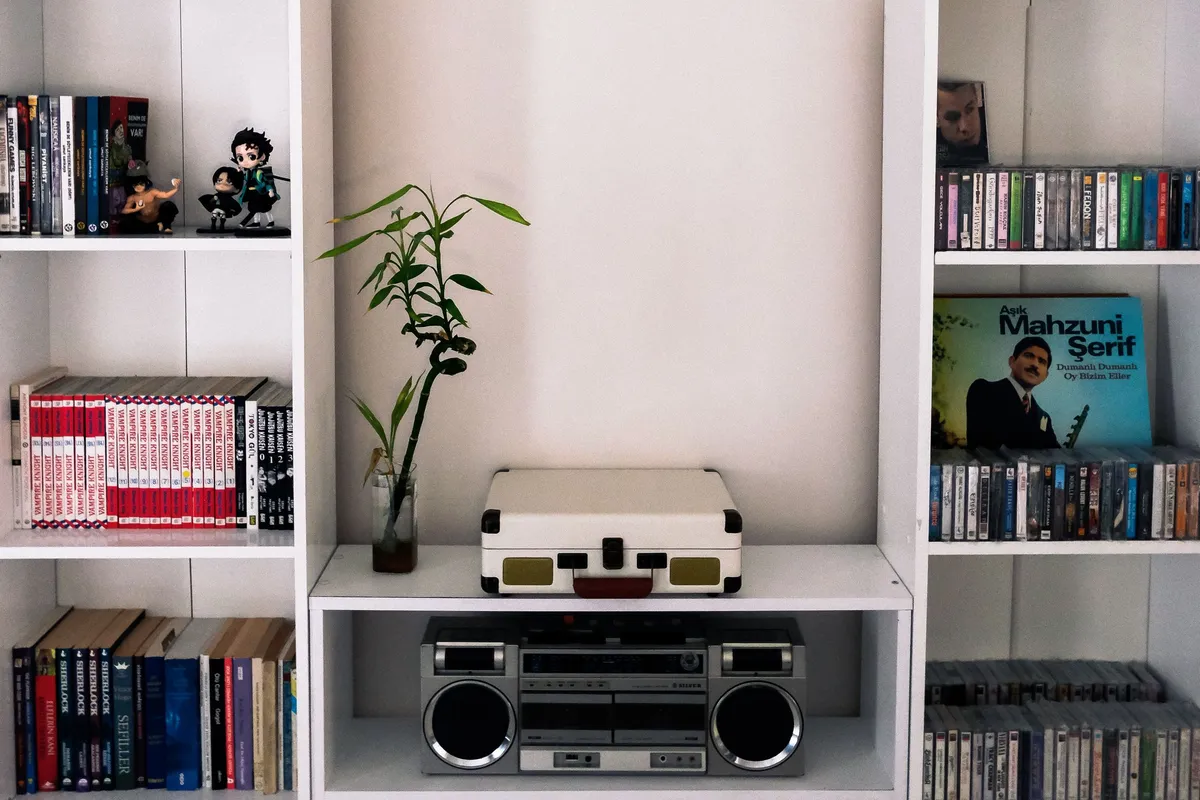
If the numbers are good and the unit is sound, offering it before disposing of it is genuinely worth an evening. Building noticeboards and community groups move this kind of item quickly, precisely because so many people are in the same position — a new television and a unit that no longer fits it. Publish the width and depth in the listing rather than waiting to be asked, since without them nobody can tell whether it solves their problem.
The unit is furniture. Most of what sits on it is not
A TV unit is ordinary furniture and is collected as furniture. The television, the media box, the games console, the soundbar, the router and any powered speakers are electrical waste, and they leave on a different route even when they leave in the same visit.
- Handled as furniture: the carcass, the shelves, the doors or drawer fronts, the legs and any glass panels.
- Handled as electrical waste: the television, any media or streaming box, the games console, the soundbar and subwoofer, the router, and every plug-in adaptor.
- Neither, quite: remotes, cables and the television's wall bracket — small, easily lost, and better bagged separately than posted into the back of the unit.
Clearing a media console is a short job compared with a home desk, where things get bolted and clamped to the furniture itself. Here almost nothing is attached — it is plugged in. Unplug everything the evening before, coil each lead, put the whole lot in one bag, and keep each remote with the device it belongs to; a television or games console offered on without its remote is worth noticeably less than one with it. Say at booking whether the electronics are going too, so both routes are accounted for rather than discovered on the doorstep.
Floating consoles and units fixed to the wall
A floating media unit is a wall fixing before it is furniture, and it is the version most likely to stall a collection. These hang on a bracket or a timber cleat screwed into the wall, and the unit lifts up and off rather than pulling away — which is not obvious from the front, and is exactly the wrong thing to work out while somebody is already taking the weight.
Look underneath before the day. If you find a horizontal rail, a batten or a row of screws passing through the back panel, say so when you book. Expect the fixing to leave several screw holes in the wall, usually four or more on a unit of any length, and plan on filling them before a property handover rather than meeting them on inspection day. The television's own wall bracket is a separate decision: it is not furniture, it stays screwed to the wall unless somebody takes it down, and leaving it for the next tenant is a perfectly reasonable choice as long as you have actually decided it rather than forgotten it.
What makes a media console awkward to carry
The difficulty of a TV unit is its proportions, not its weight. It is long, low and shallow — a shape that is stable standing on a floor and unstable in the air. A board carcass built two metres wide and forty centimetres deep has very little resisting a twist along its length, so it travels held at both ends by two people and is never picked up from the middle, which is how a long unit racks out of square or parts company with its back panel.
Glass shelves lift out and travel separately rather than rattling in their channels, and any drawer comes out too — partly to lose the weight, partly because a drawer that slides open mid-carry is a real hazard on a staircase. There is also one practical consequence of the length that catches out anyone hoping to hand the unit to a neighbour: a media console will not go in an ordinary car. Whoever takes it needs a van or a pickup, which is worth saying up front in a listing so nobody arrives expecting otherwise.
What happens to each part after collection
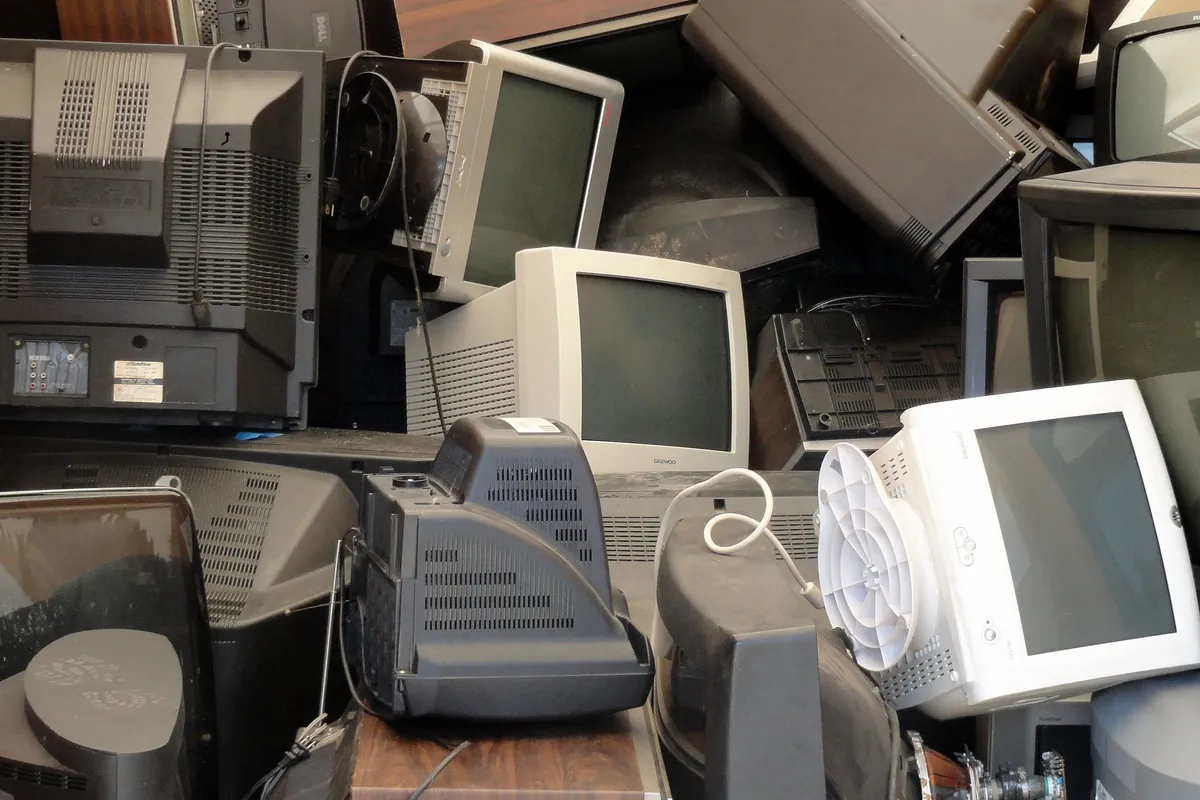
The unit and the electronics part company as soon as they leave the flat. Most media consoles are faced board, which is handled as bulky waste rather than recovered as timber, because the printed foil or laminate surface is what makes the board hard to feed back into a wood stream. Metal legs, brackets and drawer runners are worth separating and generally are. Glass shelves are dealt with on their own, since glass contaminates the other streams rather than travelling with them.
Anything with a plug goes onto the electrical waste route instead, which is a different destination entirely. That is the practical reason to mention the electronics when you book rather than adding them on the day: they are not a few extra items on the same load, they are a second category of waste that has to be kept apart from the moment it is picked up.
A TV unit is one of the few things people throw away that has nothing wrong with it. Measure the width and the depth, spend an evening offering it, and if nobody takes it the collection itself is straightforward — empty the shelves, coil the cables, check underneath for a wall fixing, and say whether the television is going too. Almost the whole difficulty of the job is settled before anybody arrives.