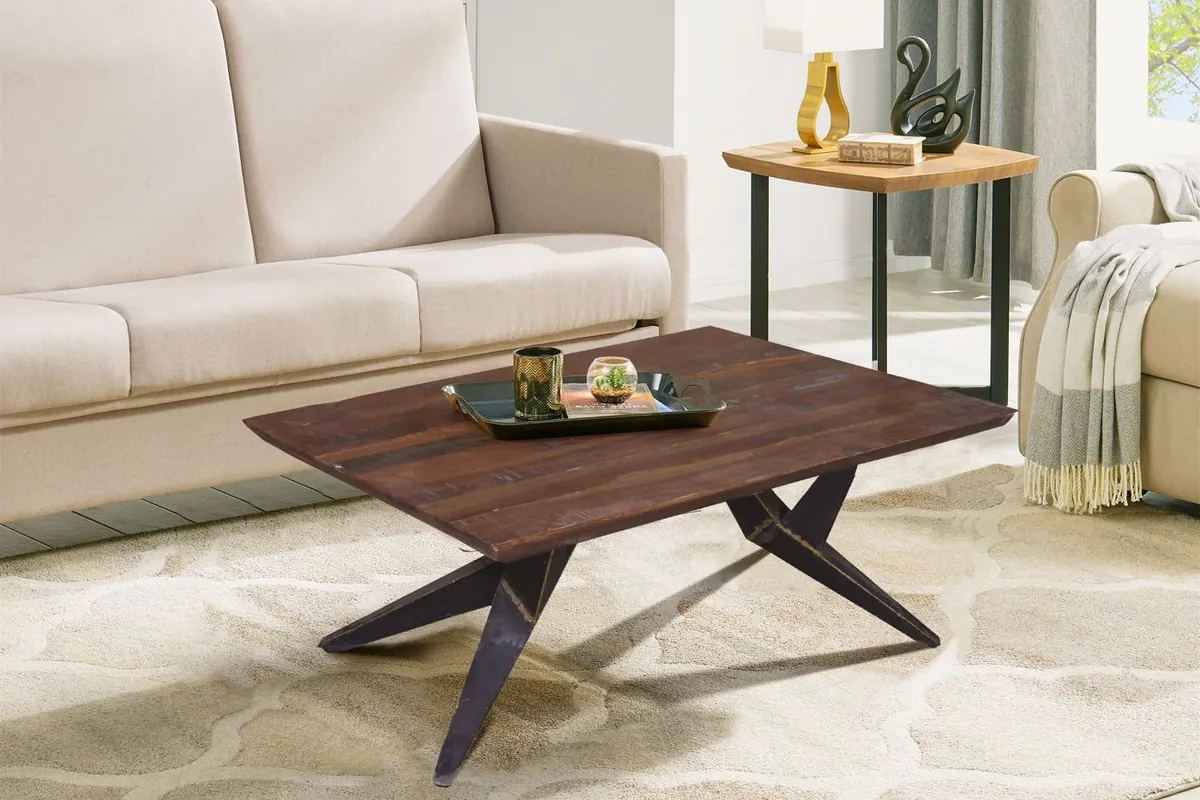
Coffee table removal is the rare furniture job that involves no dismantling at all. A coffee table is low and its footprint is smaller than a doorway, so it leaves the room standing exactly as it is — no fittings to undo, no top to lift off, no stack of panels on the floor. That makes it the simplest large item in a living room and, for the same reason, the one people most often misjudge. Everything that goes wrong with a coffee table goes wrong for reasons that have nothing to do with taking it apart.
Why it does not need to come apart
Height is the reason. Most furniture that has to be dismantled is taller or wider than the doors it must pass through, so it has to be reduced before it can move. A coffee table is typically knee height and around a metre across, which means it clears an internal doorway upright and turns on a landing without anyone thinking about it.
There are two exceptions and they are easy to check. Some large square and oversized round tables are genuinely wider than a bedroom door, in which case the legs usually unbolt from brackets underneath and take the width down. And on a few designs the top simply lifts off its base, which is worth knowing but is rarely necessary. Look underneath once before the day; if you find bolts, you have an option, and if you find nothing, the table is going out as it stands.
The weight is real and there is nowhere to hold it
This is where coffee tables actually cause trouble. A small table can be heavier than a large one, because the weight is in the material rather than the size, and a low object gives you nothing to hold.
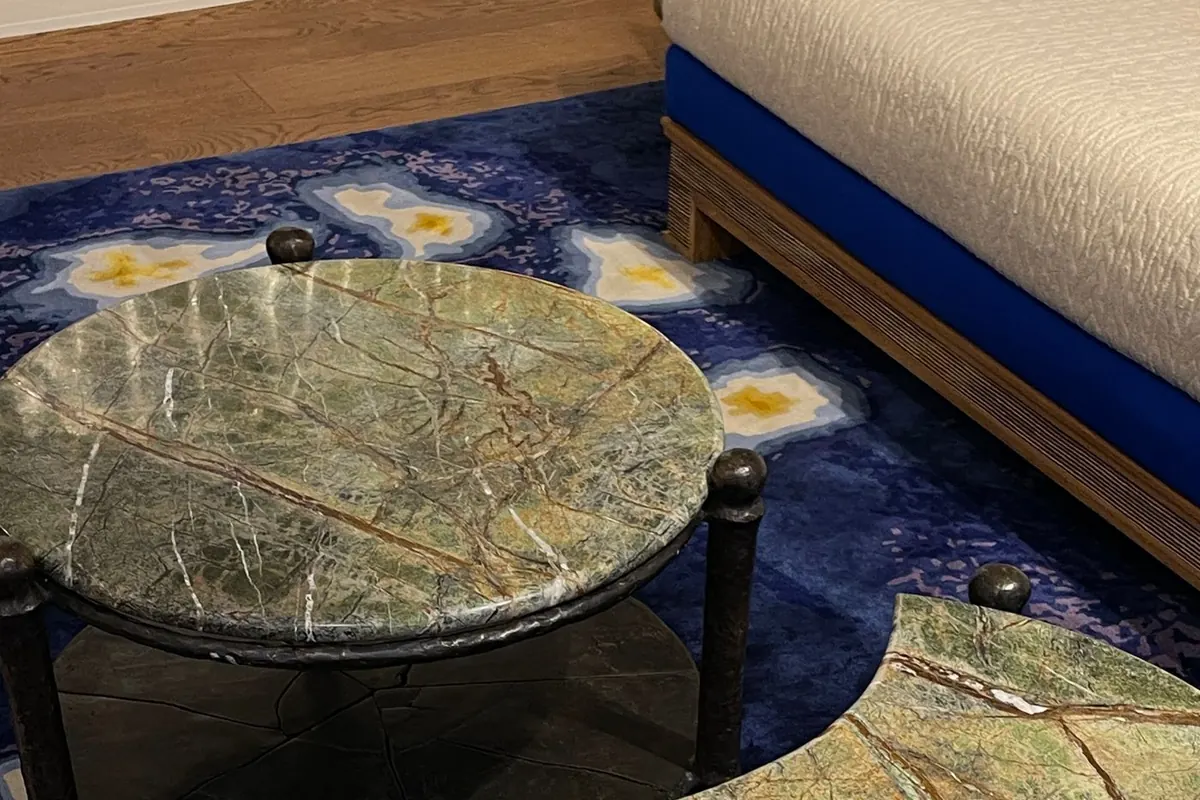
Three things make a coffee table awkward to lift rather than heavy in the ordinary sense. It sits below knee height, so it has to be picked up from a stooped position rather than at waist level. A solid slab top has no handhold anywhere along its edge, so hands go underneath and the grip is the weak point rather than the back. And because it is small, two people carrying it end up close enough together that neither can see their feet.
The tables worth flagging when you book are stone, concrete, thick solid timber and anything with a stone-effect sintered top. Say what the top is made of rather than how big the table is. A metre-wide marble coffee table needs two people; a metre-wide veneered one does not.
If the table has a glass top, say that too. Glass tops are often only resting in a frame rather than fixed to it, so they lift out and travel separately with the faces protected, and a top that shifts unexpectedly while the table is being carried is how they get broken.
It is almost never one table
Living-room tables come in groups, and this is the single most common reason a coffee table collection turns out bigger than the message that booked it. People say "a coffee table" and mean the whole arrangement.
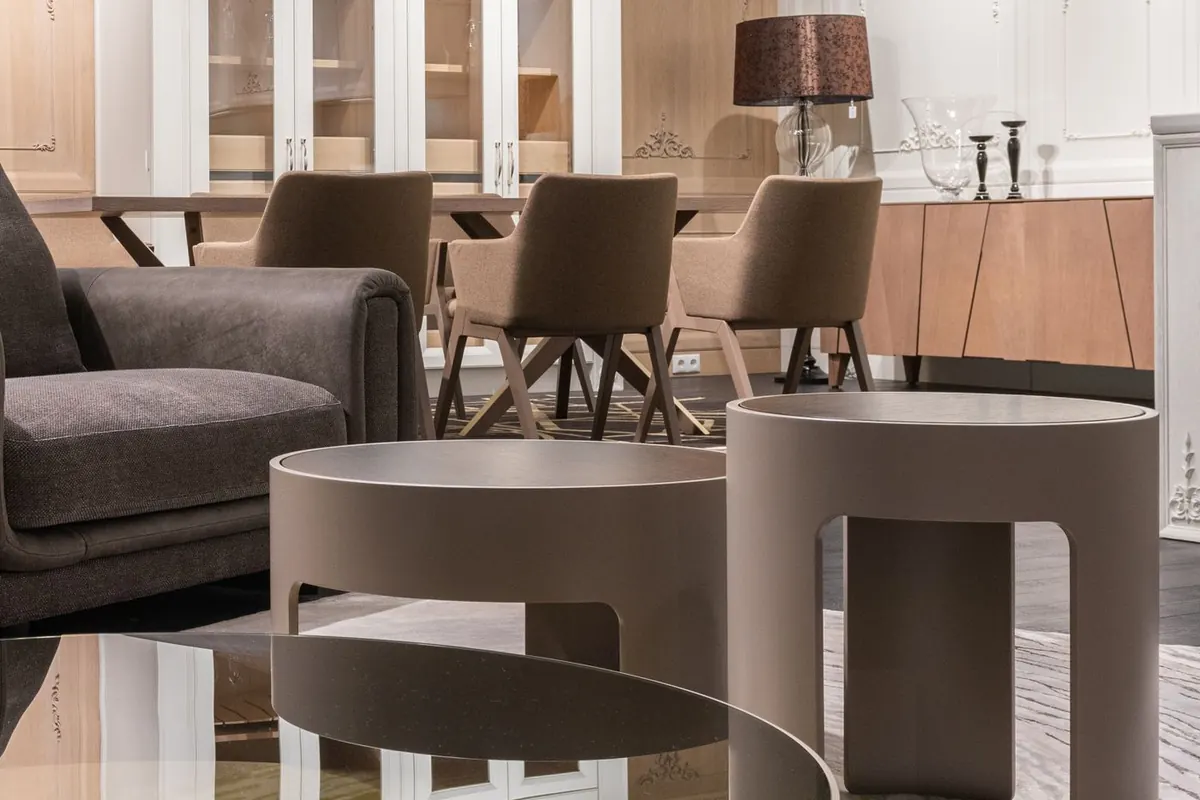
- Nesting tables — a set of two or three that slide under each other. They are individually light, they do not take up much space, and they are three items rather than one.
- Side and lamp tables at each end of the sofa, which are almost always forgotten because nobody thinks of them as furniture.
- The C-table or laptop table that tucks under the sofa edge, which is usually somewhere else in the flat by the time anyone looks.
- A console behind the sofa, if there is one, which is a different size of item entirely and is worth naming separately.
Walk the room and count before you ask for a price. Small tables are the items most likely to be added on the doorstep, and while a couple of extra side tables rarely changes a vehicle, it does change the space the load takes up and it is better said in advance than discovered on arrival.
Lift-top, storage and upholstered coffee tables
Three variants behave differently enough to mention. A lift-top table has a hinged mechanism that raises the top towards you, and the top must be latched down before it moves, because a top that swings open mid-carry takes somebody's fingers with it.
A storage coffee table — a hinged lid, a drawer run or open shelving underneath — needs emptying first, and it is worth doing properly. This is where remote controls, board games, cables and old magazines accumulate for years, and anything left inside shifts the moment the table is tilted to go through a door.
An upholstered ottoman used as a coffee table is not a table at all, and saying so when you book helps. It is a padded box with a timber frame, so it is bulkier and lighter than it looks, and it is judged on its fabric rather than on its top.
The easiest piece of furniture to give away
A coffee table is the most placeable item of furniture in a home, and it is worth trying before booking a collection. The reason is transport. Almost every coffee table fits in the back of an ordinary saloon car with the seats down, which means whoever wants it can simply come and get it — no van, no lift booking, no second person.
It also has no matching problem. A dining chair has to match a set and a wardrobe has to fit a specific wall, but a coffee table only has to sit in front of a sofa, so it does not need to suit anything the recipient already owns. Building noticeboards and community groups move them quickly for exactly that reason.
Condition is the honest limit. Ring marks and heat marks on a solid timber top can be sanded and refinished and are not the end of a table. A swollen or bubbled edge on a veneered top is, because the core underneath has taken in moisture and there is nothing to restore. Chipped glass is finished as well — a chip in an edge is where toughened glass eventually fails, and it should not be passed to anyone.
What to have ready for a coffee table removal
Very little, which is the point. Clear the top and empty anything underneath, count the side tables honestly, and say what the top is made of if it is stone or glass. Beyond that a coffee table is one of the few furniture collections where nothing needs to be prepared, dismantled or measured.
Because it is compact, a single coffee table on its own is a small job and is priced as one. If a room is being changed rather than tidied, it is worth sending the tables with whatever else is going — the rug, the old sofa, the shelving unit — since one visit for the room costs less than several visits for its parts.
The useful thing to remember about a coffee table is that its simplicity is real but narrow. It will leave your flat without being taken apart, and it will fit in somebody's car if you offer it. What it will not do is weigh what you expect or turn out to be a single table, and those two are worth checking before anyone is asked to carry it.