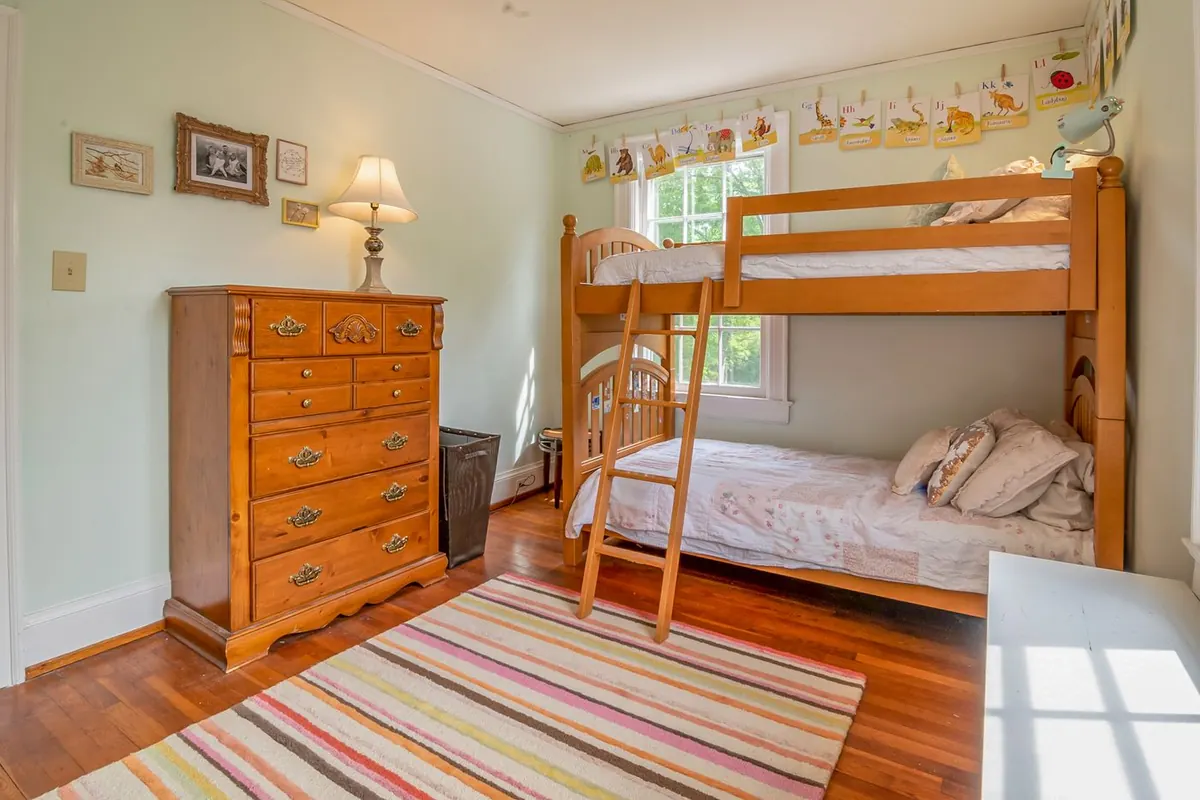
Bunk bed removal is the one bedroom job worth reading about before starting. A bunk is not two beds stacked on top of each other — it is a single braced structure that has to hold a sleeping person about two metres off the floor, and every bolt in it is doing structural work. The consequence is the part people do not expect: a bunk bed gets less stable at every stage of being taken apart, not more. The order it comes down in matters, and it is the one bed that genuinely should not be tackled by one person.
Why a bunk is one structure, not two beds
Ordinary bed frames come apart in whatever order suits the room, because a frame sitting on the floor cannot fall over. A bunk can. Its four posts run the full height, the two ends are braced against each other by the upper bed, and the whole assembly is held square by bolts passing right through the timber rather than by the cam fittings used on flat-pack furniture.
That has an immediate practical meaning. The guard rail and the ladder are not accessories bolted onto a finished bed — they are part of what holds the frame rigid, and the frame becomes noticeably looser the moment either comes off. Anyone who has taken one down has felt the structure start to move at that point, which is exactly why the order below runs the way it does.

The order a bunk bed comes down in
Work from the top down, and treat each step as making the frame slightly less rigid than it was before.
- Take both mattresses off, upper one first, and get them out of the room. They are separate items, they travel separately, and they are in the way of everything that follows.
- Remove the ladder. It comes off early on purpose — once the top mattress is gone there is no reason for anyone to climb, and a ladder left hooked in place invites exactly that.
- Take out the upper slats or the upper base panel. This is the step that makes the top bunk unusable and it is worth doing before the guard rails, because the slats are easy to reach while the frame is still square.
- Undo the guard rails. The frame will feel looser immediately. From here on nobody should lean on it or pull against it.
- Separate the upper side rails from the posts, with one person supporting each end. This is the least stable moment in the whole job: as soon as one end is released, what is left is a tall, narrow rectangle with nothing bracing it, and it will move if it is nudged.
- Take the ends apart on the floor, not standing up. Lower them down flat first, then undo the posts from the end panels.
- Deal with the lower bunk last. Once the top is gone it is an ordinary single bed and it comes apart like one.
Most bunks need one hex key and a spanner or socket for the through-bolts, which are larger than the fittings on ordinary flat-pack furniture. Keep the bolts together as they come out. If the bunk is going on to somebody they are essential, and if it is not, bagging them still stops anyone standing on one later.
One thing not to do: do not remove bolts from both ends before either end is supported. A part-dismantled bunk that is still standing is the most unstable object the job produces, and it is tall enough to reach a light fitting on the way down.
The room it is standing in
Bunk beds exist because a room is too small for two beds side by side, which means the job almost always happens in the smallest bedroom in the home. There is rarely floor space to lay the parts out, and that shapes how it runs.
In an apartment the practical answer is to move the parts out in stages rather than dismantling everything and then carrying it. Mattresses go first and clear most of the room, then the slats and rails go out to the hallway as they come off, and the posts and end panels leave last. A bunk that is fully dismantled in a small bedroom before anything is carried out leaves nowhere to stand.
Villa rooms are easier for space and harder for size. Bunks in villas are more often solid timber than tubular metal, the posts are heavier, and a bunk in a room upstairs still has to come down a staircase — where long side rails and a turn on the landing matter more than the total weight does.
Worth measuring beforehand: the length of the longest side rail against the turn out of the bedroom door. A rail is usually a little over two metres, and that is the single part most likely to need angling through a doorway.
High sleepers, L-shaped bunks and the ones with storage underneath
Several things sold as bunk beds are a bigger job than a standard two-tier bunk, and each is worth naming when you book.
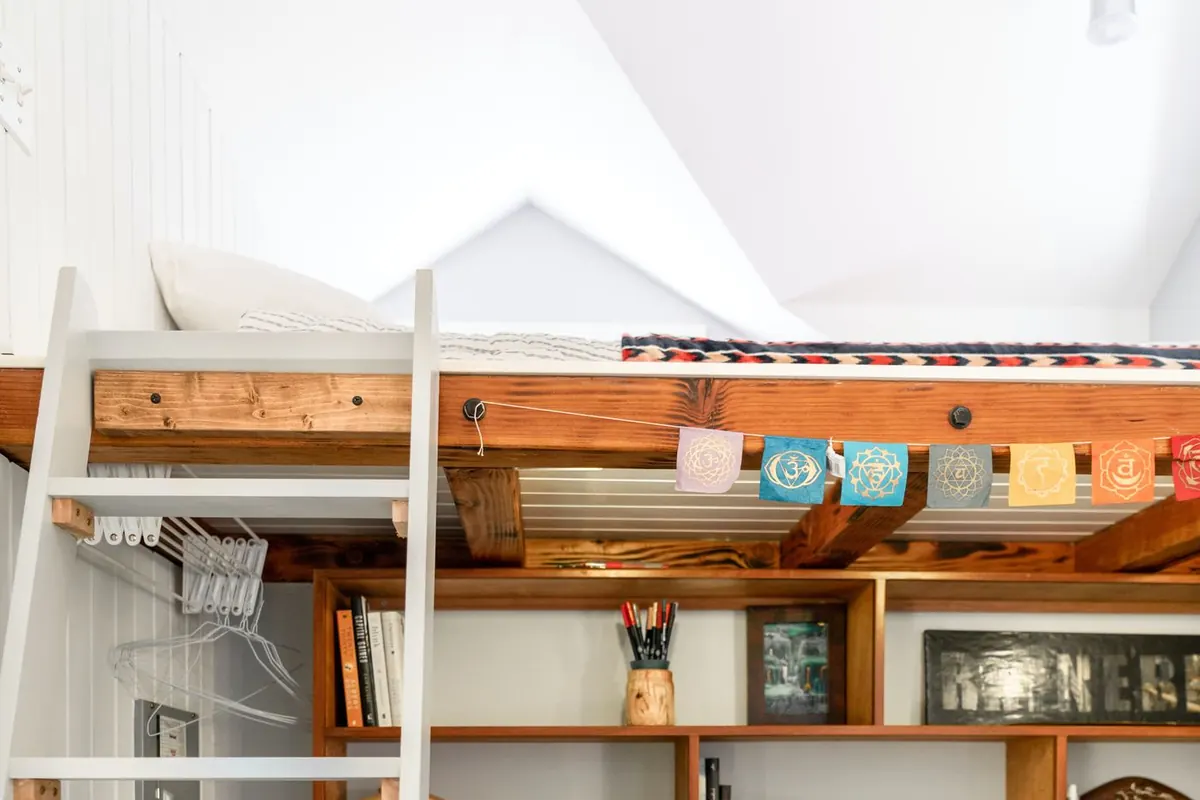
A high sleeper is a single bed at bunk height with a desk, a wardrobe or shelving occupying the space beneath. The bed is the straightforward part; whatever is underneath usually has to be emptied and taken out first, and on many designs the furniture and the bed frame share fixings. These are also the ones most likely to be braced to the wall, which is worth checking before the day rather than finding a bracket behind a headboard.
An L-shaped bunk has the lower bed at right angles to the upper one, and the two share a corner post that carries load from both. It comes apart in the same top-down order, but the corner post is released last rather than with the other posts.
A trundle drawer or storage drawers under the lower bunk should be pulled right out and emptied before anything else starts. They are usually on castors or runners, they are heavy when full, and a drawer that rolls out while somebody is carrying a rail is a genuine hazard in a small room.
Triple bunks and bunks with a built-in play structure are simply more of the same job. Allow more time and expect more parts rather than anything different in kind.
Whether a bunk is worth passing on
Bunk beds hold their value better than most children's furniture and there is steady demand for them here, where families share rooms and a second child arrives into a flat that has not grown. A sound bunk is genuinely worth offering rather than disposing of.
The condition applies to completeness rather than appearance, and it is stricter than for ordinary furniture. A bunk needs its ladder, both guard rails, the full set of slats for both beds and all its original bolts. Missing any of those, it is not a bunk with a small fault — it is an incomplete structure, and the parts are model-specific enough that replacing them is rarely realistic. Scuffed paintwork, by contrast, puts almost nobody off.
This is one place where a bunk differs from the cots and safety equipment in the same room. A bunk bed is furniture and is judged on its condition like any other furniture, which is why it can be passed on when a cot from the same house cannot. Send the assembly instructions with it if you still have them — a bunk that arrives with its instructions and a bag of the right bolts is worth considerably more to whoever takes it than one that arrives as a pile of timber.
What a bunk bed removal needs from you
- Whether it is timber or metal, and whether it is a standard bunk, an L-shape or a high sleeper with furniture underneath.
- Whether anything is fixed to the wall — a bracket, a rail or a fitted unit under a high sleeper.
- Whether both mattresses are going as well as the frame, since they are counted separately and do not compress.
- Whether the ladder, rails and bolts are all still with the bed, if you are hoping it goes on to somebody rather than to disposal.
A bunk takes longer than the two single beds it replaces and less time than people fear, provided nobody tries to shortcut the order. Strip it, work down from the top, keep two pairs of hands on the frame from the moment the guard rails come off, and the whole thing reduces to a flat stack of timber and a bag of bolts in a single visit.