A rug looks like the easiest thing in the house to get rid of. It is soft, it has no legs to unbolt and nothing inside it to empty, and it can be dragged across a room by one person. Then it has to leave the building, and two questions nobody thinks about while it is lying on the floor turn out to decide the whole job: whether it is a loose rug or fitted carpet, and whether it is worth more than the collection. This covers both, plus the part people get wrong every time — which way to roll it.
Loose rug or fitted carpet? The answer changes everything
A loose rug is a single item, collected the same way a mattress or a headboard is. Wall-to-wall fitted carpet is not a collection at all — it is a strip-out. The carpet is cut into manageable strips where it lies, pulled off the toothed gripper rods around the edge of the room, and the underlay beneath it comes up separately, usually in worse condition than the carpet.
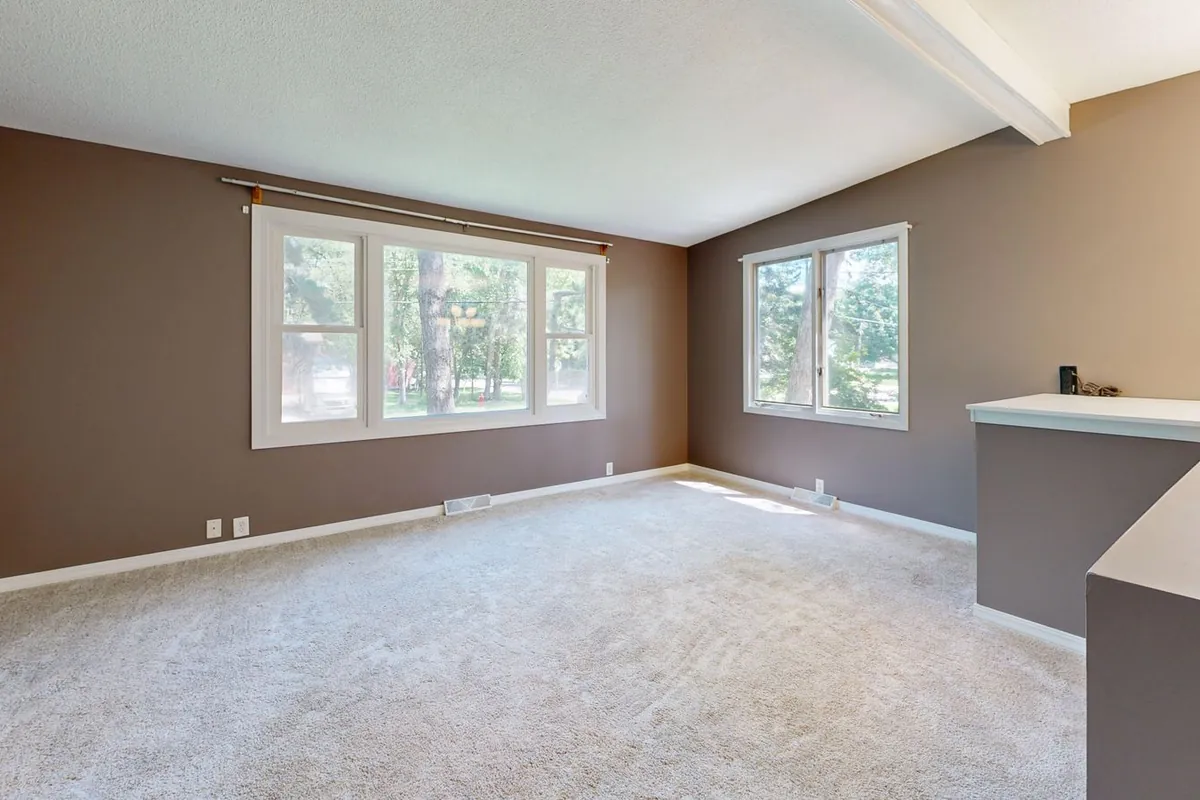
Fitted carpet is less common in Dubai homes than in the markets a lot of online advice is written for. Most apartments here are tiled or laid with engineered wood or vinyl. Where fitted carpet does turn up, it is usually in bedrooms of older buildings, on the upper floors of villas, and in offices — and in a rented property it is generally part of the unit rather than part of your contents.
That distinction matters more than it sounds. Pulling up a fitted carpet leaves bare screed or tile, exposed gripper rods with nails still in them, and a floor the landlord did not agree to change. Settle that conversation before anything is cut. A loose rug needs no permission from anyone.
Check whether it is hand-knotted before you let it go
Turn the rug over and look at the back before you decide anything. Homes in this region hold a lot of hand-knotted wool and silk rugs, brought here, inherited, or bought locally over the years, and a hand-knotted rug in sound condition holds value that a machine-made one does not. It is a two-minute check and it is worth doing on any rug you did not buy yourself.
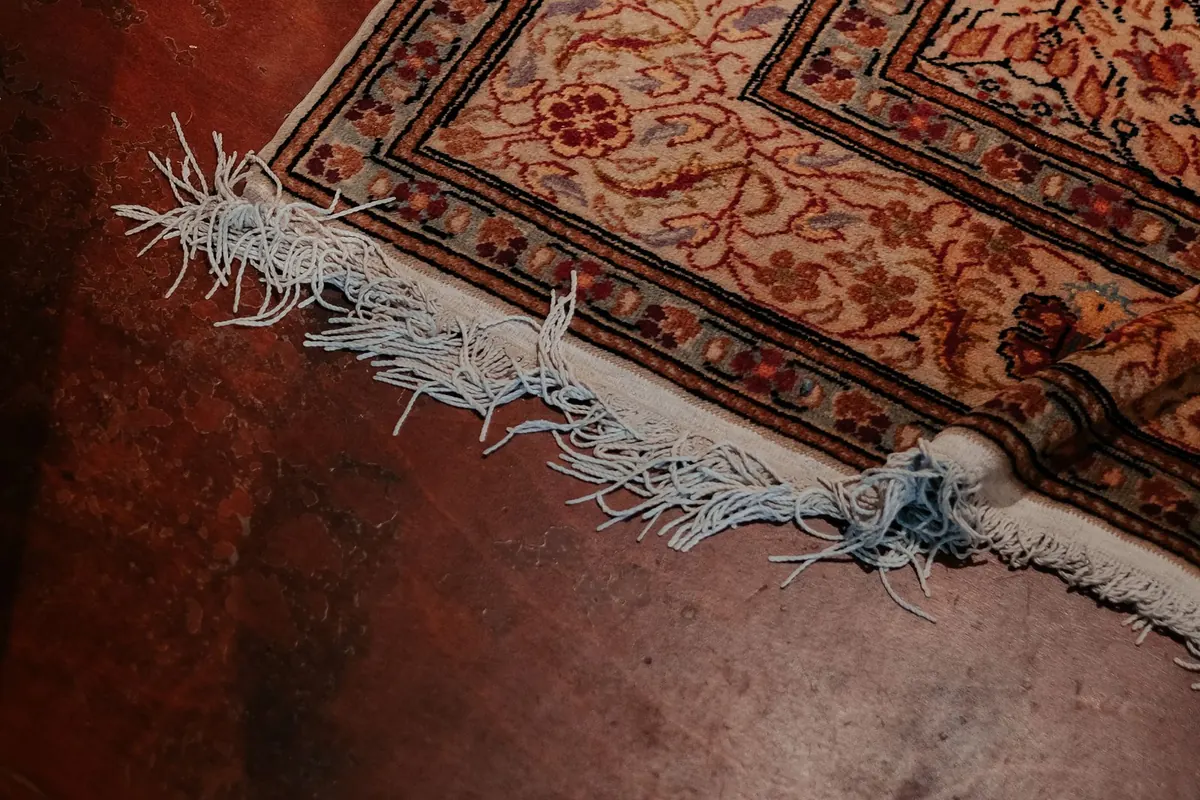
- The back. On a hand-knotted rug the pattern reads clearly from behind, almost as sharply as from the front, because the knots are the rug. A machine-made rug has a flat woven or rubbery backing that hides the design entirely.
- The fringe. Hand-knotted rugs are built on their fringe — those threads run the length of the rug and emerge at each end. On most machine-made rugs the fringe is stitched or glued to the edge afterwards, and it sits on the rug rather than coming out of it.
- The regularity. Look along a border for a band where the colour shifts slightly, or a line that wanders by a few millimetres. Small irregularities mean a person made it. Machine-made rugs are perfectly even everywhere.
What this check tells you is that the rug was hand-made. It does not tell you what it is worth. Value depends on origin, age, knot density, whether the pile is wool or silk, and condition — and that is a question for someone who buys and sells rugs, not something to settle from a photo on a phone. If the answer matters to you, ask before the rug is on a truck rather than after.
Be realistic in the other direction too. A hand-knotted rug that has been soaked, chewed at the edges or worn through to the foundation is finished, and being hand-made does not rescue it.
Roll it from the short edge, and never fold it
A rolled rug becomes a rigid tube, and the tube ends up exactly as long as the edge you started rolling from. Start at a short end of a three-by-four-metre rug and you have a three-metre tube. Start at a long end and you have a four-metre one. It is the same rug, and it is not the same problem.
That matters because a tube does not bend. It cannot be angled around a landing the way a mattress can, and a passenger lift car is rarely more than about two metres deep and not a great deal taller, so a long rug often will not go in lying down or standing up. Whether it needs the service lift, goes in on the diagonal, or goes down the stairs is frequently decided by which edge somebody started at.
- Clear the rug completely — furniture legs, plant pots, the corner tucked under a sofa.
- Sweep or vacuum it while it is still flat. Everything on it is coming with it otherwise.
- Start at a short edge and roll tightly and evenly, keeping the ends level as you go.
- Tape around the tube in three places — near each end and in the middle. Tape wrapped around holds; tape run along the length does not.
- Measure the finished tube and say that number when you book, rather than the rug's floor size.
Do not fold a rug to save space. Folds put a hard crease across the backing, and on an older rug or one with a stiff rubbery backing that crease can crack the backing permanently. A folded rug is also an awkward, shifting armful, while a rolled one is a tube two people can carry on their shoulders and put down without dropping.
Rugs weigh far more than they look
The single most common surprise on a rug collection is the weight. A dense wool rug is several times heavier than a synthetic rug of the same size, and a large one is a genuine two-person lift rather than something to test on your own back.
Dust adds to it here in a way it does not everywhere. Fine dust works down into the pile over the years and does not shake back out, so a rug that has been on the floor of a Dubai flat since the tenancy started is carrying real weight in it. Expect a cloud when it moves. Roll it near an open door or window rather than beating it in a shared corridor, where it becomes everybody's problem.
Water is the other one. An air-conditioning condensate leak, a burst pipe or rain blowing onto a balcony rug soaks it far more thoroughly than it looks, and a wet rug can be double its dry weight. Once the backing of a tufted rug has been properly wet it tends to come apart in layers and hold the smell, which is usually the reason a rug is going rather than being cleaned.
Where a rug actually ends up
A clean rug in sound condition gets passed on. A worn one is handled as bulky waste. Very little of a worn rug is recovered as material, and the reason is in how most rugs are made: the pile is stitched into a backing cloth, locked in place with an adhesive layer and covered with a second backing glued on top. The materials are bonded rather than fastened together, so there is nothing to take apart.
Flatweaves and hand-knotted rugs are the exception in principle — wool and cotton, no adhesive — but there is no household route for separating them here, so in practice it is condition rather than material that decides whether a rug gets a second life.
For passing one on, building noticeboards and community groups move rugs faster than resale listings do, because a used rug is rarely worth the two journeys a sale involves. Be honest in the listing about any pet or damp smell. It is the one fault a photograph cannot show, the recipient will find it the moment the rug is unrolled at their end, and a rug that comes back is worse for everyone than one that never left.
What decides the price
Rugs are priced on the space they take up, like everything else in a collection — not on what the rug is worth or what it cost. What moves the estimate is the rolled size, the number of them, and whether anything has to be cut and lifted rather than simply carried.
- The rolled length and thickness. A hallway runner and a majlis-sized villa rug are both one rug and are not one price.
- How many. Households almost always have more than one, and rolled rugs stack badly because they are round.
- Loose or fitted. Fitted carpet is labour first — cutting, lifting, pulling gripper rods and clearing underlay — and haulage second.
- Whether it is wet or contaminated. Those are bagged rather than loaded loose, and they are heavy.
- The route out. A long tube in a tight stairwell is slower than the same rug in a building with a service lift.
One genuinely useful thing about rugs: rolled, they travel well alongside rigid furniture and fill the gaps a load of boxes and cabinets leaves behind. Adding a rug to a collection you were already booking costs far less than sending a vehicle for the rug on its own. If you know a move or a clear-out is coming, wait and send it with everything else.
When you do book, three details are worth giving: how many rugs, the rolled length of the longest, and whether any of it is fitted carpet. Those three answers are what decide the vehicle and the time, and they take a sentence to supply.
Almost everything difficult about getting rid of a rug is settled before anyone arrives. Look at the back of it, decide whether it is a loose rug or part of the floor, then roll it from the short edge and tape it. What is left after that really is the easy job it looked like from across the room.