Most people decide a garden set is finished by looking at the cushions, which is the one part of it that tells you almost nothing. What actually decides whether an outdoor table and chairs get passed on to somebody else or go out as waste is the frame — what it is made of, and what a few summers here have already done to it. Getting the set out of the garden is a separate question with its own answer; this is about where it goes once it is out, and how to work that out yourself in about two minutes.
Why the cushions almost never go with the set
Outdoor cushions are effectively consumable. The foam inside holds moisture from humidity and the occasional wash, the covers fade unevenly depending on which way the seat faced, and anyone taking a set on can buy new cushions for less than the cost and trouble of cleaning somebody else's. So cushions almost always leave as waste, even when the furniture under them is sound.
Turn that around and it becomes a useful rule. A solid frame under ruined cushions is worth offering to somebody. A presentable set on a frame that has gone is not worth offering to anyone, and it is not a cosmetic judgement — a weakened outdoor chair tends to give way while it is being carried rather than while it is being sat on.
The three materials that survive here
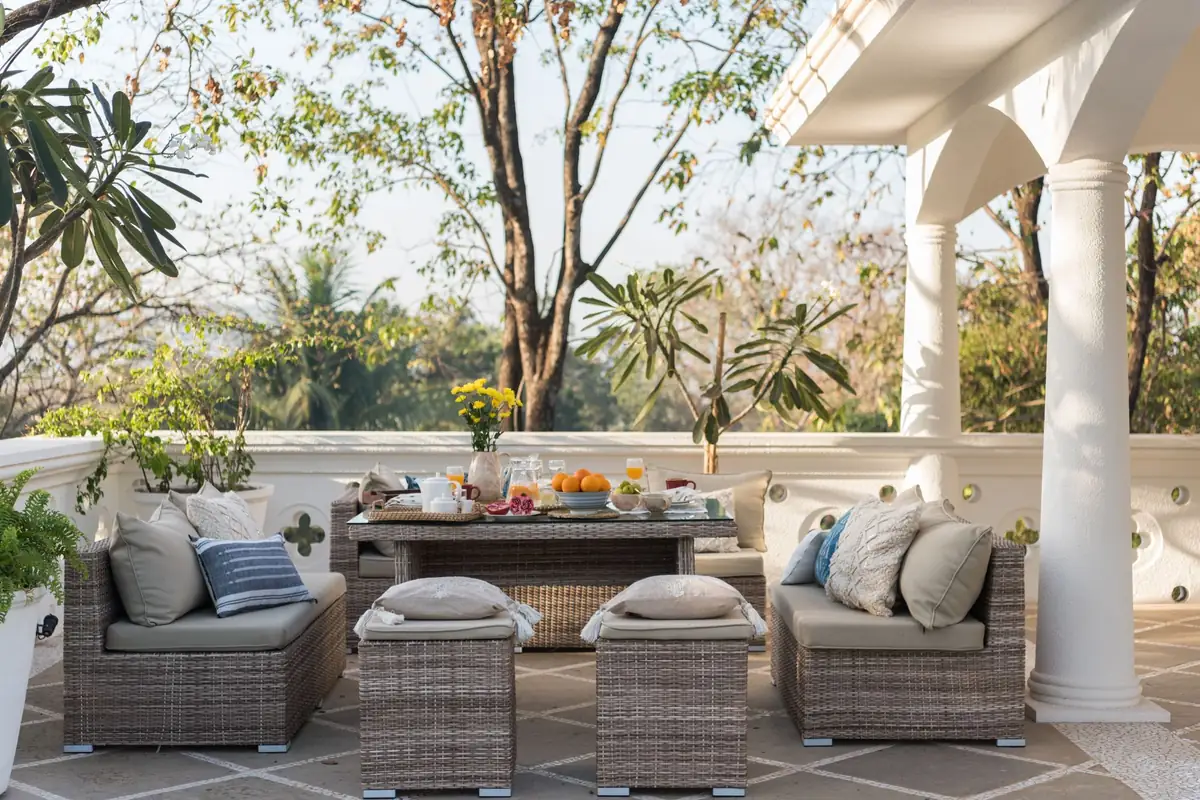
Three frame materials genuinely last through Dubai summers: powder-coated aluminium, teak and other dense hardwoods, and synthetic PE rattan woven over an aluminium frame. A set built from any of these is worth checking properly before you write it off.
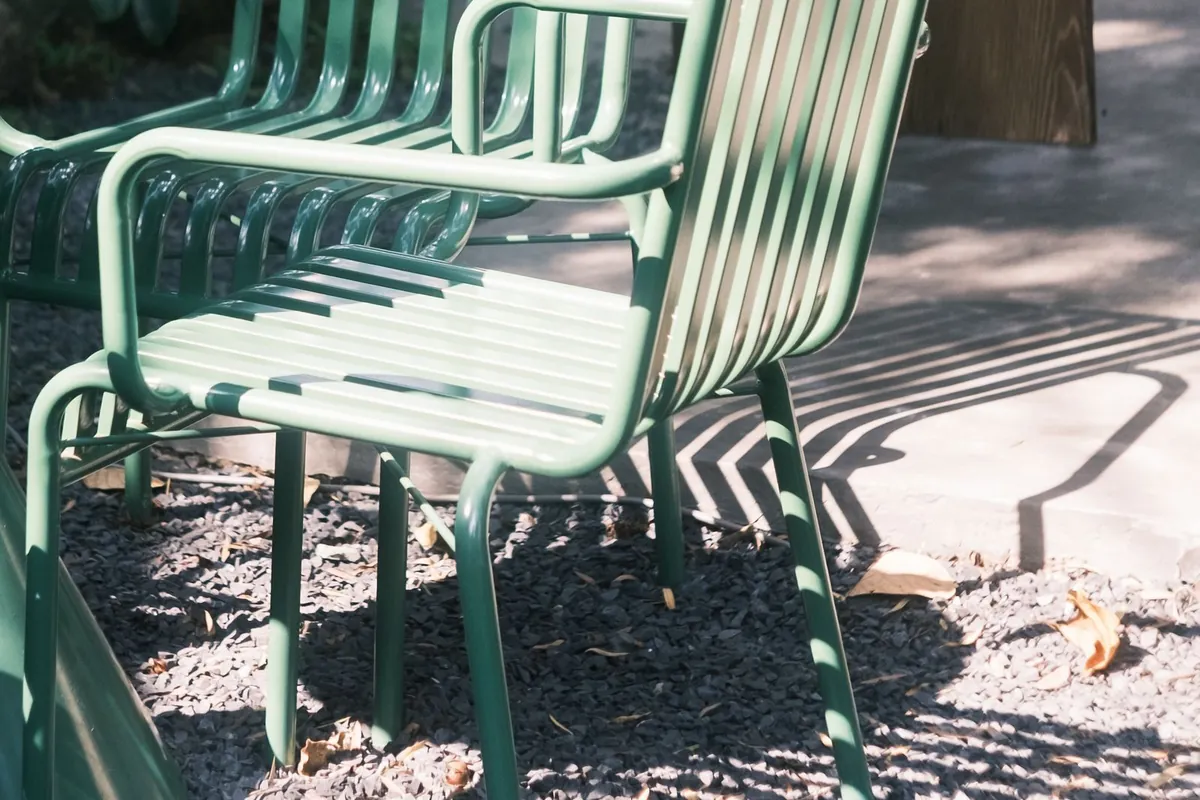
- Powder-coated aluminium. It does not rust — aluminium forms a stable dull surface instead of flaking away — so what fails is the coating. Chips let the sun at the metal and it goes chalky and pale around the damage. Check the welds where the legs meet the seat frame, because that is where a light frame gives first.
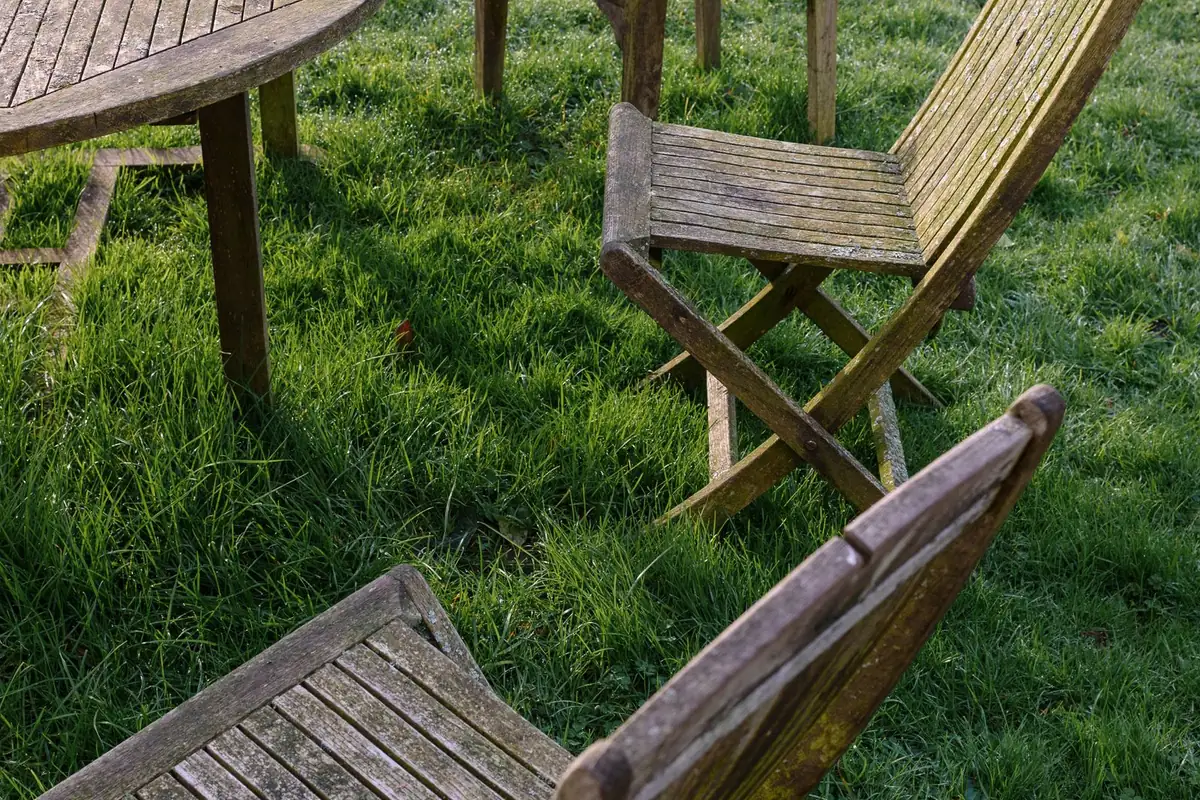
- Teak and dense hardwoods. These weather to a silver-grey on the surface and stay sound underneath for years. Grey is not damage. Press a thumbnail into the end grain of a leg: if it dents easily and the surface feels fibrous rather than hard, the timber has gone soft and the set is finished. Open joints and a chair that racks side to side are the other end signals.
- Synthetic PE rattan on an aluminium frame. The weave is the wear part, not the frame. It goes brittle and snaps strand by strand, almost always starting on whichever side faced the sun. A few broken strands are cosmetic; a panel unravelling across a seat is not, and re-weaving is a specialist repair rarely worth its cost on a mass-market set.
The materials that do not
Everything else outdoors here is on a clock, and each material fails in a way you can recognise once you know what to look for.
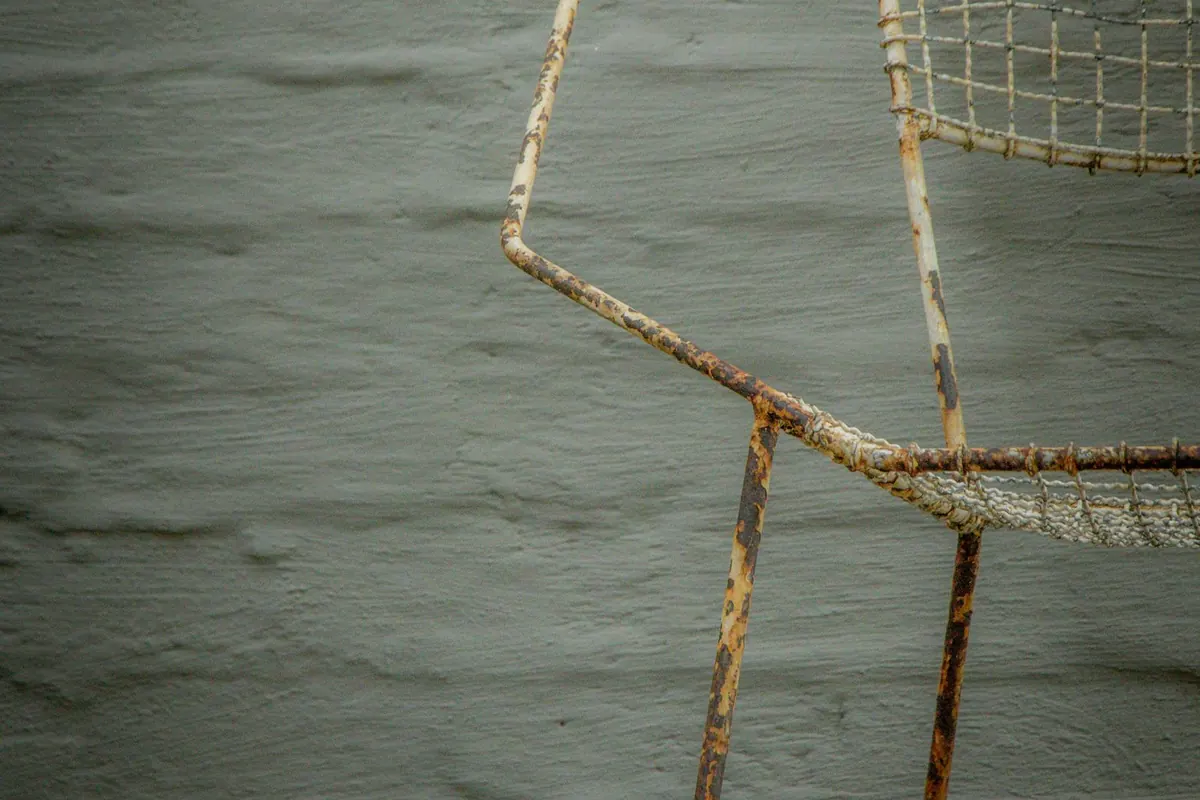
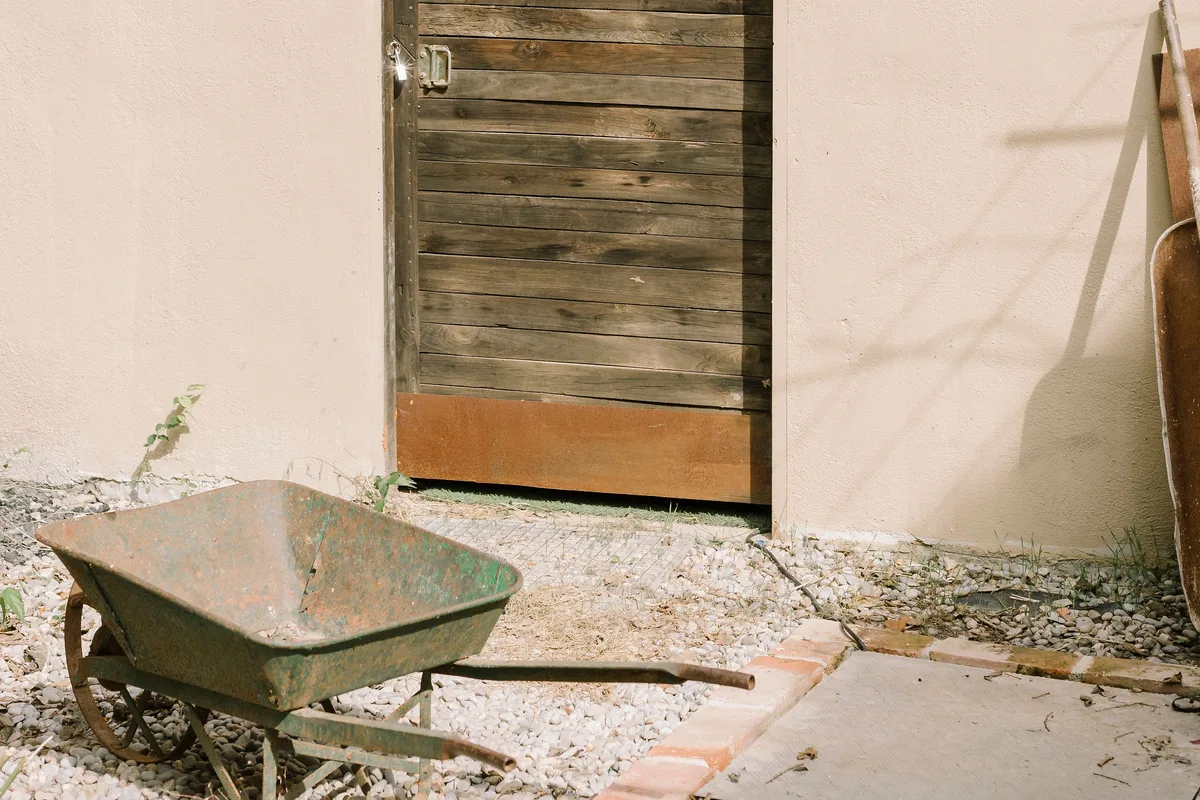
- Mild steel and cast iron. These rust from underneath the paint, where you cannot see it happening. By the time paint bubbles or lifts, the metal below has already lost thickness. Look at the underside of the seat and at the last few centimetres of each leg, which sit in whatever water reaches the floor.
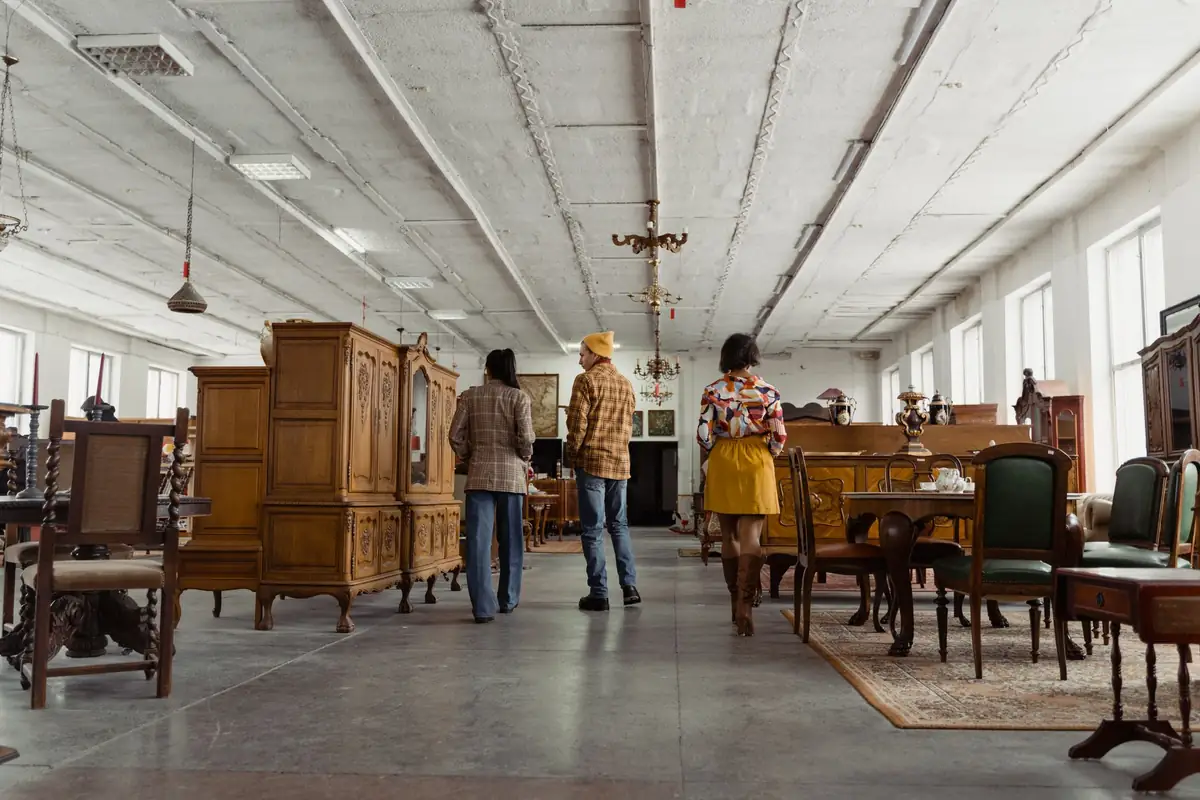
- Softwood and the cheaper hardwoods. Pine, and the low-oil timbers used in budget sets, dry out fast in this climate, split along the grain and lose their grip on the screws holding them together. One of these that has spent two summers outside untreated is rarely worth passing on.
- Natural cane and rattan. An indoor material that gets used outdoors. It dries, pales, goes brittle and begins to unravel at the ends of the weave. It almost never finds a second home once that starts.
- Thin moulded plastic. Ultraviolet light makes it chalky and brittle. If the surface leaves a powdery mark on your hand, the plastic has degraded through, and a brittle plastic chair is a safety problem rather than a tired-looking one.
- Tempered glass tabletops. These are fine until they are chipped. A chipped edge is where the pane will eventually let go, and it does so all at once rather than cracking gradually.
What genuinely gets passed on
A complete set with a sound frame moves easily here. A single weathered chair, or a table whose chairs have already gone, generally does not — outdoor furniture is bought as a set and wanted as one, so four matching chairs and their table are a far easier offer than the same pieces separately.
The demand is steady and fairly specific. Households moving into a villa or townhouse with an empty garden or terrace, and people furnishing a new outdoor space cheaply, take plain sturdy sets readily. Interest is also seasonal in a way that indoor furniture is not: gardens here get used through the cooler months, so an outdoor set offered in October moves faster than the same set offered in July.
The practical obstacle is nearly always transport. A garden set is bulky, whoever takes it has to move it, and very few recipients arrive with a vehicle that fits a six-seat table. Whatever you decide, start earlier than feels necessary, because the offer usually fails on logistics rather than on interest.
What happens to it at the end
At the end of its life a garden set is separated by material where separating is worth doing, and aluminium is the part where it genuinely is. Aluminium has real value by weight as scrap, it is easy to identify, and a light frame yields a useful amount of it. Steel is separated too, and is worth less.
Timber is handled by condition. Sound untreated hardwood can be chipped; painted, oiled or heavily degraded timber is generally handled as bulky waste instead. Glass tops are taken off and kept separate, both because tempered glass is dealt with apart from everything else and because a loose pane travels flat and alone or not at all.
The weave, the cushions and the moulded plastic are the low-value end. Synthetic weave is a mixed polymer bonded to its frame with nothing worth undoing, and cushions are foam inside fabric, so both are generally handled as bulky waste rather than separated. An outdoor set is not fully recycled, in other words — the aluminium is the part with a genuine second life, and a set that arrives complete and in one collection is easier to separate than the same set left out in pieces over several weeks.
None of this needs an expert. Take a fridge magnet and a fingernail into the garden: the magnet sorts steel from aluminium, the fingernail sorts sound timber from spent timber, and a look under one seat tells you how the frame has really aged. A couple of minutes of that decides whether you are arranging a handover or booking a collection, and it is much better to know which before you start offering the set to anyone.