A furniture disposal checklist in Dubai is more useful as a list of pieces than as a list of tasks. Write down what you actually own, then settle four things against each item: where it is going, whether it is yours to remove, how big it is at its largest point, and who has to approve it leaving the building. Three of those four have to be answered before anyone can quote you accurately, which is why the list comes first and the arrangements come second.
Why a list of pieces beats a list of tasks
A clear-out feels like one job and behaves like a dozen. The sofa, the wardrobe and the balcony chairs have different destinations, different lead times and different answers to the question of whether you are allowed to remove them at all. A task list flattens all of that into "get rid of the furniture," which is exactly the point at which things start being forgotten.
So walk the flat once with a phone or a notebook and write down every piece, room by room. Include the store room, the balcony, the maid's room and anything under a bed — those four are where the surprises live. Ten or fifteen lines is normal for a two-bedroom apartment, and the list is the thing you will send when you ask for a price.
The four things to settle against each piece
Against every line on that list, answer four questions. They are in this order deliberately: each one can change the answer to the ones after it.
- Where is it going — sold, given away, donated, or collected for disposal?
- Is it actually yours to remove, or does it belong to the landlord or to the property?
- What is its largest single dimension, and will that dimension get through the narrowest point on the way out?
- Who has to approve it leaving — nobody, building management, or a community gate?
Everything a checklist normally tells you to do on collection day follows from these four answers. Get them settled and the rest of the job is scheduling.
Column one: where each piece is going
Mark every line as sell, give, donate or dispose. The point of doing it piece by piece rather than for the whole flat is that a single home almost always splits across at least two of those routes, and each route asks for a different amount of your time.
Two practical notes. A mixed list is normal, and one collection can take items from more than one category if the sale or donation falls through. And the routes that involve another person's calendar — a buyer, a charity, a friend with a van — are the ones that slip, so give each of them a date by which it converts to disposal. Choosing between the routes in the first place is a decision with its own trade-offs, covered in more depth elsewhere on this site.
Column two: what is actually yours to remove
This is the column most people skip, and the one most likely to cost money. Three categories of furniture in a Dubai apartment are commonly not yours to dispose of, and each is checked differently.
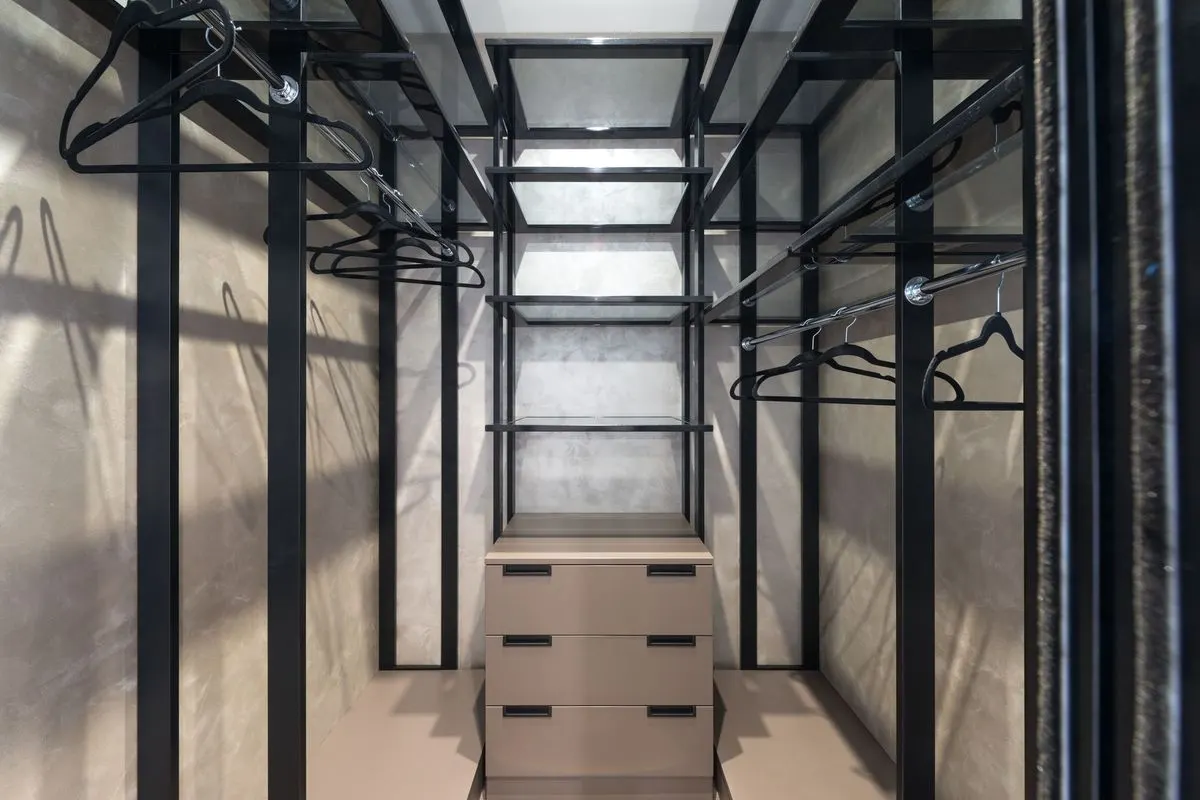
- Fitted units. Anything screwed or built into the structure — wardrobe interiors, kitchen cabinets, shelving fixed to a wall, a fitted dressing table. Removing these is an alteration to the property rather than a clear-out. The practical test is whether it can be lifted away without unfixing it from the wall or floor.
- Furniture from a furnished let. If the flat came furnished, the pieces belong to the landlord and normally appear on an inventory attached to your tenancy contract. Check that document before anything on it leaves, even if the piece is old or broken.
- Items left by a previous tenant. Ownership here is genuinely unclear until somebody settles it, and the person to ask is the landlord or building management, not the next occupant.
Take five minutes with the tenancy contract and the handover paperwork before the list is final. Which rules apply to you, and where those rules come from, is a broader subject with its own guide — but for a checklist, the tenancy inventory is the one document worth opening.
Column three: one measurement per piece
You do not need the full dimensions of everything. For each large item, write down its single largest measurement — usually the length of a sofa, the height of a wardrobe or the diameter of a round table — and then measure the narrowest point between that item and the lift or the front door.
In most Dubai apartments the narrowest point is a bedroom doorway or the turn out of a corridor, not the lift car, which is generally the most forgiving part of the route. Furniture also turns diagonally, so a two-metre sofa does not need a two-metre opening. Where a piece is genuinely larger than the tightest point, you have two options rather than a problem: take it apart, or accept it is leaving through a different route. Both of those have their own guides; the checklist's job is only to flag which pieces need the conversation.
Photograph anything bulky while you are measuring it. A photo and one number produce a far more accurate quote than a written description ever will, and it saves the crew discovering the shape of the job at the door.
Column four: who has to approve it leaving
In a villa, usually nobody, beyond letting the community gate know a vehicle is coming. In a managed apartment tower, building management almost always has to approve the collection in advance, and the service lift is often a separate reservation from the approval itself.
For the checklist, this column only needs a yes or no and a date on which you asked. Start the request as soon as you have a provisional date — it is the step with the least flexibility, and it runs on the management office's hours rather than yours.
What comes out of the furniture before it goes

Two things live inside furniture and get forgotten. The first is contents — drawers, the base of a wardrobe, the back of a bookshelf, the storage compartment inside an ottoman. The second is hardware: loose shelf pins, spare fixings taped inside a cabinet, a remote or a plug for anything powered.
Then there is what stays behind. Anything that was fixed to a wall — a bracket, an anti-tip strap, a floating shelf, a wall-mounted unit — leaves screws and plastic plugs in the plaster when it comes down. Add a line to the list for each wall-fixed piece so those holes are on your radar before a handover inspection rather than after it.
After it goes, the walls are what you check
The final pass on a furniture clear-out is not a check that the truck took everything. It is a look at the surfaces the furniture was hiding. A wardrobe that stood against a wall for three years has been protecting that wall from sunlight, and the paint behind it will not match the paint beside it. Sofa feet leave dents in carpet, and a heavy chest leaves marks on tile grout.
Walk each room once the pieces are gone and note three things: fixing holes, marks or colour differences on walls and floors, and anything that stayed behind because it did not fit or was not on the list. All three are easier to deal with in an empty room on the same day than in a handover inspection two weeks later, and all three are invisible until the furniture moves.
The list is what makes the rest of it manageable. Fifteen lines with four answers each takes twenty minutes to build and turns a vague, slightly dreaded job into something with an obvious order — which pieces need a decision, which need a measurement, which need permission, and which simply need a date.