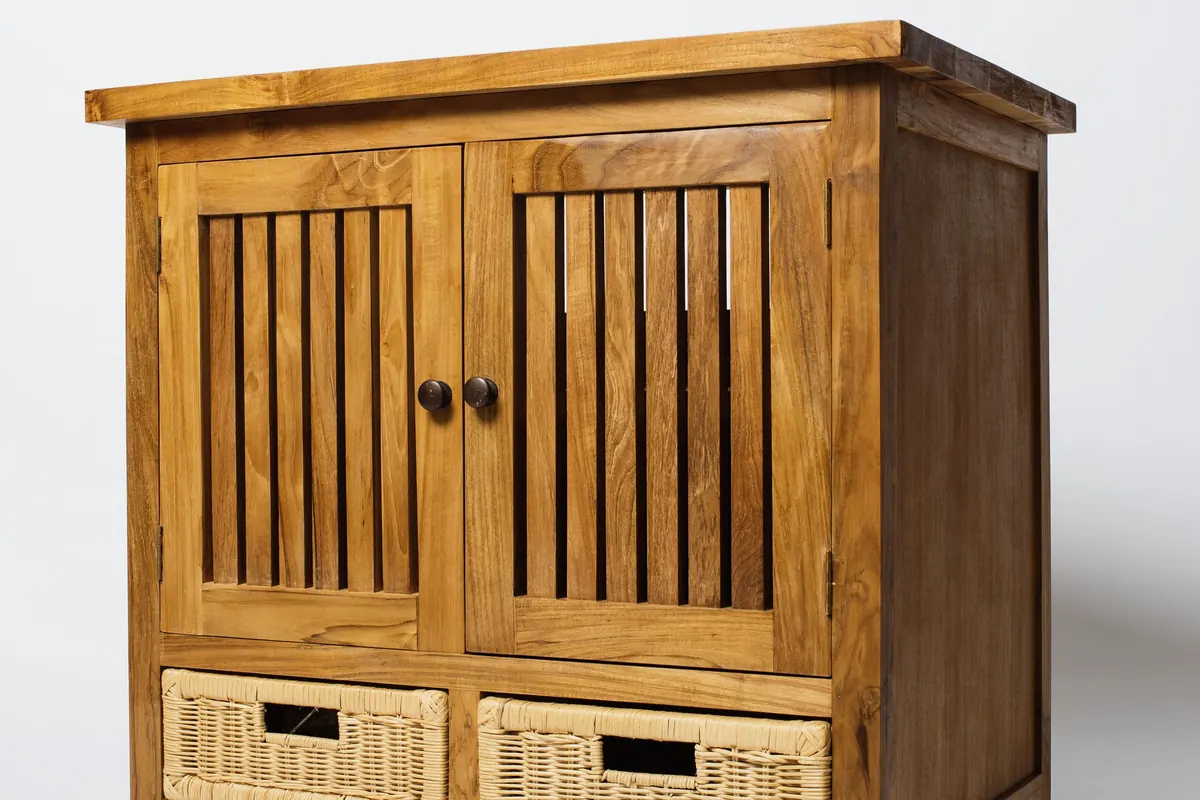
A cabinet is a box with doors on the front, and the doors are the reason it is more awkward to move than its size suggests. An unsecured door swings open on a stairwell, catches on a door frame, and slams shut on the fingers holding the carcass. Everything about a cabinet collection follows from that one fact, along with a second one: cabinets tend to be full of things that are heavy and breakable at the same time. Here is how a sideboard, display unit or storage cabinet is cleared from a Dubai home, and when the cabinet in front of you is not actually yours to remove.
What counts as a cabinet here
The word covers a lot of furniture, so it is worth being specific about what this applies to — closed storage that stands on the floor and opens with doors rather than drawers.
- Sideboards and buffets — long, low units in a dining or living room, usually a mix of doors and a drawer or two.
- Display and china cabinets — often taller, frequently glass-fronted, and sometimes lit from inside.
- Utility and storage cabinets — plain units in a laundry, storeroom, maid's room or garage holding tools, cleaning supplies and spares.
- Small standalone cabinets — a shoe cupboard by the front door, a bathroom unit that is not fixed to the wall, a drinks cabinet.
Three things that get called cabinets are genuinely different jobs. Kitchen units and bathroom vanities are fitted carpentry rather than furniture, and are covered further down. A television or media unit is usually mostly open shelving with electronics and cabling attached, which changes what has to be disconnected first. And filing cabinets in quantity belong to an office clearance, where the scheduling matters more than the item.
The doors are what makes it awkward
Every door either gets secured shut or comes off entirely before the cabinet is lifted, and which one depends on the hinge. This is settled in the room, not on the landing.
Most modern cabinets use concealed hinges — the cup-shaped kind you can see when the door is open. These usually unclip from their mounting plate with a lever or a single screw, and taking two doors off a sideboard is a couple of minutes' work that makes the whole carry safer and narrower. Keep the screws in a bag taped inside the carcass if the unit is being passed on.
Older cabinets with butt hinges screwed into solid timber are usually left assembled and strapped instead, because unscrewing those hinges damages the frame and they rarely go back into the same holes. A webbing strap around the carcass holds the doors closed without touching the finish, which is what tape cannot do.
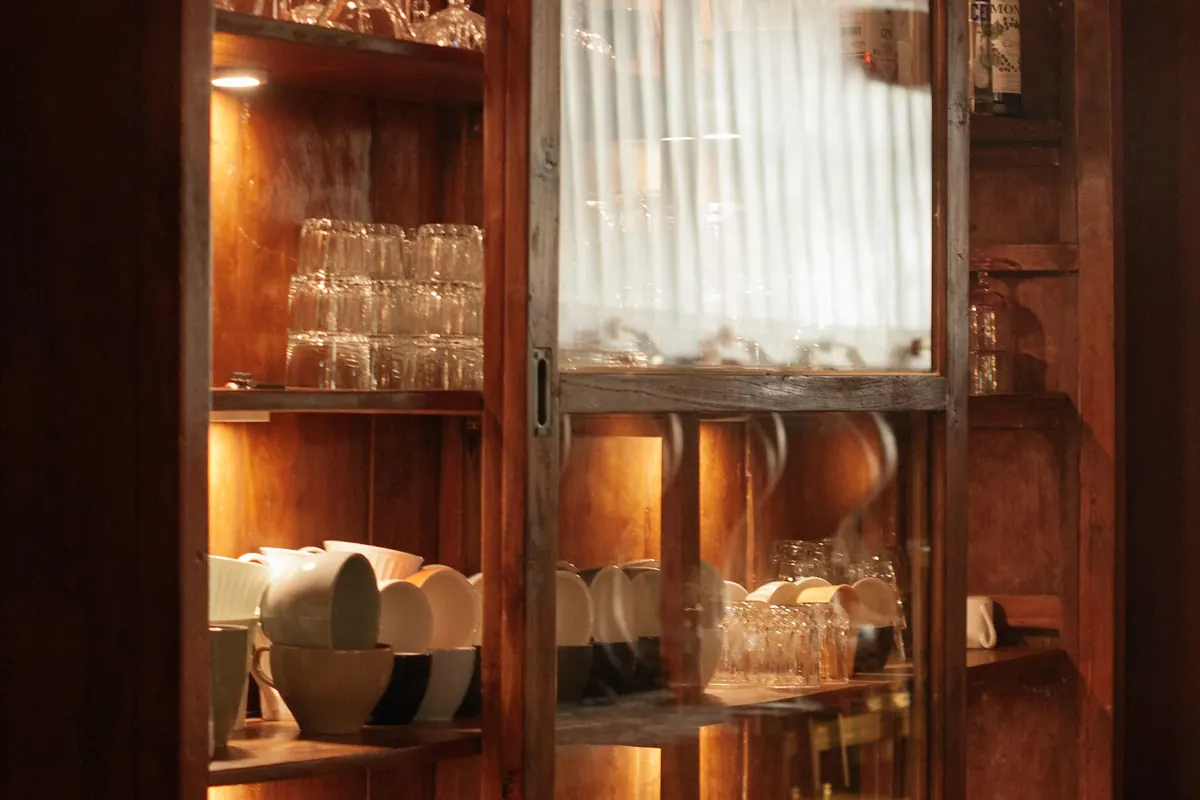
Glass doors are a separate case and the one detail most worth mentioning at booking. Whether they are hinged or sliding, they come out of the carcass first and travel flat and padded, on their own. A glass door left in a cabinet that is being tilted through a doorway is the single most likely thing to break in the whole job. The glass shelves inside come out at the same time and for the same reason.
Never move a loaded cabinet
A cabinet is the one piece of furniture whose contents are usually heavy and fragile at once. A bookcase holds weight, a wardrobe holds bulk, and a sideboard holds a dinner service — dense, sharp when broken, and completely unforgiving of a knock.
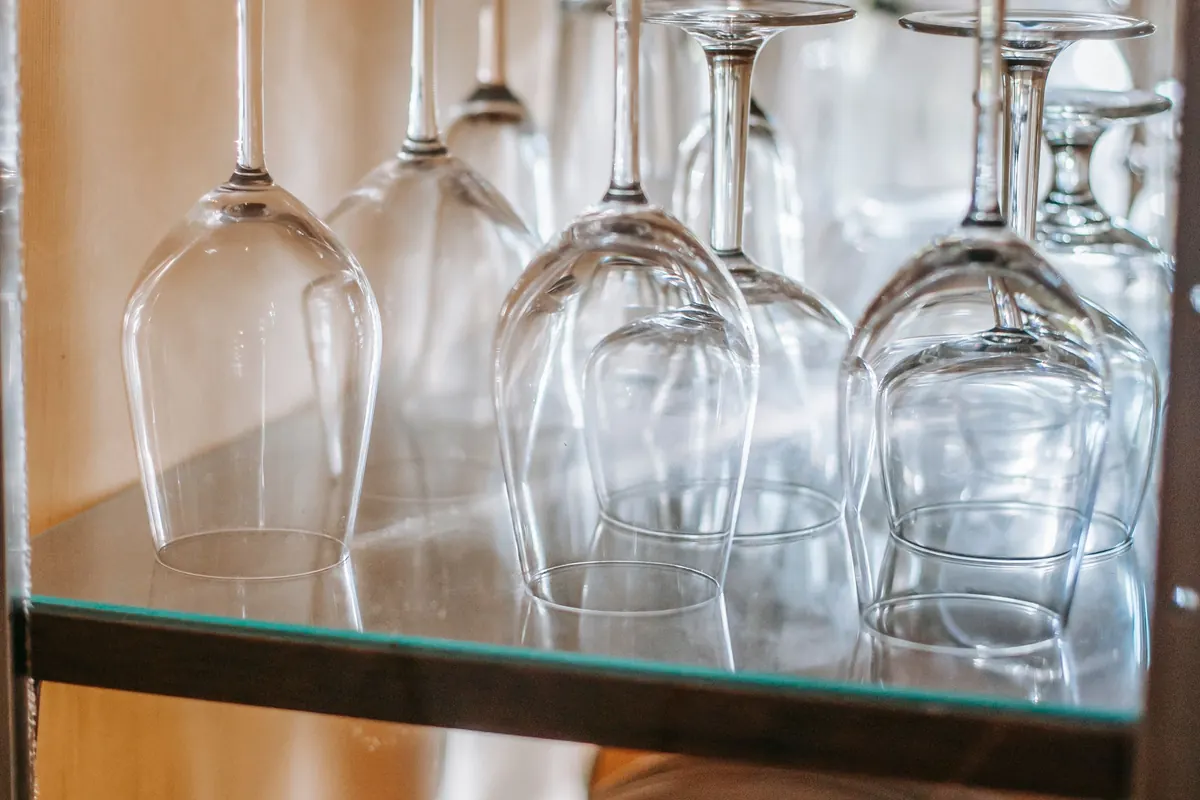
The drinks cabinet deserves its own mention, because bottles are liquid and liquid is heavy. A cabinet with a dozen full bottles in the base is carrying a load nobody would guess from the outside, and the bottles are also the thing most likely to tip and break against each other on the first stair.
Emptying it is short work if you do it in the right order.
- Take everything out of the cabinet, including whatever has migrated to the very back of the bottom shelf.
- Wrap anything breakable and box it, rather than leaving it stacked on a table in the same room where it can be knocked.
- Lift out the loose shelves — most cabinet shelves sit on pegs and will slide about inside the carcass otherwise.
- Take the key out of the lock if there is one, and tape it to the inside of the door if the unit is being passed on.
If the contents are going too, say so when you book rather than on the day. Crockery and glassware are quoted as part of the load, and they need boxing rather than carrying loose — which is a different amount of time from taking the cabinet alone.
Freestanding, fitted, or stripped out in a renovation
A freestanding cabinet is furniture and it is yours. Anything built into the room — a kitchen run, a bathroom vanity, a carpentry unit made to fit an alcove — belongs to the property, and removing it is a conversation with the landlord or building management before it is a booking.
Renovations are where this becomes a practical question rather than a legal one. When a kitchen or a bathroom is replaced, what comes out is a pile of cut-up carcasses, doors, worktop offcuts and a vanity with a basin still attached to it. That is a renovation strip-out rather than a furniture collection: the volume is larger, the pieces are irregular, and there is usually building debris mixed in. It is worth describing it that way when you ask for a price, because the two jobs need different vehicles.
The one to look at twice is a cabinet in an alcove that appears built in. In Dubai apartments these are often a freestanding unit pushed into a gap and screwed to the wall at the back for stability. Check for a seam at the sides and skirting running behind it — if the floor and skirting continue underneath, it is furniture.
What makes a cabinet worth passing on
Storage furniture is among the easier things to pass on here, because almost every home needs somewhere to put things and a sideboard suits a hallway, a dining room or a living room equally. A solid cabinet in reasonable condition is genuinely worth offering before you book a collection.
Four things take a cabinet out of that category, and none of them are cosmetic.
- A hinge plate that has torn out of chipboard. The screws have nothing left to bite into, the door hangs low, and refitting it in the same place will not hold.
- A swollen base or back panel. Water from a leak or a mopped floor wicks into board and it never goes back down — the swelling is permanent and usually spreading.
- Cracked glass in a door or shelf. A crack that formed while the unit stood still will finish the job the moment the piece takes its own weight in someone's hands.
- A missing key on a locked unit. Worth checking early, because a cabinet locked shut with no key is difficult to hand on and awkward to empty.
Solid timber is the exception to most of this. A hardwood sideboard with a loose door or a scratched top is a straightforward repair for somebody who wants it, and those units are worth offering even when they look tired.
The thing to settle before the crew arrives is the same thing that decides the whole job: what is behind the doors, and what happens to the doors themselves. Empty it, take the shelves and any glass out, and secure or unclip the doors — and a cabinet stops being an unpredictable object and becomes what it looks like, which is a box that two people carry out.