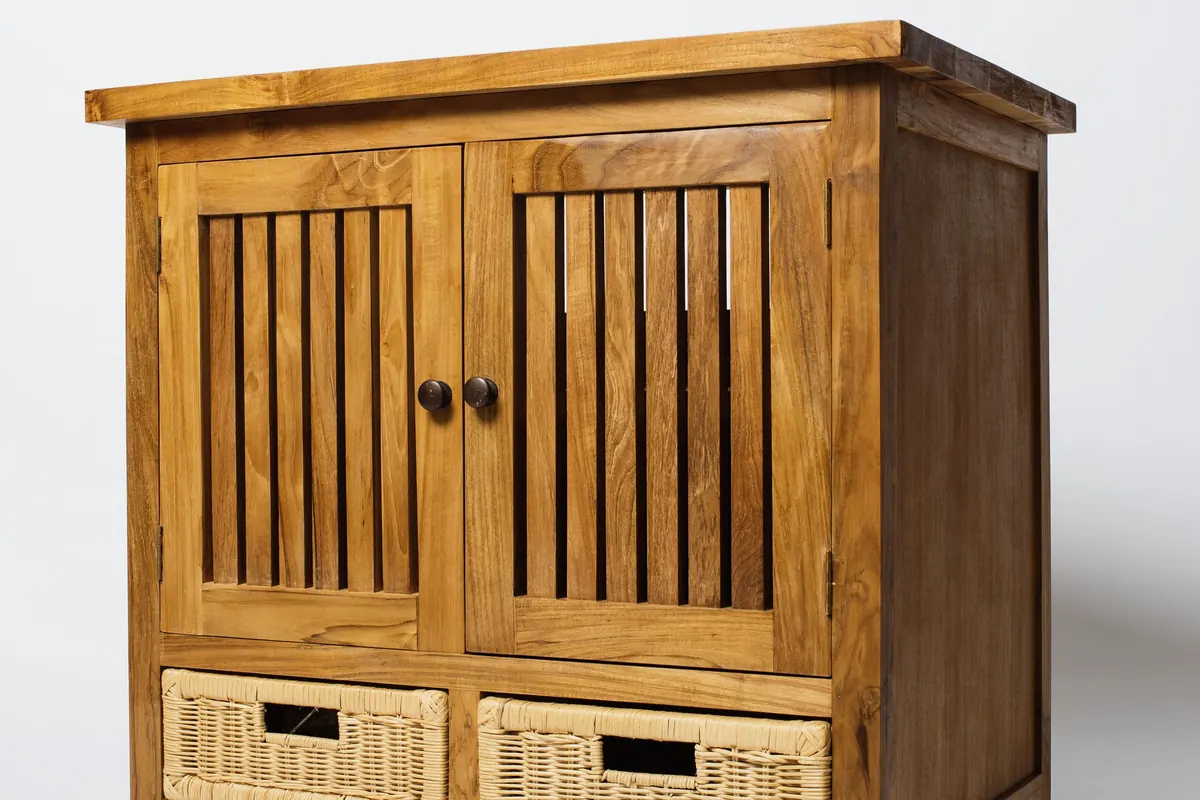
A chest of drawers is two items pretending to be one: a carcass, and a stack of loose drawers that slide straight out the moment it tilts. Taking those drawers out before anybody lifts anything is the step that decides how the rest of the job goes, and it is the one people skip. This is how a dresser collection runs in a Dubai apartment or villa, what to check on the top and the back before the day, and how to judge a chest that has reached the end of its life.
Take the drawers out before anything moves
Every drawer comes out of the carcass first, and they travel as separate pieces. This is not about tidiness. A drawer sitting in an open-backed chest is held in place by nothing but gravity, so the instant the unit is tipped to get it through a doorway, the drawers run out of the front and take the carrier's balance with them.

It also changes what kind of item you are dealing with. A chest with its drawers removed is a hollow box, and a hollow box keeps the same shape while it is being carried. The assembled version shifts weight every time it moves, which is the real reason a dresser feels harder to handle than a bookcase of similar size.
Empty the drawers rather than just pulling them out loaded. Clothes are light individually and surprisingly awkward in bulk, and a drawer packed to the top has no rim left for anyone to get a hand under.
Do not tape the drawers shut and hope. Packing tape lifts lacquer and paint off a drawer front when it comes away, it does very little on a melamine finish, and it fails under load anyway — which puts you back where you started, only now with adhesive on the furniture.
Why a chest tips when a wardrobe does not
A drawer is a lever. Pulling one out moves a load of weight forward, past the front feet of the unit, and a tall chest can pass its own tipping point on one open drawer with something heavy in it. A wardrobe cannot do this, because opening a door moves almost nothing.
Tall narrow chests are the ones to watch — anything noticeably taller than it is wide has a small footprint holding up a lot of leverage. Open one drawer at a time while you are emptying it, and start at the bottom rather than the top so the weight stays low as you work up.
Many of these units came with a strap or bracket for fixing them to the wall. If yours was fitted, it has to be released before the chest moves, and it leaves a small hole or two behind that are worth knowing about ahead of a property handover rather than on the morning of one.
Check the top, the back and the wall
Three things attach to a chest of drawers and none of them are obvious from across the room: a mirror, a separate top, and whatever is plugged in behind it.
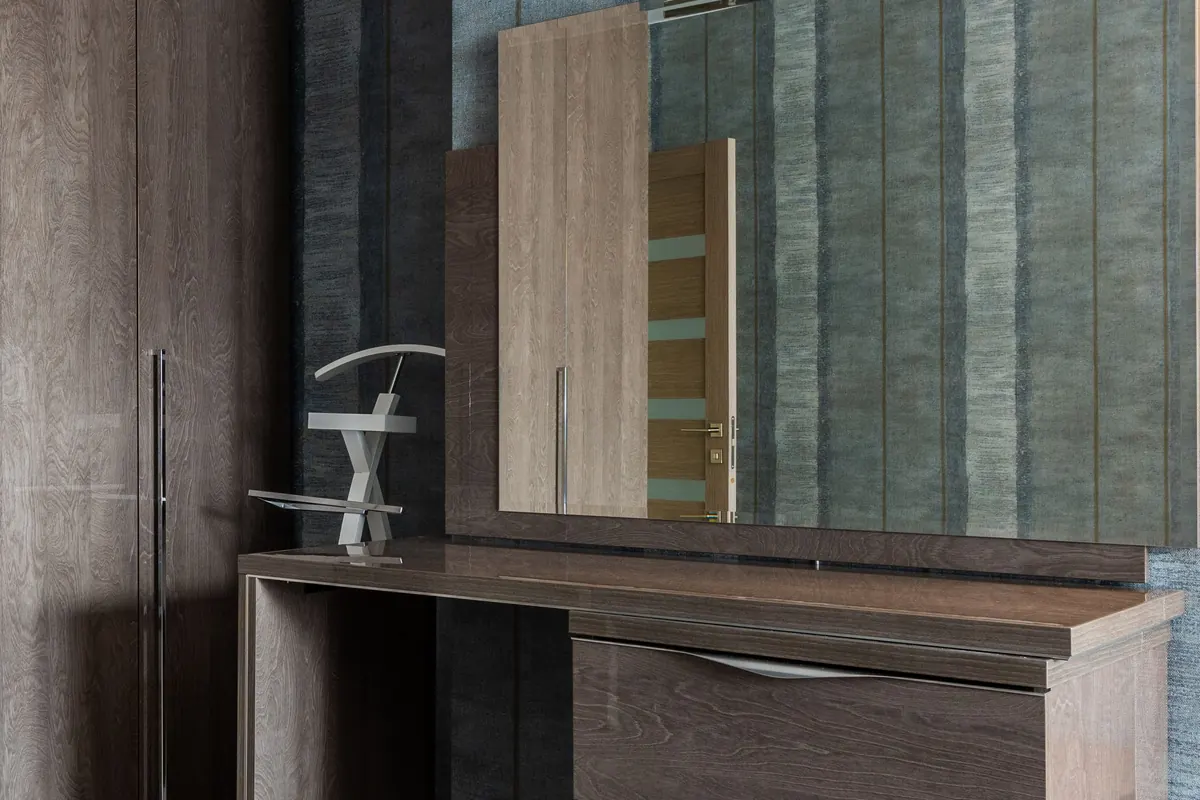
A dressing-table mirror is the one that catches people out, because there are two versions of it and they look identical from the front. Some are bolted through the back panel of the chest on two uprights, and some are hung on the wall directly above a chest that has nothing to do with them. Look behind it and find out which you have. Either way the mirror leaves separately and travels flat, because it is a sheet of glass and nothing else.
The top is worth two seconds as well. On some chests, particularly those with stone or glass tops, the top is a loose slab resting on the carcass rather than a fixed part of it. Lift a corner and check, because a slab that slides off mid-carry is a genuinely bad outcome for both the floor and the person underneath it.
Then look behind the unit. Bedroom chests collect cables — a lamp, a phone charger, sometimes a television bracket on the wall above. Unplug and coil all of it the night before rather than discovering a taut cable when the chest is already off the wall.
When the runners have gone
Most chests of drawers leave a home because the drawers stopped working, not because the carcass failed. Three things go wrong, and they are easy to tell apart once you know what you are looking at.
- Metal runners that have bent or jumped their track, so the drawer sits at an angle and jams halfway.
- Wooden rails worn smooth and slightly hollow, which makes the drawer drop as it comes out and catch on the frame below.
- A drawer base that has dropped out of its groove — the thin panel underneath is only slotted in, and once it lets go the drawer sags and stops closing.
Whether any of that is worth fixing depends on what the chest is made of. On solid timber, a worn rail is a small carpentry job and the unit is worth keeping. On a faced chipboard chest in a rented flat, it usually is not — the runner screws pull out of the board rather than back into it, and the repair does not hold for long.
The other common ending is a chest that has already been taken apart and rebuilt once. Cam fittings grip well the first time and much less well after that, so a unit that has moved between two apartments often leans slightly and has a drawer that no longer sits square in its opening. That is a sign it is finished rather than a fault to chase.
None of this affects the collection itself. A chest with a failed drawer is an ordinary item to take away, and if only one drawer has gone it is still worth offering to somebody who wants storage more than they want perfection.
How the collection actually runs
The sequence is the same everywhere. Drawers come out and get stacked inside each other by the door, the empty carcass goes out first while the route is clear, and the drawers follow in one trip afterwards.
In an apartment the carcass is the only piece that needs any thought. A wide chest is often broader than a standard internal bedroom door, so it goes through turned on its side, and that turn needs a metre or so of clear floor to happen in — worth remembering if the bed is still in the room. The drawers themselves nest and fill very little of a lift car.
In a villa it is usually simpler, because the vehicle parks near the door and there is no lift to book. The complication in villas is quantity rather than access: bedroom furniture here tends to have been bought as a matched set, so the chest going often means the bed frame and the bedside tables are going with it. Say so at the quote stage, because that is a different-sized job from one item.
A single chest of drawers is a short visit either way. The preparation takes longer than the collection, which is exactly why the preparation is the part worth getting right.
The habit worth keeping is simply this: never let anyone pick up a chest of drawers that still has its drawers in it. Empty them, take them out, and stack them by the door. What was an awkward shifting weight becomes a hollow box and a neat pile, which is a very different afternoon from the one where a drawer lands on somebody's foot in a lift lobby.