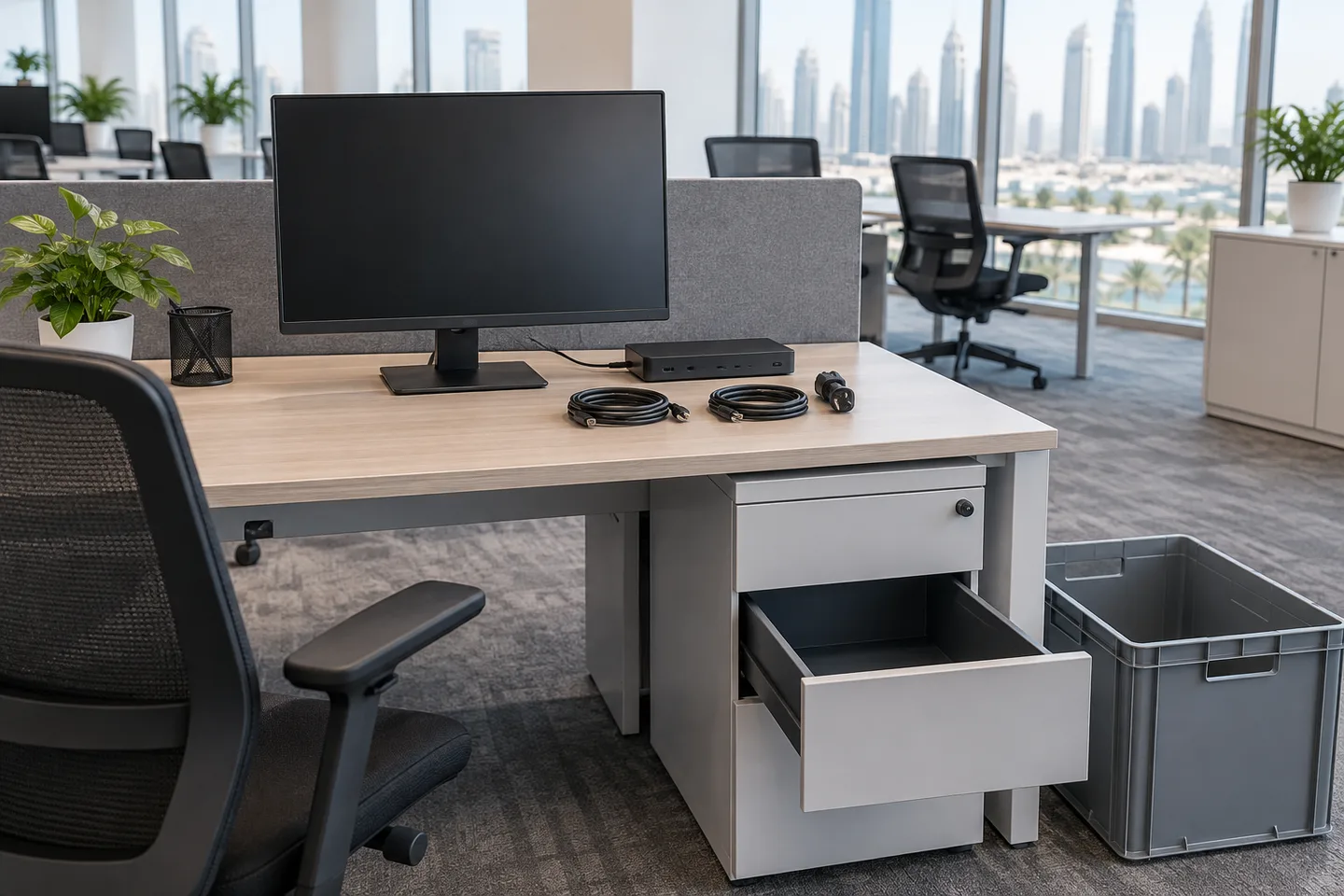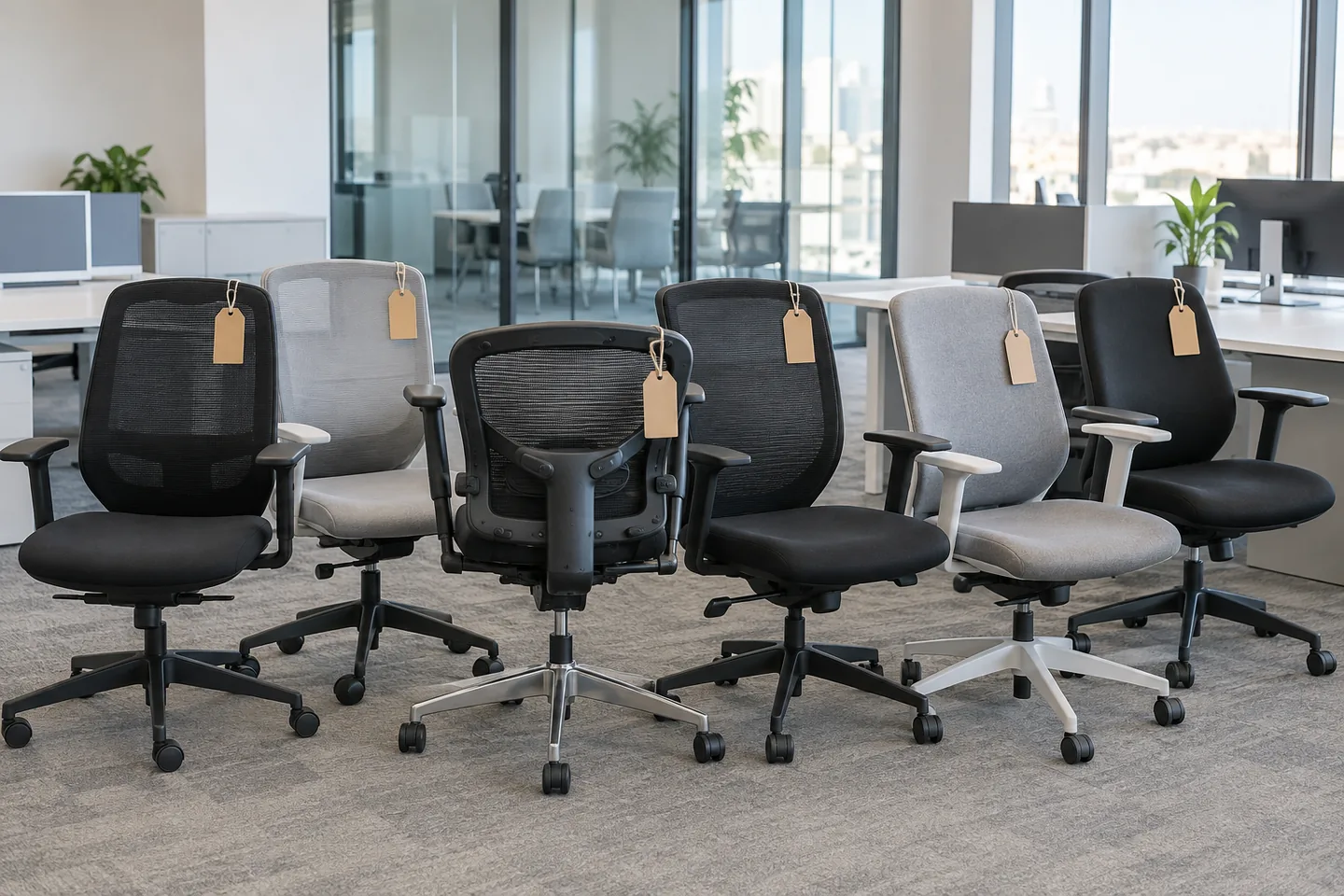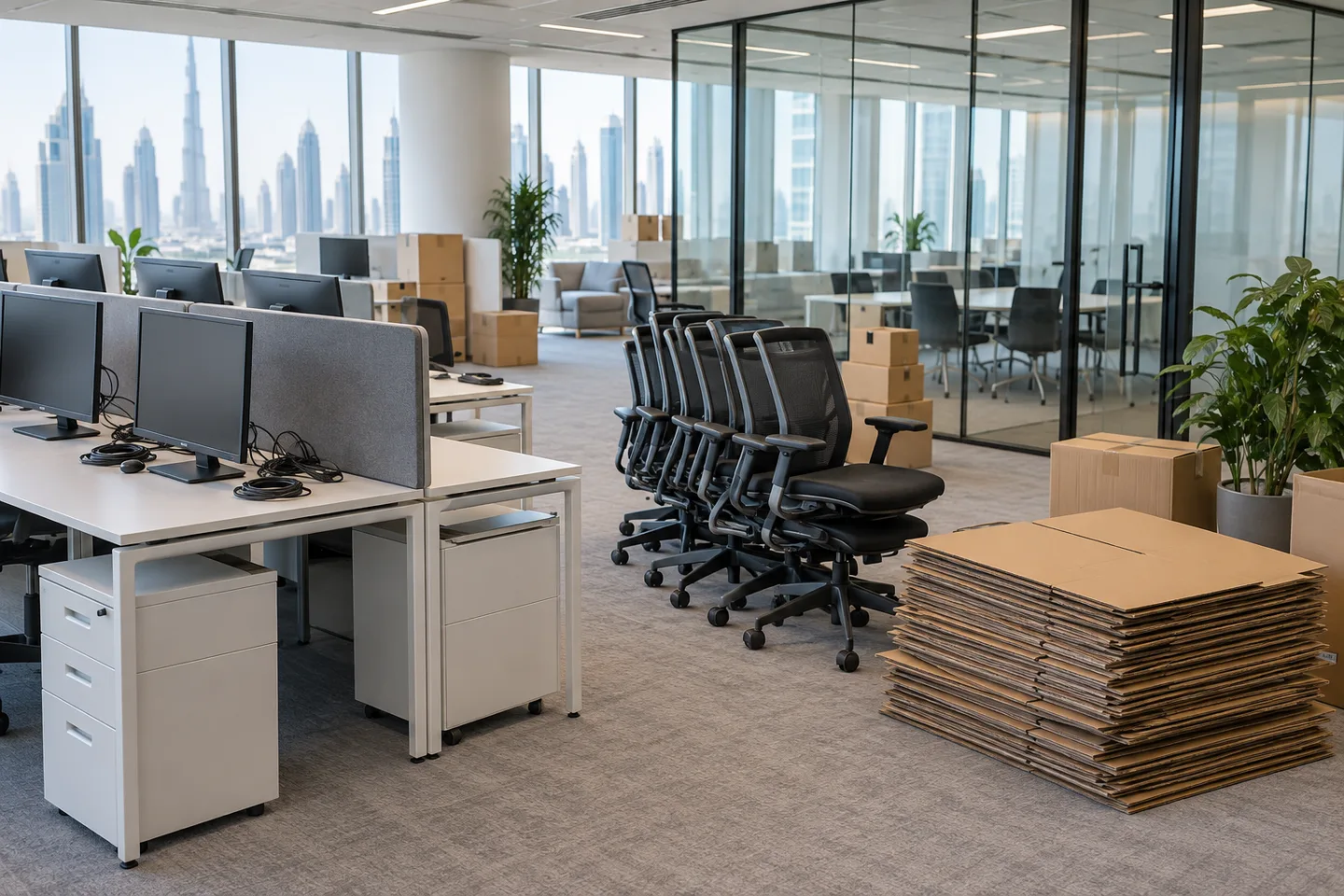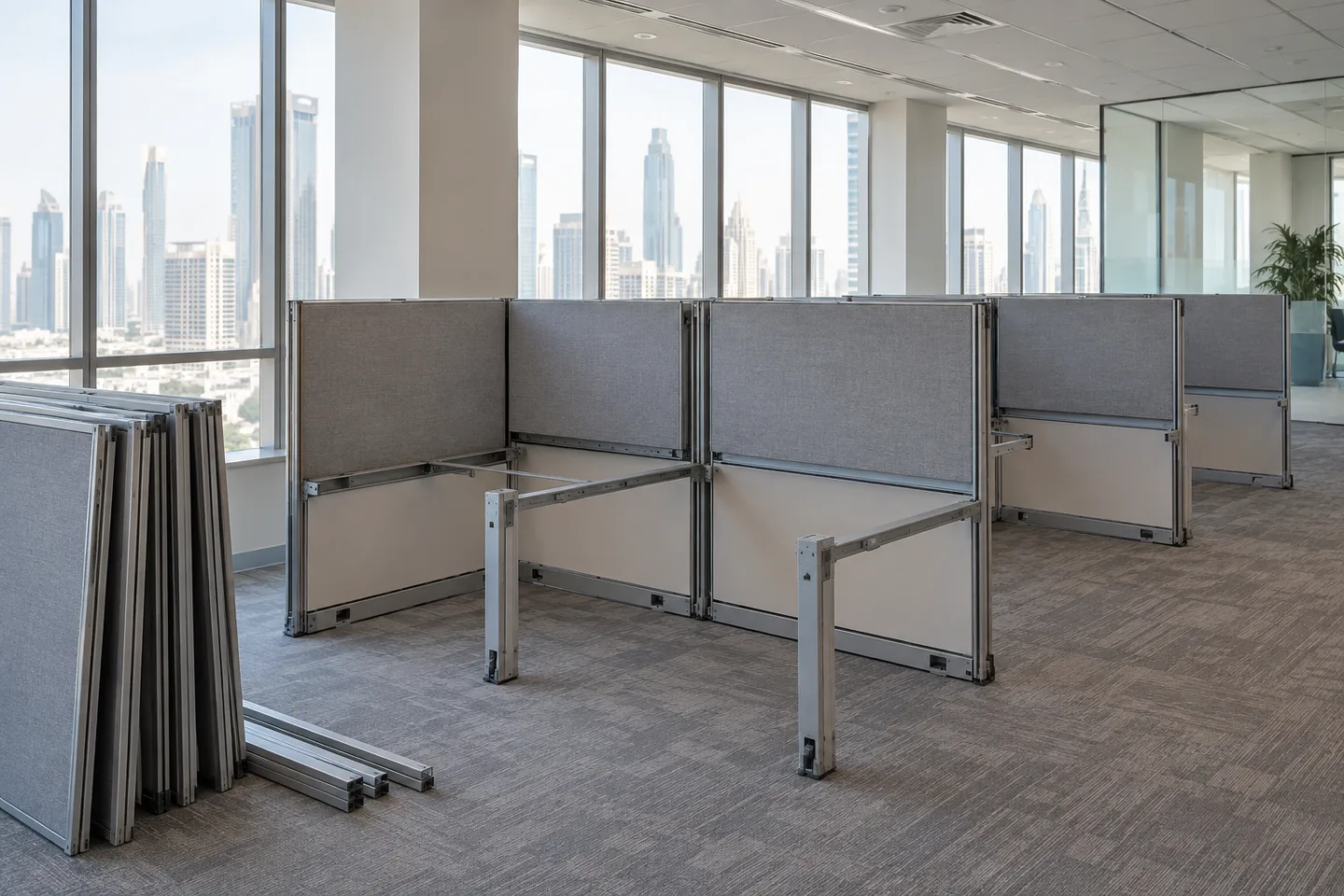
Cubicle removal is a panel-system job, not ordinary desk lifting. Before furniture removal in Dubai begins, facilities or IT must confirm what passes through the panels, which components belong to the landlord and whether the system will be reused, stored or discarded.
What counts as a cubicle system?
A cubicle is a connected set of divider panels that may support work surfaces, shelves, screens and cable raceways. Its panels create the layout and often depend on one another for stability. That is the key difference from a freestanding bench desk, whose frame remains stable after nearby desks are moved.
Photograph the end panels, corners, doorways and any change in panel height before quoting the job. The same floor count can describe six simple pods or a continuous system spanning an entire department, and those two layouts require different dismantling time and staging space.
Check power, data and ownership before touching a panel
Treat every enclosed cable channel as live until the responsible office contact confirms otherwise. Cubicle panels can carry socket modules, data outlets and linked feeds between positions. A qualified site contact should isolate and release those services before the removal crew opens a raceway or separates connected panels.
- Confirm that power feeds are isolated and identify where the system connects to the building supply.
- Ask IT to remove or release data cables, phones and network hardware that must stay under its control.
- Check the lease or fit-out register for landlord-owned panels, glazed screens or fixed floor tracks.
- Mark emergency, access-control or fire-system devices for the relevant contractor rather than including them in the collection.
In managed offices such as Business Bay, the building may also require a contractor list, loading-bay slot or protective route. Settle those arrangements while the system is still intact; discovering a restricted service-lift window halfway through a dismantled floor leaves panels occupying the only safe working space.
Use a stable dismantling sequence
Cubicles come apart from accessories to structure. The safe sequence removes loose loads first, keeps the remaining panels supported and creates a clear route as the system gets smaller. It should follow the manufacturer's connections where they are identifiable rather than forcing clips or cutting frames.
- Remove chairs, pedestals, monitors and loose contents so the work area is clear.
- Detach shelves, task lights, screens and work surfaces without loading the panels sideways.
- Open released cable channels and remove loose power and data leads by destination.
- Start at a free end, support each panel and release connectors one junction at a time.
- Separate feet, caps, brackets and fixings into labelled parts containers for reuse or material sorting.
- Move completed panels to a stable trolley or rack instead of leaning them along the exit route.
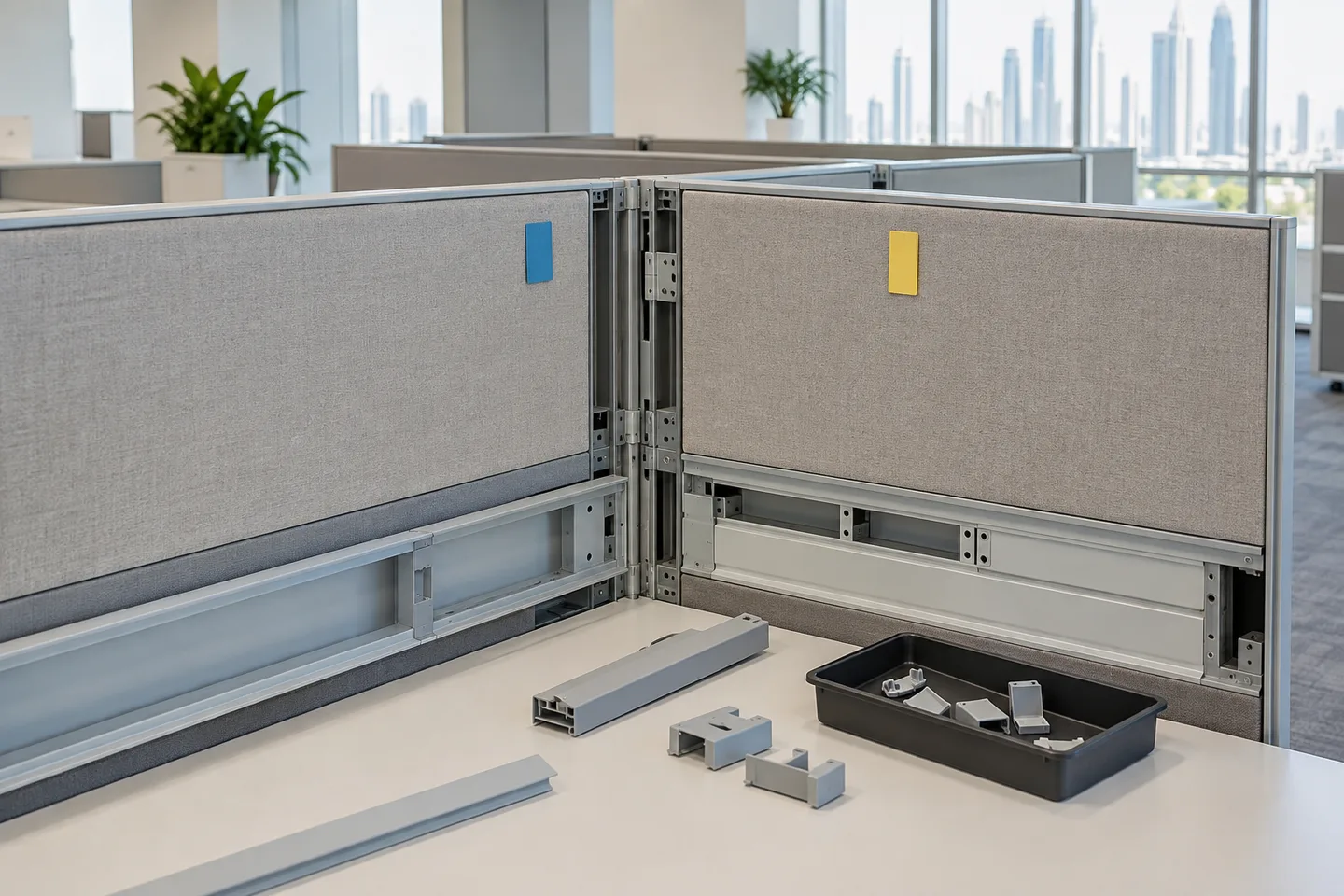
Decide between reuse, storage and disposal before dismantling
Reusable cubicles need a parts-controlled dismantle. Panels, feet, work surfaces, brackets and connector covers should stay grouped by pod or run, with enough photographs to rebuild the original geometry. Missing corner posts or proprietary clips can turn a good panel set into unusable stock.
Disposal allows broader material sorting, but the parts still should not become a mixed pile. Fabric-faced panels may contain timber board, metal frames, foam and plastic trim; glazed panels need separate protected handling. The collector can only choose a sensible route when the system's materials and condition are visible.
What should you send for a cubicle-removal quote?
Send a floor-plan count, wide photos of every run, close photos of joints and cable channels, and the route to the goods lift or loading point. State the destination for each group: reuse at another office, storage, return to a supplier or disposal. If fitted tracks, electrical isolation or making good are required, list them separately so a specialist scope is not hidden inside a collection request.
A well-planned cubicle clearance leaves two clean results: a safe, empty floor and complete component groups for anything being kept. Counting only seats misses both outcomes. Count panel runs, services and destinations instead.