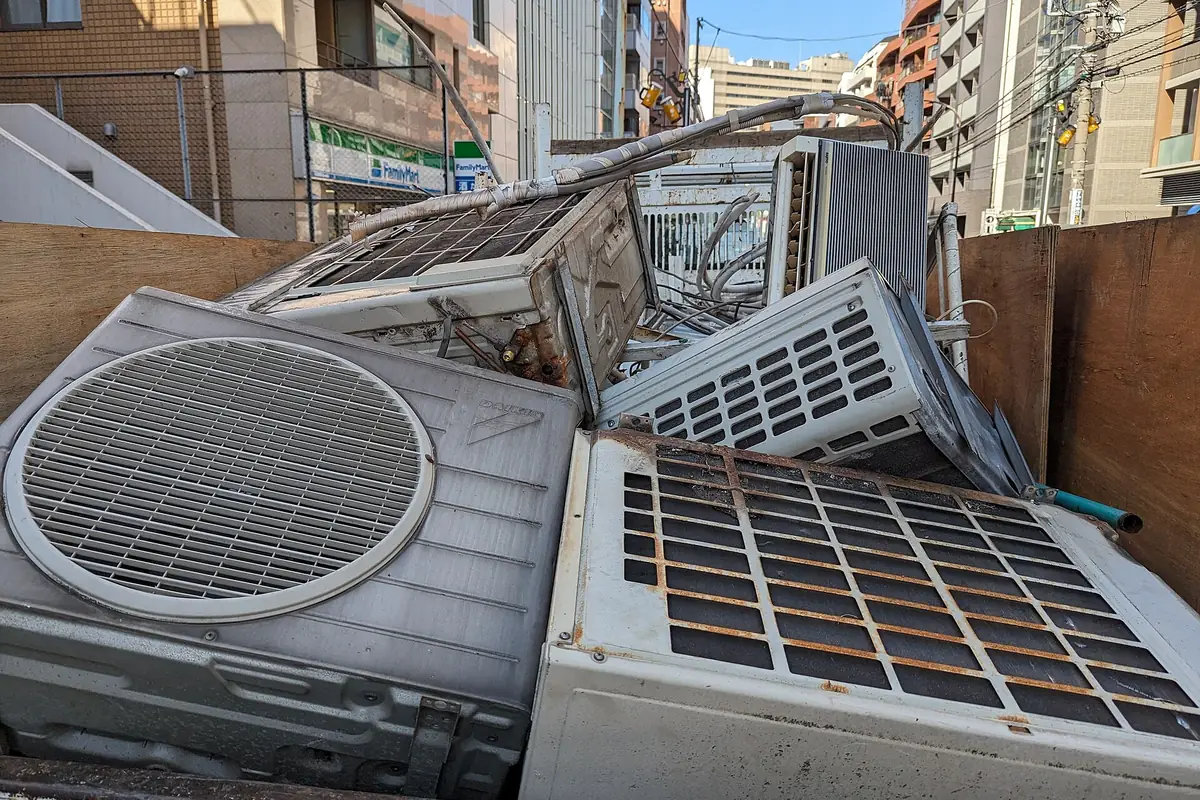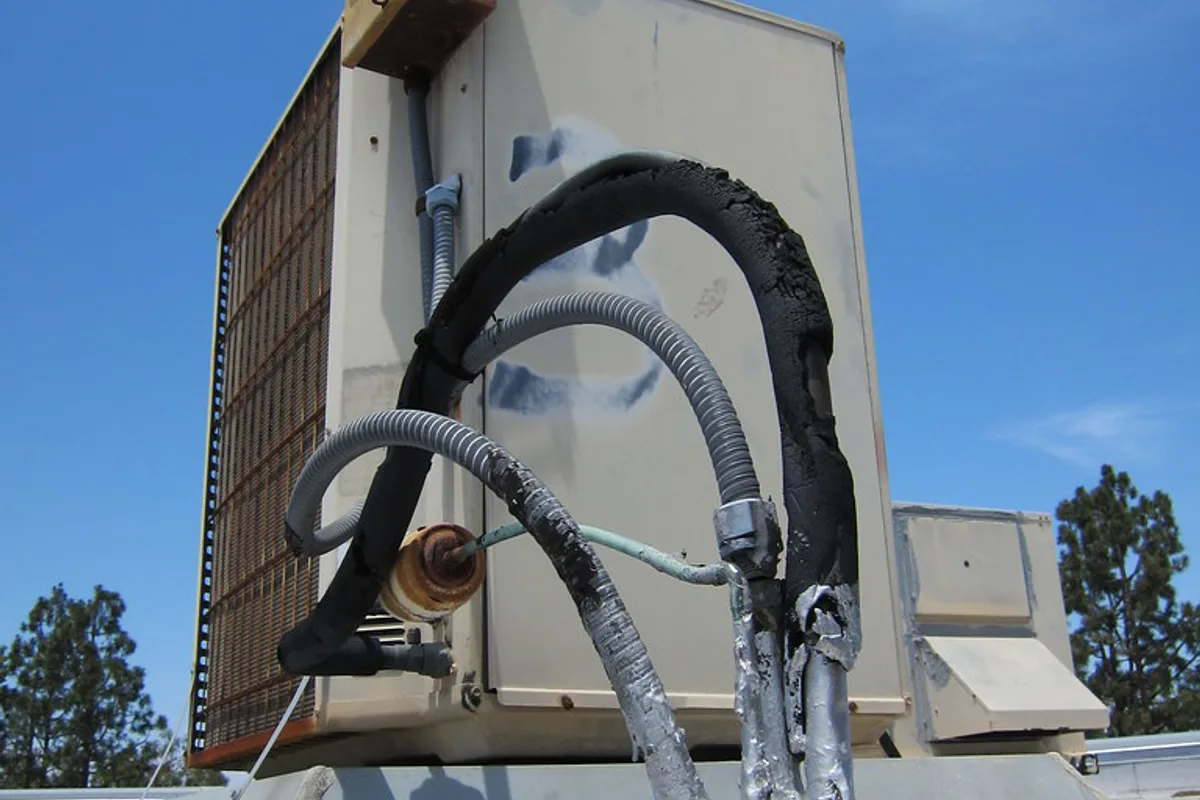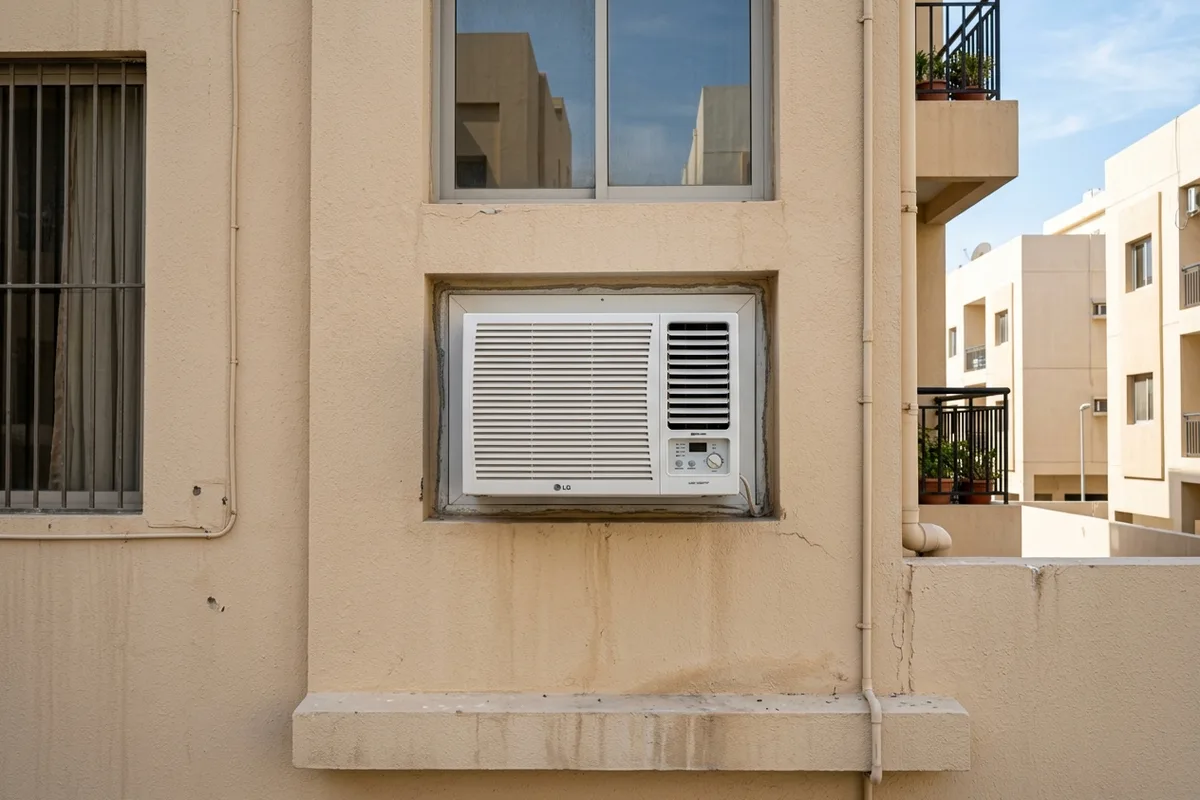
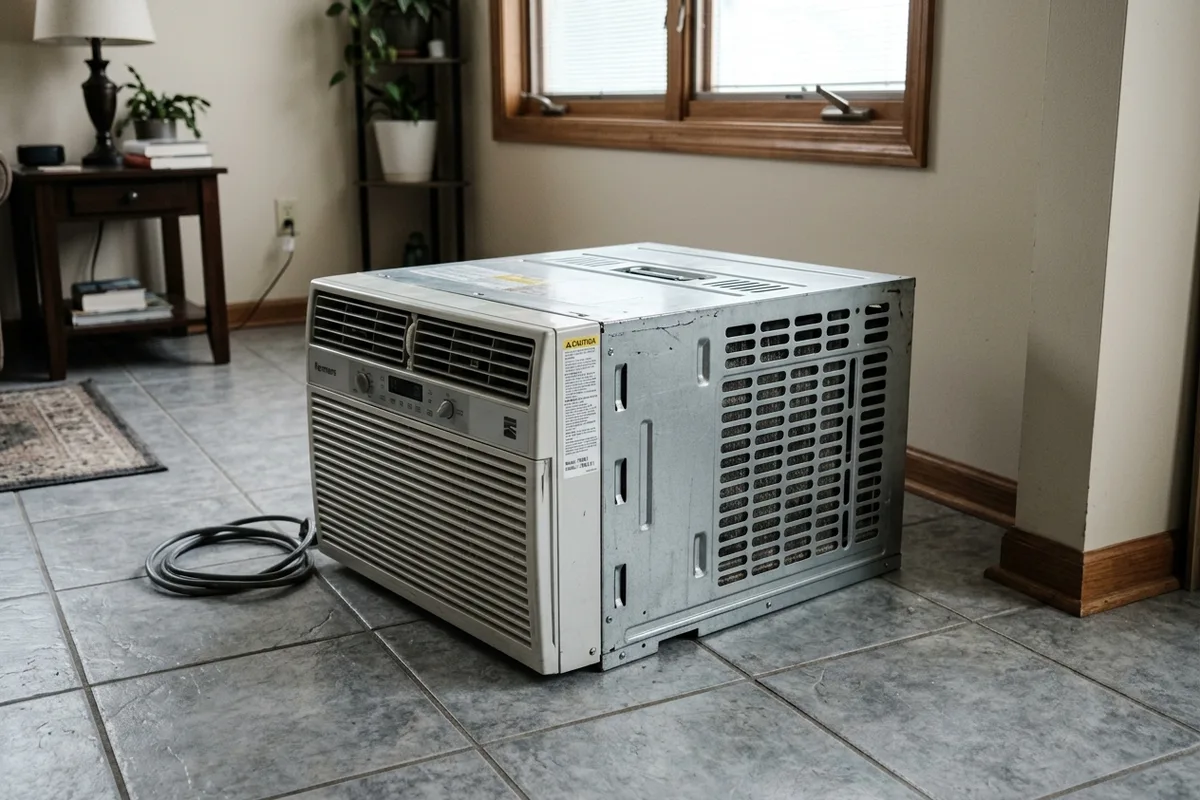
In many older residential buildings in Deira, Bur Dubai, Karama, and established villa compounds across Dubai, window air conditioners remain common fixtures. Unlike split air conditioning systems that separate the indoor cooling blower from an outdoor compressor, a window AC houses the entire refrigeration circuit, compressor motor, condenser fan, and evaporator coils within a single rigid metal chassis. Removing one is less about complex electrical and copper pipe decoupling and much more about managing a dense, heavy box sealed tightly into a masonry aperture.
The Single-Chassis Design: Why Weight and Balance Matter
A typical domestic window AC unit rated between 1.5 and 2.5 tons weighs anywhere from 38 kg to over 65 kg. Crucially, that weight is not distributed evenly across the unit. The heavy cast-iron compressor motor, condenser fan motor, and dense copper coils sit concentrated at the rear two-thirds of the metal sleeve—the portion that cantilevers outside the building envelope. The broader picture of every AC format is in air conditioner removal in Dubai; this guide is only about the window box.
When unfastening the front fascia and interior mounting brackets, the unit naturally wants to pivot downward towards the exterior ledge or street below. This severe rear-heavy balance makes extraction a strict two-person operation: one person securely braces the exterior chassis while another guides the internal slide-out mechanism into the room.
Refrigerant Handling: Sealed Factory Charge vs Split Lines
A frequent question during window AC replacement is whether a certified HVAC technician must perform an on-site refrigerant pump-down before the unit can leave the wall. With split systems, refrigerant lines must be pumped down into the compressor before cutting copper interconnects. Window units, by contrast, are hermetically sealed at the factory.
There are no external copper line sets or flare couplings to unbolt. As long as the unit's sealed copper capillary tubes and compressor loop remain intact and unpunctured during physical extraction, no refrigerant gas escapes on site. The unit is simply unplugged from its dedicated 15A/20A wall isolator or three-pin socket, pulled from the aperture as a sealed block, and transported whole to an authorized e-waste reclamation depot where refrigerant degassing takes place in controlled recovery chambers.
Surround Frames, Expanding Foam, and External Security Brackets
Window AC units are rarely just resting loose in a hole. Over years of Dubai summers, installations accumulate layers of sealant to keep out extreme outdoor heat, humid coastal air, and dust. Freeing the chassis requires systematically clearing these bonds:
- **Timber and Aluminium Sub-Frames:** Most wall apertures have an internal wooden casing or aluminium perimeter frame screwed into the masonry to square off the opening. If replacing the AC, the frame often stays; if decommissioning entirely, the frame must be unscrewed.
- **Hardened Expanding Foam & Mastic:** Installers fill gaps around the sleeve with high-density polyurethane expanding foam, rubber gaskets, and silicone mastic. A heavy-duty utility knife or reciprocating blade must slice through these perimeter seals before the metal sleeve budges.
- **Exterior Cantilever Brackets:** On upper floors or thin partition walls, exterior heavy-gauge steel L-brackets or security cages support the cantilevered overhang. These must be unbolted from the exterior facade while holding the unit securely.
- **Condensate Drain Hoses:** Plastic or PVC drain tubes routed from the base pan to a balcony drain or exterior downpipe must be unclipped to prevent tearing or water spillage onto interior flooring.
The Aperture Problem: Sealing the Wall Opening
Extracting a window AC leaves a rectangular void in the exterior wall—commonly 60 cm wide by 40 cm high. In Dubai's climate, leaving an open wall cavity even for a few hours introduces rapid thermal gain, dust infiltration, and strain on remaining cooling systems.
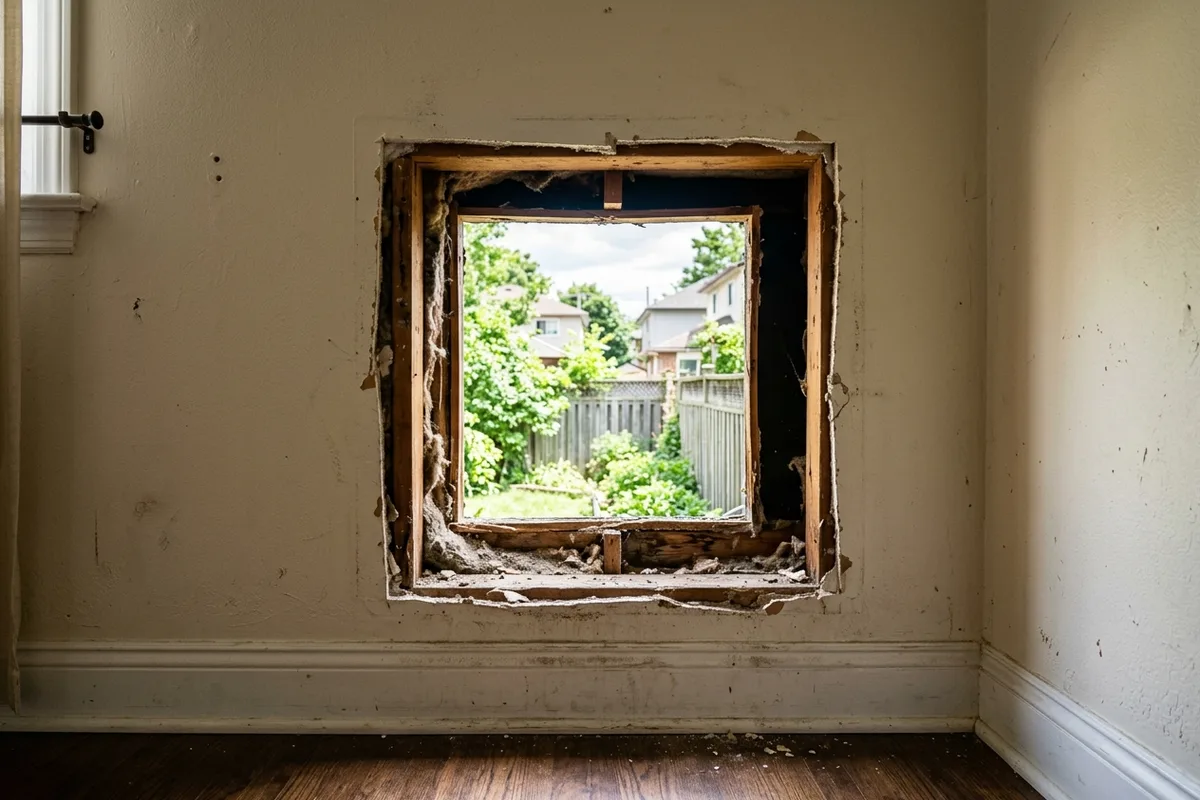
If a new unit is not being installed immediately, standard move-out protocol requires weatherproofing the opening. Homeowners and tenants typically fit an insulated marine ply-board insert sealed with exterior silicone, or arrange masonry brickwork and plastering to permanently seal the opening prior to tenancy handover inspections.
Tenant-Owned Units vs Landlord Fixtures
Before booking a collection, verify fixture ownership on your tenancy contract. In older unfurnished apartments in Dubai, tenants frequently purchase and install their own window AC units. In semi-furnished properties, the units belong to the landlord and are documented on the initial Ejari move-in condition report.
Removing a landlord-owned unit without written authorization will result in security deposit deductions to cover replacement and wall restoration. Always confirm in writing whether you are expected to remove tenant-installed units and restore the wall upon vacating.
Material Recovery: How Old Window Units Are Recycled
Because window air conditioners are built with heavy metal casings rather than thin plastics, they have high end-of-life material recovery rates. When handed over to certified e-waste and scrap processors in the UAE, the sealed unit undergoes professional mechanical depollution:
- **Refrigerant Evacuation:** Certified technicians tap the copper line using piercing valves to extract R22, R410A, or R32 refrigerant into pressurized reclamation tanks for destruction or certified purification.
- **Copper & Aluminium Separation:** The dense evaporator and condenser fin packs are sheared and shredded. Eddy-current separators detach aluminium fins from copper tubing.
- **Compressor Smelting:** The hermetic steel compressor housing is cut open to drain lubricating mineral or synthetic oils before the heavy cast-iron rotor and copper motor stator windings are sent for metallurgical smelting.
- **Outer Galvanized Chassis:** The external steel box and mounting brackets are shredded and recycled as clean ferrous scrap.