Disposing of an old AC unit in Dubai follows a fixed order: confirm who actually owns it, have a qualified technician recover the refrigerant and disconnect it, then hand the unit to a licensed collector. Almost every problem people run into comes from taking those steps out of sequence, or from skipping the first one entirely.
Start with the question that isn't about the machine
The first thing to settle is not technical. In a rented Dubai apartment or villa, a wall-mounted split system, a ducted system or a through-wall unit is normally part of the property rather than part of your belongings. It came with the flat, it appears on the handover inventory, and replacing or removing it is the landlord's decision, usually taken through building management. The step-by-step removal for each AC type — split, window, ducted — is in air conditioner removal in Dubai.
What is genuinely yours is what you bought and could carry out: a portable floor unit, a window unit you fitted yourself, or a split system you paid to install with permission. The distinction matters because disposing of a fixture you do not own creates a problem at the end of the tenancy rather than on the day. If you are unsure, the tenancy contract and the handover inventory settle it faster than asking around.
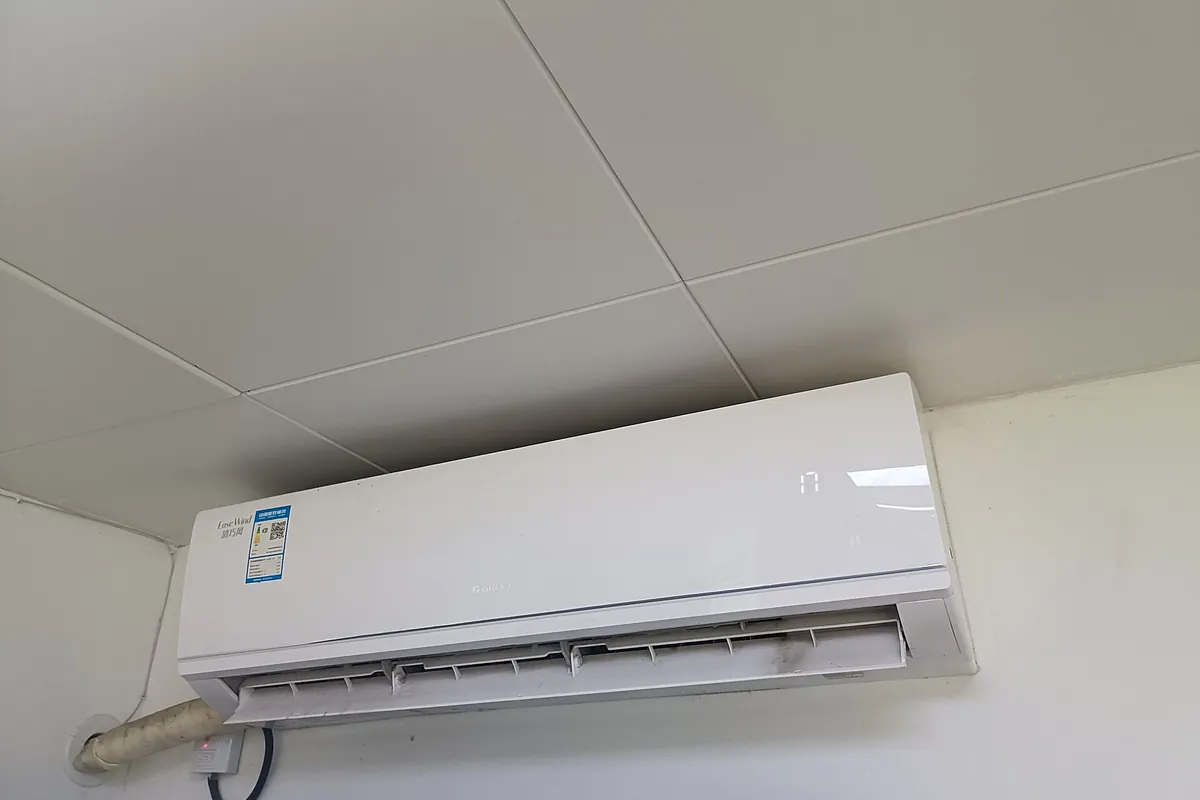
The one step you cannot do yourself
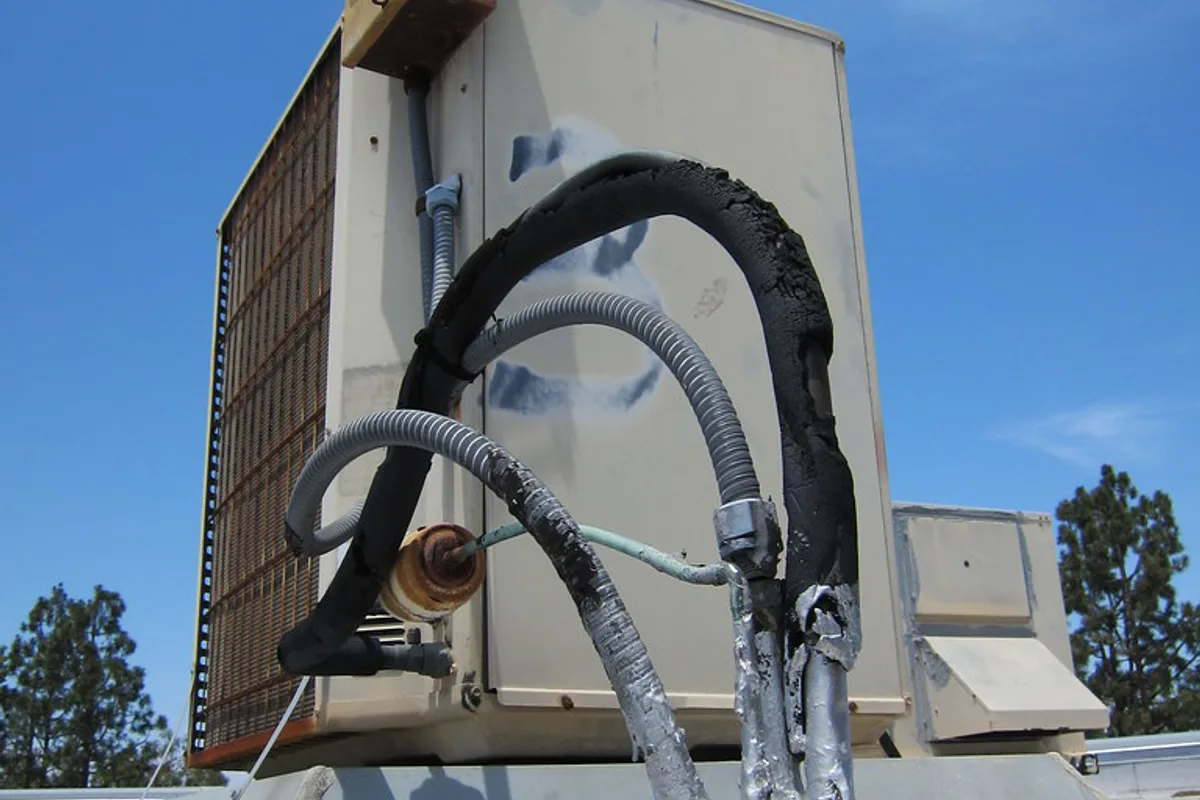
An air conditioner is the one household appliance that cannot simply be unplugged and carried out. The copper lines between the indoor and outdoor units stay pressurised with refrigerant until a qualified technician recovers it, and the unit is not safely handled until that has been done. That is a trade job with its own equipment. The physical removal that follows it, and what happens to the metal afterwards, are separate subjects with their own guides on this site.
How to dispose of an old AC unit in Dubai, step by step
- Confirm ownership. Tenant or owner, fixture or personal property — settle this before booking anything.
- Get approval if the unit is fixed. Buildings generally want notice before anyone works on a wall-mounted or roof-mounted unit, and service lift access usually has to be arranged in advance.
- Have a qualified technician recover the refrigerant and isolate the electrical supply. Nothing is cut, unbolted or carried before this.
- Keep the parts together. The indoor unit, the outdoor unit, the mounting bracket, the pipe run, the drain hose and the remote are one job, and splitting them across two collections is what creates awkward leftovers.
- Hand the unit over — either to a licensed collector, or to the installer fitting the replacement if taking the old one away is part of their job.
- Until it is collected, keep it inside the property. A stripped outdoor unit left in a corridor or on a shared landing becomes somebody else's problem within a day.
Where an old AC unit cannot go
Two destinations look convenient and are not.
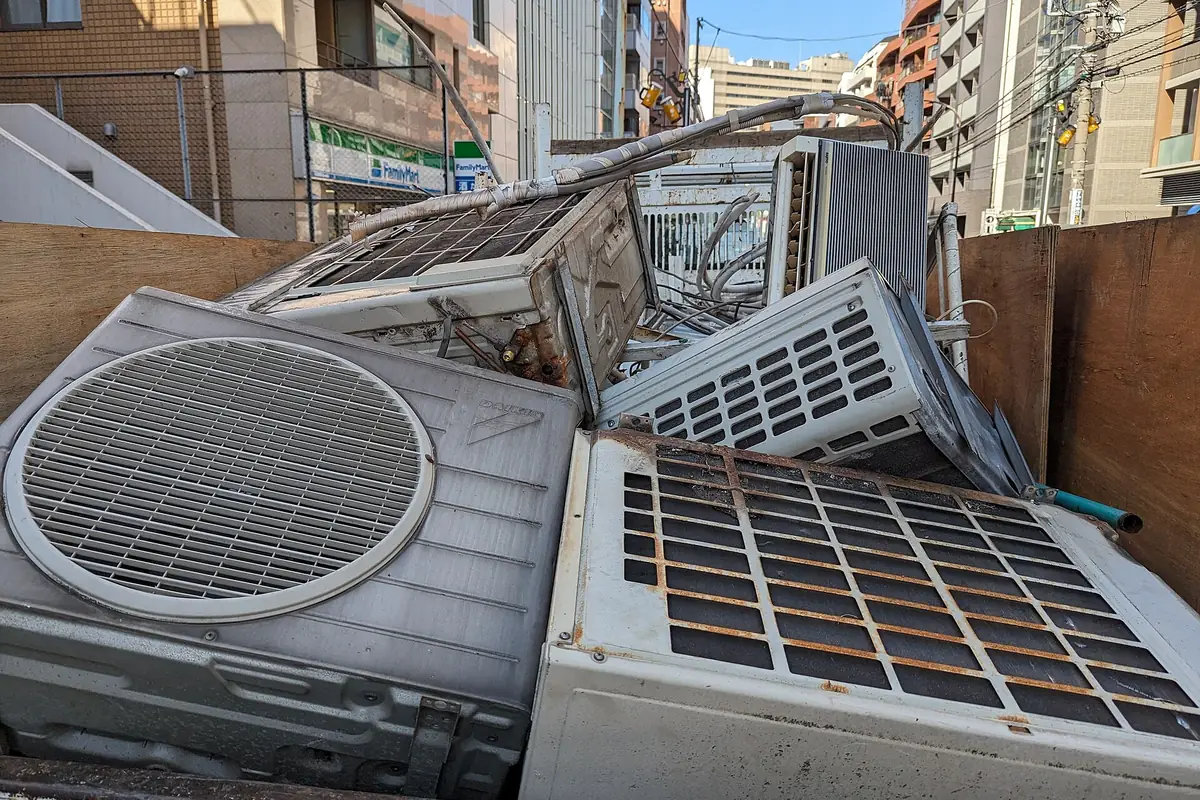
- The bin area. An air conditioner is not domestic waste. Left beside communal bins or in a tower's refuse room, it is not part of what the building's waste contractor collects, and it stays there.
- An informal scrap collector who cuts the lines. Copper is what makes an old AC attractive to buy, and cutting into a line that has not been properly recovered vents refrigerant straight into the air. Someone offering to take a sealed unit away and open it up later is not a route to use.
Neither shortcut actually saves anything. Both tend to end with the unit still on site, or with the one part of the job that mattered done badly.
The lawful options, and when each one fits
- The replacement installer takes it. The simplest route when you are swapping a unit rather than removing one. Confirm before the work starts that removing the old unit is included, because it often is not by default.
- A licensed collection from the property. Suits a unit that is already down, a unit nobody is replacing, or several units leaving a villa or an office at once.
- The landlord or building management arranges it. The correct route for any fixed system in a rented property, and the one that avoids an argument at handover.
- A licensed scrap buyer, but only for a unit that has already been properly decommissioned. Worth knowing the route exists; rarely worth pursuing for a single household machine.
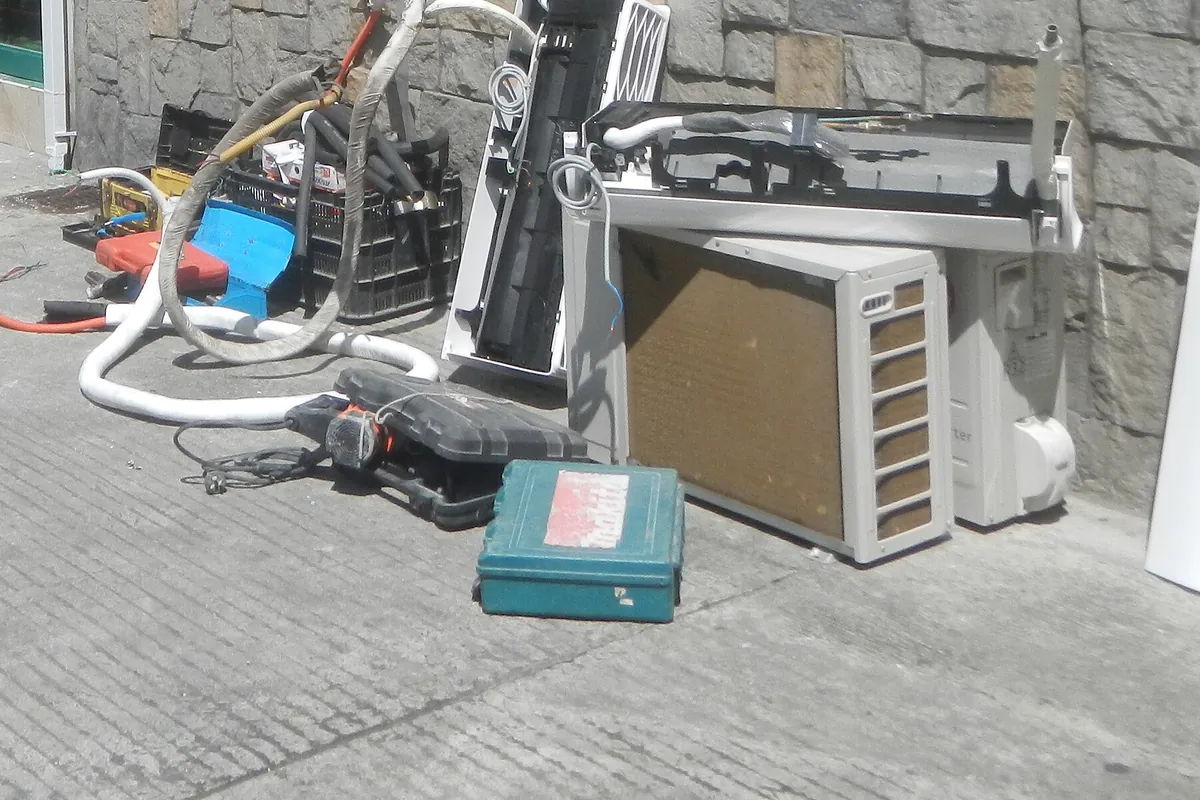
What to have ready when you book
- What kind of unit it is: split, window, portable, or a packaged or ducted system.
- Whether the refrigerant has already been recovered and the unit disconnected.
- Whether it is still on the wall or bracket, or already down on the floor.
- How it reaches the vehicle: ground floor, service lift, stairs, or a balcony or roof.
- How many units in total. A villa replacing its air conditioning is rarely dealing with one.
Sequence is what makes AC disposal in Dubai straightforward rather than messy. Settle ownership first, because that decides who is even making the decision. Let a technician decommission the unit second, because nothing safe happens before that. Hand it over intact third, to someone who can say where it goes next. The situation worth avoiding is a unit sitting on a landing while one of those three steps quietly gets skipped.