There is no single address to drive to. Where to recycle electronics in Dubai is really a choice between five routes — retailer take-back when a replacement is delivered, in-store or in-mall collection points, a building or community collection, a workplace IT decommission, and a booked collection from your own home. Which one fits depends far more on the size and number of items than on what the items happen to be.
Size decides the route, not the device type
A phone and a printer are both electronic waste, and almost nothing about handling them is the same. The practical dividing line is whether an item can be carried in one hand alongside everything else you are already carrying that day. If a drop-off is impractical, e-waste pickup in Dubai covers the booked-collection route.
- Handheld items — phones, chargers, cables, remotes, batteries, small kitchen gadgets — travel easily and suit a drop-off point.
- One-armful items — laptops, routers, games consoles, small speakers — are still portable, but rarely worth a dedicated trip on their own.
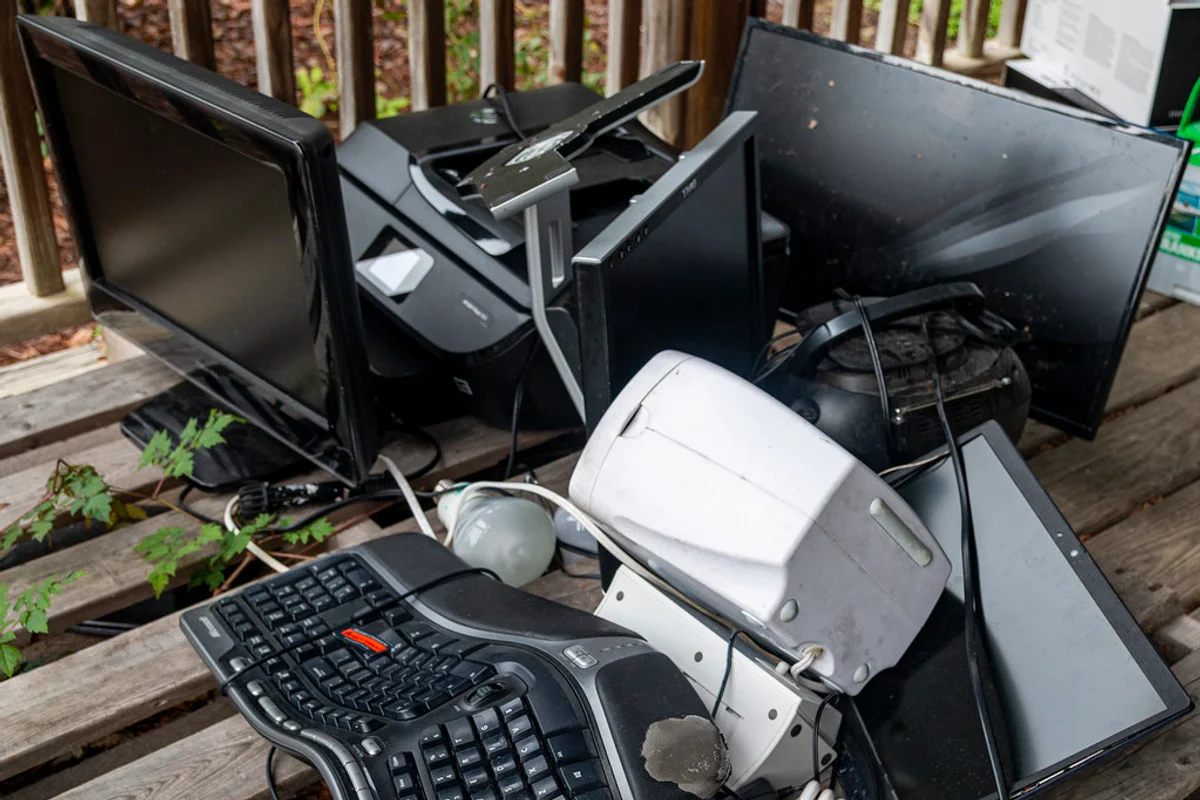
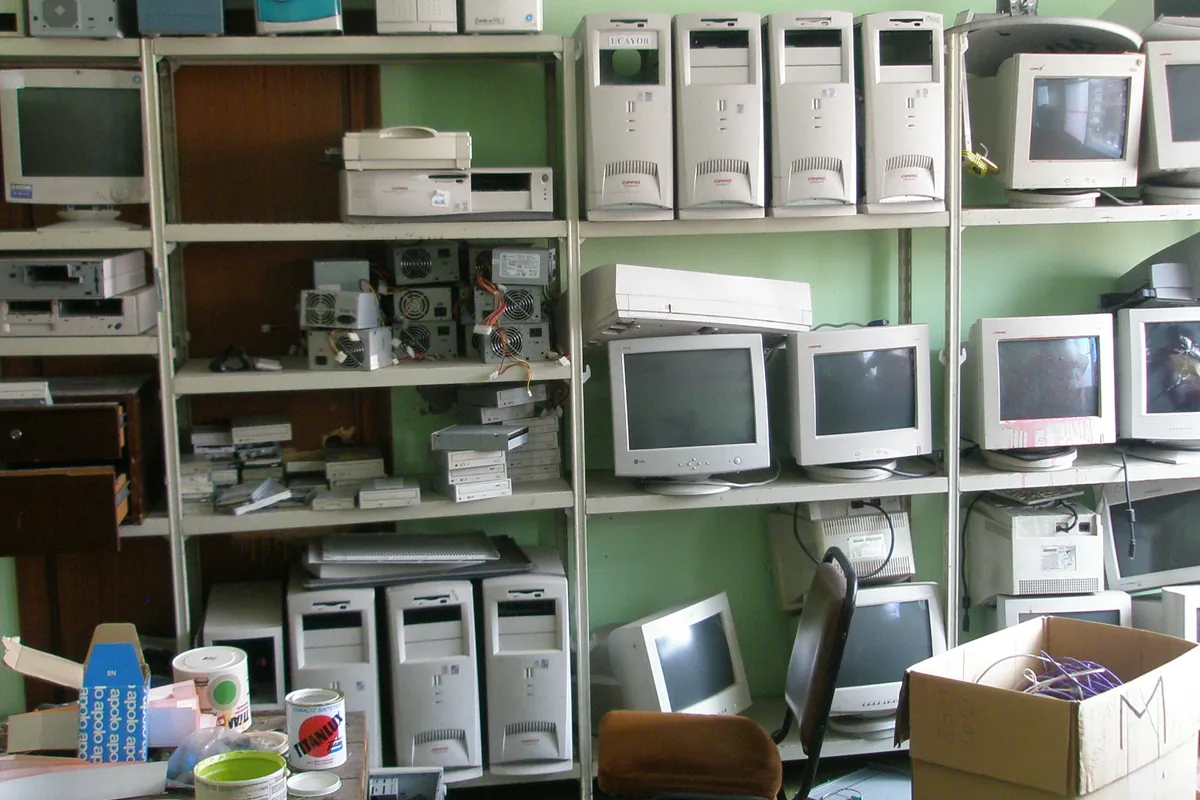
- Two-hand items — monitors, printers, desktop towers, televisions — are where the drop-off idea quietly stops working.
- Fixed or heavy items — air conditioners, ovens, water heaters — are never a drop-off at all, whatever the label on the container says.

Where to recycle electronics in Dubai: the five routes
- Retailer take-back on delivery. Some retailers will take away the item being replaced when the new one arrives. It is arranged at the point of purchase rather than afterwards, so it has to be asked about before the order goes in.
- In-store and in-mall collection points. Fixed containers for small electronics and batteries, usually near an entrance or a service desk. They take handheld items only.
- Building or community collections. Some towers and villa communities run periodic collections through building management, often alongside a bulky-waste day.
- Workplace decommissioning. Offices retiring IT equipment do so under their own process, which is the easiest route for anything that belonged to work in the first place.
- A booked collection from home. The item is collected at the door and routed onward as electrical waste. This is the route that scales — it does not care how heavy an item is or how many there are.
Small items: the drop-off you already walk past
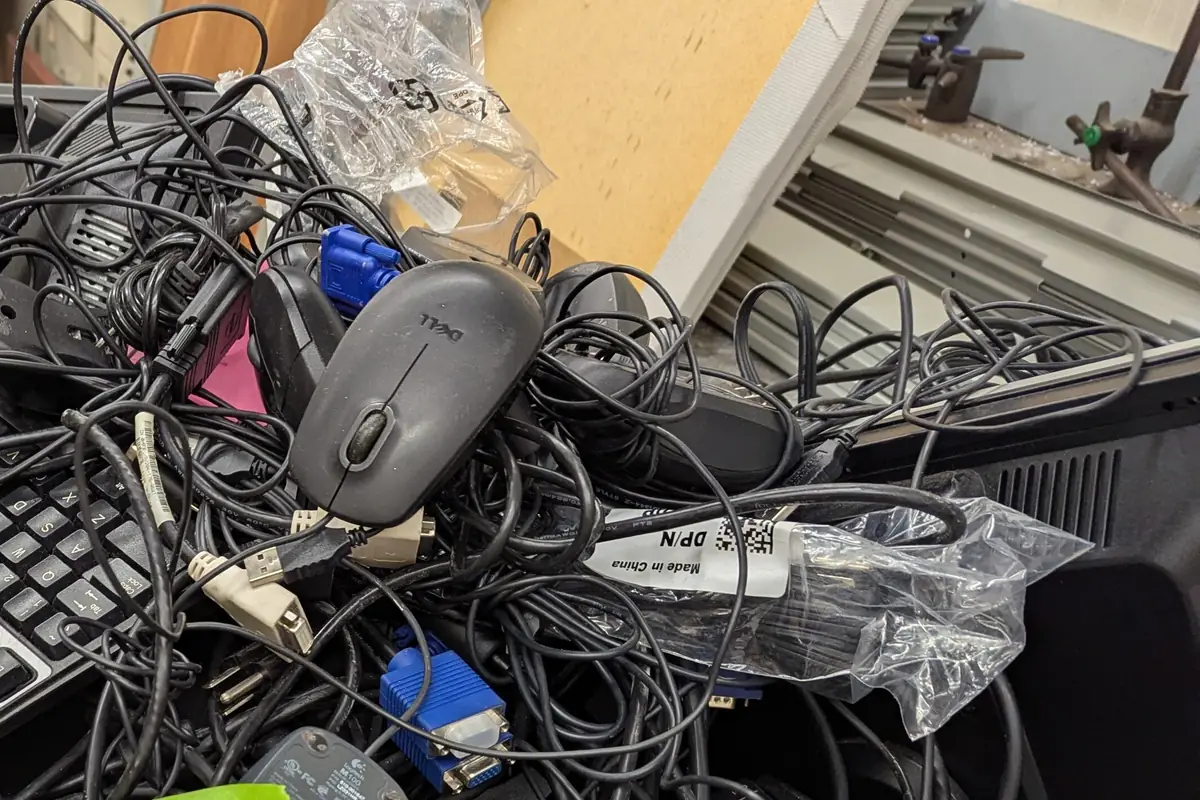
For a drawer of cables, an old phone and a handful of batteries, a collection point is genuinely the least effort — as long as the trip is folded into one you were making anyway. Two things are worth knowing before setting out.
First, these points come and go. A container that stood by a supermarket entrance last year may not be there this month, so it is worth confirming rather than crossing the city on the strength of a memory. Second, they are sized for exactly what they say: handheld items. A monitor left beside a small collection bin has not been recycled, it has been abandoned.
Larger items: where the drop-off idea breaks down
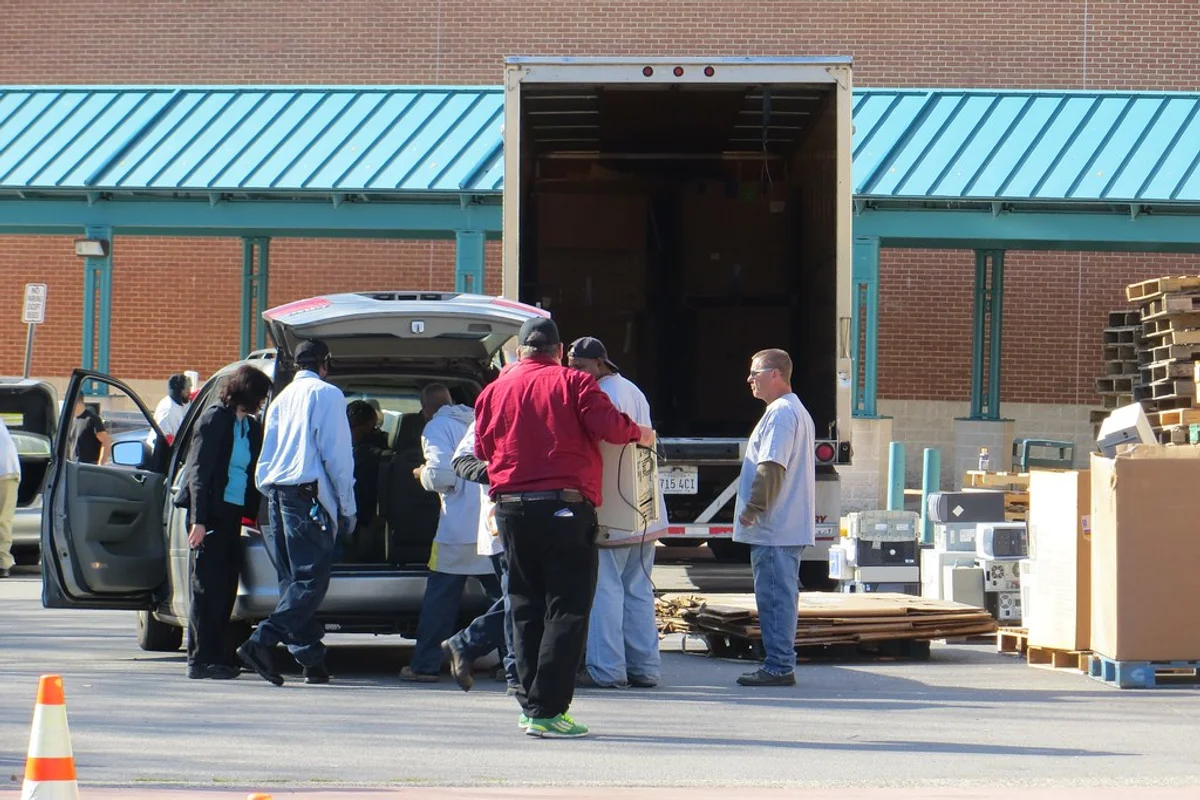
The moment an item needs two hands, the arithmetic changes. A tube monitor or an office printer has to come down in a lift, cross a lobby, go into a car that also has to carry the people going with it, and come out again at the other end. In a Dubai summer, in a tower where the service lift has to be booked, that is not a small errand.
This is where a collection from the property is usually the honest answer — not because a drop-off is unavailable, but because the effort and the risk of damage in transit both land on you. It is also the only route that handles a mixed pile, which is what a real clear-out produces: a television, two monitors, a printer, a box of cables and a dead vacuum cleaner.
How to tell whether a route is genuine
Recycling is a claim, and it is a reasonable one to test. A few questions separate a real route from a convenient-looking one.
- Can they say what happens next? An operator working with licensed processing can describe where an item goes and what is recovered from it.
- Do they take everything, or only the valuable parts? A route that wants the laptops but not the printer is not recycling, it is picking.
- Is the item handled whole? Cutting a device open on site to reach the metal inside is a warning sign, not efficiency.
- Are you being asked to leave it somewhere public? A genuine collection takes the item; it does not tell you to put it out on the pavement.
One preparation point applies whichever route you choose: anything that has stored data — a phone, a laptop, a smart television — should be signed out and reset before it leaves your hands. Doing that thoroughly is a subject of its own, and it is the step people most often mean to come back to and then forget.
Choosing when you have a mix
Most households do not have one item, they have an accumulation: the drawer, the cupboard, and the two things behind the sofa. The practical approach is to split it once. Everything handheld goes into a bag for a drop-off on the next trip out, and everything that needs two hands waits for a single collection. Trying to force all of it down one route is what leaves the pile untouched for another year.
Recycling electronics in Dubai has a shorter answer than the question suggests: small things go to a collection point, large things get collected, and the only real mistake is treating those two as interchangeable. Sort the pile by what it takes to carry it, ask whichever route you use what happens to the item afterwards, and the rest follows.