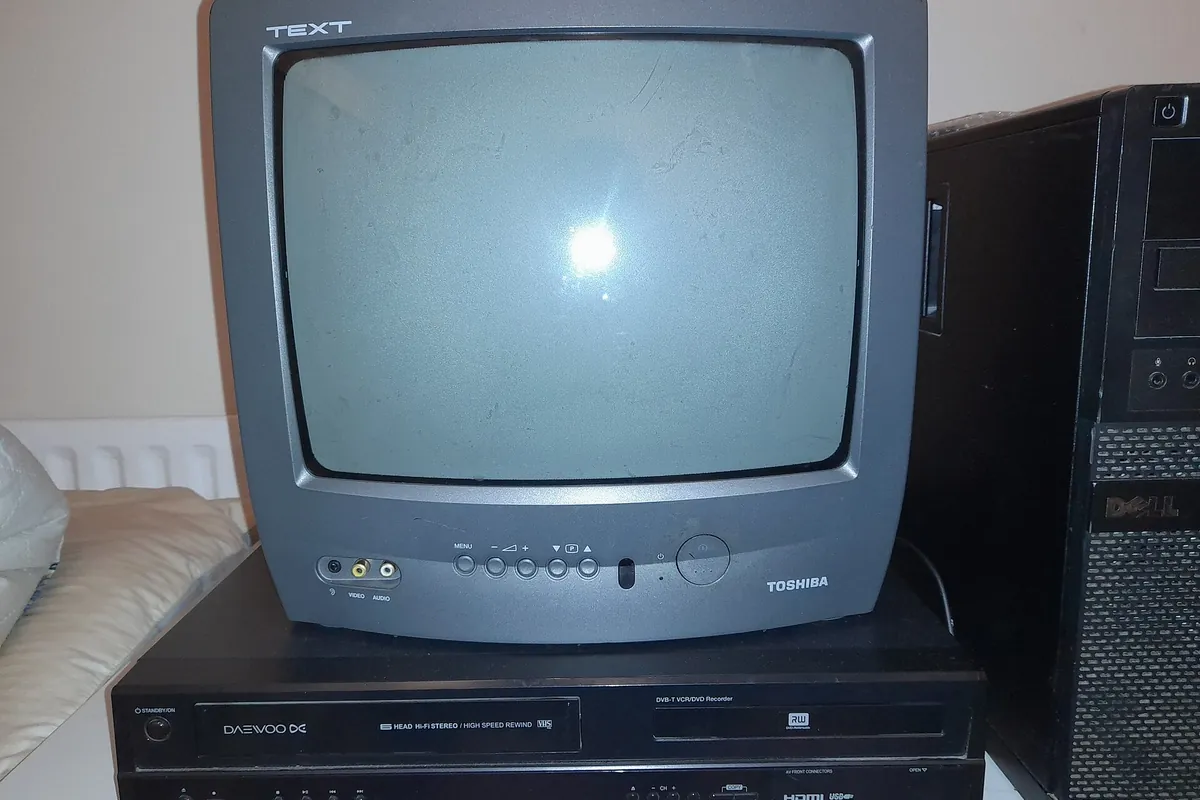
A television that has stopped working, or that was replaced two years ago and never left the spare room, is one of the most common single items people ask about. Old television disposal in Dubai turns almost entirely on one question — which generation of set it is — because a tube television, an early flat panel and a current screen each leave a home in a different way.
What “old” actually means for a television
Age matters here in a way it does not for furniture. Three broad generations of television still turn up in Dubai homes, and each behaves differently once it is being carried rather than watched. For the physical job of getting a wall-mounted or large flat screen off the wall and out of the flat, read TV removal: wall mounts and safe collection.
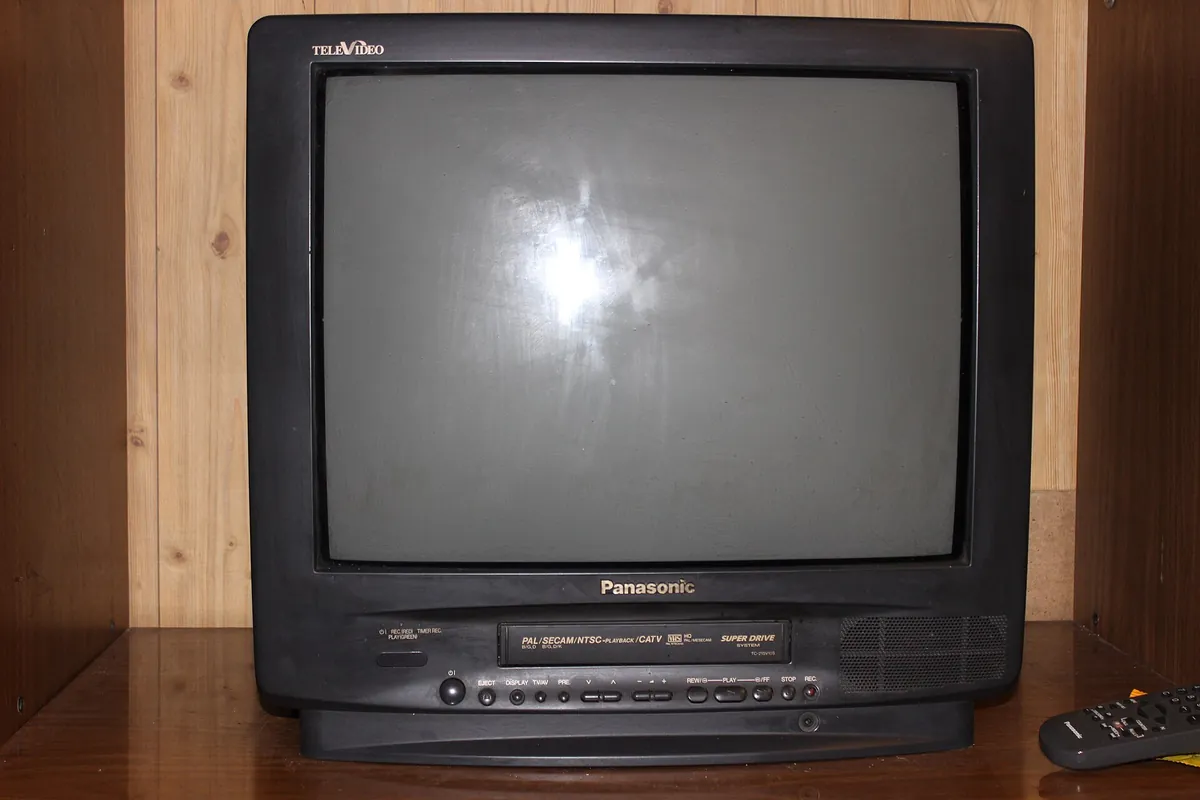
- Tube sets (CRT): deep, boxy televisions built around a heavy glass picture tube. Most were sold before the late 2000s and survive today in maid's rooms, storerooms and staff accommodation rather than living rooms.
- Early flat panels: plasma screens and the first generations of LCD, usually thicker and heavier than they look, often with fluorescent backlight tubes behind the panel.
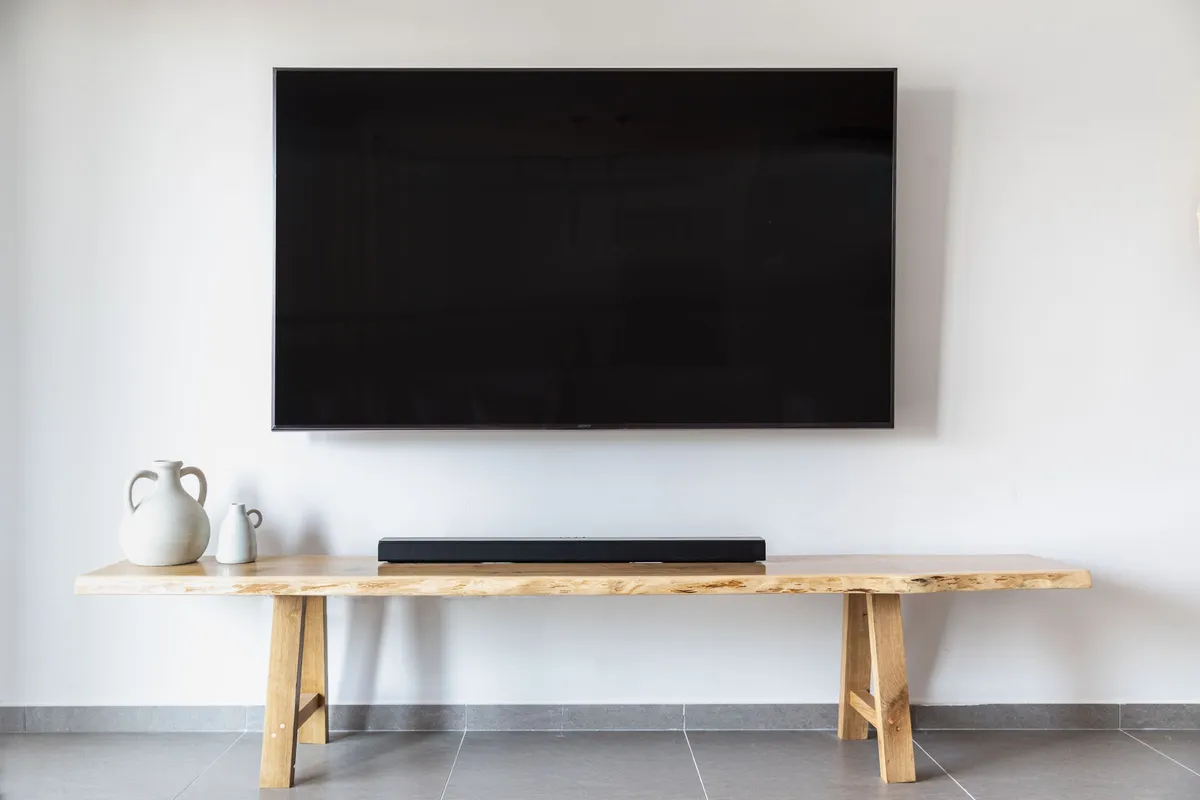
- Current screens: LED and OLED panels, thin and light for their size, and the ones most likely to be replaced while still working perfectly well.
Screen size tells you almost nothing about which of the three you have. A 21-inch tube set and a 55-inch modern panel take up roughly the same amount of a lift, and the small one is usually the harder object to move.
Why a tube television is a different job
Nearly all of a tube television's weight sits in one place: the glass funnel behind the screen. That single component is what makes an older set awkward in ways a flat panel never is. A small tube television can comfortably outweigh a much larger modern screen, and the weight sits at the back rather than spread across a frame, so the set wants to tip backwards out of your hands.
It also means the set travels as one sealed object. The glass is not cut open, broken down or crushed on site — it is moved whole and kept upright. Anything beyond a small portable is a two-person carry, and a narrow apartment stairwell becomes a genuine constraint rather than an inconvenience.
Working, broken, or simply replaced
Before disposal is even the right word, it helps to separate three situations, because only one of them ends in a collection.
- It still works. A functioning television has somewhere better to go than a waste stream — passed on within the building, given to household staff, or listed second-hand. This is by far the most common case for screens replaced during an upgrade.
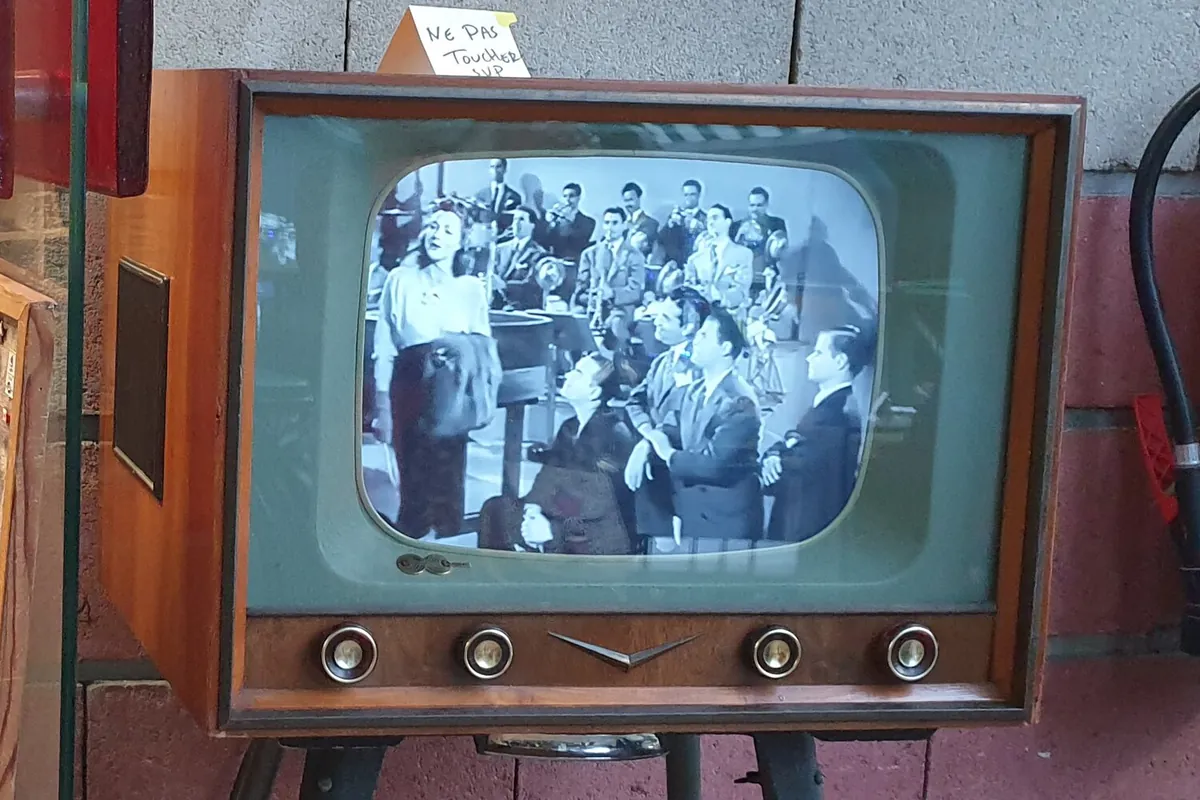
- It is genuinely old. A wooden-cased set from the early decades of television can carry collector interest. That is rare, and it does not extend to an ordinary flat panel from ten years ago.
- It is dead. A screen that no longer powers on, or that has a cracked panel, has no realistic second life and is handled as electrical waste.
Why a television cannot go out with the household rubbish
A television is electrical waste, and electrical waste is kept out of ordinary domestic bins. This is not a question of which bag it goes in. A set left in a tower's refuse room or beside a villa's communal bins is not part of what the building's waste contractor collects, so it stays there until somebody else deals with it.
Building management in most Dubai towers takes the same view, for a practical reason as much as a regulatory one: a bin room is a shared, enclosed space, and a boxy set with a glass tube inside it is exactly the kind of object that gets broken there. If a television needs to be out of the way before a collection is arranged, the right place for it is still inside the flat.
Old television disposal in Dubai: what actually happens
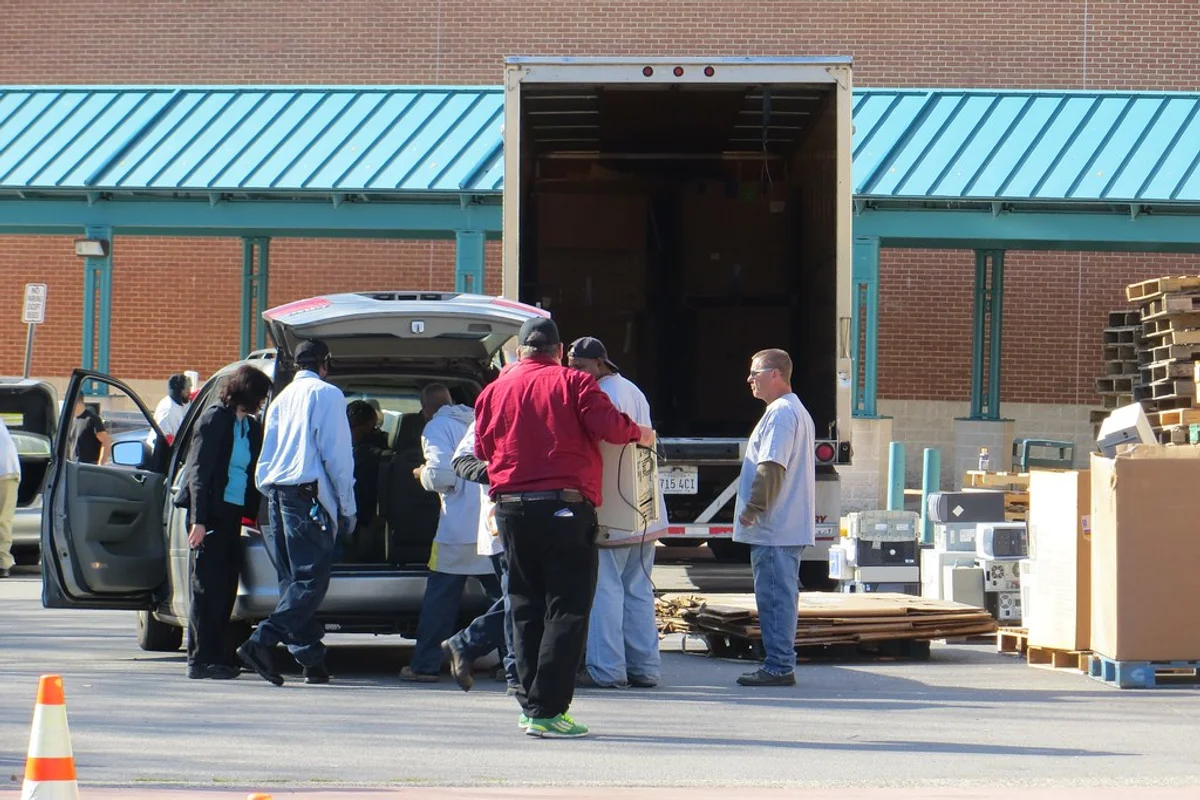
One television rarely justifies its own visit. An old set is normally added to something broader — a move-out clearance, a furniture collection, or a batch of other retired electronics — and is separated from the furniture at the point of loading rather than at the door. What matters is the routing afterwards: the stand or console underneath is furniture, and the screen is not.
Tube sets are worth mentioning specifically when booking, not because they are refused, but because they change how many people are needed and sometimes which vehicle turns up. Saying it is an old tube set rather than a flat screen is more useful information than the screen size.
Getting an old set ready
- Switch it off at the wall and unplug it, then coil the power lead and tuck it against the casing so nothing trails underfoot.
- If it is a smart television, sign out of any streaming or account services and run a factory reset. That is the only kind of set that holds anything personal.
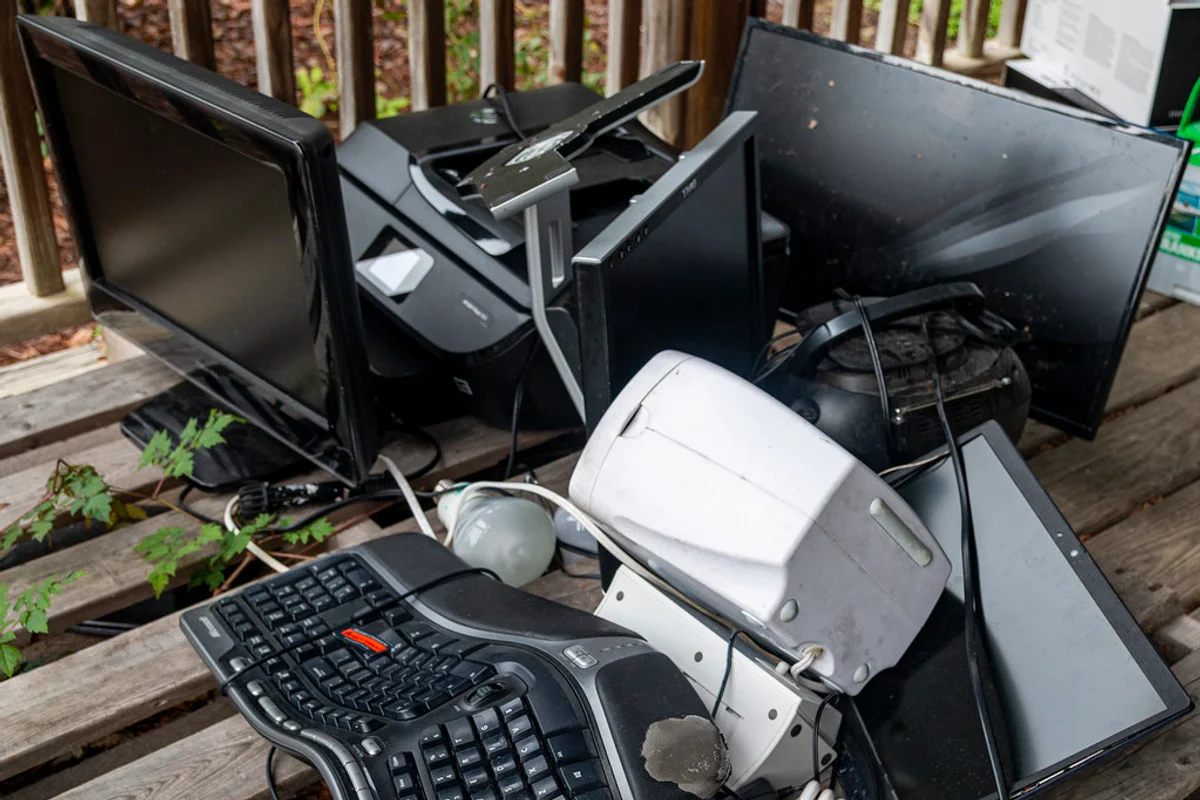
- Gather what goes with it: the remote, the set-top box, the soundbar and the loose cables in the drawer behind it. All of it is electrical waste, and it is far easier to send together than to find again later.
- Decide about the unit underneath. If the media console is going too, say so when booking, because it is a different waste type and often a bigger object than the screen.
- Clear the route properly, once. A tube set is carried at hip height by two people who cannot see their feet.
The useful shortcut with an old television is to stop thinking about screen size and start thinking about what sits behind the screen. A glass tube makes a set heavy, fragile in a specific way, and worth flagging when you book; a modern panel does not. Whether it still works, whether the console goes with it, and what else has quietly accumulated behind it all follow from that one distinction.