Most large kitchen appliances stand in a gap. A fridge is wheeled into its recess, a washing machine is slid into a slot under a counter, and both come out the same way they went in. A dishwasher is different: it is normally fastened to the kitchen around it, and if it is an integrated model it is wearing a cabinet door that may belong to the landlord rather than to you. Working out which of those two things you are dealing with is the first and most useful step in any dishwasher removal.
Freestanding or integrated decides everything else
A freestanding dishwasher has its own finished front — usually white or stainless — with the controls visible along the top edge of the door. An integrated dishwasher has a plain metal front with a cabinet door panel screwed onto it, so that it disappears into the run of units, and its controls are hidden on the top lip of the door where you only see them when the door is open.
That distinction changes the job completely. A freestanding machine needs unfastening and pulling out. An integrated machine needs the same, plus a decision about the door panel on the front and, often, a plinth or kickboard taken off along the base of the units first.
What is actually holding a dishwasher in place
A dishwasher is held by more than gravity, and every fixing has to be released before it will move. Trying to drag one out under load is how worktops get chipped and floors get gouged.
- Mounting brackets. Two small metal tabs that screw either upward into the underside of the worktop, or sideways into the carcass of the cabinets on each side. On the stone and quartz worktops common in Dubai kitchens, the brackets almost always go sideways, because you cannot screw into the underside of a stone slab.
- Adjustable feet. Wound out to bring the machine up snugly under the worktop. They have to be wound back down to give the clearance to slide it forward.
- The plinth or kickboard. The strip running along the base of the units, usually clipped or screwed on, which often has to come off to reach the feet and the front of the machine.
- The decor door panel, on an integrated unit — fixed to the appliance door with short screws from the inside.
Release all four before pulling. Once the brackets are out and the feet are wound down, the machine comes forward on its own base, level rather than tipped, and there is no need to lever it against the units on either side.
The cabinet door on the front may not be yours
On an integrated dishwasher in a rented property, the decor panel is almost always part of the fitted kitchen and belongs with the property, even when the appliance behind it belongs to you. Unscrew it, leave it in the kitchen, and the unit goes out with a plain metal front.
This is worth getting right, because a matching cabinet door is not something a landlord can easily replace — it has to match the finish and the handle of every other door in the run. Taking one away by accident is a much larger problem than it appears at the moment it happens. If the machine is yours and the kitchen is not, the safe assumption is that the panel stays.
The reverse case is worth checking too. If the dishwasher itself came with the property, it is the landlord's appliance, and replacing or disposing of it is a conversation to have with the building or the owner before anything is unscrewed.
Three connections, and the one that leaks after you leave
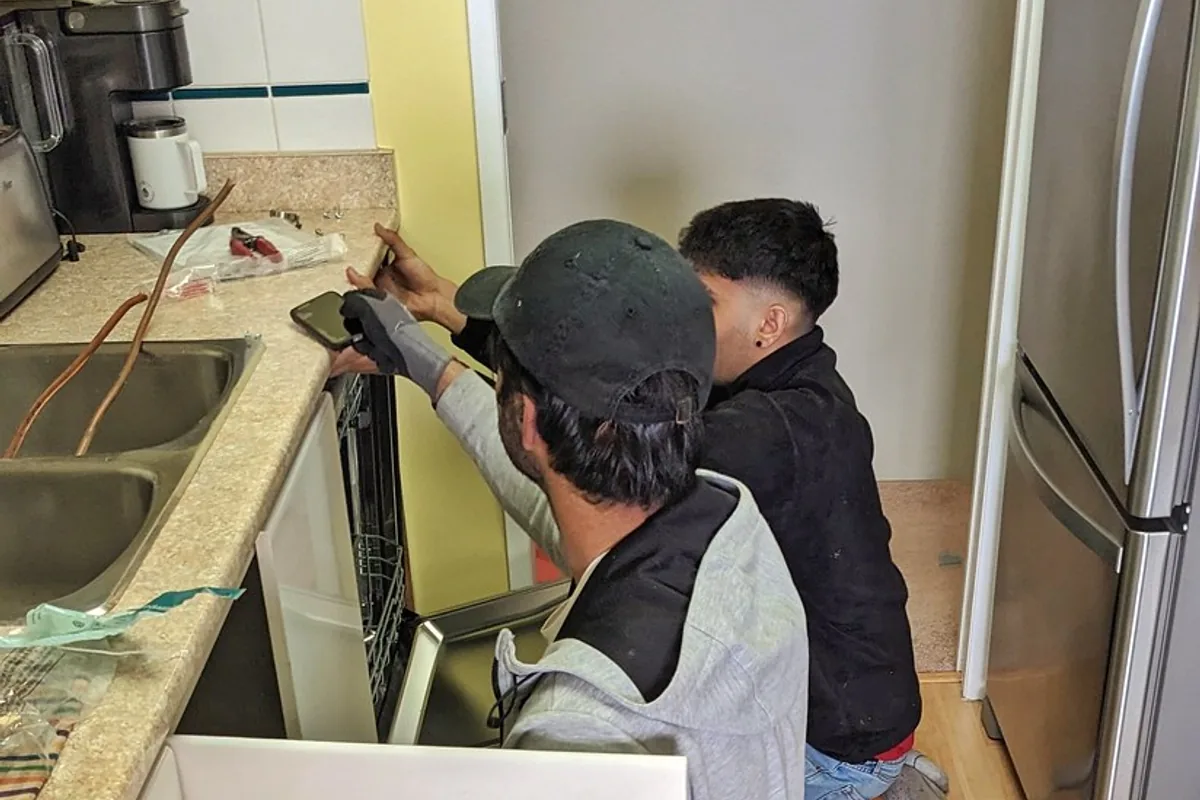
A dishwasher has three services running to it, and they should be disconnected before a collection crew arrives rather than by them.
- The water feed. A single braided hose from an isolating valve, usually under the sink in the neighbouring cupboard. Turn the valve off first, then unscrew the hose, and have a cloth ready for the small amount held in the line.
- The waste hose. This is the one that matters. It normally loops up and joins a spigot on the sink trap under the basin, and when it is pulled off it leaves that spigot open.
- The power. Usually a standard plug in the cupboard beside the machine rather than a fixed connection, so it is simply unplugged.
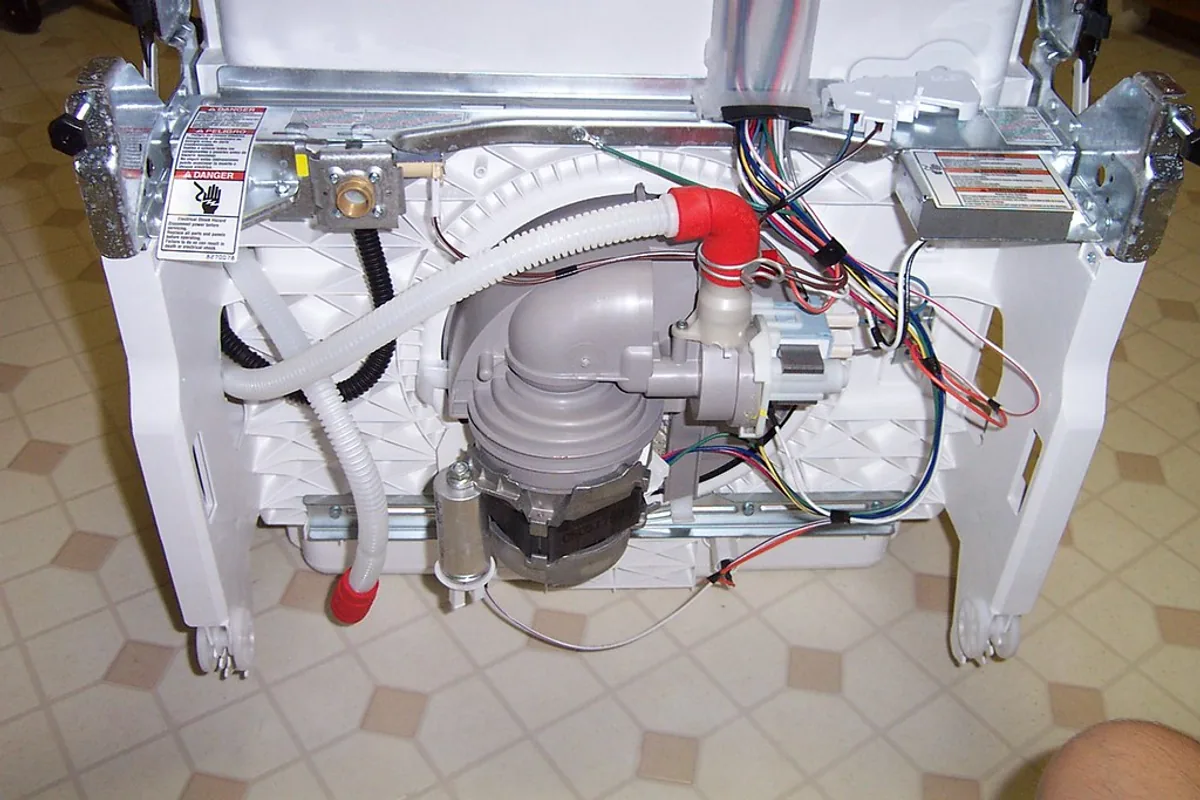
Cap the open spigot on the sink trap once the waste hose is off. An uncapped spigot does not leak immediately — it leaks the next time the sink is used, quietly, into the cupboard underneath. A small blanking cap is an inexpensive plumbing part and takes a couple of minutes to fit, and skipping it is the most common way a straightforward dishwasher removal turns into a damaged base unit a week later.
A dishwasher is never fully empty
Unlike a washing machine, a dishwasher is designed to retain water. A small amount always sits in the sump beneath the filter at the base of the drum, where it keeps the pump seal from drying out. Even a machine that finished its cycle days ago has water in it.
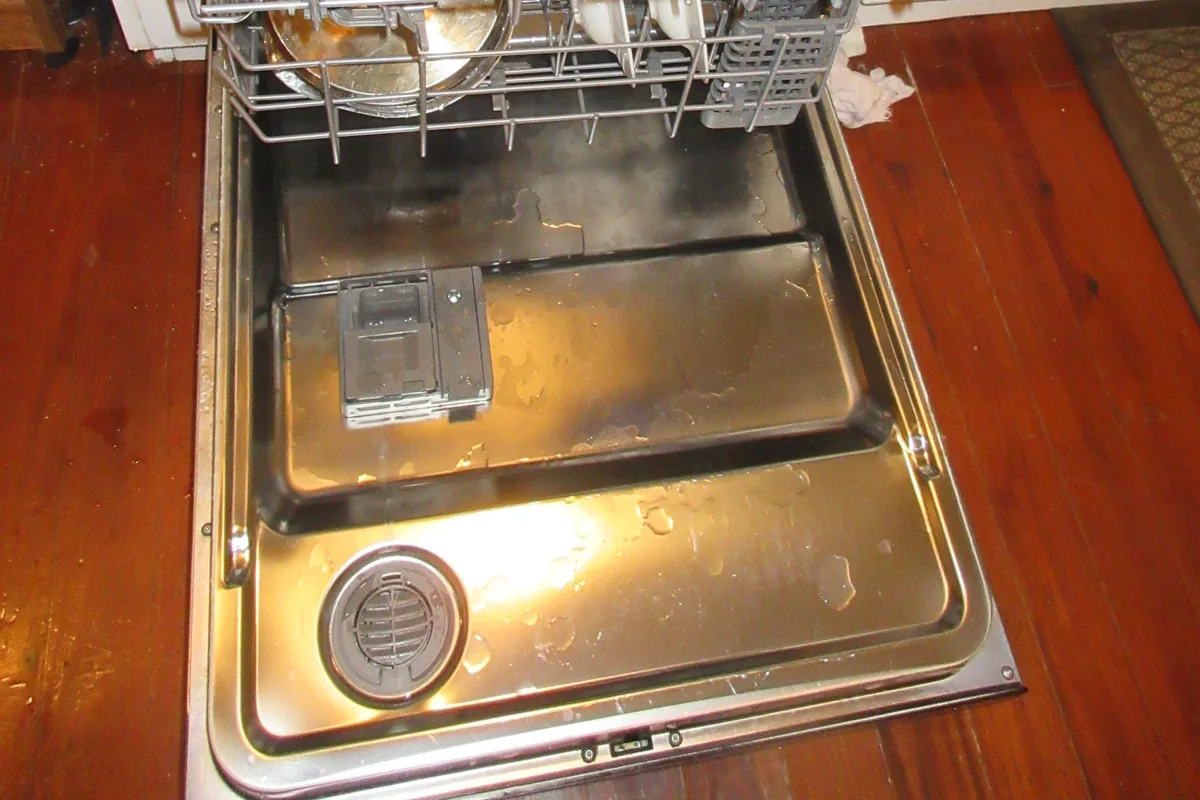
It is not a large volume, but it is enough to mark a wooden floor or run under a kitchen unit, and it comes out as soon as the machine is tipped to get it over a threshold. Lift the filter out, sponge the sump dry, and run a cloth around the bottom of the door seal where water collects unseen. Do that and the machine can be handled without a tray under it.
Sliding it out without damaging the floor or the units
A dishwasher is not especially heavy — considerably lighter than a washing machine — but it comes out of a tight opening with a stone worktop directly above it and finished cabinet sides a few millimetres either way. The damage risk here is to the kitchen, not to the person carrying it.
- Wind the feet all the way down before pulling, so the machine drops clear of the worktop rather than dragging along its underside.
- Lay a piece of card or a folded blanket on the floor in front of the opening and draw the machine onto it, rather than sliding it directly over the tiles.
- Bring it out square. A dishwasher pulled out at an angle catches the cabinet edge on one side, and that mark is on the kitchen permanently.
- Keep the door shut and taped. It is a wide, unsupported panel that swings open at exactly the wrong moment.
Where a removed dishwasher goes
A dishwasher is electrical waste and follows the same route as other large appliances rather than going out with general refuse. Its steel casing and inner drum, the drain and circulation pumps with their copper windings, and the plastic and rubber of the hoses and seals are separated as different streams once it is dismantled.
If the machine still works, that is worth mentioning when you book, because a working dishwasher being replaced during a kitchen refit is a genuinely reusable appliance. If it is going because it leaked, say that too — a machine with a known fault is handled differently from one that simply became surplus.
Almost everything difficult about removing a dishwasher happens in the ten minutes before it moves: releasing the brackets and feet, deciding whether the door panel stays, and capping the waste spigot under the sink. Get those three right and the appliance itself is the easy part of the afternoon.