A tumble dryer sits beside the washing machine, looks near enough identical to it, and is a completely different appliance to remove. It has no concrete ballast, so it is far lighter. It has no water inlet, so there is no valve to isolate. What it has instead is a route for the hot, wet air it produces, and undoing that route — or emptying the tank that replaced it — is where most dryer removals in Dubai actually begin. Dryer removal in Dubai is booked as an ordinary appliance pickup, but the crew needs to know how yours vents.
A dryer is lighter than it looks, and that is what catches people out
A domestic tumble dryer typically weighs somewhere between a third and a half of what a washing machine of the same size weighs. A washing machine is heavy because of the concrete block cast into it to stop it walking across the floor during a spin. A dryer has no such block, because a drum full of dry clothing barely weighs anything.
That sounds like good news, and mostly it is. The catch is that a dryer is bulky without being heavy, which is a genuinely awkward combination. It is light enough that one person will try to shift it alone and wide enough that they cannot see their feet while doing it. The injuries and the scraped door frames on this job come from underestimating it, not from strain.
Three types of dryer, and what each one needs disconnected
Every tumble dryer has to get rid of the moisture it pulls out of the clothes. How it does that is the single fact that determines what has to be undone before it can leave the room.
- Vented. The dryer blows hot, damp air out through a flexible hose to a wall outlet, a window panel or a ducted opening. Removal means detaching the hose and dealing with whatever it was attached to.
- Condenser. There is no hose. The moisture is condensed back into water and collected in a pull-out tank, usually in the top corner or behind the plinth flap. The tank has to be emptied, and the condenser block itself holds water.
- Heat pump. Mechanically a condenser dryer with a more efficient heat exchanger, so it is prepared the same way: empty the tank, and expect a little residual water in the unit.
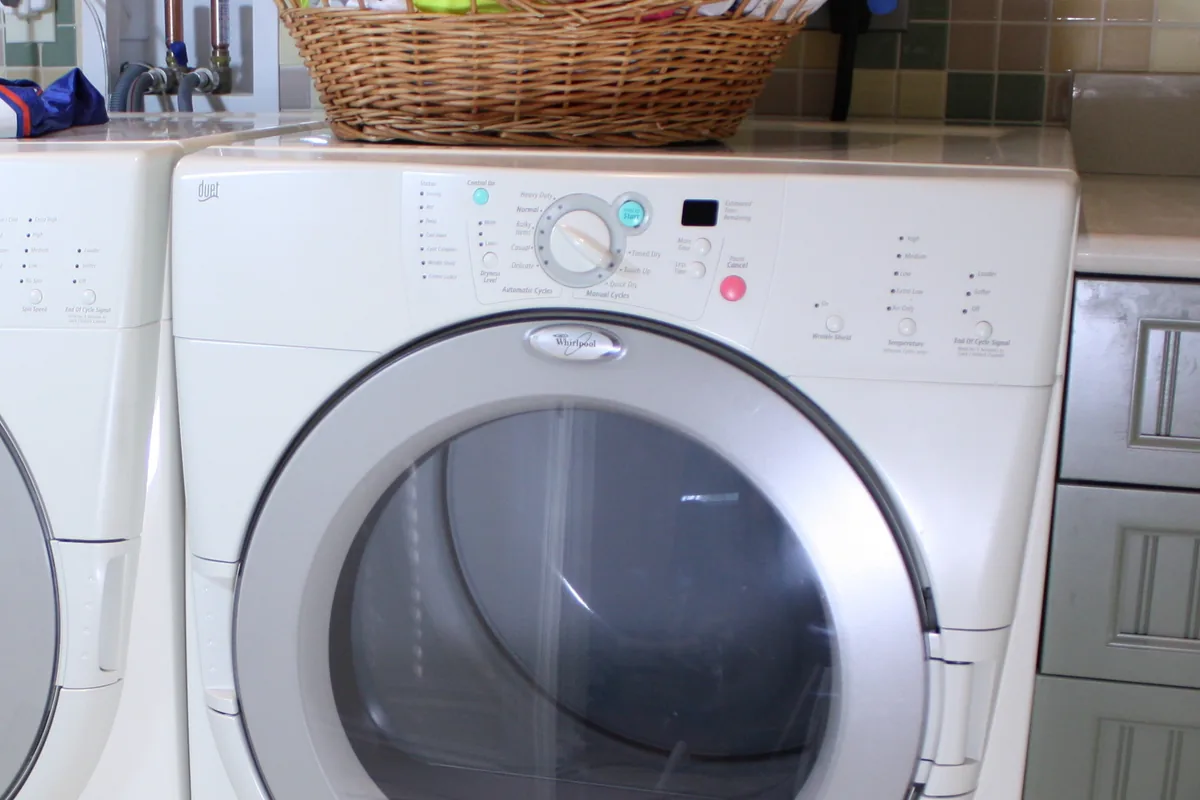
If you are not sure which you have, look at the back. A large round opening or an attached flexible hose means vented. A flat back with no opening means condenser or heat pump, and there will be a tank to slide out at the front.
The vent is the part people forget
On a vented dryer, the hose is the only part of the installation that is not the appliance. Take the dryer away and the hose, the wall plate and whatever hole they pass through all stay behind, which is worth thinking about before the crew arrives rather than after.
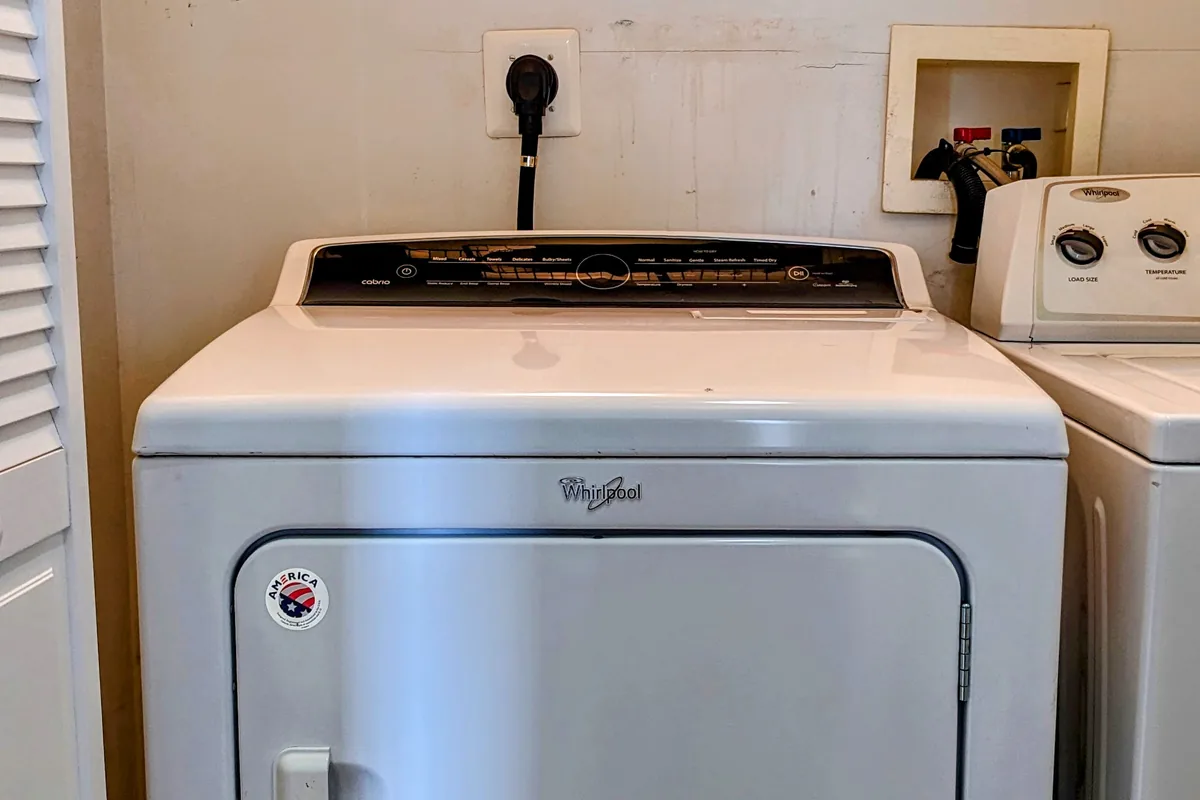
In apartments the hose usually runs to a purpose-made opening or to a panel fitted into a window or balcony door. In villas it more often goes straight through an external wall. Either way, decide whether you want the hose taken with the dryer or left in place for a replacement. If you are moving out, an open vent opening is the sort of thing a landlord's inspection notices, so leaving the wall plate on and simply detaching the hose from the machine is usually the tidier choice.
Condenser and heat pump dryers have none of this, which is one of the reasons they are common in apartments here — there is nothing to route outside. Their equivalent step is simply pulling the water tank out and emptying it, which takes a moment and prevents a spill in the corridor.
A stacked dryer always comes down first
Where a dryer sits on top of a washing machine, the dryer comes off before anything else moves. The two are held together by a stacking kit — a bracket or a set of brackets fixed between the machines — and neither appliance can be shifted safely while that kit is still in place.
Taking a dryer down from head height is a two-person lift and the point in the job where most goes wrong. It is a wide, light object being lowered by people who cannot see past it, in a space that is usually a cupboard. Clearing the floor in front of the machines first makes more difference here than anywhere else in the job.
Decide in advance what happens to the bracket itself. If only the dryer is going and the washing machine is staying, the kit comes off with the dryer and there is nothing left to reuse. If both are going, it is worth keeping the bracket only if the replacement pair is the same size, which is often not the case.
Lint is why an old dryer is a dirtier job than a washing machine
A washing machine leaves water behind. A dryer leaves lint, and there is a great deal more of it than the filter suggests. Years of fine fabric dust collects behind the drum, inside the hose, along the plinth and on the floor underneath, and most of it is only discovered when the machine is finally pulled out.
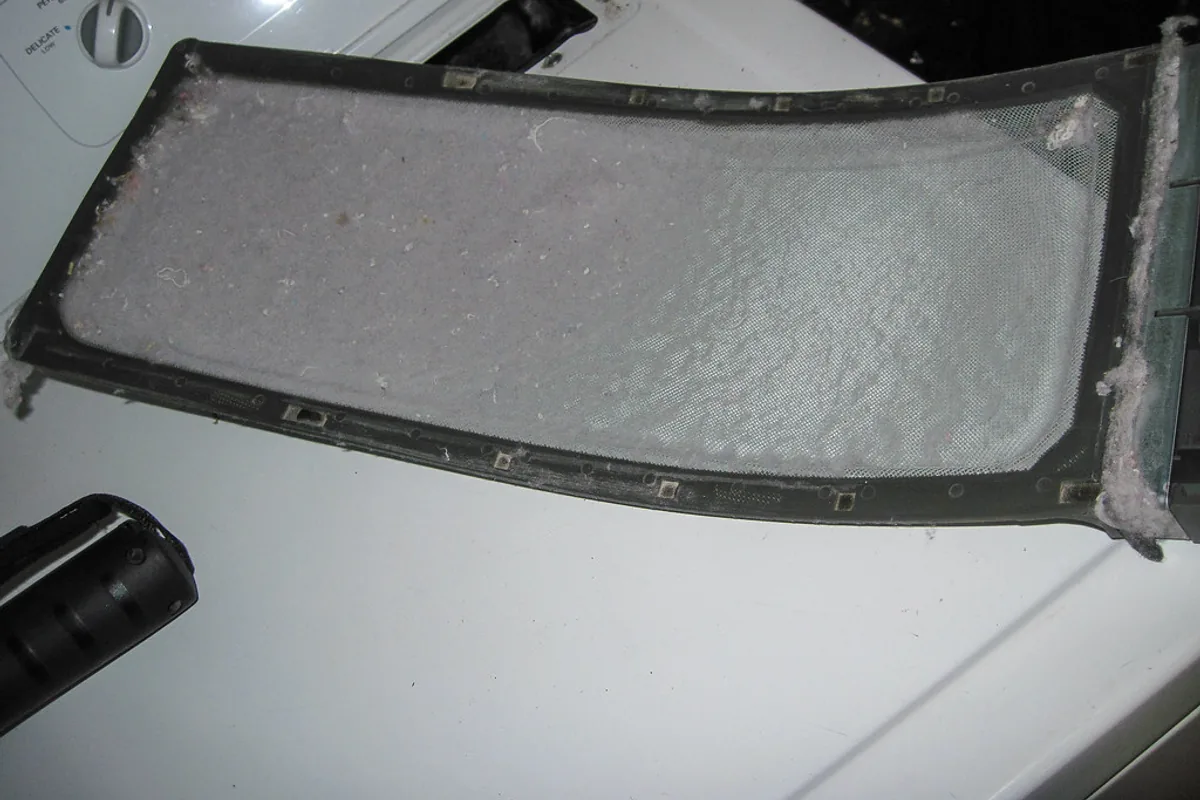
- Empty and remove the lint filter before the crew arrives, so nothing loose falls out during the carry.
- Detach the vent hose at the machine end slowly. A hose that has been in place for years holds a surprising quantity of lint, which comes out all at once if it is pulled off sharply.
- Have a bag ready for what is behind the plinth. This is dry, fine and light, and it travels through an apartment easily once it is disturbed.
- Expect to sweep or vacuum after the machine is out, not before. Cleaning first only means doing it twice.
What is left behind when the dryer goes
Three things stay in the room once the appliance is gone: the electrical socket, the vent opening if there was one, and a patch of floor that has not been walked on for years. None of them is a problem, but all three are visible, and they are the ones that get noticed during a move-out inspection.
Dryers are also heavy enough on small feet to leave four marks in a vinyl or soft tiled floor. Those marks are usually indentation rather than damage and will not lift, so it is better to know they are there than to be surprised by them when the room is handed back.
Where a removed dryer ends up
A dryer is electrical waste rather than general waste, so it goes down the same route as other large appliances instead of into a mixed load. Once it is dismantled, the steel casing and drum, the motor and its copper winding, and the heating element are separated as different material streams.
One thing genuinely worth checking before it goes: heat pump dryers are the most expensive type to buy and the newest of the three, so a working one has real second-hand value in a way that an old vented machine does not. If the dryer is being replaced because it is the wrong size rather than because it has failed, it is worth saying so at the point of booking.
For a dryer, then, the useful preparation is short and specific: work out whether it vents or condenses, empty the tank or detach the hose accordingly, take the dryer down first if it is stacked, and accept that there will be lint. Everything else is an ordinary appliance carry, and a lighter one than the machine standing next to it.