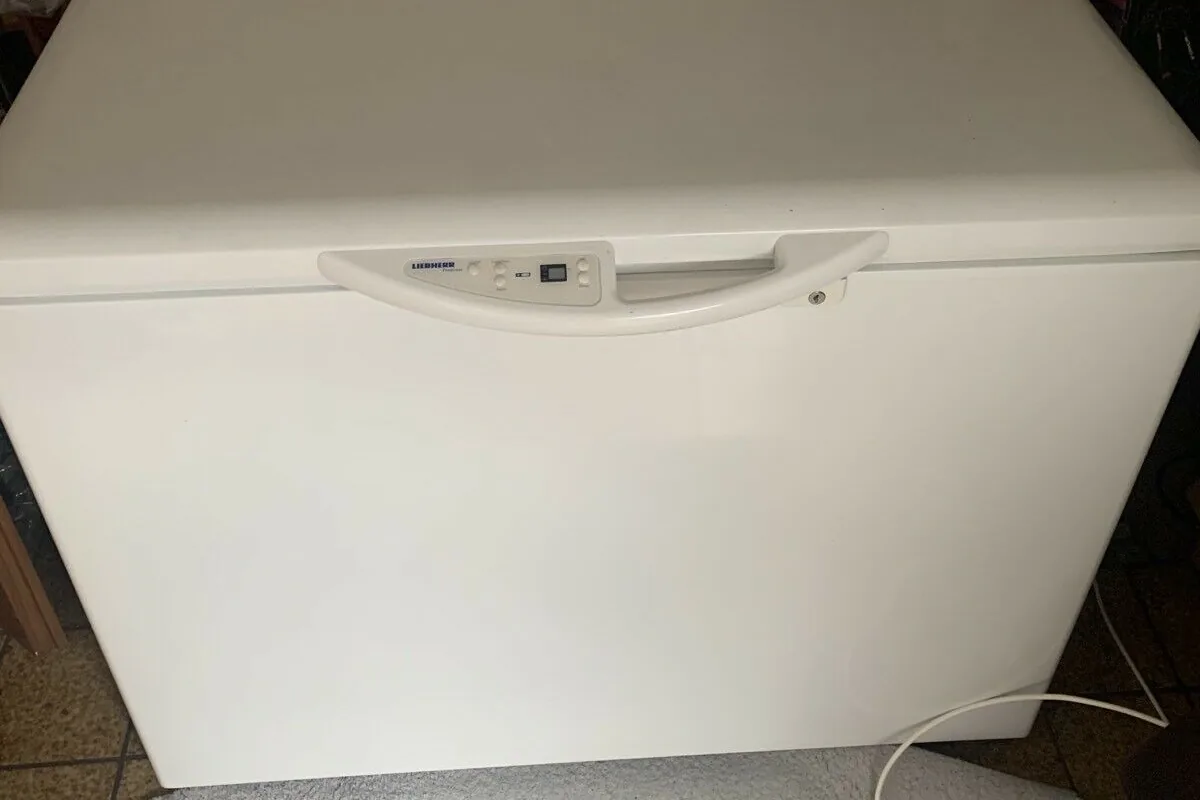
A fridge lives in the kitchen, in a gap it was slid into on the day it arrived. A standalone freezer almost never does. It sits in a storeroom, a garage, a utility balcony or a maid's room, put there once and then quietly built around by everything that has been stacked near it since. That is why freezer removal in Dubai rarely turns on the freezer itself — it turns on where the freezer has been standing, and what has to move before anyone can reach it.
Where the freezer is sitting decides the job
Before anything else, work out the route from the freezer to the front door. A second freezer is usually placed somewhere out of the way, and out-of-the-way spaces in Dubai homes tend to be the narrowest ones in the property. The defrosting and preparation steps are the same as for a fridge, covered in how to dispose of a fridge in Dubai.
- Villa storerooms and garages. Usually the easiest, because a vehicle can get close and there are no lifts involved. The obstacle is what has accumulated in front of the freezer over the years.
- Utility balconies in apartments. The freezer went out through a sliding door, and it has to come back in through the same one. Balcony doors are often narrower than the main internal doors.
- Maid's rooms and store cupboards off a kitchen. Tight, often with a door that opens inward against the appliance, and sometimes with shelving fitted after the freezer went in.
- Kitchens, where a freezer stands beside the fridge. The simplest case, and the least common one for a standalone unit.
The single most useful thing you can do before collection day is clear a path. A crew that arrives to find the freezer walled in by boxes, luggage and a bicycle spends the first part of the visit moving your belongings rather than the appliance, and things get put back in the wrong places.
Chest and upright freezers are not the same job
A chest freezer and an upright freezer weigh roughly the same but behave completely differently once they are lifted. The difference matters more than the capacity printed on the label.
- A chest freezer is wide and low, with no natural place to grip. The lid is hinged and unsecured, the sides are smooth, and the weight sits close to the floor — which makes it stable standing still and awkward the moment it has to be tilted or turned in a doorway.
- An upright freezer is narrow and tall, and top-heavy once the door is empty. It handles much like a fridge and can go on a trolley, but it wants to tip forward on a slope or a threshold.
- Chest freezers are the ones that fail to fit. A 200-litre chest can be wider than an internal door frame, and unlike an upright it cannot be turned on its end to get through.
- Both have a lid or door that will swing open mid-carry unless it is strapped shut.
Measure the freezer's width and depth and compare them against the tightest point on the route, not the widest. In most cases that tightest point is a store cupboard doorway or the turn at the end of a corridor, not the front door.
The two states an old freezer turns up in
There is a practical difference between a freezer that is being replaced while still running and a freezer that stopped working some time ago. They are the same appliance and a very different job.
A working freezer that is simply surplus can be emptied, unplugged and defrosted on your own timetable. It comes out clean. A freezer that failed unnoticed in a hot storeroom is a different proposition: the contents have spoiled, the seal has been holding that in, and opening it is genuinely unpleasant. This happens more often than people expect with a second freezer, precisely because nobody opens it daily and nobody hears the compressor stop.
If that is your situation, say so when you book. It changes how the crew prepares — sealing the lid rather than opening it, bringing sheeting, and planning to take the unit out closed and upright rather than emptying it first. It is a normal thing to be told and a bad thing to discover on the day.
Defrosting a chest freezer takes longer than a fridge
Allow considerably more time to defrost a chest freezer than you would for a fridge. A chest freezer that has run for years without a manual defrost can hold a genuinely surprising amount of ice — thick enough on the walls to reduce the usable space by a noticeable margin — and all of it has to melt before the unit moves.
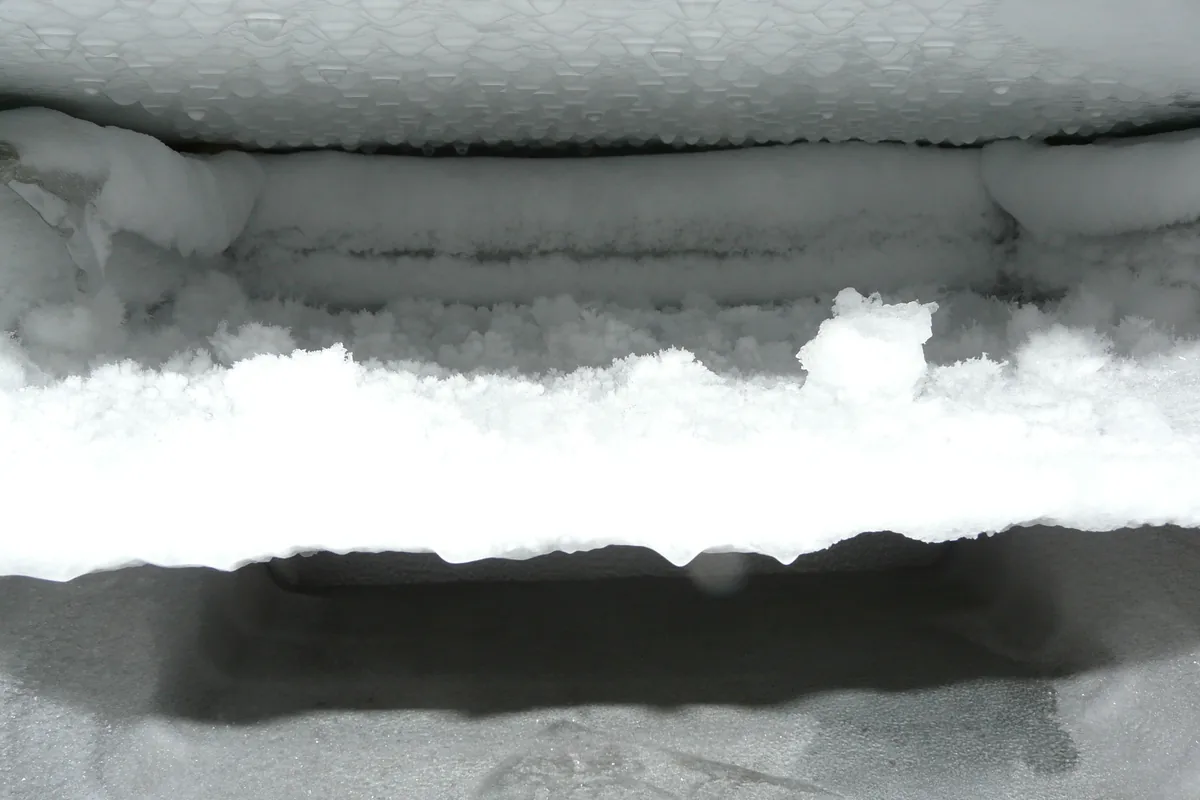
- Empty the freezer completely, including the drawers or wire baskets in an upright and the loose hanging basket in a chest.
- Unplug it and leave the lid or door propped open. Two full days is a safer allowance than one for a heavily iced chest freezer.
- Find the drain. Most chest freezers have a small plug at the base of one side that lets meltwater out into a tray; uprights usually drain to a tray above the compressor at the back.
- Put towels and a shallow tray under the drain point rather than around the whole unit, and check them more than once. The volume is larger than a fridge produces.
- Wipe the inside dry and leave it open until collection, so it does not develop an odour in the meantime.
One local point worth knowing: a freezer in a garage or an unconditioned store defrosts faster than one indoors, but it also produces meltwater faster than a single towel will hold. Check it after the first few hours rather than leaving it until the morning.
Getting it out of a store that was built around it
Most of the difficulty in a freezer collection is in the first three metres. After that it is an ordinary appliance move. A few things make that first stretch straightforward.
- Clear the floor space in front of the freezer and along the route out, ideally the day before.
- Take off the lid or door restraint if the appliance has one, and strap the lid shut once the unit is dry.
- Check whether the store door opens inward and whether it can be lifted off its hinges. On a tight cupboard this is often the difference between the freezer coming out and not.
- In an apartment, arrange the service lift with building management in advance. Large appliances are generally expected to move through the service lift and loading area rather than the main lobby.
- Coil the power lead and tape it to the body so it is not trodden on or caught in a doorway.
If the freezer is on a balcony, mention that when booking. Balcony thresholds have a raised lip for drainage, and a low chest freezer has to be lifted rather than wheeled over it — which needs two people positioned deliberately, not improvised on the day.
Why a dead freezer cannot be left in the car park
A freezer is not bulky waste that can be set down beside the bins, in a basement bay, or outside a villa gate. It contains a sealed refrigerant circuit and compressor oil, both of which need proper handling, and a discarded freezer with a closing lid is a genuine safety hazard for children.
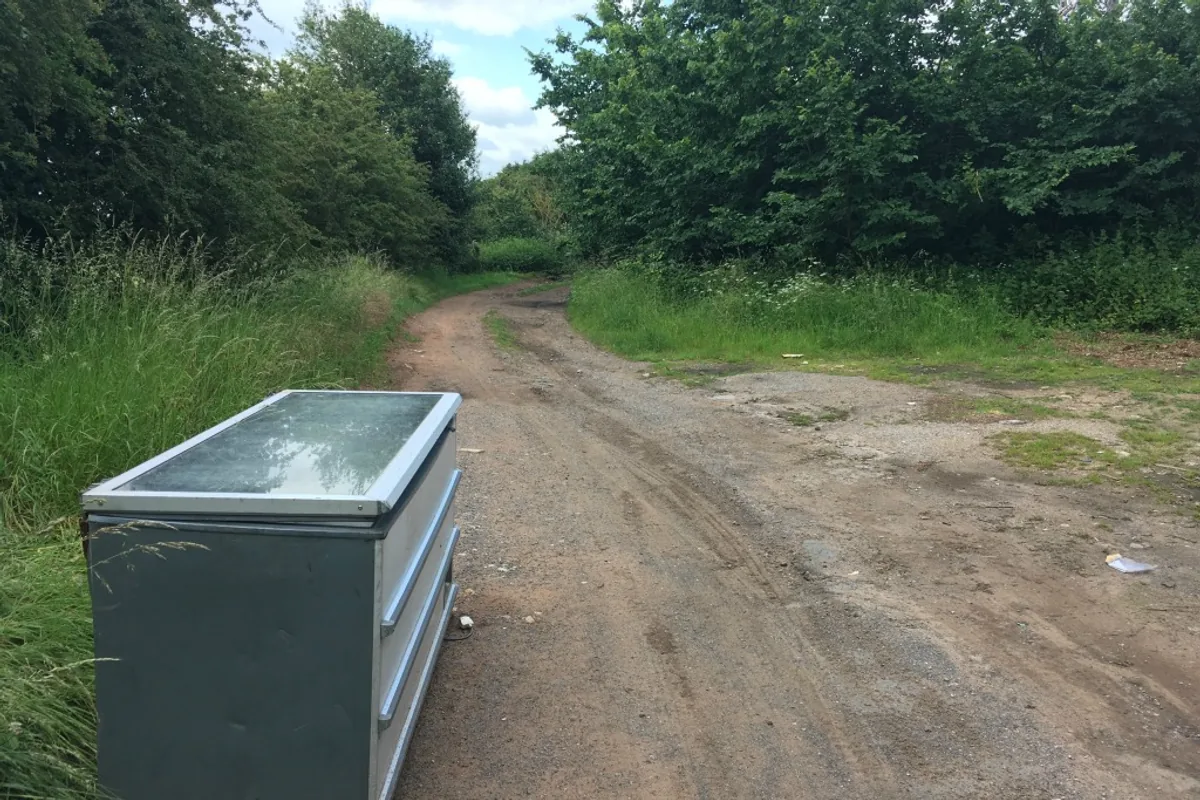
Building management will identify where an abandoned appliance came from, and the cost of clearing it lands back on the resident. Booking a collection that takes the freezer from where it stands is both simpler and, in practice, the cheaper route.
What happens to the freezer after collection
A freezer that still works has value to someone, so it is worth saying at the point of booking whether the unit was running when it was unplugged. A working second freezer is one of the more genuinely re-usable large appliances, because the thing people want from it — cold storage in a garage — does not require it to look new.
A freezer that has failed goes down the electrical waste route rather than the general one. The refrigerant is recovered under controlled conditions before anything is dismantled, and the steel casing, the compressor and the copper inside it are separated afterwards. What is recovered from an appliance like this, and how, is a subject in its own right.
The practical summary is short. Measure the tightest point on the route rather than the door you are picturing, give a heavily iced chest freezer two days rather than one, and tell whoever is collecting it whether the unit failed with food inside. Those three things account for nearly every freezer collection that goes slower than it should.