Keep belongings with a clear purpose, a place and a condition that makes them usable; clear what no longer serves your household once you are entitled to decide. Before a house clearance in Dubai, separate uncertain items from the approved load instead of letting the collection date make the decision. This guide helps you decide what leaves, before choosing whether it will be sold, donated or collected.
First establish which decisions are yours
An unwanted item is not automatically yours to remove. Check belongings shared with a housemate, items borrowed from someone else and furniture supplied with a rental before applying any keep-or-clear test. Where ownership or permission is unresolved, record the question and leave the item outside the removal scope.
Set aside personal papers, keys and belongings that need individual review before assessing ordinary household goods. Their importance is not measured by how often they are used. The decision method below is for possessions you can reasonably assess, not a shortcut for settling somebody else’s rights or judging an unfamiliar document.
Give each retained item a real role
Ask what the item will do in the home you are actually planning to live in. “The desk I work at each week” is a clear role; “a desk might be useful one day” still needs a decision. This is not a rule that everything must be used daily: occasional items can earn their space when the occasion is real and the item is suitable for it.
- Name its use: what task or household need does it meet?
- Name its place: where will it be stored or used without obstructing another function?
- Check its condition: can it perform that role as it stands?
- Check the alternative: is another retained item already doing the same job?
Use these questions together rather than letting one answer decide everything. A folding guest bed may be used infrequently but have a known purpose and an appropriate storage place. A second damaged desk can be used often as a dumping surface without being worth keeping for that reason.
Compare duplicates as a group
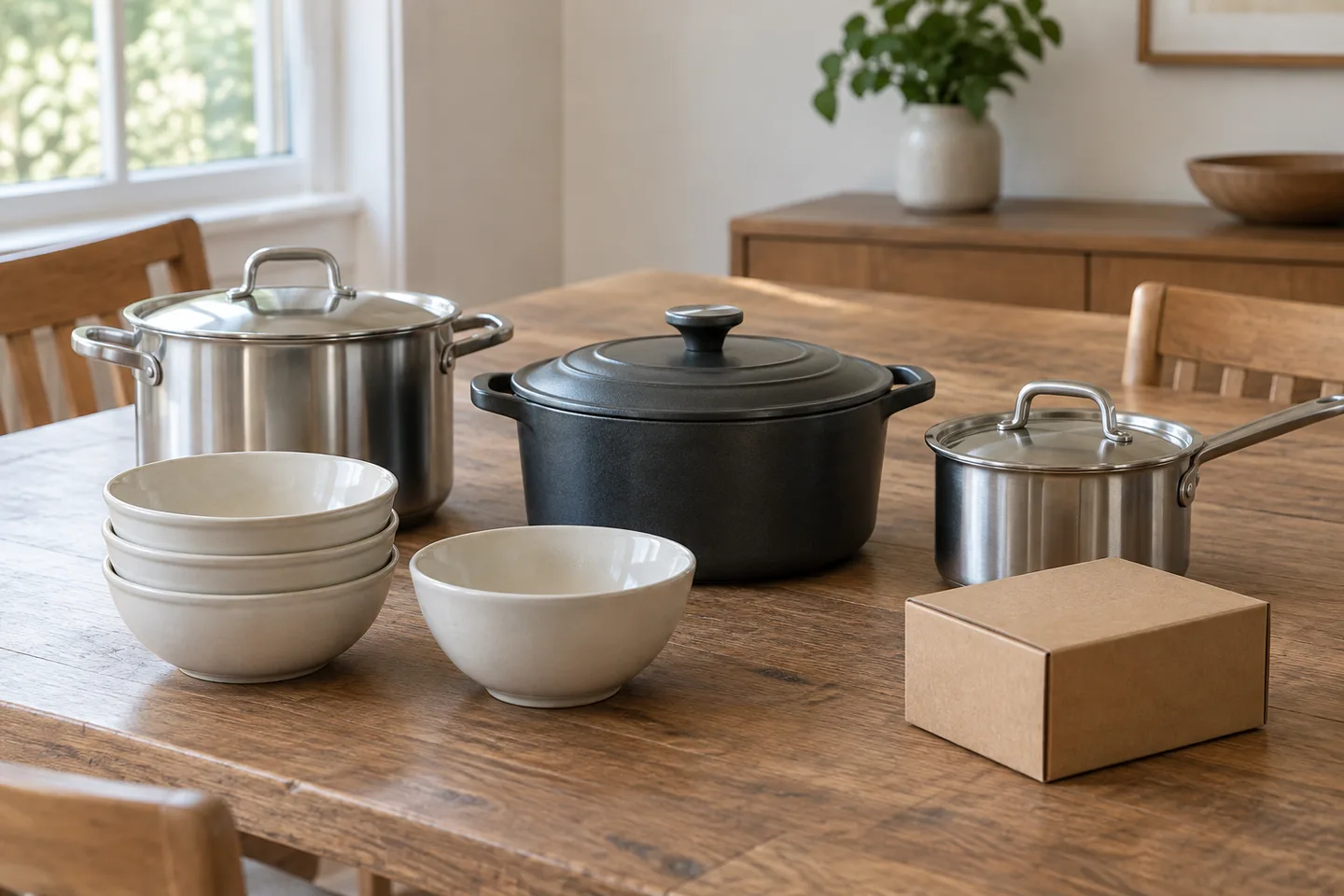
Bring similar items into the same decision, even if they live in different cupboards. Otherwise each spare chair, pan or bedside lamp looks useful in isolation and every duplicate survives. Choose the group the household will use, then identify the surplus rather than repeatedly asking whether each individual object might be useful.
A duplicate is not always unnecessary. Two people working at home may need two desks, and a complete dining set needs enough chairs for its intended use. Check the function of the group before removing a matching component, especially where one item supports or completes another.
For example, if you have several pans of the same size, compare their condition and the way you cook before keeping all of them. There is no required number to reach. The useful outcome is a deliberate working set, not a smaller collection chosen simply because it looks tidier.
Turn a repair intention into a specific plan
Keep a repair candidate when there is a credible next step, not just because repair is theoretically possible. Identify what needs attention, who will assess it and when you will decide whether to proceed. If those questions cannot yet be answered, put the item on a limited review list rather than calling it ready for use.
Do not assume an electrical or structural fault is minor because the object looks intact. Seek an appropriate assessment where needed and avoid passing an unverified item on as working. This guide helps organise the decision; it does not establish whether a faulty appliance or damaged piece of furniture is safe to use.
The original purchase price may explain why a decision feels difficult, but it does not tell you what the item can do now. Compare the practical repair plan with the household need it would meet. You can decide an item should leave without pretending it never had value.
Count the space an item will continue to use
A retained item needs a place beyond the clearance day. If its only destination is the hallway or another already-full room, the decision has not yet solved the household problem. Identify the space before moving the object, and check what will have to move to make room for it.
For a move into a smaller home, use the downsizing clearance guide to assess the new rooms and furniture fit. Here, the broader question is whether you want to keep providing space for the item at all. An object that physically fits may still have no useful role, while something essential may justify reorganising the room.
In a JVC apartment, a storage cupboard may also hold equipment the household needs regularly. Keeping an unused bulky item in front of it has a practical cost even without a storage bill. Judge the retained arrangement by whether the home works afterward, not by whether everything can be squeezed back inside.
Give each uncertain item one unanswered question
Use a hold list for decisions that need information, with a specific question beside each item. “Ask whether this belongs to the landlord” or “check whether the replacement includes a base” is actionable. “Maybe keep” gives the next review nothing to resolve.
- Write the item and the question preventing a decision.
- Name the person who can provide the answer.
- Choose a review date that allows time before collection.
- Keep the item physically outside the approved load until a decision is recorded.
A review date is a reminder, not automatic permission to dispose of an unresolved item. If the answer does not arrive, keep the item excluded and reconsider the plan. Sentimental decisions may need their own time; do not present a quick usefulness test as a reason to override someone’s attachment.
Choose the outgoing route after deciding it can leave
Once an item is genuinely surplus, decide how it will leave based on its condition and the available arrangements. The sell, donate or dispose guide covers those options for furniture. An intention to donate is not yet a completed handover, so keep the outgoing item on your list until its route is confirmed.
Turn the decisions into a short removal list with clear descriptions and locations, using the house clearance checklist for the property walkthrough. The collector should receive the settled outcome, not be asked to choose which duplicate is best or whether a repair is worthwhile.
A good keep list describes a home that will work after the load leaves. Retain what has a role and a place, make uncertain questions visible and separate the decision to let go from the route out. That gives the clearance a clear purpose without turning it into a rush to remove as much as possible.