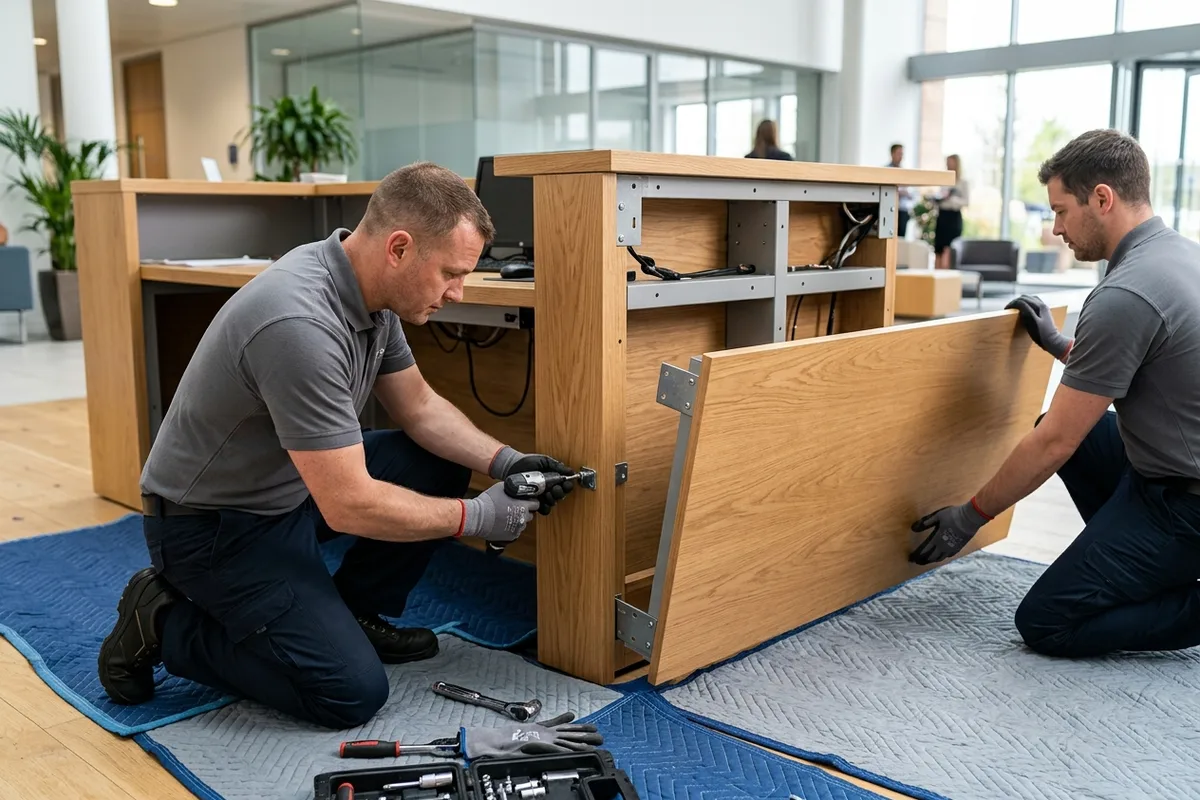
When a clinic in Dubai refurbishes, relocates or closes, most of what has to go is ordinary furniture: reception counters, waiting room chairs, consultation desks and storage. Furniture removal in Dubai can take all of that, but only after the clinic has dealt with everything clinical through its own arrangements. This guide explains where that boundary sits, how to prepare the furniture, and what to agree before collection day.
What can a junk removal crew collect from a clinic?
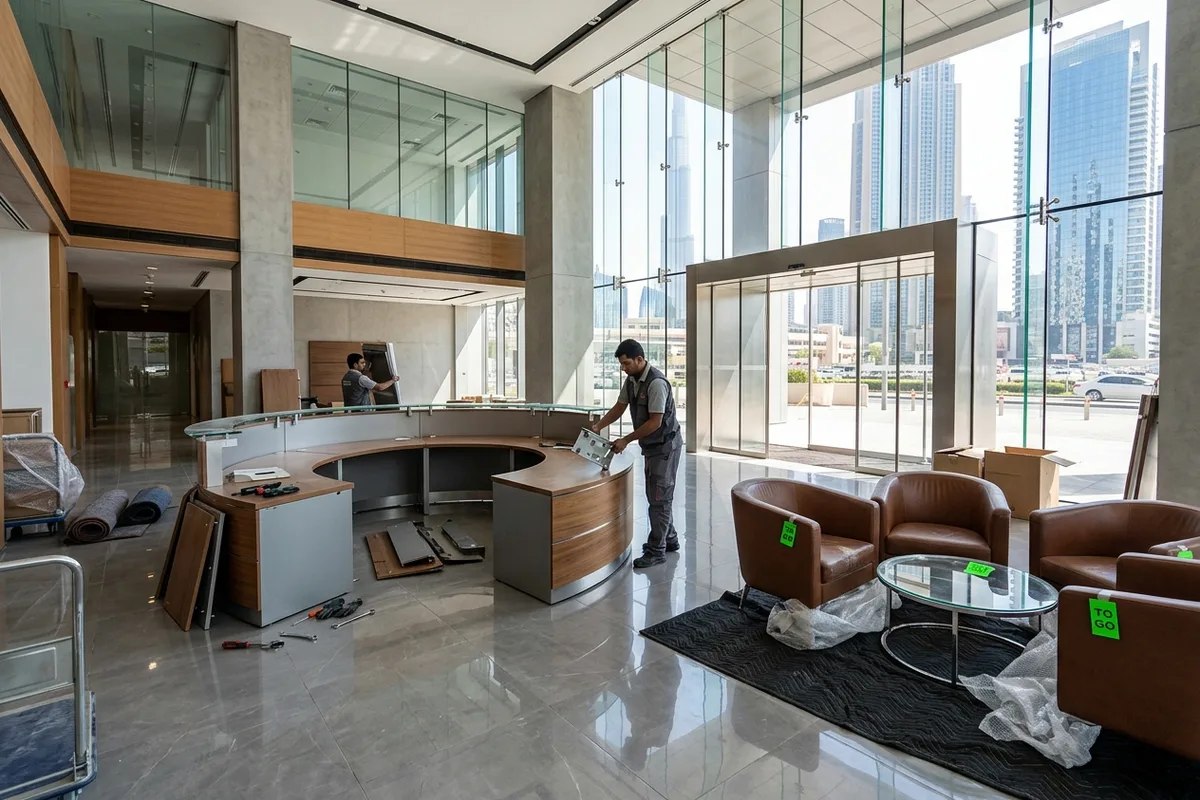
A junk removal crew can collect the clinic's non-clinical furniture and fittings once they are empty, clean and released. That covers most of the volume in a typical medical, dental or physiotherapy clinic, because waiting areas, offices and storage rooms hold far more furniture than the treatment rooms do.
- Reception and waiting areas: modular reception counters, waiting room chairs and benches, side tables, magazine racks and children's play furniture.
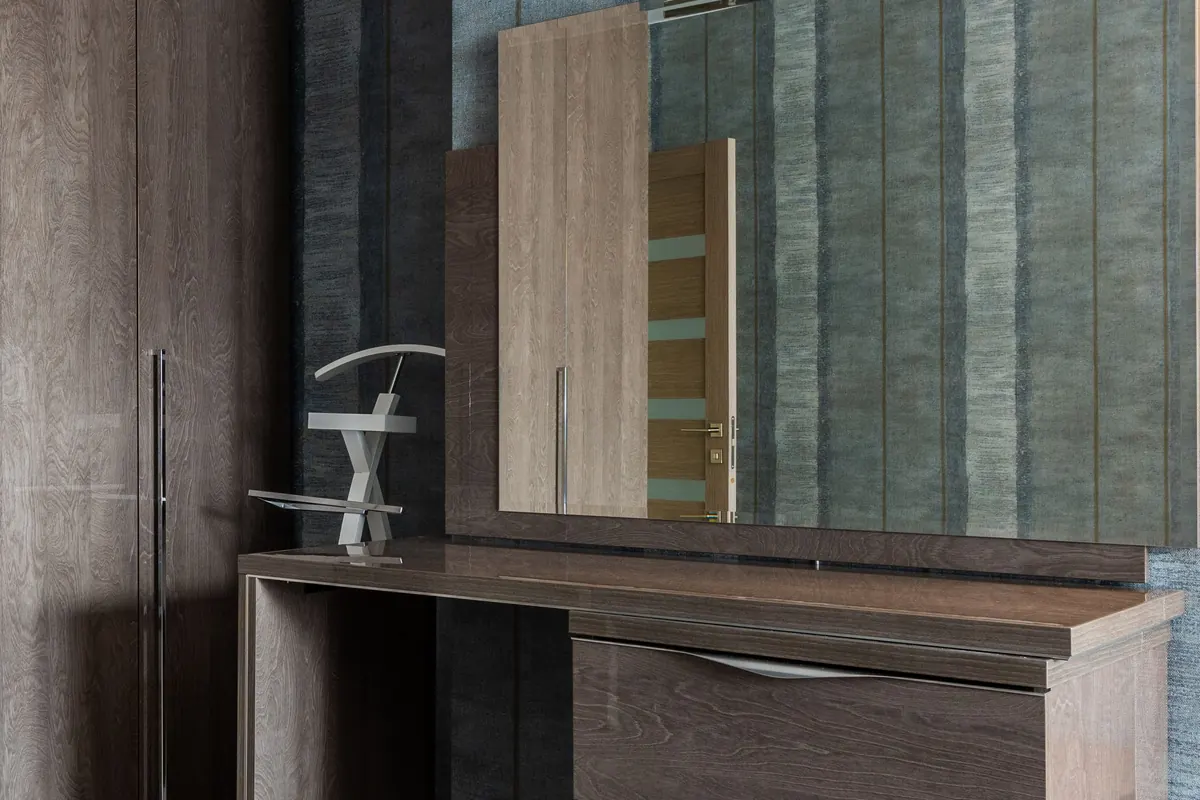
- Consultation rooms: desks, doctor's chairs, patient chairs, bookcases and lockable cabinets.
- Treatment rooms: manual examination couches, stools, privacy screens on wheels, empty trolleys and freestanding storage.
- Staff and back-office areas: staff room furniture, office desks and chairs, lockers and filing cabinets.
Clinic furniture is often finished in wipe-clean vinyl, laminate or powder-coated steel, so it tends to survive well. Matching sets of waiting room chairs in good condition may be worth offering for reuse before they are listed for disposal.
The clinical boundary: what stays with the clinic's own arrangements
Clinical waste, medicines and medical devices are not part of a furniture collection. They leave through the clinic's licensed medical waste contractor, its equipment suppliers or its own decommissioning process, and that work should be finished before the crew is booked. The general list of what junk removal companies will not take includes medical and biohazard waste for the same reason.
- Sharps, used dressings, specimen containers and anything contaminated with bodily fluids.
- Medicines, vaccines, local anaesthetics and pharmaceutical stock.
- Imaging and diagnostic equipment, such as X-ray units, ultrasound machines and dental imaging, which need specialist decommissioning.
- Dental chairs, treatment units and other equipment plumbed into water, suction or compressed air, which the supplier or a technician must disconnect.
- Leased or supplier-owned devices, which go back to the owner under the lease terms.
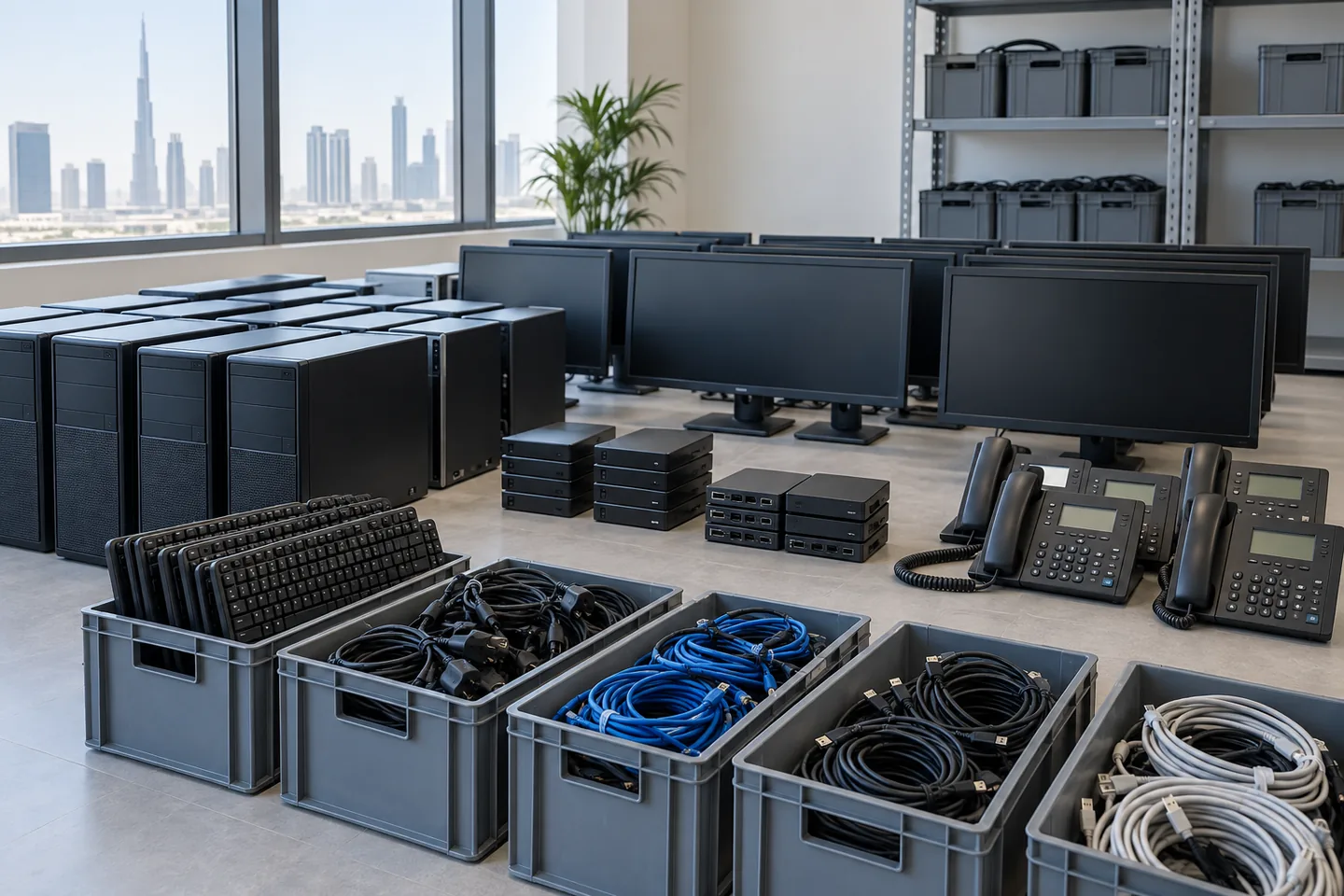
Once a medical device has been decommissioned, disconnected and released by the clinic, its electrical parts are electrical waste rather than furniture. Ask about e-waste disposal separately, and do not add it to the furniture list until the release is in writing.
Examination couches, treatment chairs and screens
Examination couches come in two kinds, and the difference matters for collection. A manual couch with a fixed or gas-assisted backrest is furniture and can be carried out like any heavy bench. An electric or hydraulic couch has a motor, control unit and power lead, so it should be unplugged, have its cable secured and be listed as an electrical item.
- Lower electric couches to their lowest position before unplugging them, so they are stable to carry.
- Remove paper roll holders, stirrups, armrests and any detachable accessories, and bag them with the couch.
- Take curtains off ceiling tracks and treat the curtains as textiles; the tracks are fixed to the ceiling and stay unless the fit-out contractor removes them.
- Fold wheeled privacy screens flat and lock their castors for loading.
Clean, empty and release before collection
Every item leaving a clinic should be empty and cleaned to the clinic's own standard before the crew handles it. That protects the crew, and it is also what makes furniture acceptable to a second user. Items that cannot be cleaned, such as a torn couch cover that has absorbed fluids, should go through the clinic's clinical waste route instead.
Patient records need the same care as clinical waste. Staff should empty every desk, cabinet and locker, because patient files, appointment books and prescription pads are the clinic's responsibility to keep or destroy under its own policy. Computers and storage that hold patient data should follow the steps in the guide to office electronics disposal before they go anywhere.
- Medical waste contractor collects clinical waste and sharps containers.
- Suppliers and technicians decommission, disconnect or take back devices.
- Staff empty desks and cabinets, and remove records and personal items.
- Released furniture is cleaned, wrapped or marked as ready.
- The furniture collection takes place, ideally when the clinic is closed to patients.
Access and timing for a clinic clearance
Clinics in Dubai sit in very different buildings: ground-floor villa conversions along Jumeirah's main roads, units in medical towers, and suites in mixed-use buildings around Oud Metha. A villa clinic may have a short carry to a vehicle at the gate, while a tower clinic depends on a goods lift that has to be booked with building management.
If part of the clinic is still seeing patients, keep the collection to rooms that are closed and to a route that avoids the waiting area. Many clinics prefer a day when they are fully closed, so the crew never passes patients in a corridor.
What to send for a clinic furniture quote
- Photos of each room, showing only the furniture that has been released for collection.
- Which couches and chairs are electric, and confirmation that they are unplugged.
- Confirmation that clinical waste, medicines and devices have already been removed or are excluded.
- Building access: goods lift, loading point, parking and any time restrictions.
- Any matching sets that are going to reuse or donation rather than disposal.
A clinic clearance runs smoothly when the clinical side is finished first. Once waste, medicines, devices and records have gone through the clinic's own channels, what remains is a straightforward furniture job that can be quoted from photos and cleared in a single visit.