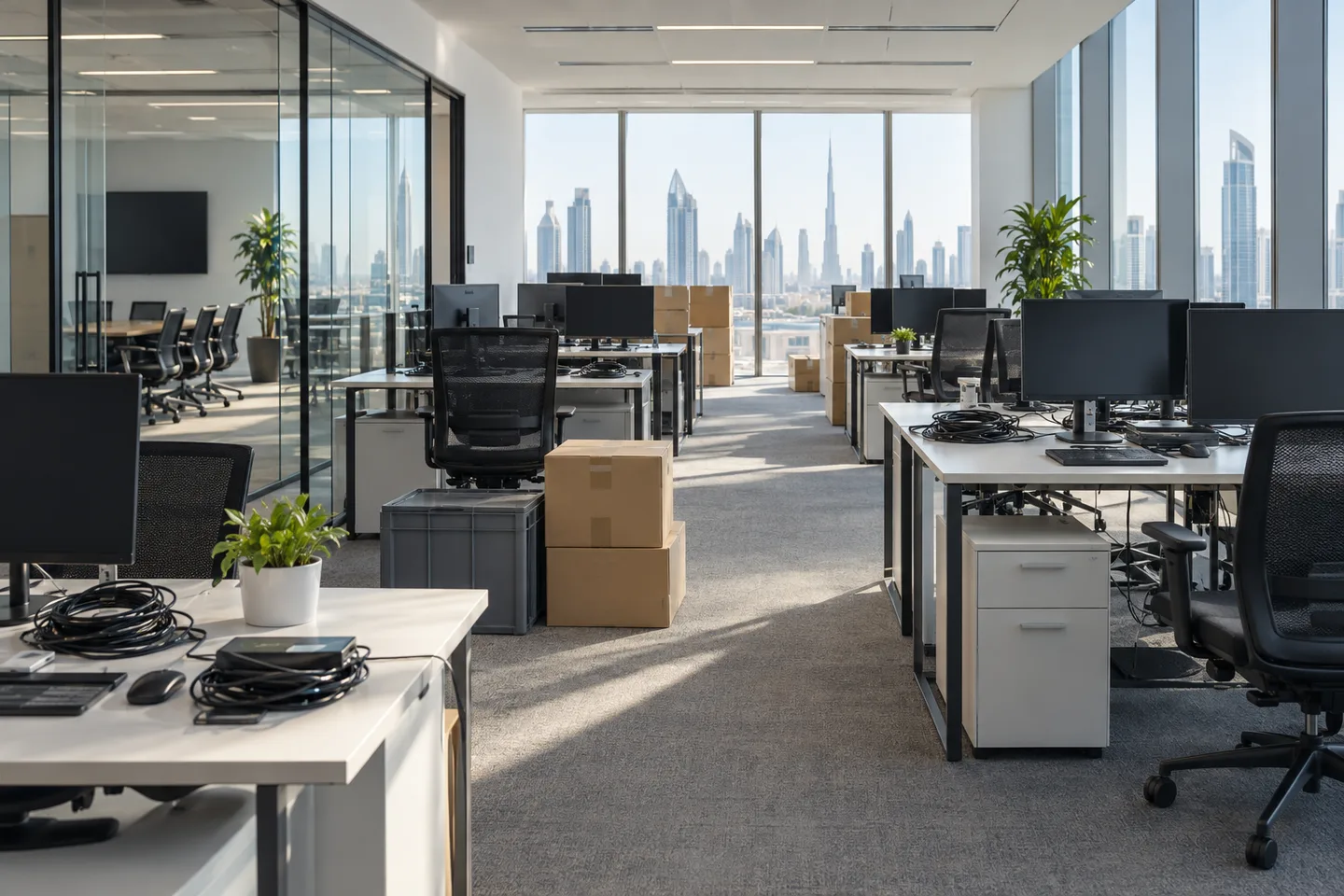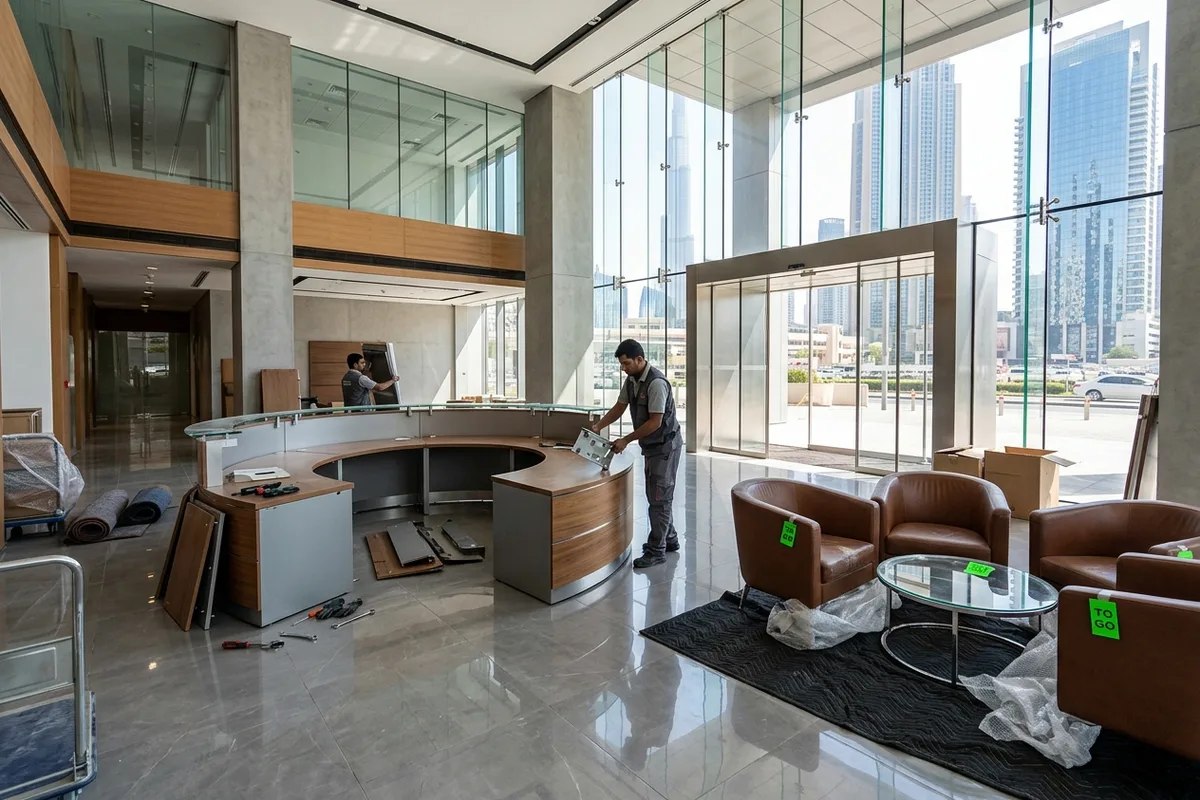
The reception area is an office's public arrival point, furnished with substantial front-of-house counters, executive visitor armchairs, coffee tables, and company display stands. When vacating commercial premises or updating corporate interiors, clearing this arrival zone requires specialized furniture removal in Dubai that respects the building's strictest aesthetic and logistical boundaries. Success depends on drawing a clear line between loose modular desks and fitted architectural millwork, protecting sensitive stone lobby flooring, and coordinating removal windows during approved building management hours.
Distinguishing freestanding reception desks from architectural joinery
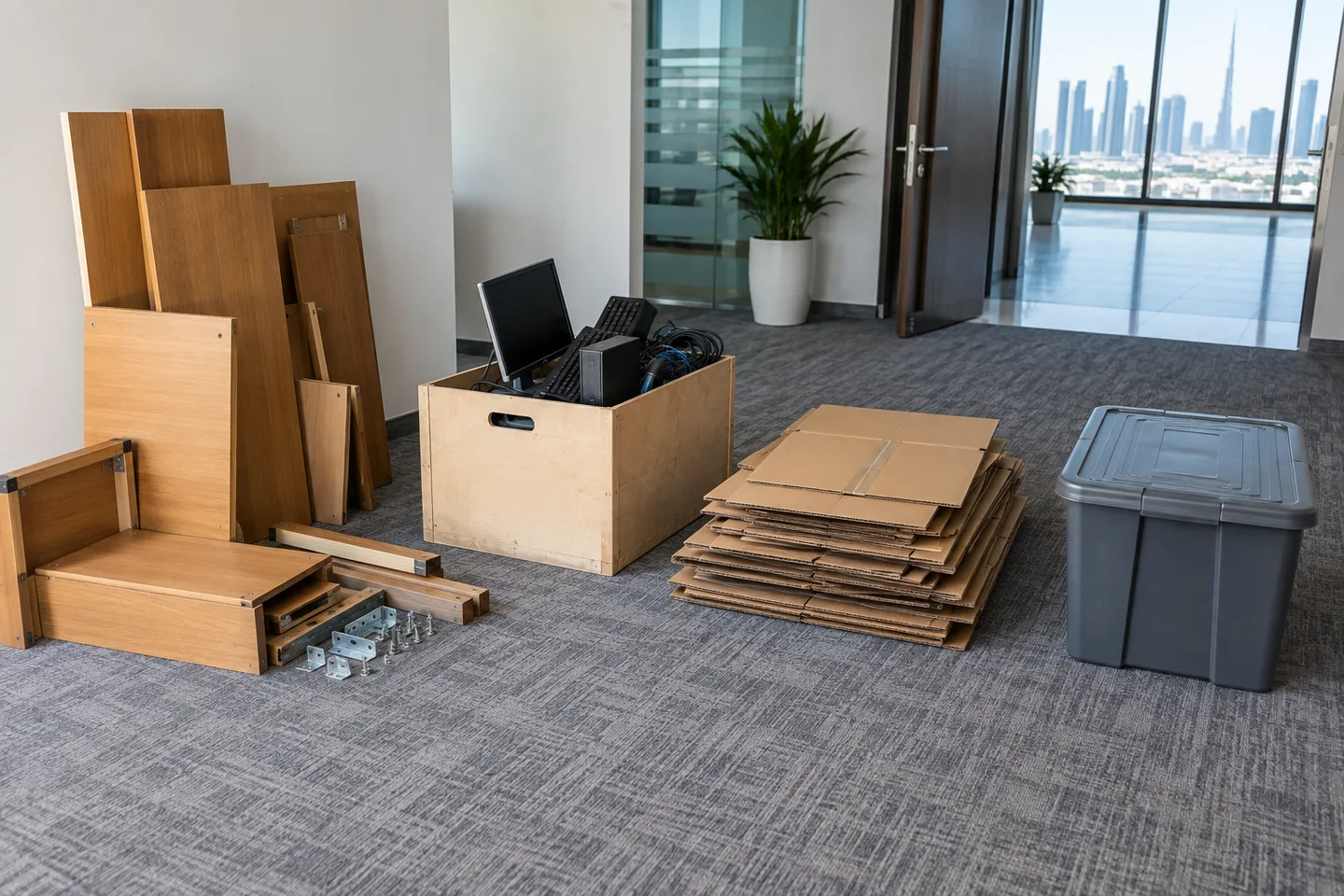
Freestanding modular reception desks assembled with cam-locks, brackets, and leveling feet can be unbolted and removed directly by a clearance crew, whereas counters permanently bonded to the floor screed or tied into building structural walls belong to contractor fit-out scope.
- Freestanding modular units: multi-section laminate, steel, or timber desks that uncouple at internal joiner plates without disturbing underlying floor tiles.
- Custom architectural millwork: counters siliconed, glued, or anchored with heavy structural bolts into masonry, requiring carpenter or demolition contractor release.
- Integrated electrics: LED kick-strip lighting, reception signage, and counter power blocks must be isolated at the distribution board before physical clearance starts.
This distinction follows the boundaries set out in office fit-out clearance. Leaving fitted joinery intact prevents security deposit deductions, while all loose counter modules can be dismantled quickly and loaded into the collection vehicle.
Clearing visitor seating, display units and branding elements
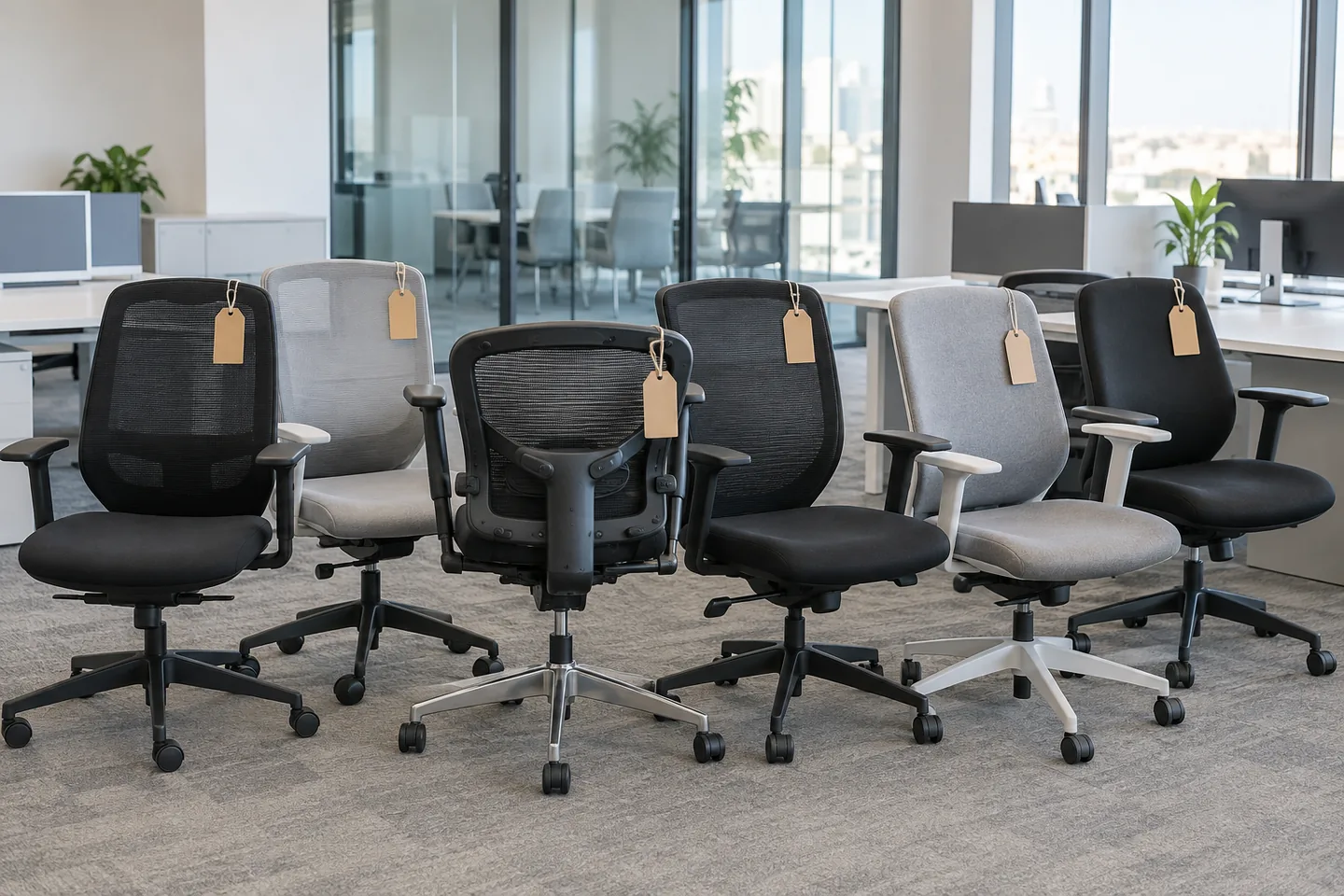
Reception guest seating—including leather tub chairs, modular waiting room couches, glass low coffee tables, and magazine plinths—is staged and removed whole or wrapped to prevent corridor snags.
- Executive armchairs and sofas: inspected for condition and wrapped in protective stretch film to keep upholstery clean during transit.
- Glass and stone coffee tables: tempered glass tops are separated from metal pedestals and carried vertically with edge cushions.
- Display fixtures: acrylic brochure holders, queue stanchions, and literature racks are grouped together for consolidated loading.
- Digital sign-in kiosks: interactive touchscreens and visitor check-in terminals are unplugged and routed separately for e-waste disposal.
Protecting high-traffic lobby floors and public elevators
Ground-floor entrance lobbies and shared passenger foyers in Dubai commercial towers like Downtown Dubai and JLT have strict zero-damage policies for polished marble and granite surfaces.
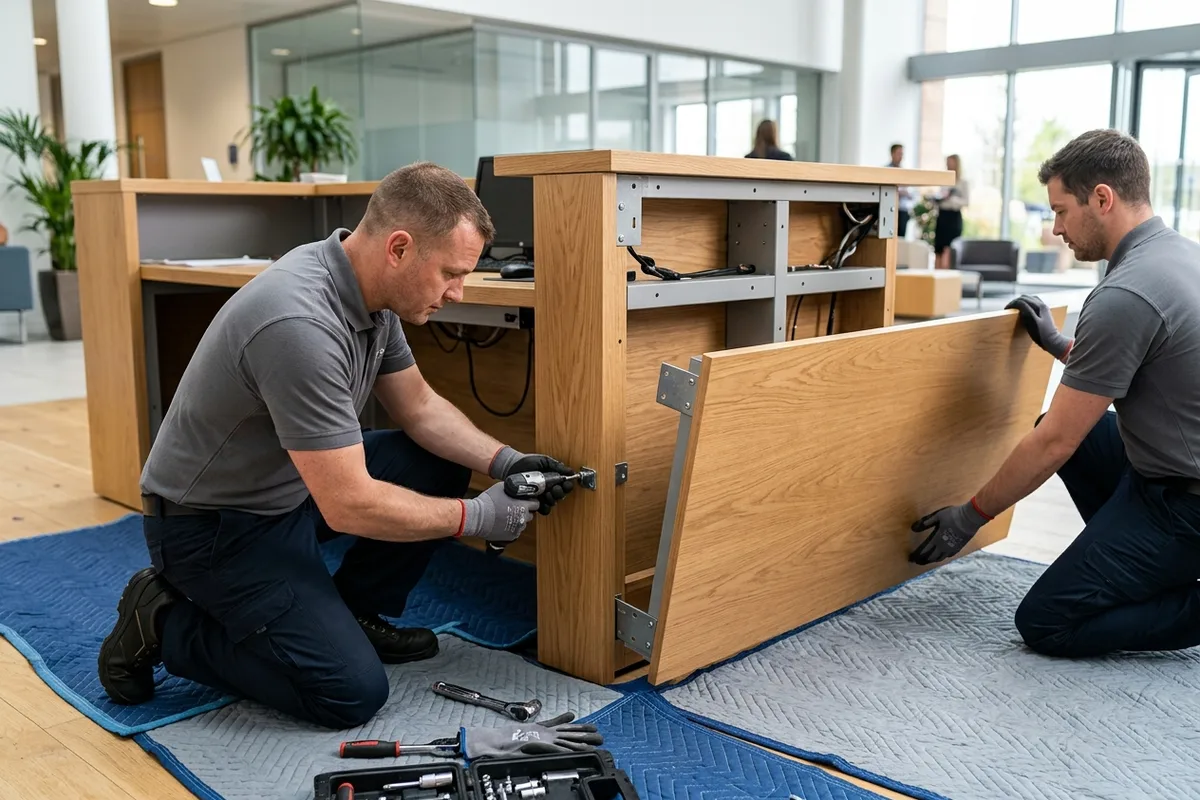
Bulky reception counter panels must never be dragged across lobby floors. Professional crews transfer all items onto pneumatic or non-marking rubber-wheeled dollies, laying floor protection boards along transit routes. Where clearance routes cross shared public lobbies, teams navigate designated back-of-house corridors directly to service lifts to avoid disturbing other building tenants.
Building permits, security gate passes and after-hours timing
High-rise commercial towers strictly forbid moving bulky reception furniture through main passenger entrances or during peak business arrival hours.
Tenants must obtain an electronic Gate Pass or Move-Out Permit from building security prior to collection day. Most property managers require heavy furniture removals to take place after 6:00 PM on weekdays or across weekend windows, ensuring uninterrupted access to dedicated freight lifts and basement loading bays.
What happens to collected reception furniture
Executive reception seating and modular desks in clean working condition are prioritized for commercial reuse, often linking into office furniture liquidation. Items with worn upholstery or broken panels are separated into timber, steel, and foam components, mirroring the recycling pathways used for office chair disposal.