Before booking a comprehensive house clearance service in Dubai, property owners, executors, and departing residents often question whether surplus contents possess significant financial value. When clearing a fully furnished villa or handling an inherited estate, there is a natural desire to offset clearance expenses by selling valuable pieces. Distinguishing realistic secondary market demand from perceived purchase value is essential to avoid costly delays and unrealistic expectations.
In the United Arab Emirates, the secondary furniture and household goods market operates under distinct economic dynamics. An item purchased for a substantial sum five years ago may have negligible resale appeal today, while specific vintage collectibles or solid timber pieces retain surprising durability and interest. Understanding these valuation dynamics allows property owners to separate genuine assets from ordinary disposal volume before the clearance crew arrives.
Dubai second-hand market realities: why mass furniture depreciates fast
Dubai has one of the world's most mobile expatriate populations. With tens of thousands of residents arriving and departing annually, the domestic market is consistently flooded with standard household furniture. This constant supply dynamic directly influences resale values across the secondary market:
- Flatpack and veneer furniture: modern particleboard and MDF wardrobes, bookshelves, and bed frames lose up to 80% to 90% of their retail value the moment they are assembled. Once dismantled for transport, joint fasteners weaken, making reassembly unpredictable.
- Upholstered sofas and soft furnishings: secondary buyers place high scrutiny on hygiene, fabric cleanliness, and pet exposure. Unless upholstered pieces are from recognizable luxury design houses in mint condition, resale liquidity is low.
- Used domestic appliances: while functioning washing machines, dryers, and refrigerators retain modest demand, buyers demand operational guarantees, testing proof, and delivery logistics, which private sellers often struggle to manage.
Recognizing that standard domestic furniture carries high physical bulk but modest secondary market value prevents homeowners from stalling move-out schedules while attempting to sell low-demand items privately.
Identifying items of potential worth: art, collectibles, and solid timber
While mass-produced furnishings face steep depreciation, specific categories of household goods maintain strong collector appeal and resale potential. Prior to clearance, inspect your property carefully for items matching these characteristics:
- Solid hardwood furniture: authentic teak, rosewood, oak, mahogany, and walnut dining suites, credenzas, and armoires. Unlike engineered boards, solid wood pieces can be sanded, refinished, and transported without structural failure.
- Recognised designer pieces: mid-century modern furnishings, licensed designer lighting (such as Italian architectural lamps), and signed studio furniture featuring verifiable manufacturer stamps or provenance plaques.
- Fine art and regional antiques: signed paintings, limited-edition lithographs, Persian or Caucasian hand-knotted wool and silk rugs, antique brassware, and historical decorative collectibles.
- Luxury timepieces, jewellery, and precious metals: vintage clocks, silverware sets, commemorative coins, and fine jewelry should always be identified and secured well ahead of general property clearance.
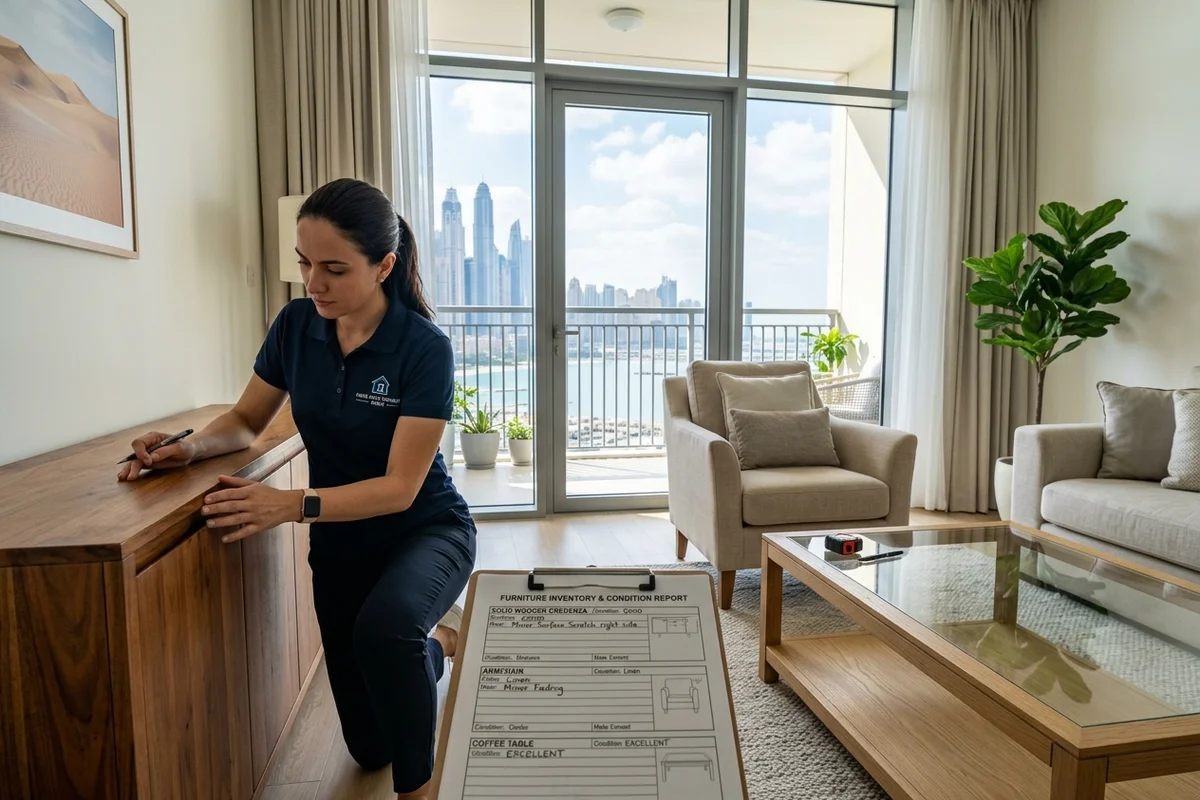
If you encounter items featuring authentic maker marks, stamped hallmarks, or documented purchase provenance from reputable galleries, segregate them from the general clearance inventory immediately.
When and how to commission independent professional appraisals
A fundamental rule of professional house clearance is maintaining a strict division between valuation and disposal. Clearance contractors are specialists in heavy physical extraction, logistics coordination, and environmental waste management. They are not certified art appraisers or antique auctioneers.
Asking a removal contractor to estimate the value of antique furniture or fine art creates an inherent conflict of interest. An unscrupulous operator might downplay an item's true market worth in order to acquire it cheaply as salvage, while an honest clearance crew will simply admit they lack certified appraisal credentials.
When handling an estate with potential collector value, follow these independent appraisal guidelines:
- Engage certified independent appraisers: commission accredited fine art or antique specialists who charge a professional consultation fee rather than taking a percentage of salvage profits.
- Consult specialized regional auction houses: reputable auction houses in Dubai can review photographs of high-end collections to provide preliminary estimates of auction viability.
- Transfer appraised items off-site: once an item is verified as valuable, arrange dedicated specialist transport to an auction facility or secure private storage before general clearance begins.
Regional collectibles: separating authentic heritage from decorative replicas
Homes across Dubai frequently contain Middle Eastern, South Asian, and East Asian decorative pieces collected over decades of expatriate living. Distinguishing authentic historical artifacts from decorative market reproductions is critical before booking clearance:
- Hand-knotted oriental carpets: examine the reverse side. Authentic hand-knotted wool or silk carpets show individual knots and pattern clarity on the underside, with fringes integrated into the warp threads rather than sewn on by machine.
- Traditional copper and brassware: heavy, hand-hammered dallahs (Arabic coffee pots), chased trays, and cooking vessels often carry regional metalwork value. Thin, stamped brass items produced for the tourist trade carry negligible scrap or resale appeal.
- Carved architectural elements: authentic antique doors, mashrabiya lattice screens, and Indian hope chests crafted from dense teak hold steady decorator appeal, whereas modern distressing on soft pine has low market durability.
Salvage offsets vs direct second-hand selling
Homeowners often weigh the option of selling surplus furniture privately online against hiring a clearance service. While listing items on digital classifieds is accessible, the real-world operational friction in Dubai is substantial.
Selling dozens of individual furniture pieces requires managing inquiries, negotiating prices, coordinating security gate passes for unfamiliar buyers, and risking property damage when inexperienced buyers attempt to dismantle heavy pieces. If a prospective buyer fails to arrive on collection day, your tenancy handover deadline or property sale schedule can be compromised.
In contrast, professional house clearance provides a guaranteed, single-day resolution. When items possess modest secondary utility, reputable clearance services may factor salvage offsets into their scoping assessment, balancing handling labor against metal recovery or secondary reuse, while providing guaranteed departure times.
A 4-step valuation protocol for property owners
Follow this systematic workflow before scheduling your clearance appointment to maximize value recovery and protect valuable assets:
- Step 1 — Secure all personal heirlooms: physically remove all jewellery, precious metals, watches, family photo albums, and essential documents from the property.
- Step 2 — Document maker labels and stamps: inspect underside frames, drawer corners, and back panels of prominent furniture pieces. Photograph manufacturer plaques and hallmarks in high resolution.
- Step 3 — Run preliminary digital verification: search verified auction databases and reputable second-hand platforms for identical models to establish realistic price baselines.
- Step 4 — Finalize your clearance brief: once high-value items are removed or marked for specialized sale, present the remaining volume to your clearance provider for an accurate, fixed-scope quotation.
By establishing realistic item values early, you protect genuine heirlooms, avoid wasted time on low-yield classifieds, and ensure your house clearance proceeds cleanly and efficiently.