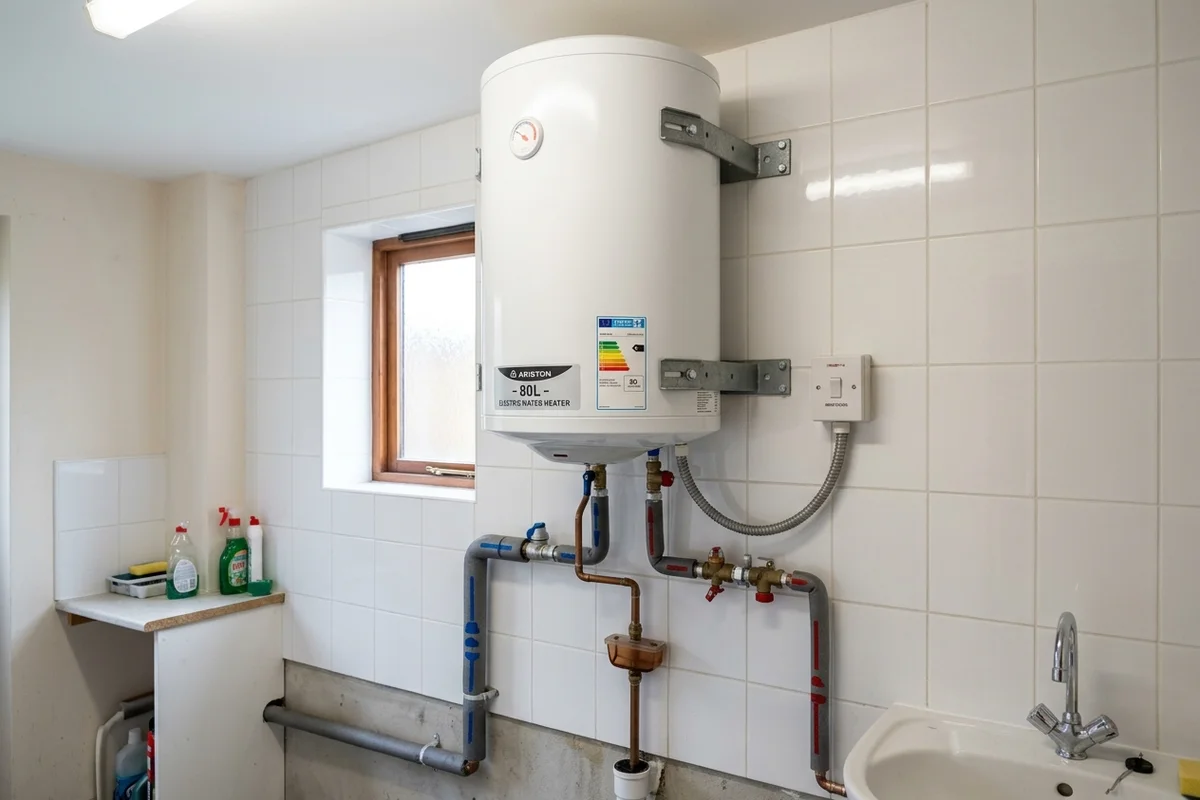
When a domestic electric water heater fails in Dubai, replacement is usually urgent. But once the plumber fits a new geyser, the old cylinder is often left sitting on the floor or balanced in a utility space. Removing an old water heater involves a physical challenge unlike any other appliance: before it moves an inch, tens of litres of trapped water must be drained to make the unit safe and light enough to transport.
Why a water heater is a draining job before it is a lifting job
An empty domestic water heater tank in Dubai weighs between 15 and 25 kg for a standard 50-litre or 80-litre unit. When full of water, that same unit weighs between 65 and 105 kg. Water weighs exactly one kilogram per litre, which means the water inside is three to four times heavier than the steel tank itself.
Attempting to unbolt or move a water heater before it has been completely emptied is dangerous. It risks tearing mounting brackets out of concrete walls, cracking ceiling tiles, or dumping rusty floodwater across bathrooms and living areas.
Where water heaters hide in Dubai homes
How accessible a water heater is depends almost entirely on the property layout and building design in Dubai.
Apartment false ceiling access hatches
In most Dubai apartment towers, electric storage water heaters are mounted horizontally or vertically above the false ceiling in the bathroom or hallway corridor. They are accessed through a square gypsum or aluminium trapdoor in the ceiling grid.
Working in this tight ceiling void requires a technician to disconnect the electrical feed, close the cold-water inlet valve, connect a hose to the drain cock, and guide the empty cylinder carefully through the narrow ceiling hatch without crushing the aluminium grid or puncturing gypsum boards.
Villa service cupboards and plant rooms
In villas and townhouses across communities such as Arabian Ranches, Jumeirah, and Springs, water heaters are typically larger (often 80 to 150 litres) and installed inside ground-floor utility cupboards, laundry rooms, or rooftop solar/electric plant enclosures.
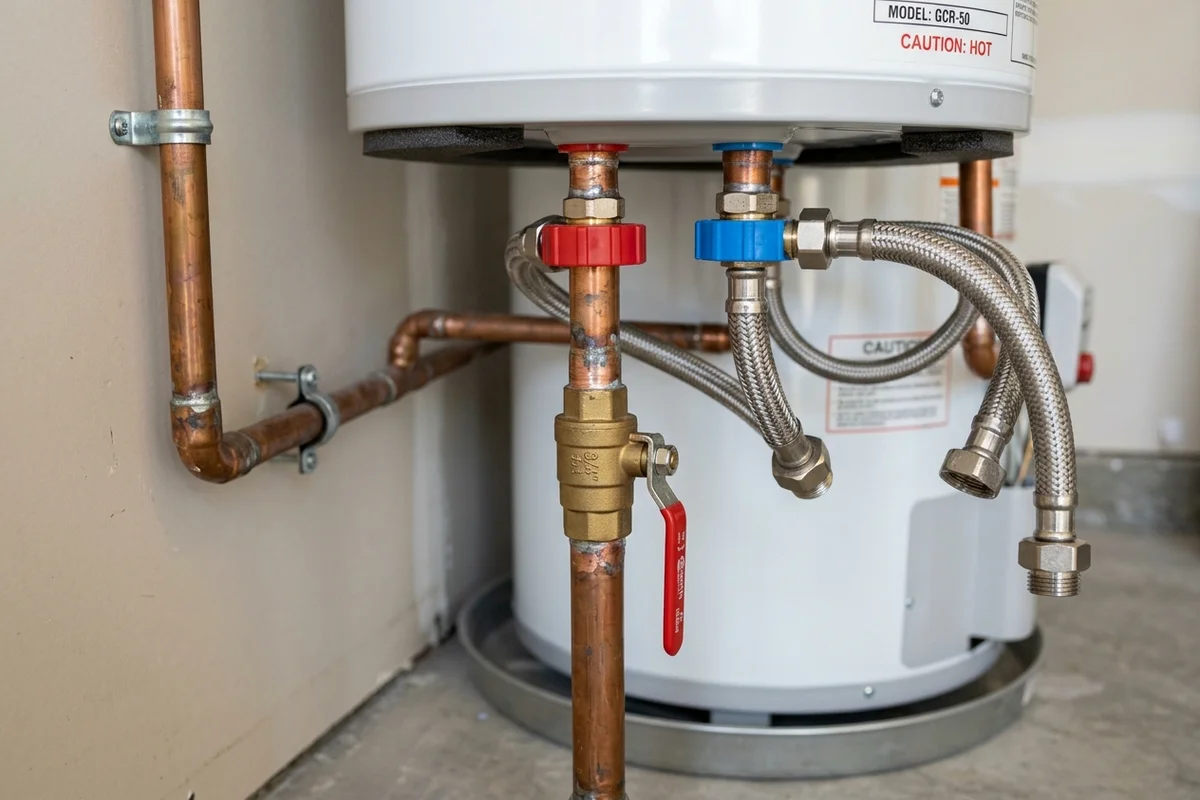
Floor-level and utility cupboard installations offer far easier physical access than ceiling hatches, but large capacity tanks still demand two-person lifting once unbolted from wall brackets.
Electrical isolation and draining the cylinder
Before any wrench touches a pipe, three critical safety steps must be completed in order:
- Switch off the water heater switch on the wall (often marked with a red indicator light) and turn off the dedicated breaker in the distribution panel.
- Turn off the cold-water inlet isolation valve located on the supply pipe entering the heater.
- Open hot water taps nearby to relieve line pressure, then open the heater drain valve or loosen the cold flexi-pipe connection to drain all water into a bucket or floor drain.
Wall brackets, heavy anchors, and lowering the tank
Water heaters in Dubai are mounted using heavy steel expansion anchor bolts drilled into concrete or solid blockwork. Because the tank was designed to carry heavy water weight, the mounting bracket holds the cylinder firmly against the wall.
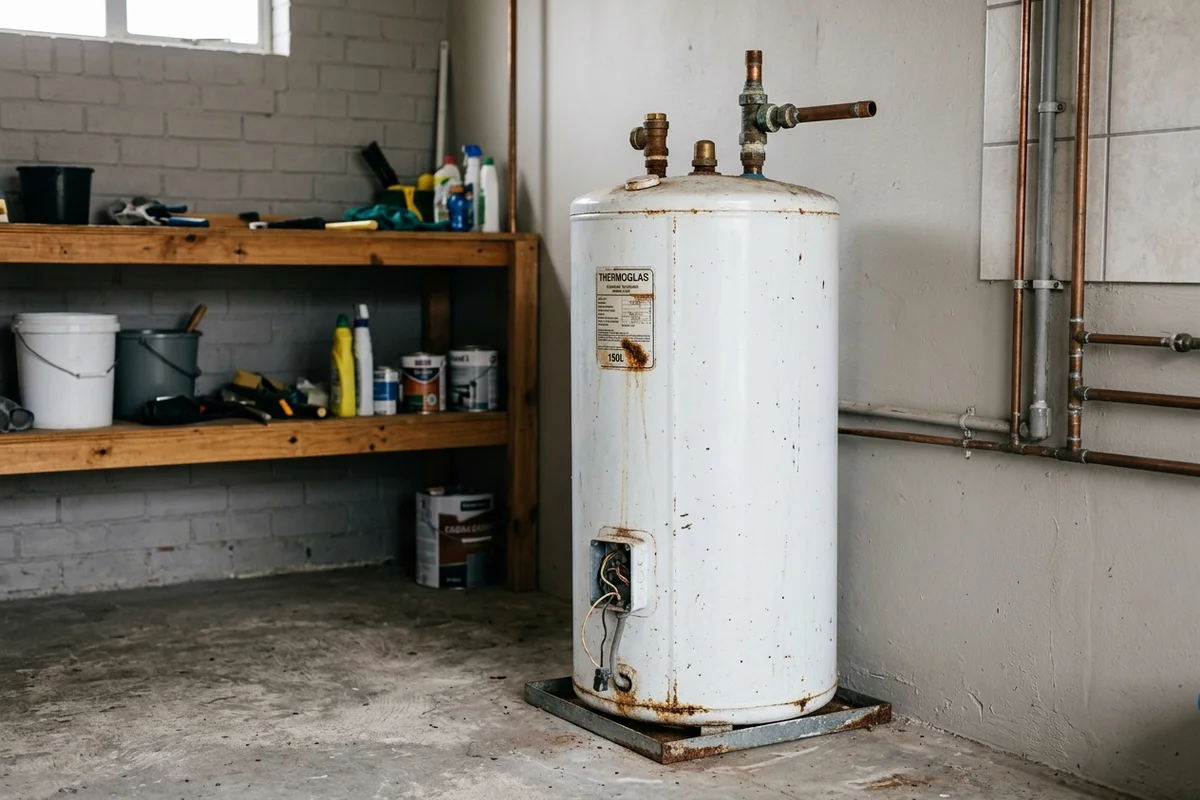
Once the plumbing flexi-hoses are disconnected and the tank is drained, the cylinder is lifted slightly upward to clear the bracket hooks, then brought down to floor level. Old corroded fittings may weep residual rusty water, so capping the inlet and outlet ports or wrapping the base in plastic protects carpets and tiled pathways during removal.
Where the steel cylinder and copper heating elements go
Old water heaters are prime candidates for high-grade scrap metal reclamation. A domestic water heater consists of an enamelled or stainless steel inner tank surrounded by polyurethane foam insulation and a painted steel outer casing.
Inside the tank, the immersion heating element contains high-value copper or incoloy alloy, and the pressure relief valves are made of solid brass. Certified recycling facilities separate the outer casing, strip the insulation, and melt the steel and copper back into raw industrial manufacturing streams.
Plumbers in Dubai frequently replace failed water heaters but leave the bulky old cylinder behind for the resident to dispose of. Booking a dedicated junk removal pickup ensures the drained cylinder is cleared from your corridor or garage without delay.