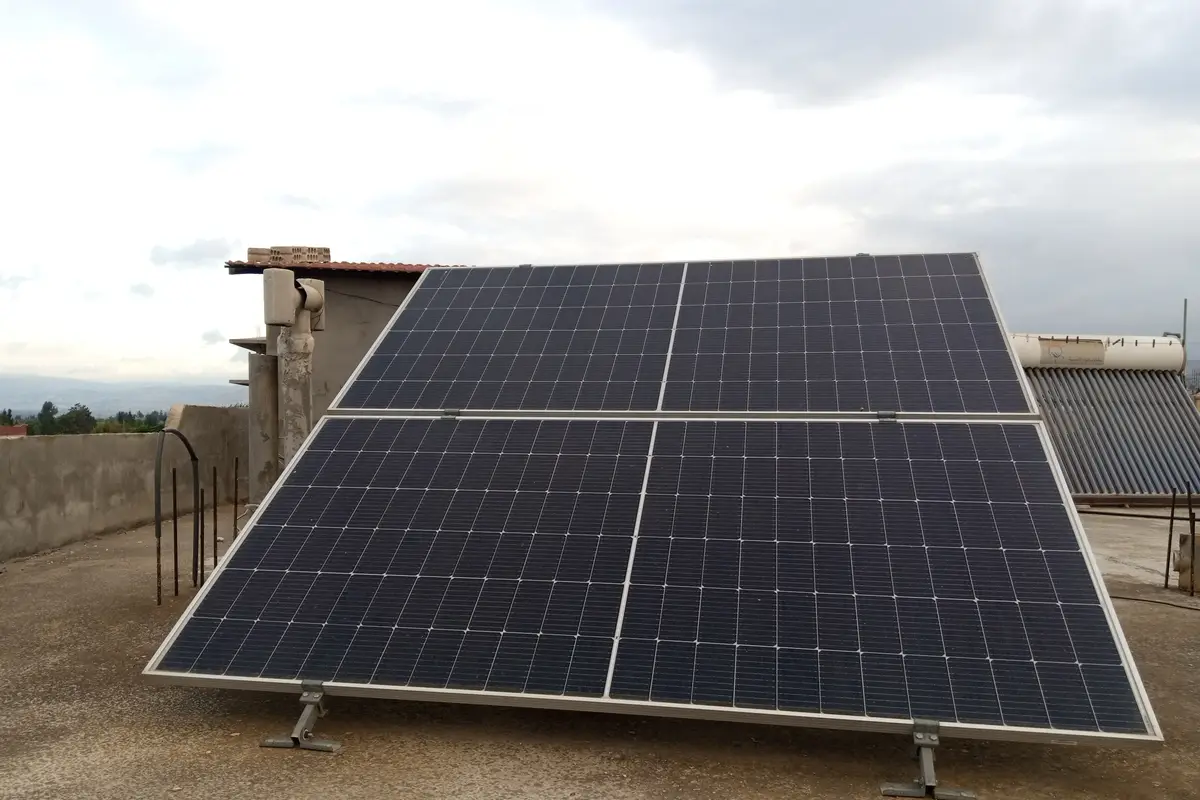
Solar equipment reaches the end of its life on a roof for ordinary reasons: a villa is being renovated, an array has been replaced with a larger one, a landlord is stripping a property back, or a set of panels has simply stopped producing what it used to. Whatever the trigger, the first useful thing to understand is that a solar setup is not one item being taken away. It is four, and the differences between them decide how the removal is arranged.
A solar setup comes down as four separate items
Whatever size the installation is, it separates into the same short list, and each part is treated as its own category once it is off the roof. Once it is down, the inverter and panels are booked as an e-waste collection in Dubai, not as general junk.
- The panels: sheets of glass laminate in an aluminium frame, with a small sealed junction box on the back of each one.
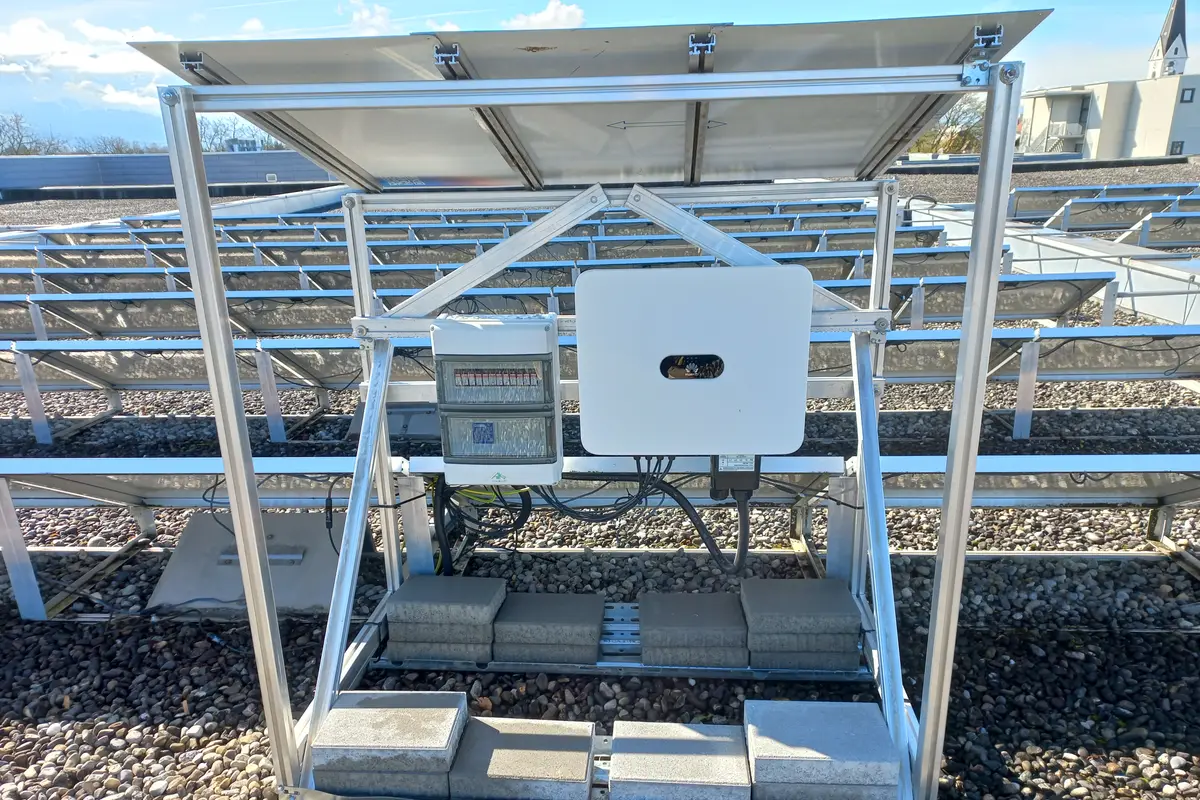
- The inverter: a wall-mounted or frame-mounted electrical box, along with its isolators and any monitoring unit. This is electrical waste in the ordinary sense.
- The mounting system: rails, clamps, feet and often concrete ballast blocks. Bulky, heavy, and almost entirely metal.
- The cabling: long DC runs between the panels and the inverter, usually in conduit, plus the AC side back to the board.
- A battery, on some systems: a lead-acid bank or a lithium unit, which changes how the whole collection has to be booked.
Only the panels are genuinely unfamiliar. The inverter behaves like any other piece of household electrical equipment, the frame is scrap metal, and the cabling is copper. The panels are the part that carries a rule most people have never been told.
Before anything is touched: has the system been made dead?
A solar panel produces voltage whenever daylight falls on it, connected or not. That is the single most important fact about removing one. Switching off a breaker stops power flowing to the building; it does not stop the panels generating, because the panels are the source rather than the load.
For that reason a collection crew does not disconnect an array. Isolating the system, disconnecting it from the property supply and confirming it is dead is electrical work, and it belongs to the installer or a qualified electrician before a removal date is set. Where the system was ever connected to the utility supply, the disconnection is arranged through whoever set that connection up in the first place.
Covering a panel with a sheet is not the same as switching it off either. It reduces output; it does not reliably remove it. Panels are handled as live components until they are separated from the system by someone equipped to confirm that they are not.
Who actually owns the array?
Anything wired into a property behaves like a fixture rather than like furniture, and solar is the clearest example of it. A tenant almost never owns a rooftop array on a villa, even one they arranged themselves, and the decision to remove it usually sits with the owner or the community rather than with the occupant.
- Developer or landlord installed: the array belongs to the property, and removal is the owner's decision and the owner's contractor.
- Tenant installed and hard-wired: still attached to the building's supply, so the question of whether it leaves or stays is agreed with the landlord, ideally in writing and well before the tenancy ends.
- Shared or community rooftop: the roof of an apartment building is common property, and nothing on it is removed on a resident's say-so.
- Genuinely portable equipment: a folding panel, a garden light or a battery power station is a possession like any other and can simply be handed over.
This is the same question that decides who deals with a water heater or a wall-mounted air conditioner, and it is worth settling before anyone quotes for the work. A crew arriving to take an array that the building did not agree to lose is a wasted visit for everybody.
The panels themselves
A panel is a rigid sheet of laminated glass held in an aluminium frame, and it is heavier and more awkward than it looks from the ground. A full-size one is a two-person carry, not because of its weight alone but because of its span. Panels travel on edge in a padded rack or stacked face to face with something soft between them, never laid flat on a rough roof surface where a single stone will do the damage.
A cracked panel is a different item. The glass is bonded to the laminate rather than free like a window pane, so it tends to craze and stay in place instead of falling apart, which makes it easy to underestimate. The edges are sharp, the sheet flexes where it should be rigid, and it still generates voltage in daylight. Say at booking that a panel is broken so it is loaded as glass rather than as a flat rigid item.
A panel that still works is worth passing on before it is worth scrapping, in the same way a working appliance is. One that is delaminated, water-stained inside the laminate or visibly burnt at the junction box is finished, and the honest answer is that it is now a materials question rather than a reuse one.
The inverter, the isolators and the cabling
The inverter is the most conventional part of the job. It is a sealed electrical box, it comes off its bracket once the circuits either side of it are dead, and from that point it is handled as electrical waste like a router, a printer or a control board. Its casing stays closed. Equipment of this kind holds a stored charge inside for a period after disconnection, which is the reason the do-not-open rule exists for sealed electrical units generally.
The isolators, the combiner box and any monitoring unit come away with it. The cabling is usually the tedious part rather than the difficult one: long DC runs clipped or run in conduit across a roof, which are worth pulling out as complete lengths and coiling rather than cutting into pieces. Copper in a clean bundle is a great deal more useful than copper in fragments threaded through plastic trunking.
A battery changes how the job is booked
If the system stores anything, say so when you book rather than when the vehicle arrives. Storage batteries fall into two broad groups and both are declared: sealed lead-acid banks, which are extremely heavy for their size and are usually the older arrangement, and lithium units, which are lighter but are handled under their own precautions.
Two things apply to either kind. A disconnected battery is still a live one, so terminals stay covered and nothing conductive is stacked on top of them. And a battery that is swollen, leaking, hot or physically damaged is no longer an ordinary item at all and should be described exactly as it is, before anyone plans to lift it.
The mounting frame is the part people forget
Once the panels are off the roof, what is left is usually the largest and heaviest thing in the job. Rails, clamps, end feet and cross-bracing add up quickly, and on a flat concrete roof the frame is often held down by concrete ballast blocks rather than by fixings, which means dozens of individual weights to carry down as well.
Where the frame was drilled and bolted instead, the holes it leaves are part of the roof's waterproofing rather than part of the collection. Making those good is a job for whoever removes the fixings, and it is worth agreeing who that is before the frame comes off. A collection crew takes the metal away; it does not reseal a roof.
Small solar without a roof
Most solar disposal in a Dubai home has nothing to do with a rooftop array. Garden path lights, portable folding panels, battery power stations and the small panels on parking meters and gate motors all reach the same end, and they are simply small electrical items with a cell inside. The cell is the part that matters at booking; the panel itself is trivial.
Solar water heating is the other common case, and it is worth separating clearly because it looks like solar electricity and is not. A thermal system is a rack of glass evacuated tubes or a flat collector feeding a tank, and it is a plumbing item with a large quantity of glass attached. It is drained before it is touched, the tubes are fragile enough to be handled individually, and there is no inverter and no electrical generation anywhere in it.
What to have ready when you book
A solar removal is quoted on access and quantity far more than on weight, so a short, accurate description saves a return visit.
- Confirm the system has been disconnected, and by whom. If it has not, that is the first booking to make, not the last.
- Count the panels and say roughly how big they are, and whether any are cracked.
- Say whether the frame is coming down too, and whether it is bolted or ballasted.
- Say whether there is a battery and what type, and describe its condition honestly.
- Describe how it gets to ground level: an internal staircase, an external roof stair, a service lift, or a hoist arranged separately.
- Ask what the operator can actually take, because what a given collection will accept from a rooftop system varies from one to another.
That last point is not a formality. Panels, frames and inverters are ordinary enough, but batteries in particular are the item most likely to need arranging separately, and the time to discover that is before a vehicle is on its way.
A solar installation is the rare household item where the thing you are thinking about is the smallest part of the work. The panels are what you look at; the frame is what fills the vehicle, the inverter is what needs the electrician, and the battery is what decides how the booking is made. Get the system properly dead first and the rest of it turns into a set of familiar problems.