Most of an old appliance is inert. The parts that are not are few in number, they sit in the same places in every machine, and none of them is a reason to be nervous about the fridge standing in your kitchen. What they are is a routing question — knowing which of your machines holds which component changes what you say when you arrange a collection, and almost nothing else.
What makes a component hazardous
A component is treated as hazardous when it holds something that must not be released into the air, the ground or an ordinary scrap load: a gas, an oil, a stored electrical charge, or a metal that contaminates everything it is mixed with. That is a handling classification. It is not a statement about how safe the machine is while it sits unplugged in your home.
It matters because these components decide the route. An appliance carrying one cannot travel in a general load, and whoever collects it needs to know before the vehicle is packed rather than after.
Where each one lives
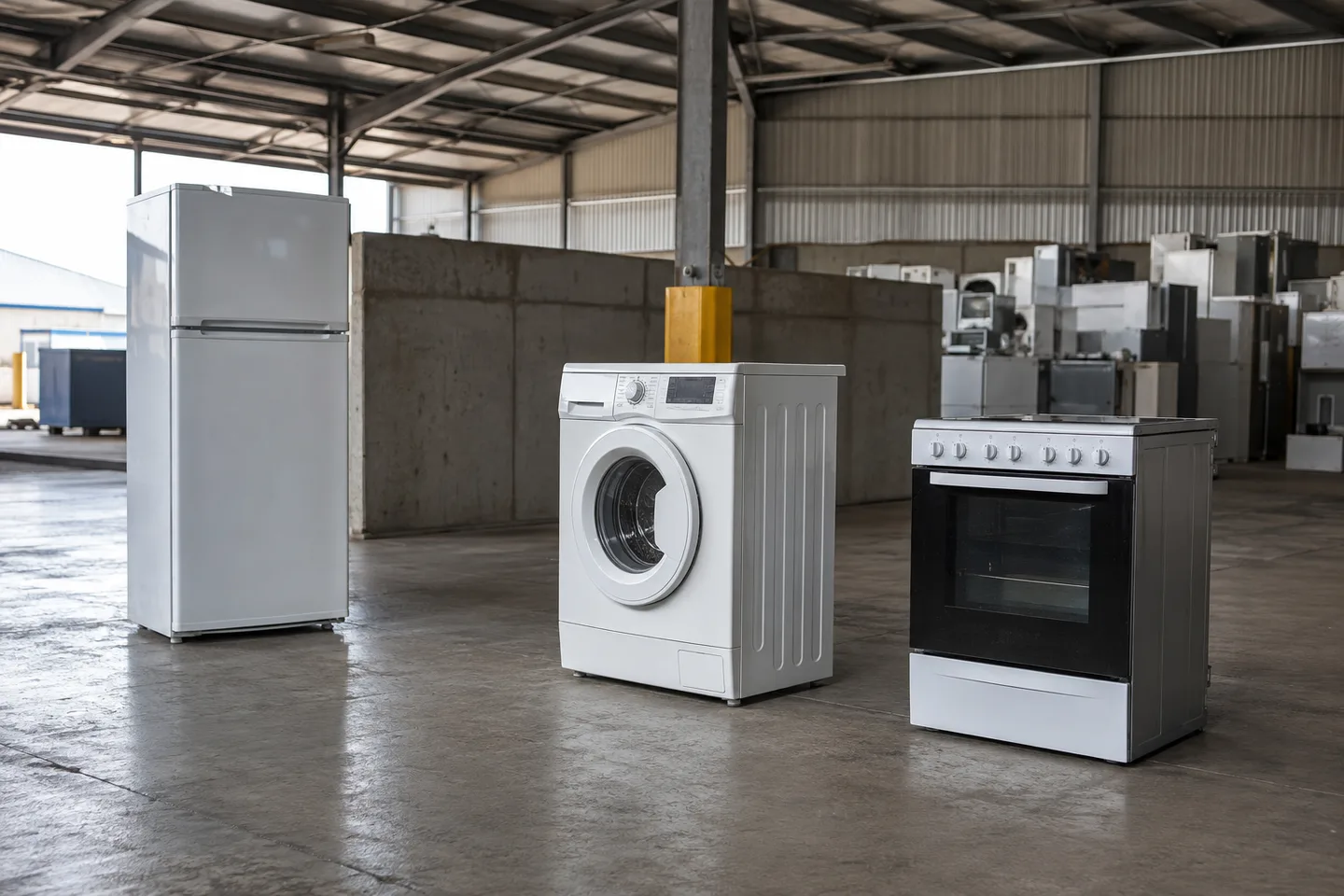
It is easier to hold this as a map of components than as a list of machines, because the same component turns up in appliances that otherwise have nothing in common.
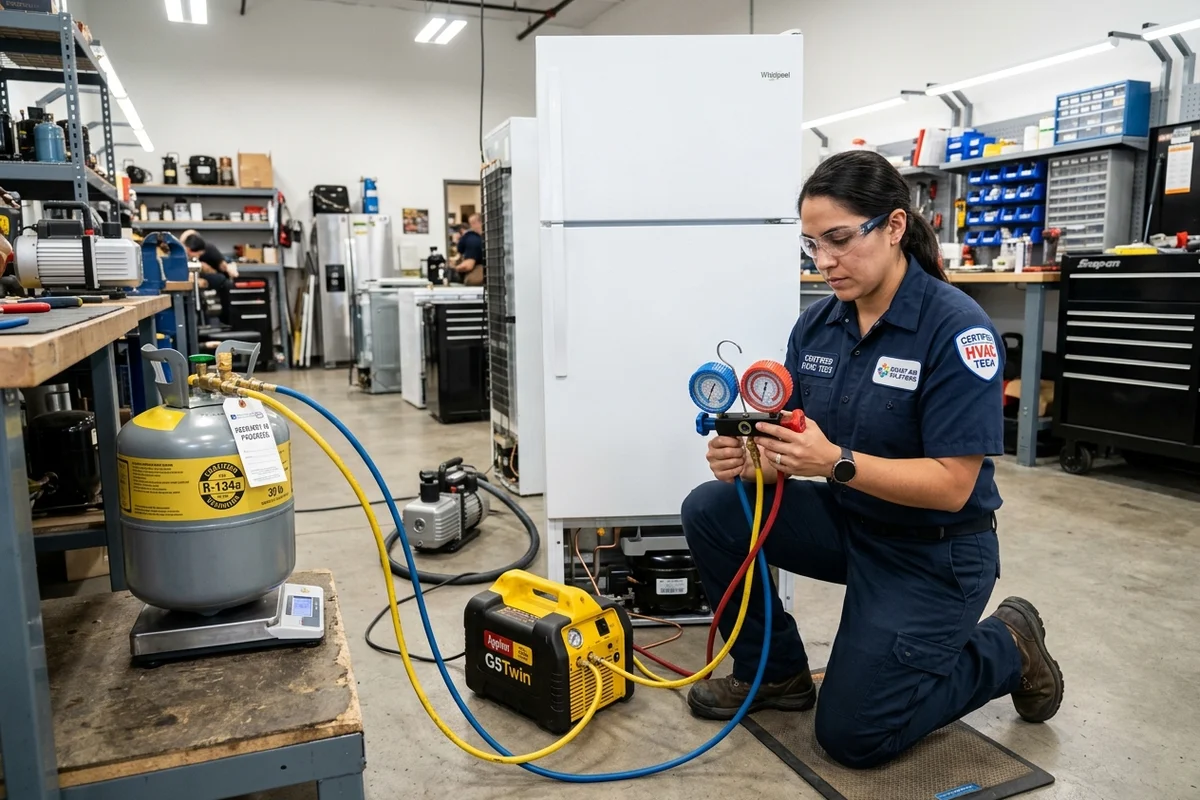
- Sealed refrigerant circuits: fridges, freezers, wine coolers, water dispensers, dehumidifiers and every kind of air conditioner. The circuit runs through the pipework and the sealed canister at the base or the back, and it has to be recovered by someone qualified before the metal around it goes anywhere.
- Compressor oil: inside that same sealed canister, mixed with the refrigerant. It leaves as part of the circuit rather than as a separate job.
- Insulating foam: the cabinet walls of fridges and freezers. Dealing with the circuit does not deal with the foam, which is why an emptied fridge cabinet is not simply steel.
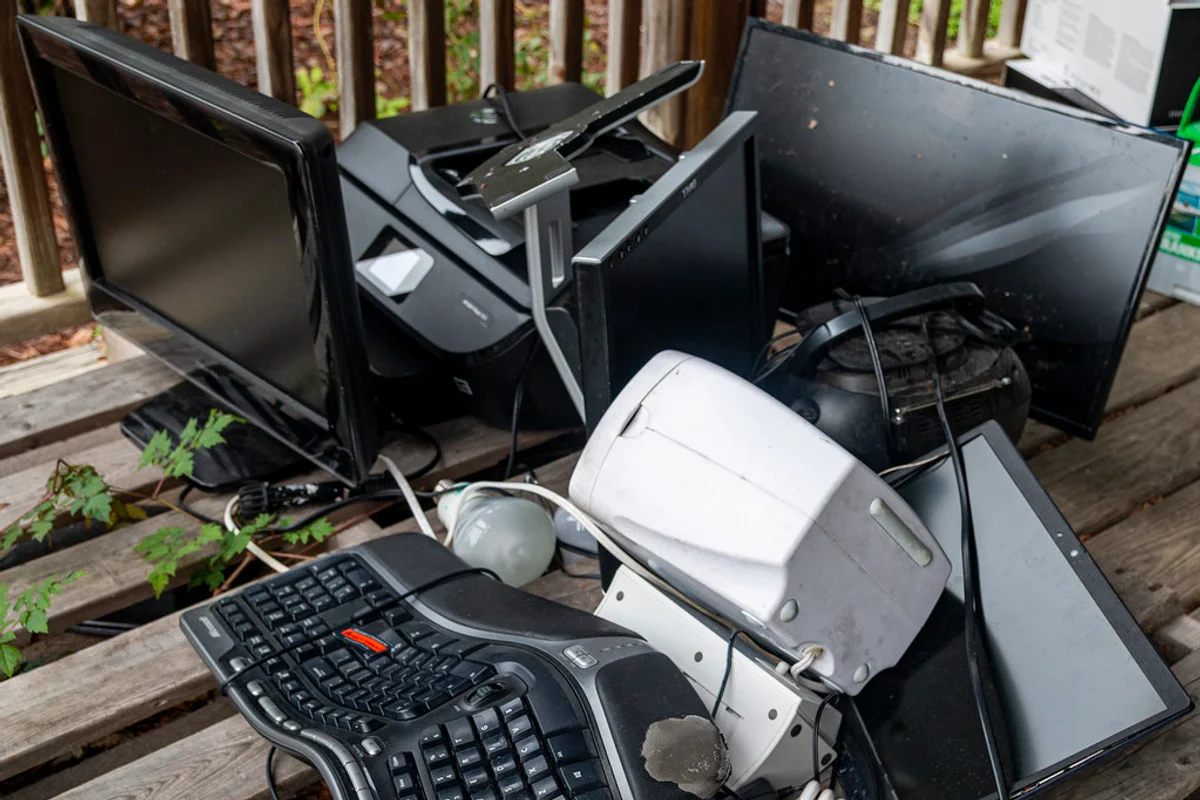
- Lithium cells: cordless vacuums, laptops, tablets, robot vacuums, cordless tools, electric shavers and toothbrushes, and anything else that charges rather than plugs in. On most modern products the cell is sealed inside the housing.
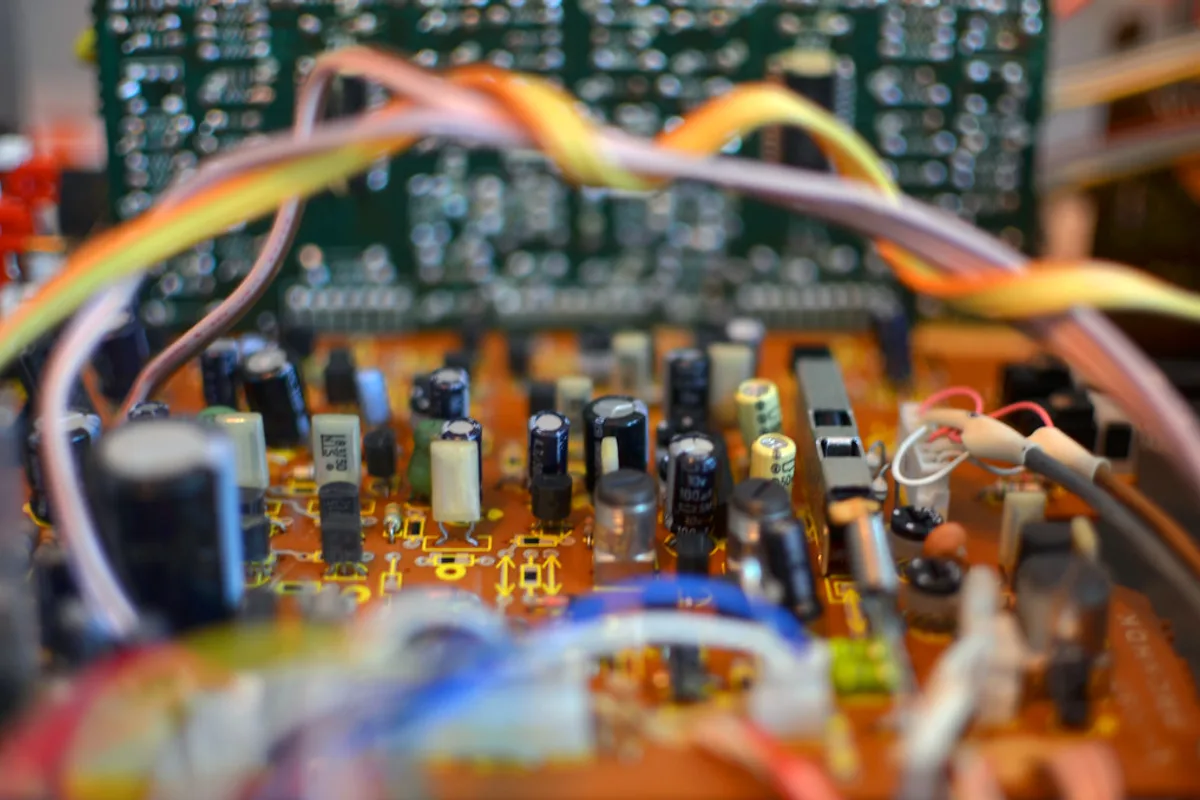
- Capacitors: a microwave carries a large one, and motor-driven appliances carry smaller start and run capacitors. They can hold a charge after the machine is unplugged, which is the whole reason casings stay closed.
- Toner and ink: printers and copiers, held in a cartridge that is designed to be removed by hand.
- Mercury in older lighting: the thin backlight tubes inside older flat panels, and older fluorescent fittings. Modern LED-backlit screens do not use them.
- Older tube televisions: here the glass itself is the issue, and a set like that is a job of its own rather than a component question.
Nothing on that list needs to be found, removed or verified by the person clearing the house. It is there so you can recognise which machines are in which category and say so.
What is not hazardous, even though it looks like it
The opposite half of the map gets published far less often, and it is just as useful.
- The steel shell, the drum, the frame and the hinges.
- The motor and its copper windings.
- The mains cable and plug, however old and however frayed the outer sleeve looks.
- Glass shelves, oven doors and hob surfaces — breakable, and worth taping, but not hazardous.
- Water left in a hose, a pump or a sump. That is a mess and a slip risk, not a chemical.
The distinction is worth keeping. Treating everything inside an old machine as dangerous ends up in the same place as treating none of it as dangerous: nobody is told anything useful, and the one component that genuinely changes the route gets lost in the noise.
Damage changes the category
An intact hazardous component is a routing question. A damaged one is a handling question, and those are the ones that need saying out loud rather than noted quietly.
- A battery that is swollen, unusually warm, leaking, or has taken a hard fall.
- A cooling appliance whose pipework has already been cut, which means the circuit is open and the machine is not in the state a treatment route expects.
- A capacitor that is visibly bulged or weeping, if that is apparent without opening anything.
- A cracked older flat panel, where the backlight tubes behind the screen may be broken.
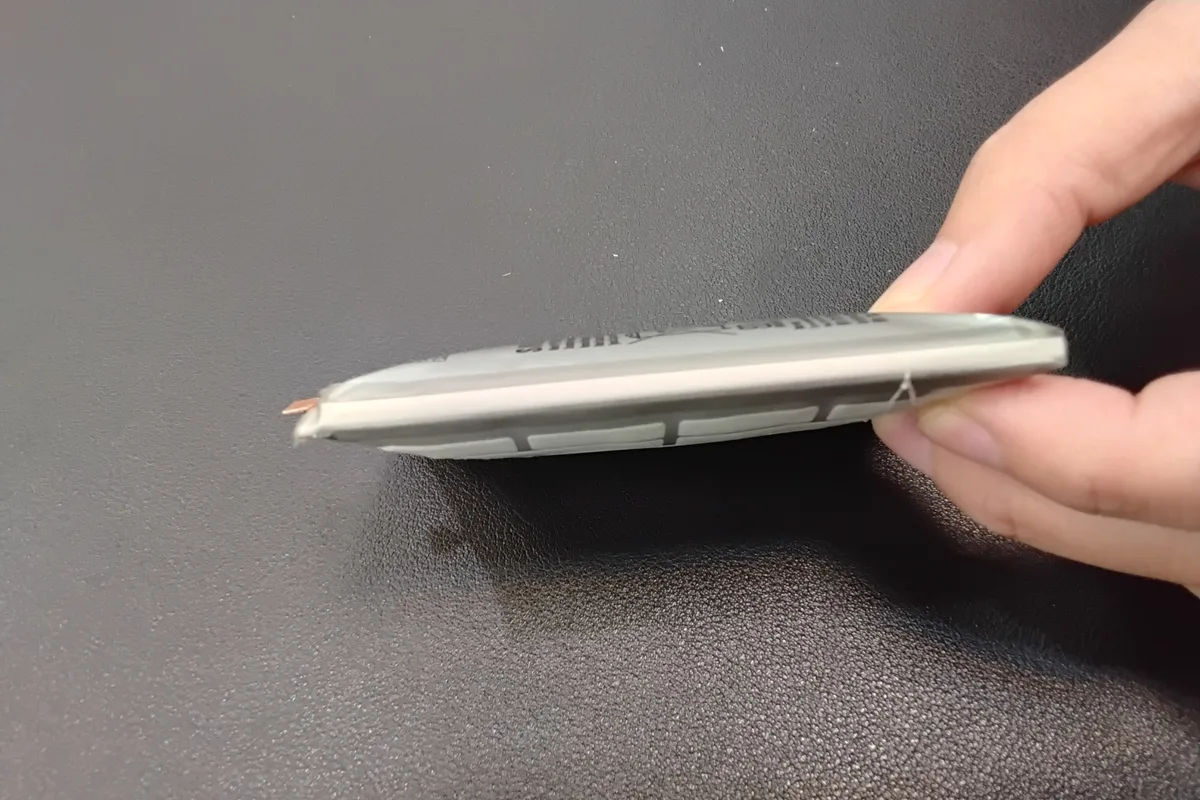
None of these needs repairing before collection. They need declaring, keeping away from anything flammable, and otherwise leaving completely alone.
What this actually changes for you
Five things, and they all happen at the point of booking rather than in the kitchen.
- Name the appliance rather than a category. A fridge and a small appliance produce two different answers about the vehicle and the route.
- Say whether the item runs on a battery, even when the battery is sealed inside it.
- Say whether a cooling appliance has ever had its pipes cut, or has been standing outdoors on a balcony or in a yard.
- Remove only what is designed to be removed by hand — a printer cartridge, a clip-out battery pack — and leave everything else exactly where it is.
- Do not open a casing to look for any of the components described here.
Why intact is the safe state
Every component on this map is safe inside the housing built to contain it. A sealed circuit holds its gas. A battery pack in its bay is better protected than the same pack loose in a box. A capacitor behind a screwed-down panel is doing exactly what the panel is for. The risks in appliance disposal come almost entirely from machines that were opened by someone without the equipment to finish the job, not from machines that were simply old.
So the practical version of everything above fits in one line: learn which of your machines is a cooling appliance and which one carries a battery, mention both when you book, and let the rest of the map stay closed. It exists to be described, not to be dismantled at home.