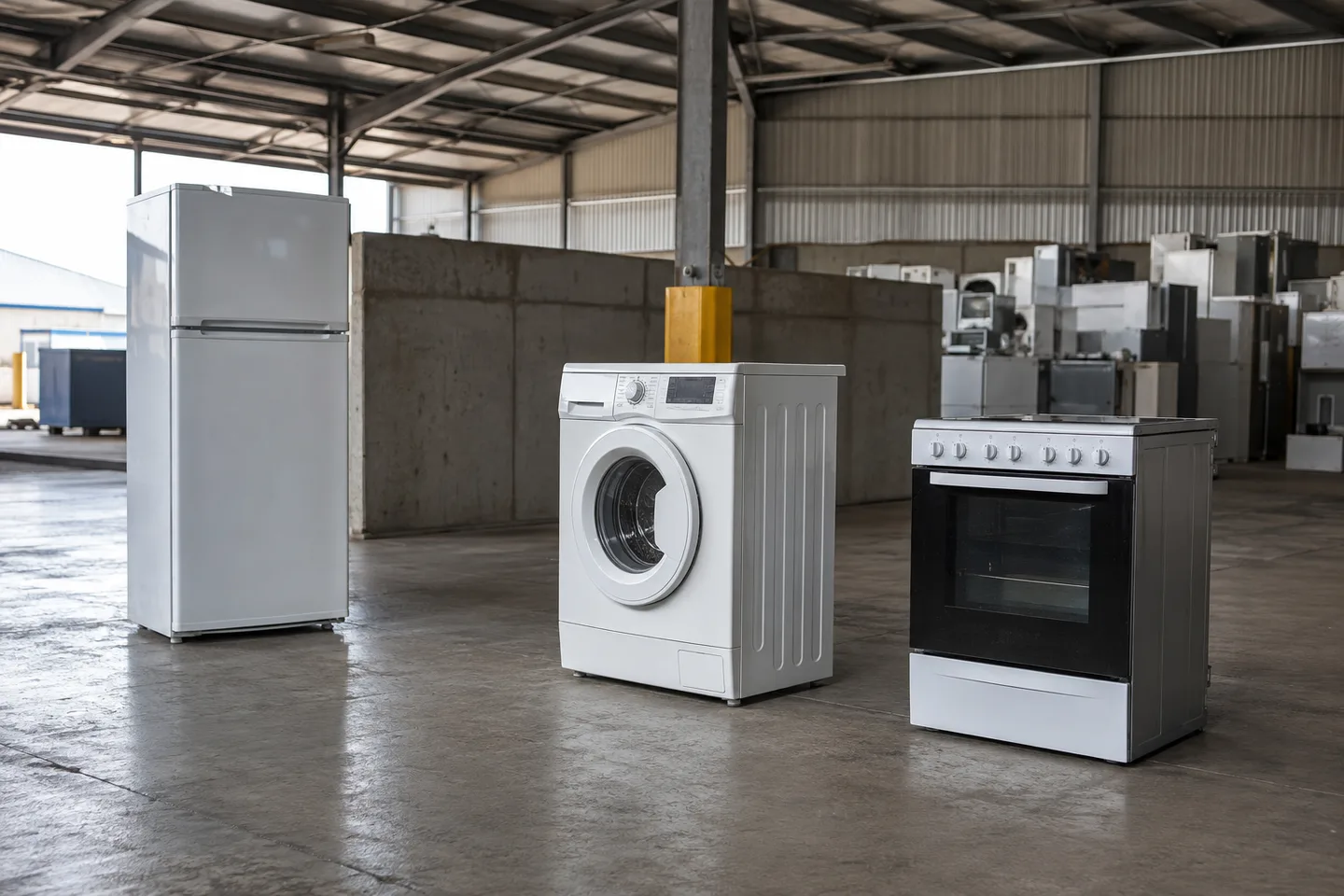
Appliance recycling starts with identifying the machine, not crushing it. Different equipment needs different treatment before usable materials can be separated: a refrigerator adds a sealed cooling system and insulated cabinet, while a washing machine presents a different mix of components. For a Dubai household booking collection, the useful question is whether the receiving route suits the appliance being removed.
What are the main stages of appliance recycling?
- Identify the equipment and assess whether there is a suitable reuse route.
- Separate appliances that need different treatment or specialist handling.
- Remove or treat relevant hazardous components using suitable equipment.
- Dismantle or mechanically separate the remaining material, according to the processing route.
- Send recovered materials onward and manage the fractions that cannot be recycled.
This is a general process, not a description of a particular Dubai plant or a promise that every collector performs these steps in-house. Equipment, accepted materials and downstream partners differ. An operator should be able to explain where its own work ends and the receiving processor’s work begins.
Why does sorting come before processing?
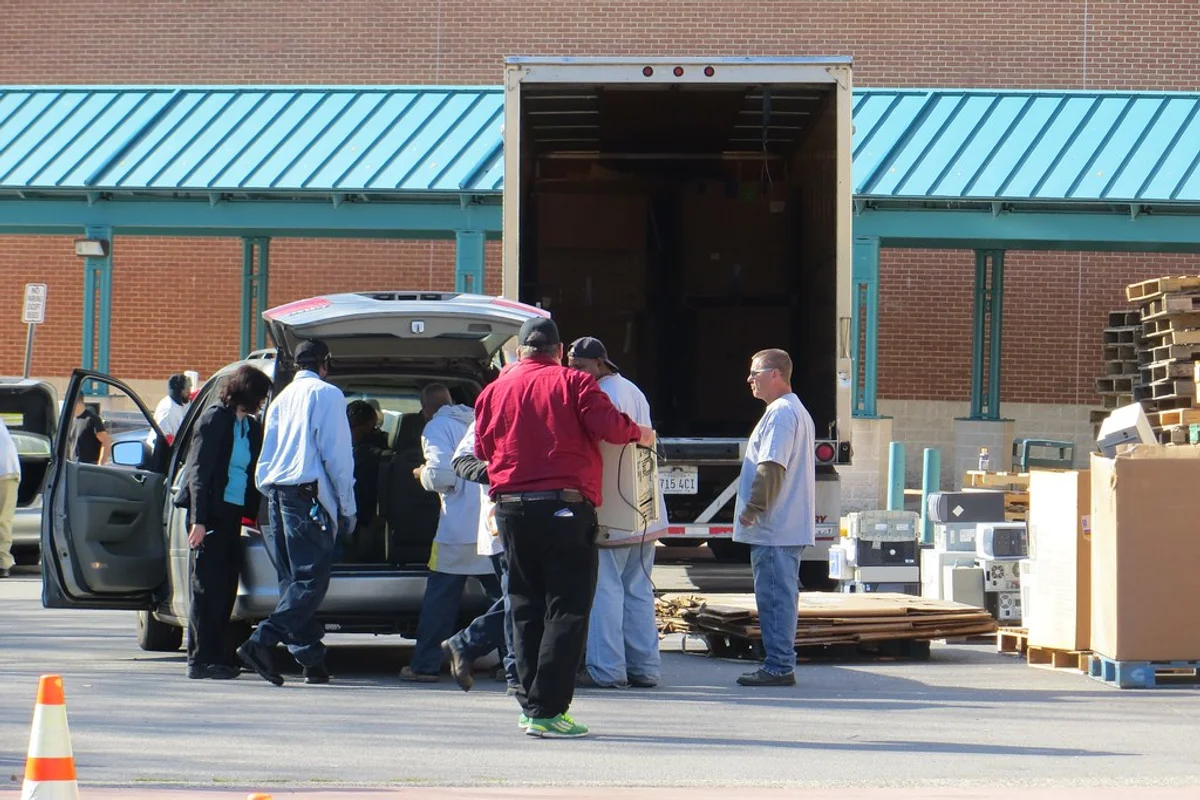
Sorting decides which treatment an appliance needs before anyone can recover its materials. A metal exterior is not enough to identify the contents: cooling equipment and ordinary electrical appliances can look similarly straightforward from the outside. Keeping an appliance identifiable helps the receiving team assign it to the appropriate route.
Reuse is a separate decision at this stage. A machine that looks clean still needs appropriate checks before someone treats it as working equipment. If you are offering a usable appliance, disclose known faults and missing parts; if you have already agreed recycling only, make that instruction clear before collection rather than relying on an assumption about condition.
Why do fridges need a different treatment route?
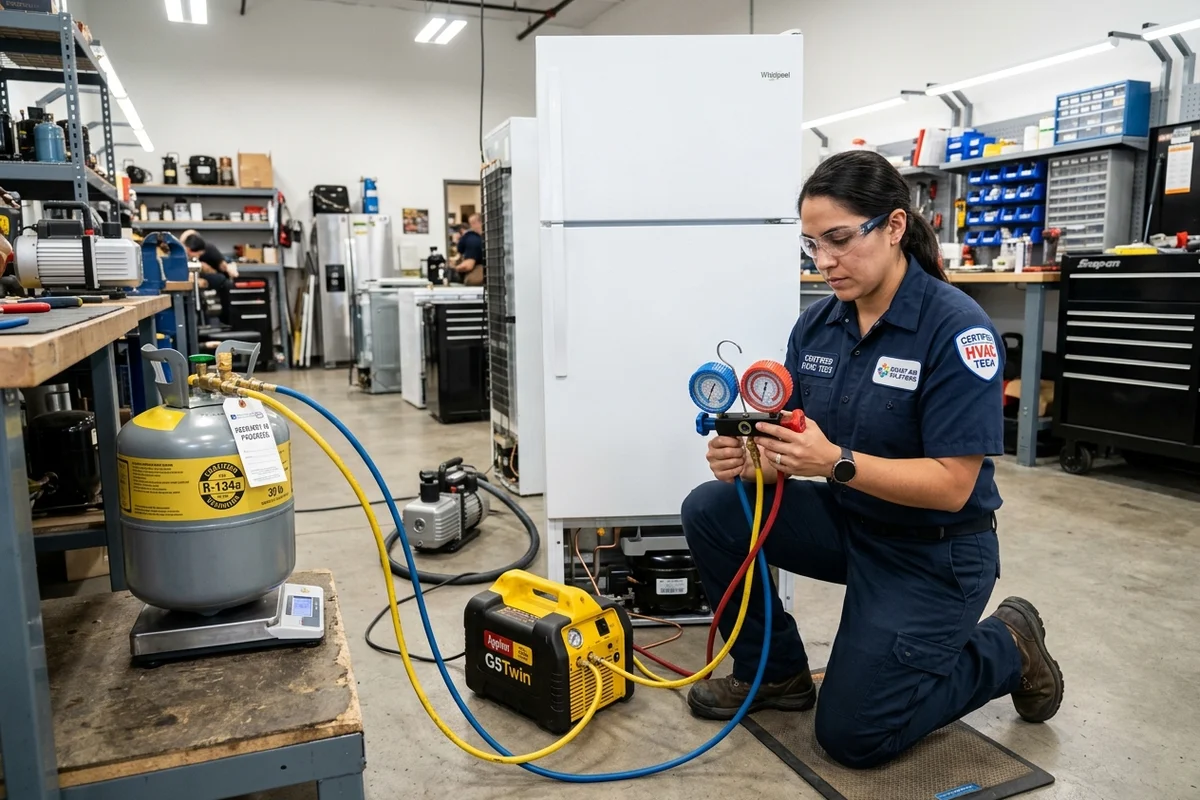
Cooling appliances can contain refrigerant in a sealed circuit and blowing agents in insulating foam. Recovering the refrigerant addresses the circuit; it does not by itself deal with the cabinet insulation. These are separate treatment tasks, which is why an emptied fridge cabinet should not automatically be treated as ordinary clean metal scrap.
The exact treatment depends on the equipment and its contents. Specialist processing is a facility-level task, not a reason for a householder to open pipework or strip cabinet panels. When describing an old fridge or freezer, say what it is and report visible damage; let the receiving operator establish the treatment route.
This distinction also helps with questions about small cooling appliances. Size alone does not tell you whether a product has a compressor, another cooling technology or no refrigerant circuit at all. Supply the model information when available instead of guessing from the shape of the cabinet.
Why remove components before separating materials?
Some components require separate handling before the remaining equipment can be processed. Depending on the appliance, these can include batteries, certain older switches or capacitors, and oils. Treatment begins with identification, rather than assuming every machine contains the same hazardous parts.
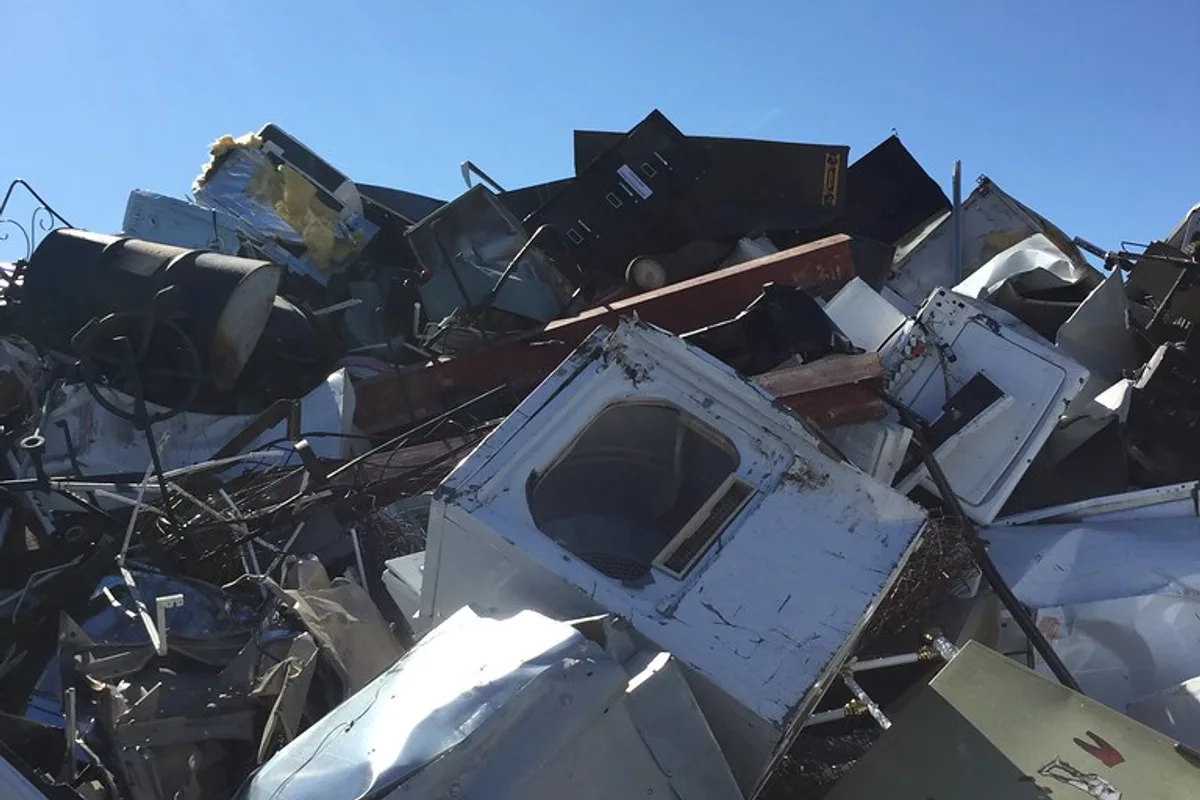
Dismantling and mechanical separation serve different purposes. Dismantling can isolate a component as a unit; later separation produces material fractions. This is why a photograph of a pile of crushed appliances tells you little about whether the necessary earlier treatment happened.
What makes a recovered material usable?
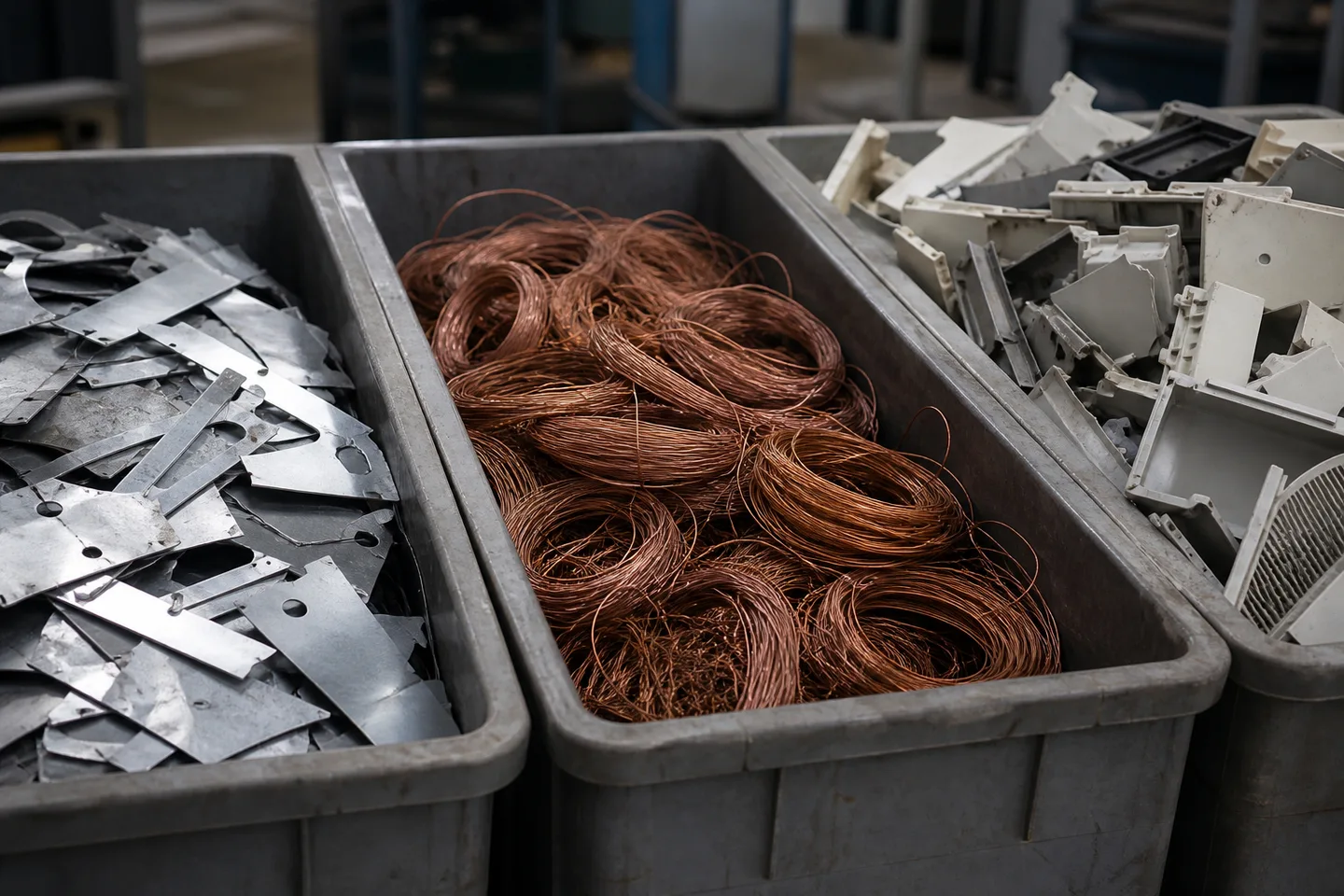
Material recovery produces fractions that need an appropriate next user. Steel, non-ferrous metals and plastics do not all have the same processing route, and a fraction may need further sorting or refining elsewhere. The collection vehicle is therefore only one part of a longer chain.
Keeping materials separate matters because the next processor accepts a particular feedstock, not simply anything called recyclable. Contamination and mixed materials can limit what can be recovered. A metal-rich appliance can still leave residues that need a different treatment or disposal route; avoid interpreting “recycled” as a guarantee that every gram becomes a new appliance.
How does the process differ between appliances?
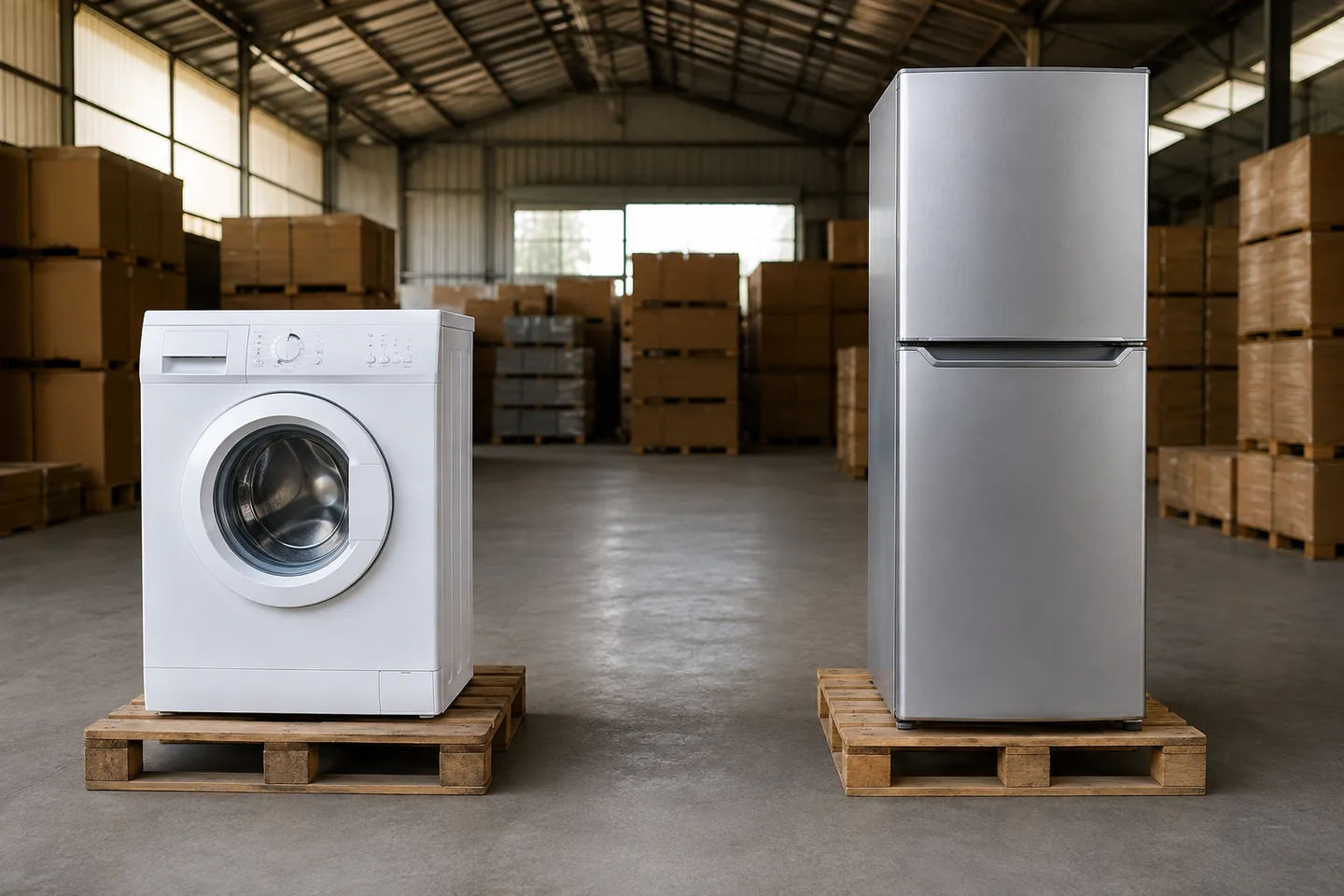
- A refrigerator needs its cooling-system and insulation issues considered as well as its recoverable cabinet materials.
- A washing machine has a different assembly of structural metal, motor, electronics and non-metal parts; its detailed material breakdown belongs to the washing-machine disposal guide.
- A small electronic appliance needs a route appropriate to its electronics and any battery, even when its size makes it easy to put in a carrier bag.
These differences explain why an operator may accept one appliance category and refer another elsewhere. A general willingness to collect metal is not an answer about treating cooling equipment. Give the item type before agreeing the visit, especially when a single Dubai apartment clear-out includes both large appliances and small gadgets.
Ask about treatment rather than a recycling percentage
Ask which appliance types the receiver accepts, whether it handles treatment itself or transfers equipment onward, and how cooling appliances are routed. If you need evidence for a landlord or business record, agree what can actually be provided before the pickup. Do not substitute a collection receipt for an explanation of the processing route.
The main distinction is the order: identify, route, treat, then recover materials. Choosing a collection route that can explain those steps is more useful than assuming all electrical goods follow one line. Keep the appliance identifiable and leave specialist treatment to the people and equipment intended for it.