Nobody books a collection for a sewing machine. What actually gets cleared is a corner of a spare room, a villa store room or a maid's room that has been holding a hobby for several years — and that corner contains three different kinds of thing at once. Sorting them before you call is what turns a vague job into a specific one.
A hobby clear-out is three jobs standing in one place
Split what you are looking at into three groups before anything else. Each one is handled differently, and mixing them is what makes these jobs harder to quote than they should be.
- The equipment: the sewing machine, the overlocker, the embroidery machine, the knitting machine, the airbrush compressor. Small electrical items, individually light.
- The furniture: the cabinet the machine sits in, the cutting table, the plastic drawer towers, the shelving. Bulky, and priced like furniture rather than like appliances.
- The materials: fabric, yarn, paper, paints, adhesives, offcuts and half-finished projects. Usually the largest volume in the room and the part that decides how the collection is arranged.
The sewing machine itself
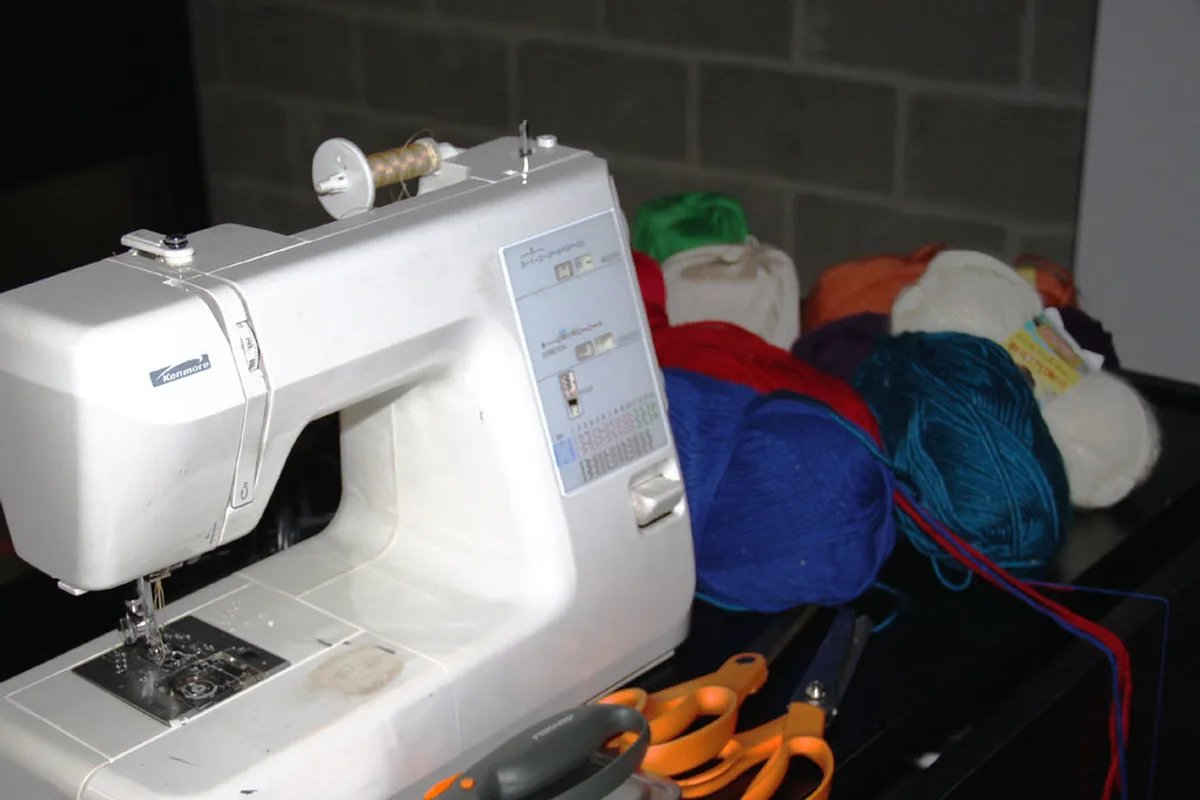
A domestic sewing machine is a small electrical appliance with an unusually good chance of being wanted by somebody else. It is compact, it is repairable, and unlike most old electronics it does not become obsolete — a machine from thirty years ago does the same job as a new one, and often does it with more metal in the casing.
Keep the set together. A machine without its foot pedal and power lead is unsellable and close to unusable, and the extension table, bobbin case, spare feet and manual belong in the same box rather than in a drawer somewhere else in the flat. Overlockers, embroidery machines and small knitting machines fall into exactly the same class and travel the same way.
Machines that still sew are a different item
The test is simple and takes two minutes. Does it run when the pedal is pressed, does the needle bar move freely, and does it hold thread tension through a short seam on a scrap of fabric? A machine that passes has an onward route as a working item. A machine that hums without moving, or has a seized handwheel, is electrical waste and should be described that way — passing on a machine that does not sew is not a favour to anyone, and charities have their own acceptance rules for working goods.
The cabinet is furniture, not part of the appliance
This is where these jobs get misquoted. A machine described over the phone as a sewing machine can turn out to be a machine set into a solid wood cabinet with drawers, a fold-out leaf and a cast iron treadle base underneath. That is a small desk, it takes two people, and it needs its own line on the request.
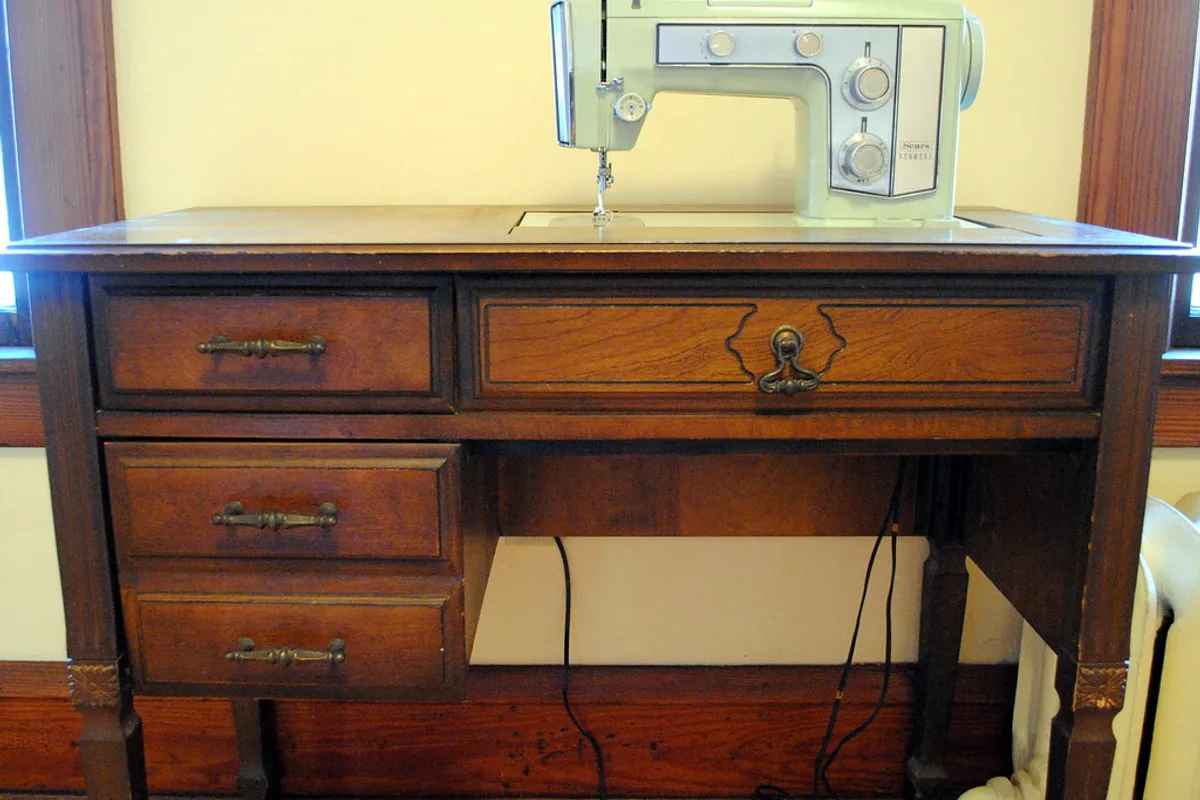
Measure the cabinet's width and depth and check it against the doorway and the lift, exactly as you would for a chest of drawers. Older treadle bases are cast iron and heavier than they look, and they usually unbolt from the timber top, which is worth knowing before anyone tries to carry the whole thing down a stairwell in one piece.
The rest of the room
Hobby rooms accumulate equipment that fits no obvious category, and it helps to name it rather than let it travel as miscellaneous.
- Looms, spinning wheels and floor-standing knitting frames: light but awkward, and generally better dismantled to their frame before they go.
- Cutting tables, self-healing mats and dress forms: furniture-sized, and a dress form on a cast base is heavier than expected.
- Easels, stretched canvases and portfolios: bulky, fragile, and easily damaged in a mixed load.
- Model-making and airbrush kit: a small compressor is an appliance, the spray booth is furniture, and the paints are neither.
- Pottery wheels and small kilns: a kiln is a wired installation rather than a plug-in appliance. Confirm who owns it and who is allowed to disconnect it before booking anything, the same way you would with a water heater.
The materials are what changes the booking
Most of a hobby clear-out by volume is materials, and while nearly all of it is ordinary household waste, a few categories are not and have to be named in advance.
- Fabric, yarn, thread and paper: light, bulky, and the most donatable thing in the room. Usable stock is worth offering to a craft group or a school before it is binned. Describe it in bags and boxes rather than in weight.
- Paints, varnishes, thinners, resins, hardeners and strong adhesives: these are chemical products rather than junk. Keep them in their original containers with the lids on, keep them upright in one box, and list them by type when you book.
- Aerosols, including spray paint and adhesive spray: pressurised, so they stay separate and are never crushed or punctured.
- Batteries and cordless tools: rotary cutters, glue guns and hand tools with rechargeable packs go with the electrical items, not with the craft supplies.
- Sharps: needles, pins, rotary blades, craft knives and broken glass. Put them in a rigid container, tape it shut and label it, so nobody finds them by hand.
What a given collection can take from the chemical group varies by operator, so the honest approach is to say what you have and get the answer back before the vehicle is on its way. A box of small acrylic tubes is a different conversation from four half-full tins of solvent-based varnish, and both are easier to resolve on the phone than at the door.
Before you book
- Separate anything still usable — a working machine, unopened materials, good fabric — and decide where it is going before the rest is packed.
- Box the small material so it travels as counted boxes rather than as loose armfuls.
- Measure the cabinet, the cutting table and anything else that will not fit through a door upright.
- Gather the chemicals into one box and write down what types they are.
- Count the boxes. A number is the single most useful thing you can give when you describe the job.
Then describe it in those three groups. “One working sewing machine, a cabinet about a metre wide, roughly twelve boxes of fabric and a box of craft paints” is a job anyone can quote and load correctly. “A sewing room” is not, and the difference usually shows up as a second trip.
In a tower, book the service lift for the cabinet rather than for the boxes, because the cabinet is the only part with a real chance of not fitting. In a villa the constraint is almost always the opposite one — the equipment goes out easily and the volume of accumulated material is what takes the time.
A craft corner has a way of surviving several moves because none of it is individually difficult to keep. Sorted into equipment, furniture and materials, it stops being one immovable heap and becomes three short decisions, and the machine at the centre of it is usually the one item somebody else still wants.