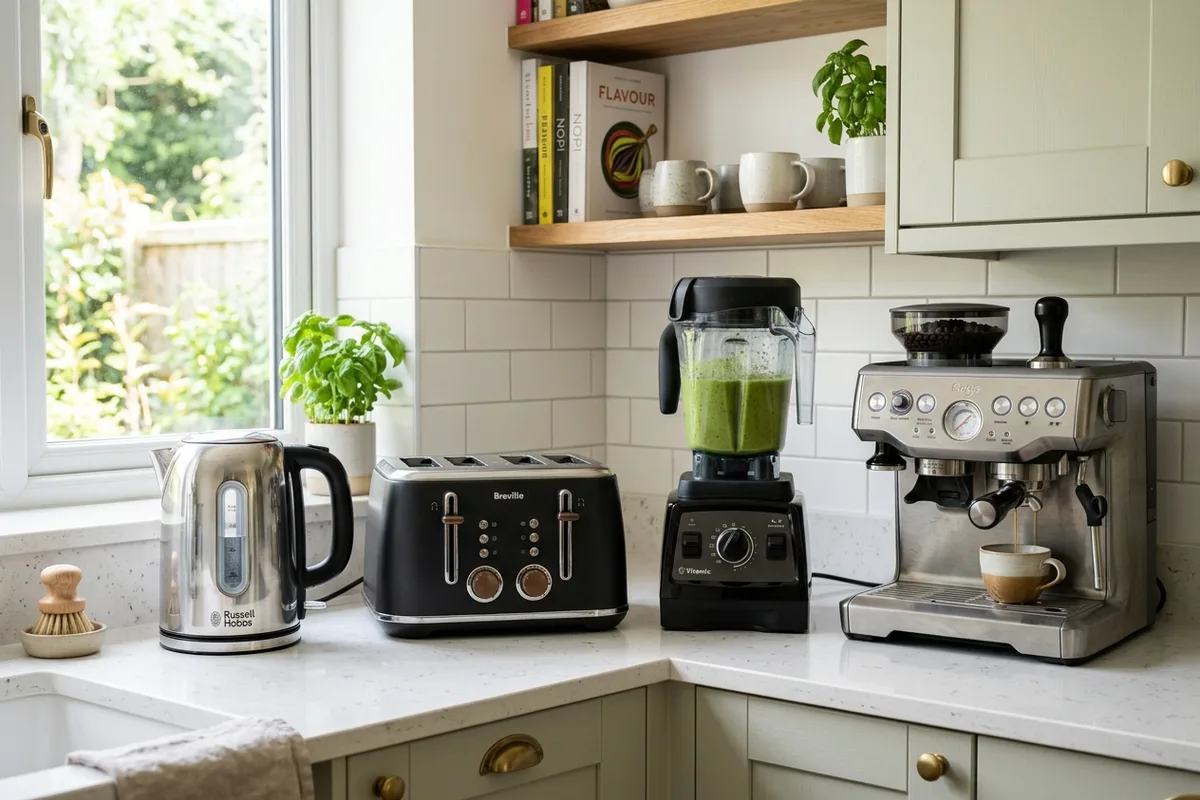
A broken toaster, a calcified electric kettle, an old blender with a cracked jug, or a retired espresso capsule maker rarely command the urgency of a broken refrigerator or a failed washing machine. Because countertop gadgets and personal electrical items are compact and lightweight, they frequently accumulate over years in pantry corners, under-sink cupboards, utility shelves, and balcony storage chests. Small appliance disposal in Dubai requires understanding why individual single-gadget collections are economically and environmentally impractical, how grouping creates workable logistics, and how mixed metals and engineering polymers are processed through certified electronic waste recycling streams.
Why single small appliances present collection hurdles
Dispatching a two-person professional removal crew and a dedicated transport truck across Dubai for a single sandwich press, steam iron, or hand mixer is neither financially viable nor environmentally sound. The logistical overhead of transport, fuel consumption, driver scheduling, and building security gate clearance far outweighs the material recovery value of a lone one-to-two-kilogram device. Consequently, standalone collection bookings for solitary countertop gadgets are rarely practical on their own.
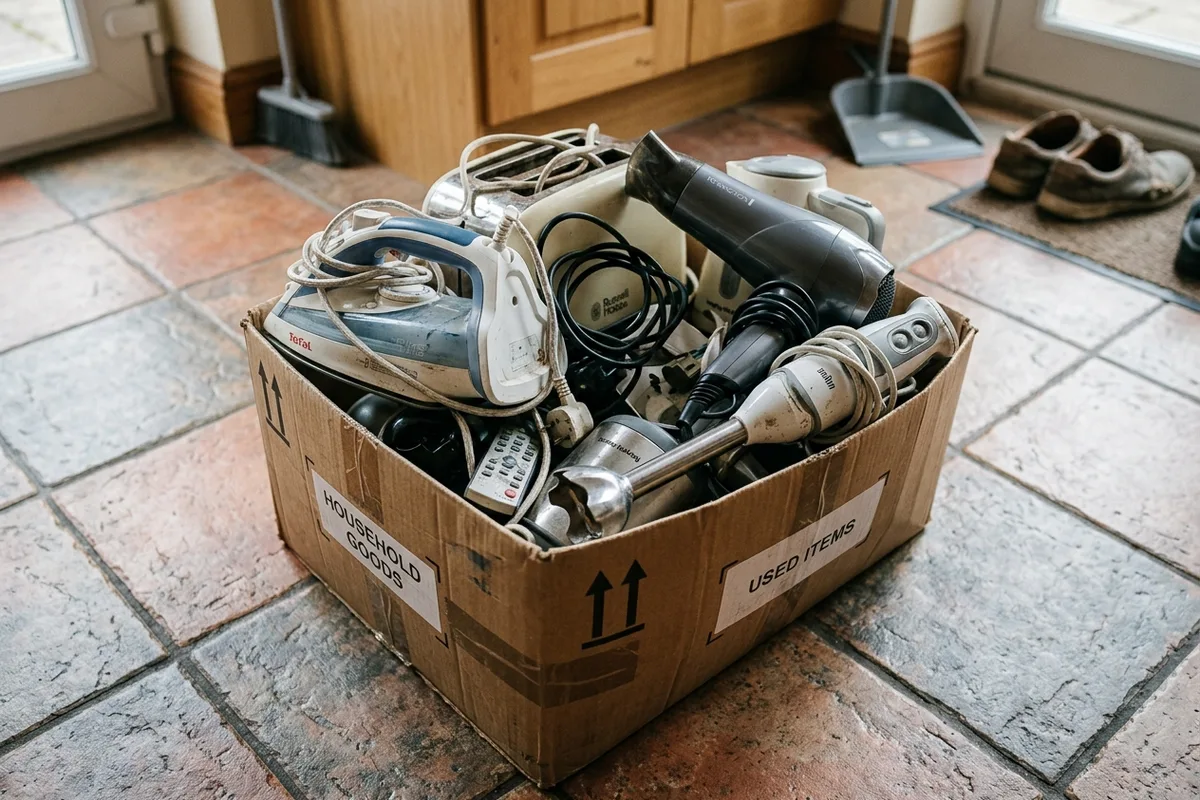
Instead, the standard operational approach for domestic small appliance disposal relies on consolidation. Residents typically gather several retired domestic electronics together into a single carton or add them as supplementary items to an upcoming scheduled collection for bulky furniture, retired white goods, office IT equipment, or a broader residential move-out clearout.
What counts as small domestic appliance e-waste
Small domestic electrical waste (often categorized internationally as small WEEE) covers an extensive range of kitchen prep gadgets, cooking accessories, personal grooming tools, and general home maintenance equipment. Common domestic items that qualify for specialized electronic waste processing include:
- Food preparation and blending: benchtop blenders, multi-blade food processors, electric hand mixers, citrus juicers, meat grinders, and immersion blending wands.
- Countertop cooking and heating: multi-slice toasters, electric kettles, sandwich and panini presses, waffle irons, electric rice cookers, slow cookers, and tabletop electric grills.
- Coffee and beverage machines: manual espresso machines, pod and capsule brewers, filter coffee makers, milk steamers, and electric samovars.
- Personal grooming and styling: high-wattage hair dryers, ceramic curling irons, straighteners, electric shavers, beard trimmers, and motorized facial cleansing brushes.
- Household cleaning and fabric care: steam irons, garment steamers, compact handheld vacuums, rechargeable window squeegees, and digital kitchen and bathroom scales.
Material separation: heating elements, motors, and plastics
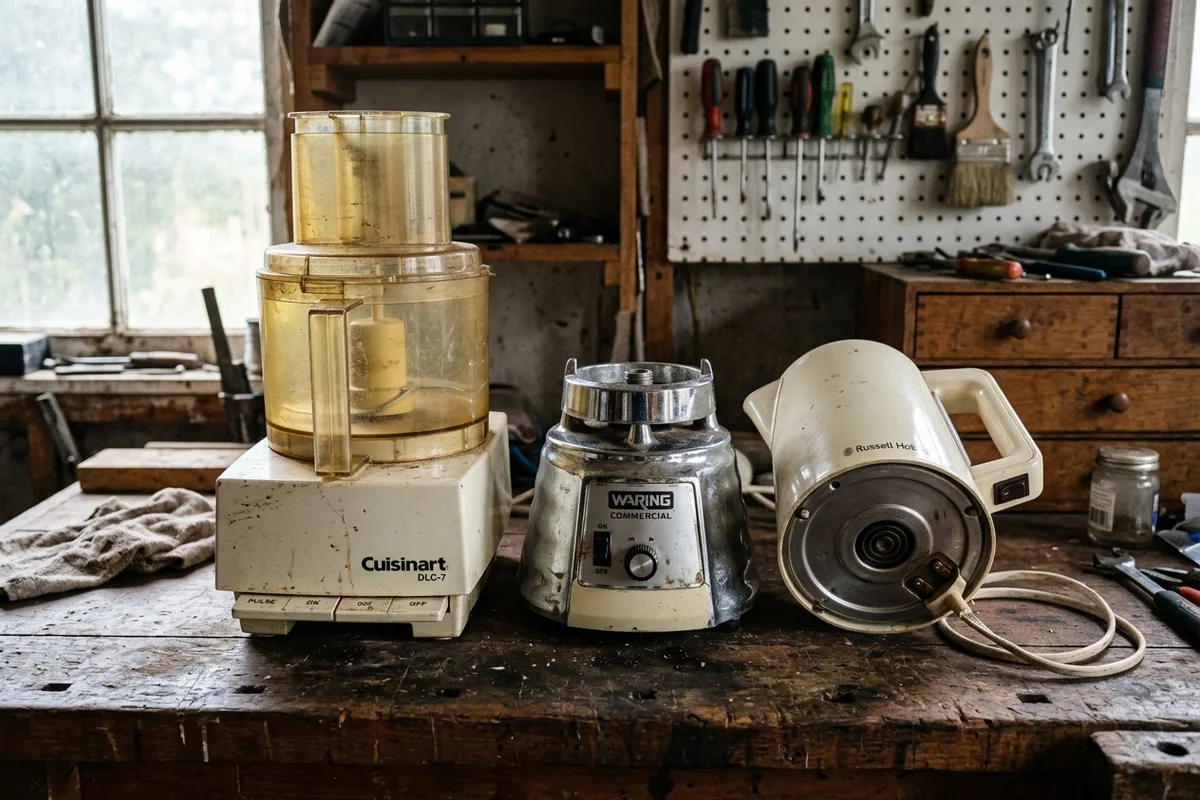
Unlike simple single-polymer plastic household containers, small electrical appliances represent intricate multi-material assemblies engineered to withstand intense heat, vibration, and mechanical torque. Inside certified electronic waste recovery facilities across the UAE, these composite devices are manually depolluted and mechanically granulated into distinct commodity fractions:
- Electric motors and copper windings: High-speed universal motors found in blenders, food processors, and vacuum turbines contain dense copper armature windings. These are separated from ferrous steel laminations and baled as premium non-ferrous scrap for industrial smelting.
- Heating elements and thermal blocks: Nichrome (nickel-chromium) resistance wire, stainless steel kettle heating plates, cast aluminium iron soleplates, and quartz toaster tubes are isolated for metallurgical processing.
- Structural and flame-retardant polymers: Outer casings made of polycarbonate (PC), polypropylene (PP), and acrylonitrile butadiene styrene (ABS) are separated from internal fasteners, shredded into clean regrind pellets, and re-compounded for industrial manufacturing.
- Printed circuit boards and power cords: Digital temperature controllers, timer modules, and copper-cored PVC power cords are recovered for secondary copper extraction and circuit board precious metal refining.
How to prepare countertop electronics for collection
Proper resident preparation ensures sanitary handling, prevents fluid leaks on carpets or vehicle cargo beds, and protects collection crew members from sharp exposed blades or broken glass. Before handing over small appliances for collection, follow this standard preparation protocol:
- Drain internal liquid reservoirs: Pour out remaining water from electric kettles, steam iron water chambers, espresso machine boiler tanks, and garment steamer bases to eliminate messy leaks during transit.
- Clean out residual food matter: Empty toaster bottom crumb trays, rinse out blender jars, remove spent coffee pods and ground cakes, and discard sticky food residue to prevent foul odors and pest attraction during storage.
- Secure electrical cables: Wrap power cords neatly around the appliance body or secure them with rubber bands, twist ties, or masking tape to eliminate loose trailing cords that create tripping hazards.
- Pack loose attachments securely: Place detachable chopping blades, whisks, measuring scoops, portafilters, and power adapters into a small taped cardboard box or sealed bag alongside the main appliance unit.
Why small appliances must avoid domestic refuse bins
Tossing broken kettles, irons, or blenders into municipal green street dumpsters, community wheelie bins, or apartment garbage chutes violates Dubai environmental and municipal waste guidelines. When mixed into general municipal solid waste, domestic compactors crush the plastic shells, exposing internal electrical circuitry, lithium coin cells on smart timers, and heavy metal components to landfill moisture and organic decay.
Securing a dedicated collection or dropping small electronics off at authorized community e-waste collection bins guarantees that copper, nickel, aluminium, and engineering polymers are completely reclaimed, supporting UAE circular economy targets and keeping hazardous materials out of landfills.