A microwave is one of the simplest kitchen appliances to get rid of — provided it is a countertop model. Unplug it, carry it to the door, and it leaves in one trip. But not every microwave in a Dubai kitchen is a countertop unit. Built-in microwaves — the kind mounted above the oven or recessed into a cabinet run — are bolted, screwed, and wired into the kitchen in a way that makes them closer to a small appliance removal than a simple carry-out.
Countertop Microwaves: The Simple Case
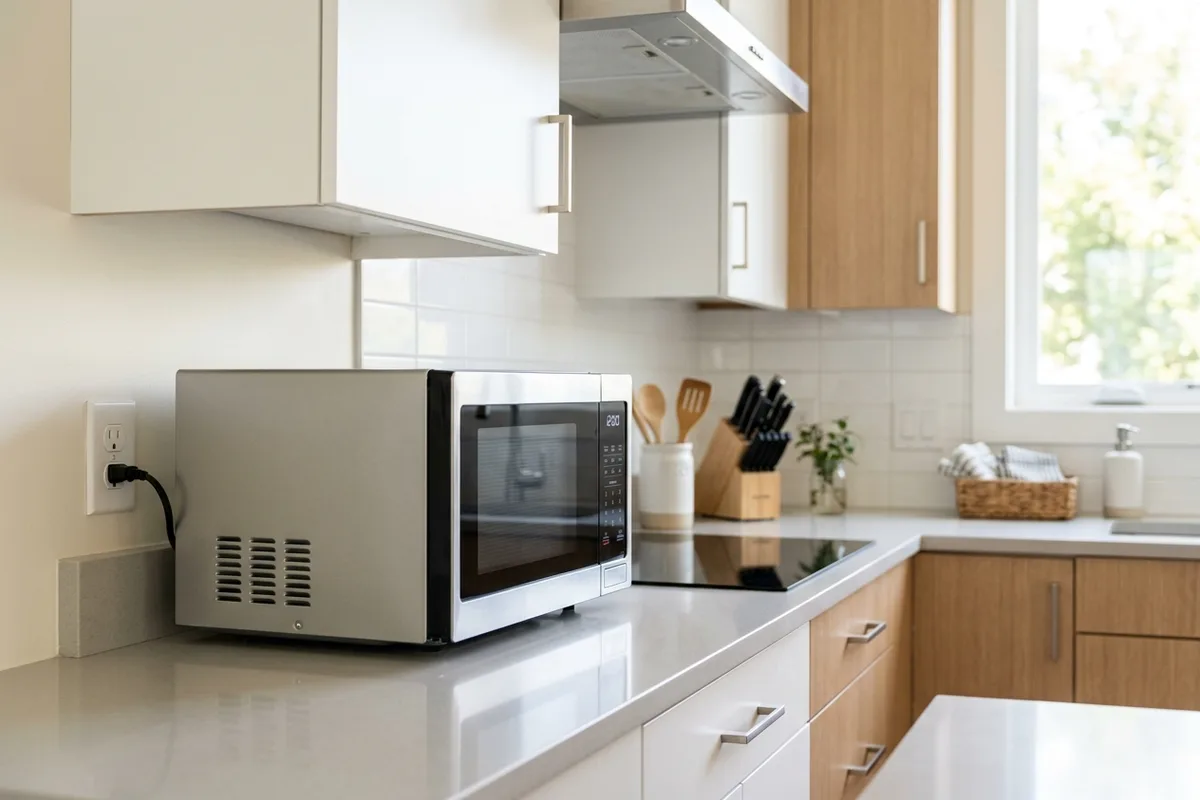
A standard countertop microwave weighs between 10 kg and 15 kg, sits on the counter surface, and connects to a standard 13A socket. Disposal is as straightforward as carrying it to the front door. The only preparation needed is to clean the interior (dried food residue attracts pests if the unit sits in a bin area) and to tape the door shut so it does not swing open during the carry.
If the microwave is the only item being collected, it is worth knowing that most removal services have a minimum-load policy. A single countertop microwave is well below that minimum. It often makes more practical sense to bundle it with other small appliances — a kettle, a toaster, an air fryer — that are leaving the kitchen at the same time.
Built-In Microwaves: A More Involved Job
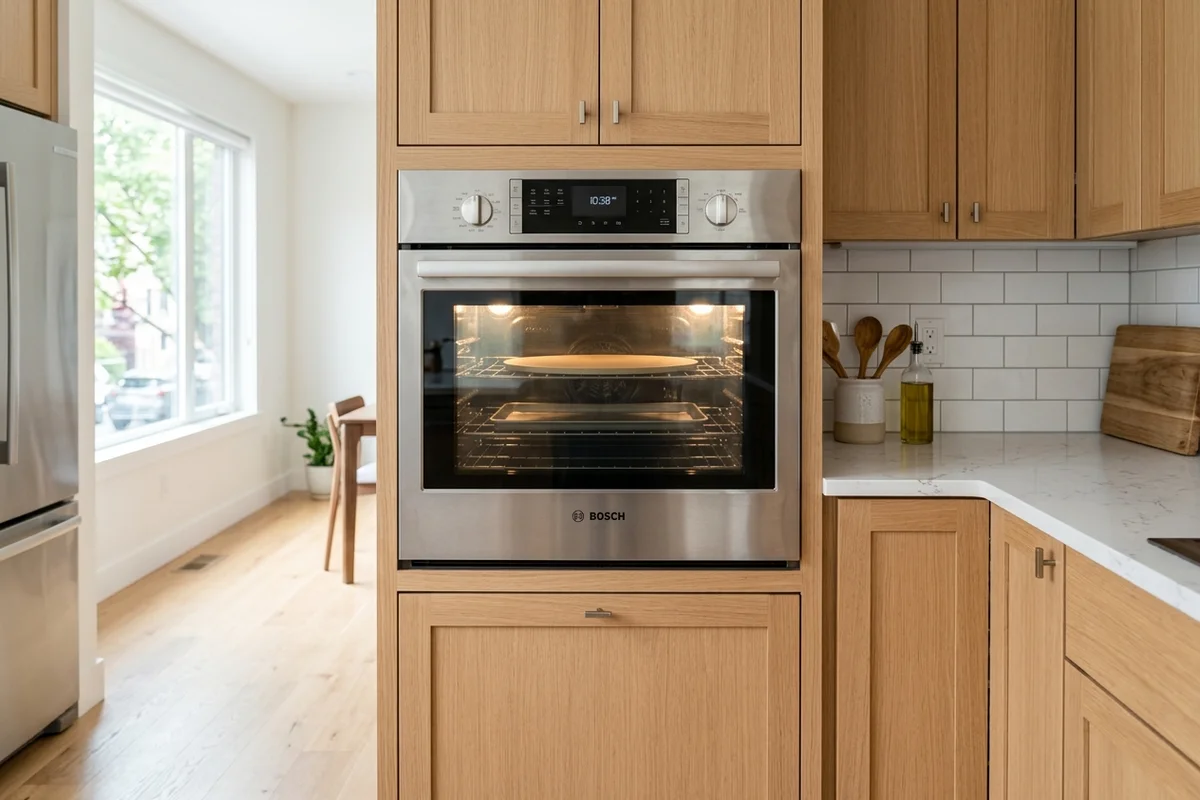
Built-in microwaves are common in newer Dubai apartments and villas with fitted kitchens. They sit in a purpose-built cabinet cavity — either above a wall oven, in a tall housing column, or recessed into an upper cabinet. The microwave is secured by screws through the back panel or side walls of the cavity, and the power cable runs through a hole in the cabinet to a socket or a spur behind the unit.
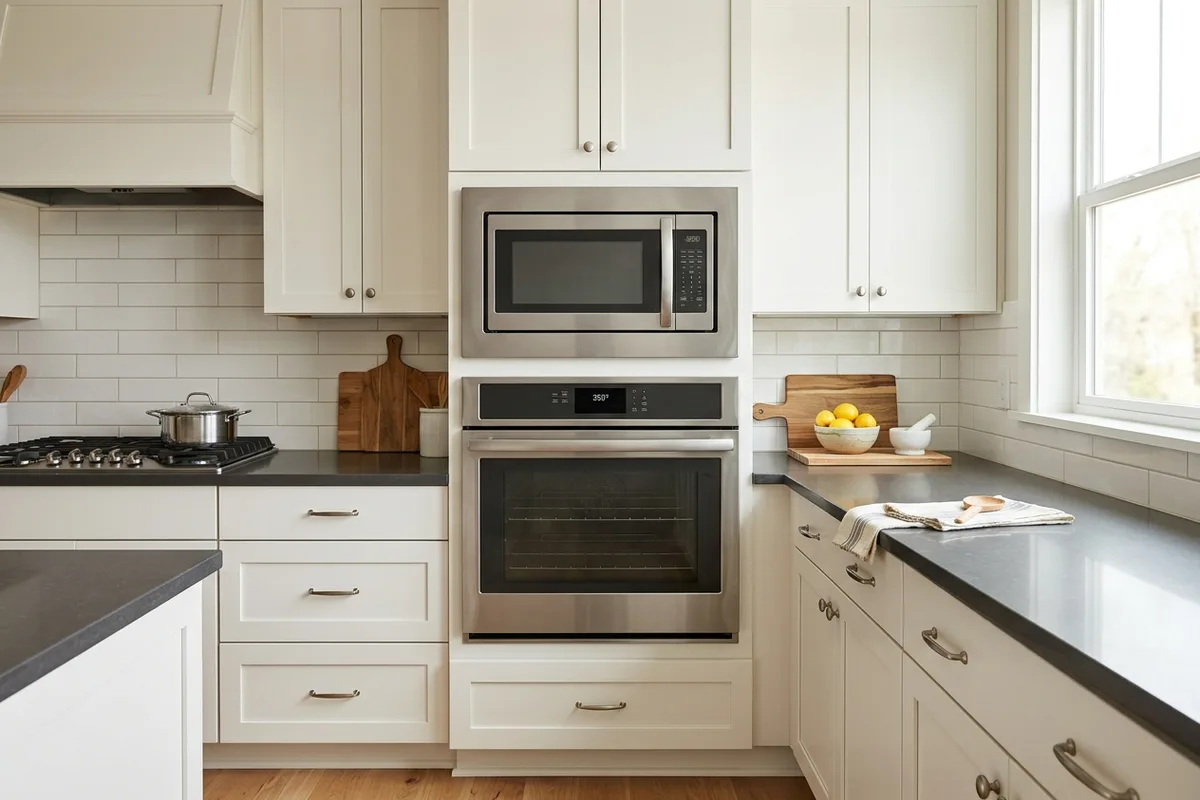
Removing one means opening the cabinet, unscrewing the mounting brackets (usually two or four screws at the sides and one or two at the back), supporting the unit's weight while pulling it forward, and then disconnecting the power cable. Some models are heavier than their countertop equivalents — 20 kg to 30 kg — because the chassis includes ventilation housings and trim panels designed to sit flush with the surrounding cabinetry.
Over-Range (Hood-Combination) Microwaves
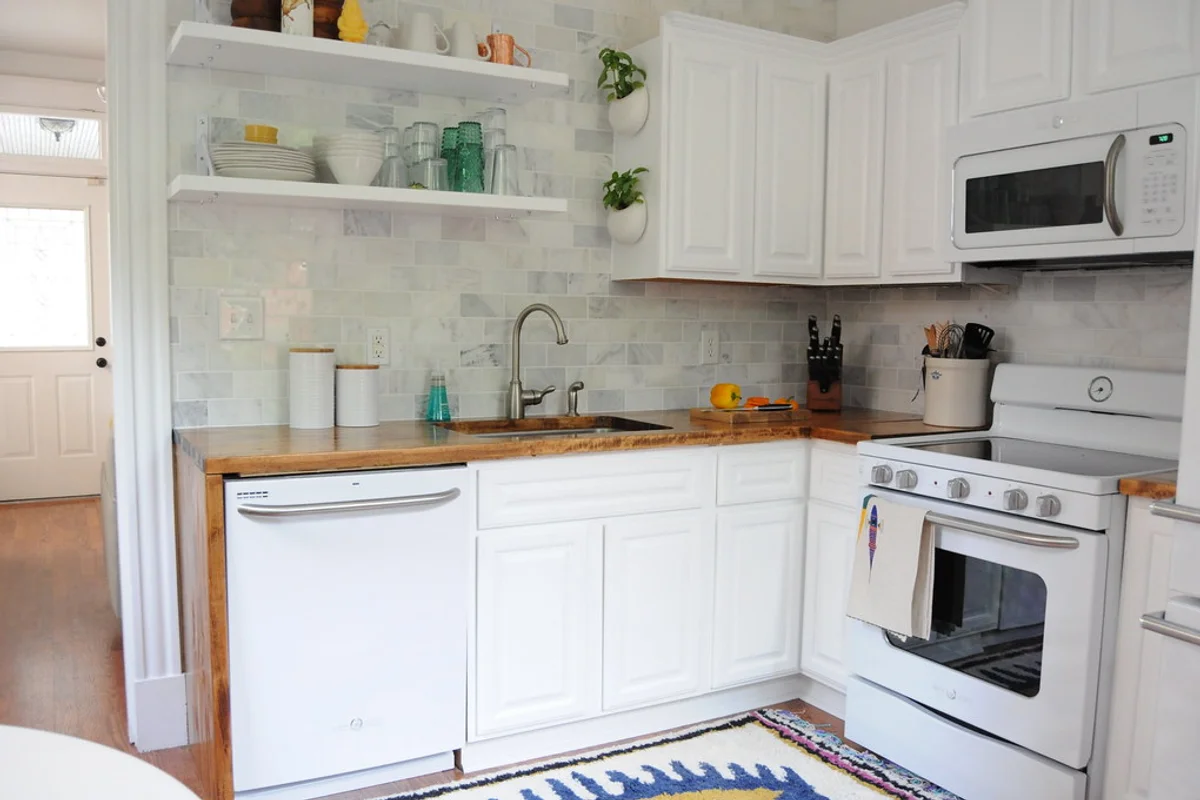
An over-range microwave doubles as an extractor hood. It is mounted to the wall above a cooktop and vented through ductwork into the wall or ceiling. This type is the most involved to remove because it is both bolted to a mounting plate on the wall and connected to ductwork. The duct connection is usually a flexible aluminium hose clamped to a spigot on the top of the unit. Releasing the clamp, supporting the microwave, and unbolting it from the wall plate is a two-person job — the unit is heavy and mounted at chest height, which makes it difficult to control while unfastening the last bolt.
Landlord and Tenancy Considerations
In many furnished or semi-furnished Dubai apartments, the built-in microwave is part of the landlord's kitchen fit-out. It appears on the tenancy inventory alongside the oven, the cooktop, and the dishwasher. Removing it without the landlord's written agreement means the tenant is liable for replacing it — or for the cost of restoring the cabinet cavity — at the end of the lease.
Countertop microwaves brought by the tenant are their own property and can be disposed of freely. The distinction is simple: if it was there when you moved in and it is on the inventory, it belongs to the landlord. If you bought it and plugged it in yourself, it is yours to dispose of.
Why a Microwave Is Classified as E-Waste
A microwave oven is an electronic appliance regardless of its size or mounting type. It contains a magnetron (the component that generates microwave radiation), a high-voltage transformer, a capacitor, a control board, and wiring. These are electronic components, and the appliance is classified as e-waste for disposal purposes — it should not go into general waste or beside the communal bins.
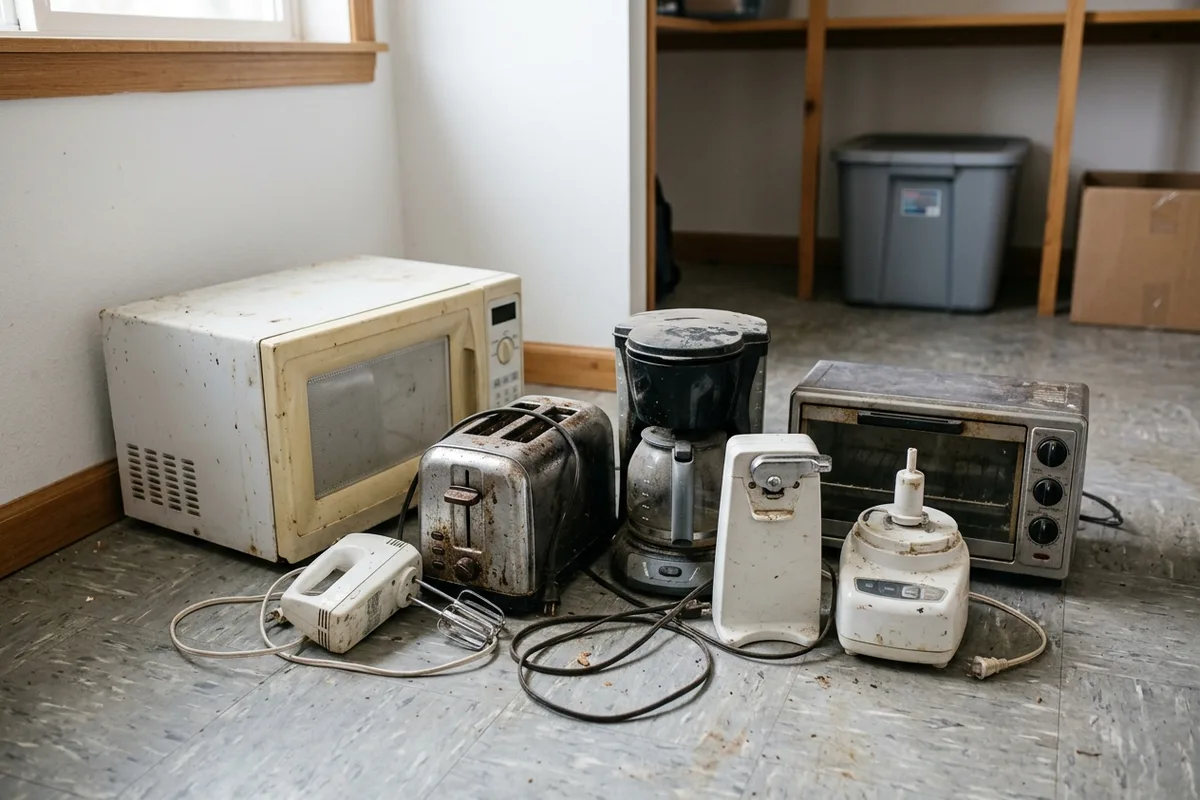
The magnetron and the high-voltage capacitor are the two components that distinguish a microwave from other small kitchen appliances. The capacitor can retain a lethal charge even when the appliance is unplugged, which is one reason that opening the casing of a microwave is not something a non-specialist should do. For disposal purposes, the unit should be kept intact — the e-waste processor handles the internal components safely during dismantling.
What to Do Before Collection
- **Clean the interior.** Remove any food residue and wipe down the cavity. A dirty microwave left in a staging area attracts pests.
- **Remove the turntable and roller ring.** These are loose glass and plastic parts that can break during transport. Carry them separately or wrap them inside the cavity.
- **Tape the door shut.** The door latch on most microwaves is a push-button release that can pop open if the unit is tilted. A single strip of tape prevents this.
- **For built-in units, confirm the mounting type.** If the microwave is bolted into cabinetry, mention this when booking. The crew may need a drill driver and a second pair of hands.
- **Bundle with other small appliances.** A microwave alone is below most minimum-load thresholds. Adding a kettle, toaster, or other small items makes the collection more practical for both sides.
What Happens to a Microwave After Collection
At an e-waste processing facility, the casing is opened and the internal components are separated. The steel casing and internal chassis are ferrous scrap. The copper winding in the transformer and the magnetron have a higher scrap value. The capacitor is discharged safely before processing. The control board, wiring, and any plastic components are directed to their respective recovery or disposal streams.
The glass turntable, if still present, is a separate material — borosilicate glass, which is heat-resistant and not recyclable through the same stream as standard glass. It is typically handled as general waste unless the processor has a specific intake for heat-resistant glass.